
Translated material
The ECHR recognized the ban on adopting children from Russia by American families
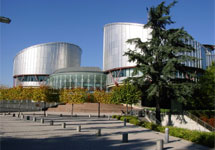
The European Court of Human Rights recognized the ban on the adoption of Russian children by citizens of the United States. As follows from the published decision , thereby the court supported 45 American plaintiffs who were denied the adoption of children, despite the fact that they have already begun the registration procedure. The claims were filed on behalf of 45 US citizens and 27 Russian children.
In accordance with the verdict of the court, Russia should pay a total of 75 thousand euros as a coating of moral damage. In addition, the Russian authorities also must pay legal costs in the amount of 13.6 thousand euros.
The claims noted that all applicants began to draw up the necessary documents for adoption from 2010 to 2012. Most American families have received confirmation that they are suitable for adoption and that children cannot be transferred to Russian families. The applicants spent several days in orphanages and met with children.
Children, as noted in the materials of the ECHR, managed to get attached to foster families. In addition, in one case, it was about the adoption of a child, whose brother had already lived in the same foster family.
Due to the "law of Dima Yakovlev," the process of adoption was interrupted, and attempts by US citizens to achieve results in Russian courts were not successful.
The claims stated that the measures of the Russian authorities violate Article 3 (no one should be tortured or inhuman or humiliating dignity or punishment), 8 (the right to respect private and family life) and 14 (prohibition of discrimination) of the Convention on the Protection of Human Rights and Basic Freedoms.
As a result, the court recognized only a violation of articles 14 and 8. "The decision of the ECHR is very large, the text must be comprehended. The court recognized the violation of two articles 14 and 8, although we announced the violation of Article 3. The ECHR founded that there was no evidence. It is difficult to present information when there was no access to the orphanage. The authorities showed that the children live in good conditions," the lawyer Karinna Moskalenko, representing the interests, told the new newspaper. American families.
In support of the decision of the ECHR, the head of the Council for Human Rights under the President Mikhail Fedotov spoke out. “We support the decision of the ECHR. I think that now there will be an opportunity if the American side shows goodwill, to significantly improve relations between our countries. And within the framework of this improvement, legislative acts of both American and Russian could be revised,” Fedotov told Interfax.
“It must be borne in mind that the so -called“ Law of Dima Yakovlev ”was a response to the“ list of Magnitsky ”, which was adopted by the US Congress. And the answer to the“ List of Magnitsky ”was supposed to be. But it was obvious that the orphans had absolutely nothing to do with these foreign policy actions,” the head of the Special Special Revolutionary.
Russia intends to appeal the decision of the ECHR, said the deputy head of the Ministry of Justice Georgy Matyushkin. “We will carefully study this decision and, of course, will appeal it in the Great Ward,” he said .
The Law of Dima Yakovlev entered into force on January 1, 2013. The document, which received an unofficial name in honor of the adopted child who died in the United States in 2008, was adopted in response to the Magnitsky Act.
On December 20, 2012, President Vladimir Putin said that the introduction of the ban is an “emotional but adequate answer” to the “Magnitsky Law”. “According to sociological surveys, the vast majority of citizens are negatively related to the fact that foreigners adopt our children,” Putin said. “We need to do this ourselves, stimulate the transfer of orphans to families.”