
Translated material
In defense of libraries
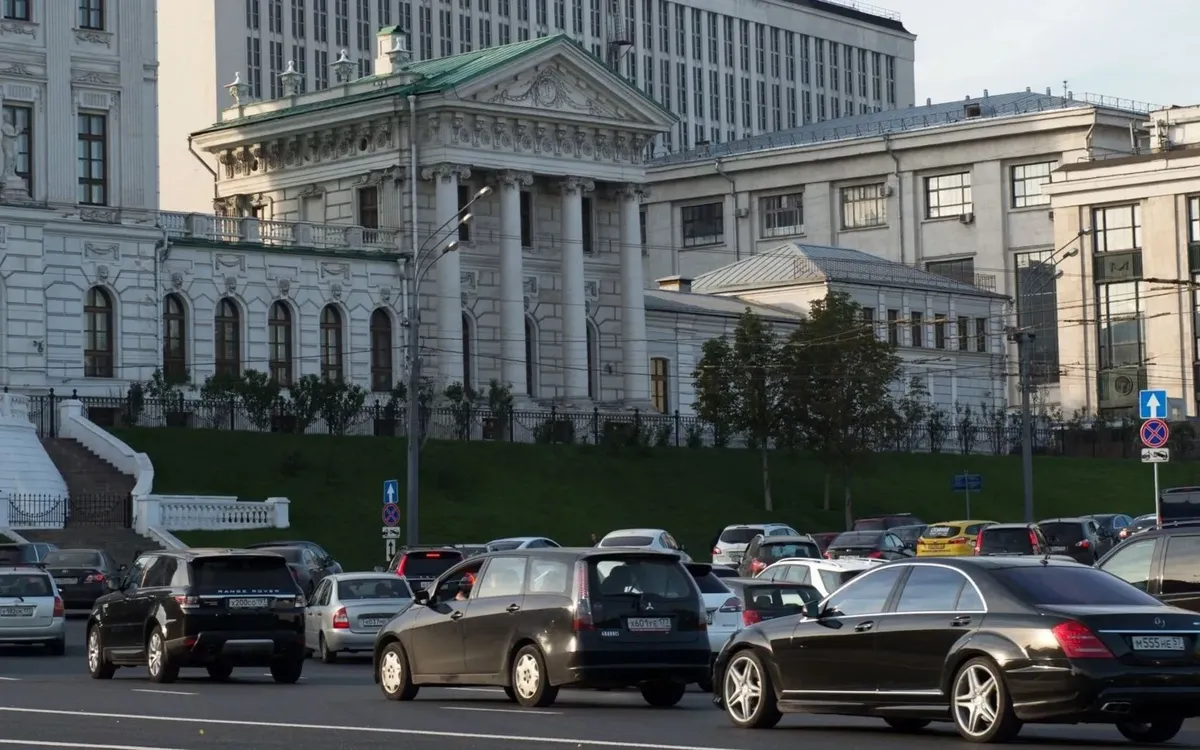
On January 10, the REGNUM news agency reported that the Ministry of Culture of the Russian Federation allegedly supports the joint proposal of the heads of the Russian National Library (RND, St. Petersburg) and the Russian State Library (RSL, Moscow) A.I. Vysolo and V.I. Gnezdilov about the "unification" of the two largest national bookstores.
Let us ask ourselves the question why does Cambridge University not unite his library with the library of the British Museum? The journey between them is more convenient than between the RSL building in Moscow and the branch evicted in Khimki. Why, with the super -centralization of the GDR, did not occur to anyone to merge the German National Library and the University Library in Little Leipzig, located one and a half kilometers from each other?
Why, finally, with the super -centralization of the USSR, were not combined in Soviet times the Gorky and Leninka, who were from each other at a distance of several hundred meters?
The answer is one: all the named libraries are the historically established national treasure of the relevant countries. The national treasure is a higher and valuable essence and than the state, and what this phase of the country's social development.
Neither during wars, nor during revolutions, nor in the era of ideological persecution of the country's national treasure did not encroach.
Why have you encroached now, today? The answer is obvious: someone wanted to get historical buildings in the city center, created specifically for national libraries-as it was, will be and will be in all developed countries where national and university libraries are expanding, even adjacent.
It is difficult for directors of libraries to counteract the predation of the high authorities. Outstanding architectural monuments (classicism, constructivism or eclecticism-it does not matter), specially built for outstanding libraries-the pride of the country and, of course, they may like this or that high-ranking official or owners of some corporations. But these gentlemen have the opportunity to build for themselves any building anywhere in the city. It is not necessary to destroy national libraries for this.
And these libraries differ from state authorities, this is what. They are in the historical center of their cities. The state power moved to Moscow from Petrograd, but the city was not affected by this, because the Hermitage and Publicity remained in their places. And Moscow will not suffer if the government moves to Khimki or to another city. As long as the Historical Museum and Museums of the Kremlin, the Pushkin Museum and the Tretyakov Gallery, the Russian State Library and the Scientific Library of Moscow State University, and theaters remain in its place. Will remain within the limits of walking distance from each other. And with the libraries of other cities of their country and other countries will be friends electronically and through the good old interpreting subscriptions, also for a long time - electronic ones.
So, in other world cultural capitals and small university cities, whose libraries do not move from place to place, but expand and make more and more convenient, more and more modern - and exactly where they historically have developed, if necessary, new buildings or reconstructing and giving the libraries of the old neighboring buildings.
Russian administrators do not even have to understand why in developed countries they do this. Pretty simple imitation. And a simple analogy: Lenin was irreparable damage to the expulsion of part of the funds in Khimki and accompanied by the loss of thousands of rare books.
Yes, cases of destruction of libraries are known. Both in ancient times (Alexandria Library), and in the capital of Russia (INION).
If the message about the plans of the movement and the merger of the two largest libraries themselves is not a stupid hearing, but the truth, then this is a certificate of dangerous administrative degradation, the result of which will be cultural and scientific degradation.
It may be even useful to show on a living example to what absurdity the bureaucracy can reach. Nevertheless, it is infinitely sorry for the following generations, which will simply run away from predatory savagery covering the reform.