
Translated material
Schemes and only
In the privatization of Rosneft, could not only state banks, but also the budget?
“Within the framework of the transaction, all goals were fully achieved, but in the course of it a variety of risers were solved, in particular, various excesses had to be avoided,” Rosneft, Mikhail Leontyev, told Interfax, commenting on the information that the state-owned enterprise’s financial resources were involved in the privatization of the state-owned enterprise.
Excesses could not be avoided. The first of them is that Vladimir Putin called for real privatization and directly indicated that it should not occur using state banks. Therefore, apparently, the head of Rosneft, Igor Sechin, reporting to the president about the closure of the transaction in December last year, focused on the fact that the owner of 19.5% of the shares on the balance of Rosneftegaz was not state -owned company itself, but the most real international investors, the Glencore trader and the Qatar Investment sovereign fund Authority (Qia), united in such an important case into consortium. And that thanks to the managerial efforts of Sechin himself, the deal was closed on time (until the end of the year) and at the price determined by the government (710 billion rubles).
But then important pieces began to fall out of this mosaic one after another. At first it turned out that the real amount of the transaction is only 692 billion rubles, and the missing amount to the budget will pay extra in the form of Rosneftegaz dividends (although this laying company, which is 100% of state property, was supposed to pay dividends to the budget).
Then it became known that the new investors invested only 2.8 billion euros out of 10.2 billion, the remaining amount was provided by the syndicate of banks, which was a well -known participant of which was only the Italian Intesa. However, the credit financing of large transactions in itself is in the order of things. As well as their structuring using a number of companies in different jurisdictions.
In our case, as the Vedomosti found out, the British QHG Holding lies on the basis of the scheme, which on December 5, that is, on the eve of the transaction, the Swiss and Qatarians established on a parity basis. But just taking and buying on it Rosneft's shares would be boring, no one does so. Therefore, QHG Investment was established to attract investments, and she, in turn, created QHG Shares in Singapore. The newborn Singapore company, as follows from its documents studied by Vedomosti, has already managed to attract a loan from VTB of exactly 692 billion rubles on the key to the purchased shares. And already on December 22, Rosneftegaz redeemed the rights to this loan (for what amount is unknown).
The transaction was closed only on January 3, when Intesa's money came, then the bail was removed.
So far, we will leave the question of the brackets who now owns the rights of the claim on the loan, whether it is closed, and if so, to what extent. We only fix that without this credit shoulder, the transaction could not have taken place within the terms established by the government and, close to the directive, the price.
Now let's recall the main excess that was not formally connected with the privatization deal (if it is still appropriate to use this term), but preceded it.
This, of course, is about a commemorative meeting in the Rosneft office, which ended with the detention and house arrest of Alexei Ulyukaev and his removal from the post of Minister of Economic Development.
So, as a minister, Ulyukaev held a number of strategically important posts. In particular, he headed the VTB supervision council.
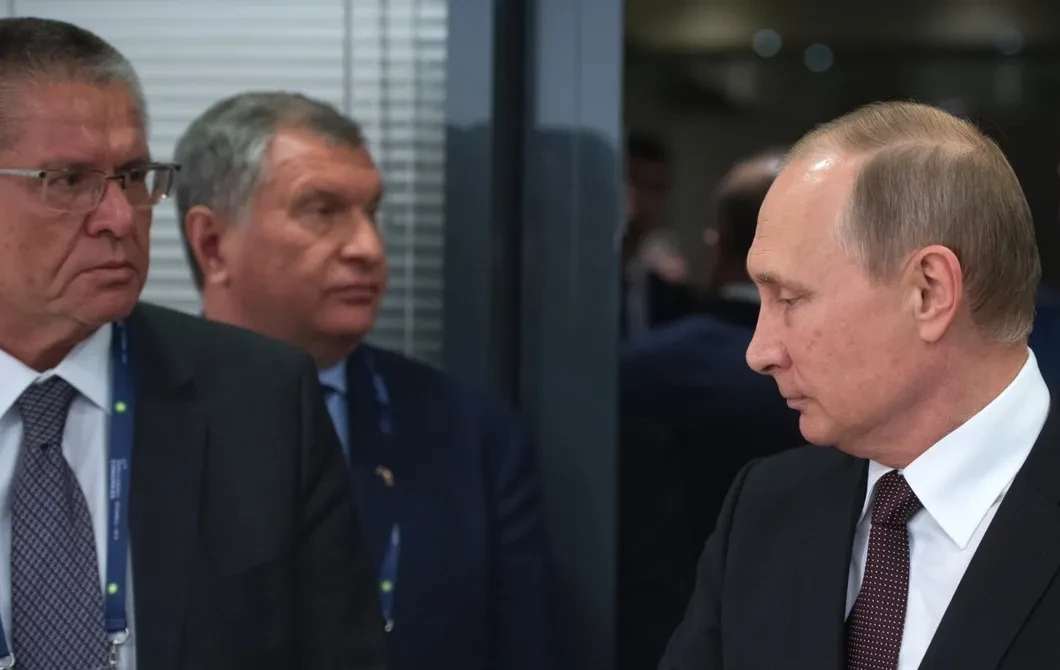
Of course, I am far from the idea that in that capacity he could somehow interfere with the plans of Igor Ivanovich Sechin. But I believe that after the arrest of Ulyukaev, they definitely stopped interfering with the entire government, including Igor Ivanovich Shuvalov.
I am even ready to assume that the government helped to make a transaction in some way. For example, few understood what for the sake of the year the Ministry of Finance decided to close the long loans of the defense industry enterprises issued by state -owned banks from the budget, immediately 800 billion rubles. You can, of course, say that this will help in the future to save on percentage.
But if in our budget everything is so complicated that it was necessary by the end of the year to fill it with 710 billion from the privatization of Rosneft, then why was it to spend a large amount on a completely optional event?
Well, a simple question: did VTB get part of the budget money? Of course: 330 billion rubles. Could this money indirectly participate in the acquisition of the Rosneft State Conference transaction? There is no reason to believe that no.
So - Rosneft was bought with the help of companies from foreign jurisdictions not only thanks to the credit of the State Bank, but also with the participation of budget money, literally, as was done in the excellent era of pledge auctions? Well, this is a strong assumption that I cannot afford within the framework of the author's column. Therefore, the "New Gazeta" will continue to study the epoch -making deal.