
Translated material
"Do you think it's easy to shoot people?"
Conflictologist Goran Loyanchich - about how to sit at the negotiating table those who killed each other yesterday
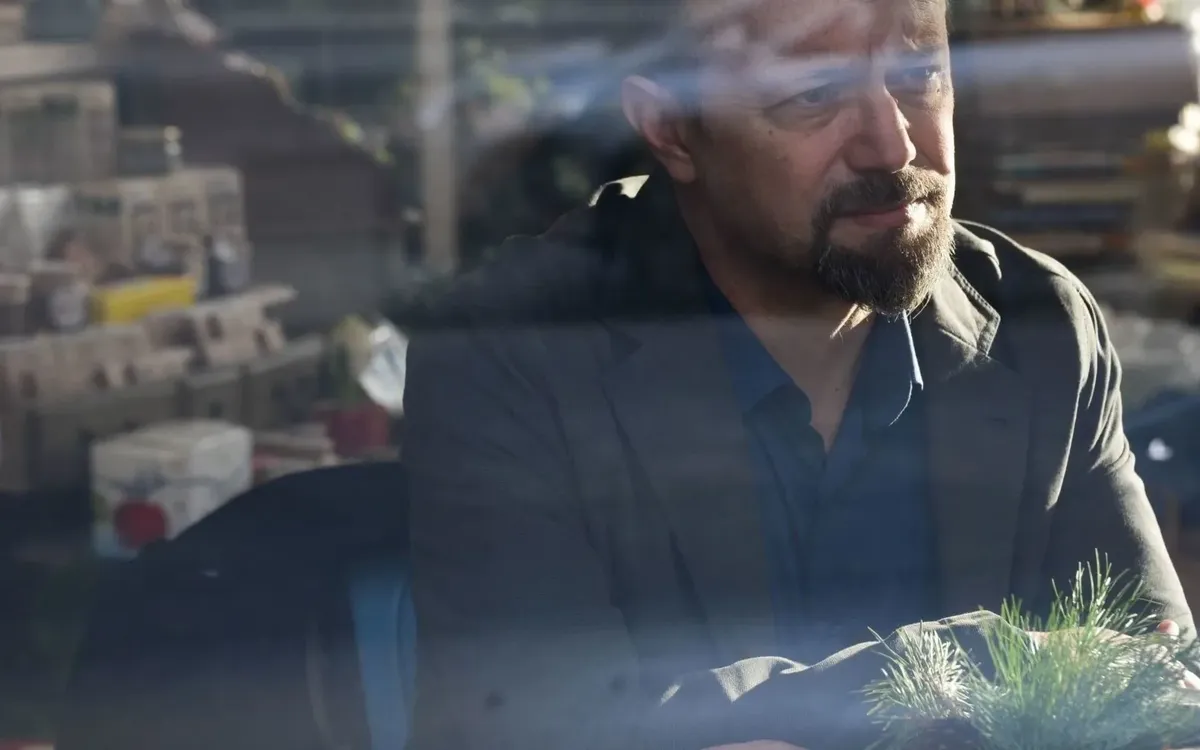
In 1999, Goran Loyanchich, the Balkan sociologist and Peacemaker, created the first inter -ethnic bilingual radio station “Contact” in Serbia to “bring bridges” between the Serbs and the Albanians living in the region. But the authorities rapidly closed the radio station that worked in the conditions of civil conflict. And then there was a war.
“You can bring democracy to the country, establish a human rights system, a strong economic structure, security, but if people do not know how to live together, then all efforts can be useless,” he says now.
After the war, the Norwegian center of the world and dialogue. F. Nansen, created with the support of the Norwegian Foreign Ministry and had previously had experience in promoting the peaceful process in the former Yugoslavia, launched his “Kosovo” project. For more than 12 years, Goran has been working as a civil peacekeeper as part of this project. On his account is not one implemented program in Belgrade (Serbia), Skopier (Macedonia), Protem (Kosovo). And also three in Bosnia: in the Muslim Sarajevo, Batha-Luke-the capital of the Bosnian Serbs, and the Croatian Mostar, where more than a thousand Muslims were killed in May 1993.
During the break between the lectures with which he came to Moscow, the expert told Novaya Gazeta how to put people who shot at each other at the negotiating table and teach sworn enemies to live together.
- What is your work?
- At first - these are conversations. Unlike the so -called “mediation”, when you are trying to help solve the conflict, the dialogue has a much more modest goal. Let's just say we help people hear each other.
Arriving in the conflict zone, we start by meeting with the communities, the dialogue between which was interrupted due to military conflict. We talk with people, listen to them, ask to tell how they see the situation, and then we offer to think together, how they would like to live in the future.
- What does such a dialogue look like?
- This is a series of seminars. The key part of them is questions and answers. Sometimes this is the only thing we do for three days. We divide the participants into mini-groups, and they exchange questions, first in writing. Then they get together - this is a climax - and ask each other their questions orally.
In the course of the participants, we give the participants the opportunity to express the opinion whether they are satisfied with the answers. It is important that we never limit the participants in time, the seminar ends only when all questions and answers will be heard. That is, when the participants themselves finish it.
- What is your role in this process?
-We are trying not to interfere in the course of discussion, not to impose our own point of view, not to take someone's side.
In some ways, we bring people together ... and we will make our way.
I remember how, during one of the seminars, one of the participants screamed on his opponent: “Do you think it was easy for me to stand knee -deep in ice water and shoot people whom I know my whole life?!” - At that moment I got up and left the room. I realized that they no longer need me. Then they can speak eye to face, without an intermediary. I completed my work.
When the stage of dialogs ends, we are developing a program for working with the conflict, specific projects for the community, mainly in the field of education or local self -government. Moreover, we believe that efforts should be directed primarily to education, because, as a rule, the most urgent measures are needed there.
- What are these measures?
- Barbie with the segregation of any national communities. We try to get away from any division. In addition to assimilation, that is, the dissolution of minorities in the dominant community, and segregation - fundamental breeding of the warring parties on different sides of the barricades, there is an alternative path - this is “integration”. And she should begin with school. We had two guys, the same age who participated in the Kosovo war from the opposite sides: one of them was a Serb, the other was Albanian. During the seminar, it turned out that they have similar views on life, they love the same music, wear the same clothes. And at the same time they could kill each other, because they thought they were enemies. Since then, they have become good friends. This is the most important part of our work - we try to help people get away from the idea of the "enemy".
“ But at the same time remain Serb and Albanian?”
- Yes. Integration does not mean that someone should abandon their previous identity. We are talking about the plurality of identities. Religious identity or national, of course, is important, but they cannot be the only ones. Each specific person can have several of them at the same time.
That is, besides the fact that he is a “Serb”, he, for example, is a doctor, he is someone’s husband, father, a native of Kosovo ... This is exactly what we work in conflict zones. We believe that there is a space where we can all remain the ones we are, and not kill each other.
- But these conflicts are hundreds of years, and people are growing with this ...
- Let me tell you one story. We worked with a group of people whose relatives were stolen during the war. Albanians and Serbs. They hated each other, and they had reasons for this.
There was an Albanian participant. His 17-year-old child was taken directly from his hands, and he never saw him again. In the group, they were very distrustful and hated each other. They have not cooperated for years. But they had a reason to unite.
The Albanian organization, which worked in Kosovo, had no contacts in Belgrade with the Serbian authorities, and they needed secret state documents to look for people. And vice versa: the Serbian organization in Belgrade could not go to Protina and ask the Government of Kosovo.
Then we began to think about how they could help each other. In the center of Protina appeared a wall of memory with photographs of people who have not yet been found. And Kosovo organizations added photographs of missing Serbs with the Albanians there. This is very symbolic. And this was the beginning of cooperation.
Now they exchange information, documents. If these people who have lost relatives were able to unite and go through all this, then - and the rest will be able to.
- And your ethnicity does not interfere with your work?
“I am equally sympathized with both the Serbian and Albanian participants in my seminars.” Yes, I'm a Serb. Yes, I held seminars in Kosovo, being Serb, but I do not sympathize with individual nations or individual countries. I am worried about people, for ideas. If I were an Albanian, an American or Russians, nothing would have changed.
The people with whom I work are my friends. At seminars, they trust me, because I do not take someone's side.
- And in Serbia did you have problems with politicians, local leaders?
- Nash the agenda is equal opportunities for everyone. Not everyone accepts this. But in general, I would not say that we have many problems. To be honest, I don't think about politicians so often. Because I don't have time for this. I want to be focused on the public with whom I work.
- Are you scared?
- I never thought of danger. It is much more dangerous to do nothing in life at all. By the way, in Russia there are no less conflicts than in the Balkans ...
But this is not only the problem of our countries. Even in the most developed democracies, from time to time, the opinion arises that human rights are not for everyone.
Look: we have a universal human rights convention, she is already 70 years old. Most civilized countries signed this convention. But so far, African Americans in the States do not feel that they have the same rights as the rest. The same - with Muslims in France and other countries, such as the Netherlands, Belgium. Then we have an example of Brexit in the UK. During it, racist arguments were openly declared.
Poland, Hungary, Czech Republic, Slovakia - all of them have problems with minorities. We have a convention, but there is no human rights themselves.
- And what to do now?
- It is not so important that it is written in the universal declaration. How many of us have read it? We are not even familiar with its content! It seems to me that it is more important to be able to just empathize with a neighbor, a friend, a person on the street ...
With the participation of Nadezhda Mironenko