
Translated material
Isaac ... Next is everywhere?
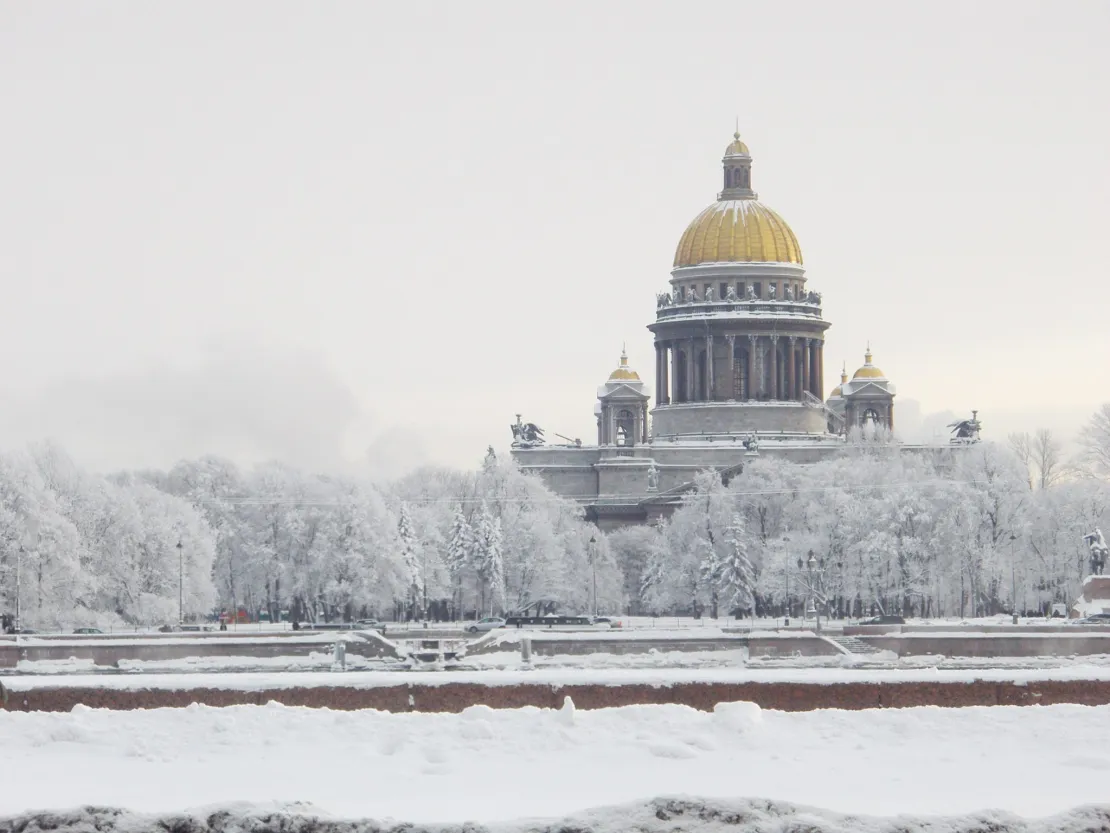

On January 8, 2017, immediately after the New Year holidays, the Governor of St. Petersburg Georgy Poltavchenko said that it was decided to transfer the ROC -ROC. Details of the situation are told by a political observer, head of the Yabloko faction in the Legislative Assembly of St. Petersburg Boris Vishnevsky .
In response, an explosion of indignation followed: a petition on the Internet about the preservation of Isaac, 156 thousand people signed for three days. Representatives of the museum community, cultural and science figures, opposition politicians, journalists, just caring citizens. Nevertheless, on January 12, Smolny published (for some reason, dated to December 30) the order of the property relations committee and the plan for the transfer of the cathedral, from which it follows that the cathedral will be transferred to the Russian Orthodox Church for 49 years and no later than the first half of 2019.
And the day before, at a special press conference, representatives of the Russian Orthodox Church said that when transferring the cathedral to them for free and unlimited use, they are not going to bear the costs of maintaining, maintaining and restoring the monument, believing that the city should pay for everything. In other words, St. Petersburg taxpayers will contain the building, and use it for free and receive income (delicately called “donations” and not taxed) the church will be ...
Generally speaking, the situation seems not only absurd, but also illegal. And for many reasons.
“The cathedral is obliged to transfer the Russian Orthodox Church - this is the requirement of federal law,” both churchmen and St. Petersburg United Russia are repeated in unison. But this is not so: the authorities have the right to both transfer the cathedral and refuse to transfer it (as was done in 2015), there is no imperative here. At the same time, the refusal to transfer in 2015 was justified by economic reasons: with reference to the profitability of the State Museum of Isaac's Cathedral and the lack of funds in the city budget for the maintenance of the federal architectural monument (despite the fact that the Russian Orthodox Church will not be able to finance it). I would like to ask: what has changed in a year and a half?
And then and now the Russian Orthodox Church refuses to pay for the maintenance and restoration of the monument. And then and now the city has no extra money for these purposes. Today, those almost 800 million rubles that the museum earn, and if the Isaac is transferred to the Russian Orthodox Church, will come to this, then the question will arise about where to get this money. Note: the restoration of the facades of the Kazan Cathedral, already transferred to the Russian Orthodox Church, is stopped in the middle, because the diocese has no means. As for Isaacia, the head of the legal service of the Moscow Patriarchate of Igumen Ksenia (Chernoga) directly stated: "The Patriarchate expects that the work to maintain the building of the Isaac's Cathedral after the transfer of it will be carried out by subsidies."
But why on earth should the state contain the Isaac, transmitted by the Russian Orthodox Church? On what basis is the state to put a tribute for the maintenance of temples? Maybe a separate collection will be logical, and voluntary? Who agreed to pay is really a believer. And then let's see how true we have (and not shown by polls) percentage ...
Further, it is not clear on what basis the decision is made to transmit the cathedral. The 2015 application, as already mentioned, was rejected, and the diocese in court did not dispute it. There is no new application: the St. Petersburg Metropolis, as its representatives told reporters on January 9, "recently it has not submitted additional applications for the return of the Isaac's Cathedral of the Russian Orthodox Church." How, in this case, on December 30, could an order appear on the plan for the transfer of the cathedral? Note: the federal law requires that the application of the religious organization for the transfer of property within a week be published on the website of the administration of St. Petersburg. This is not done.
The transfer of Isaacia of the Russian Orthodox Church practically paralyzes the work of the museum - simply because, according to the law, upon such a transfer, it is subject to eviction from the building, and the only exhibit that shows the museum is the Isaac's Cathedral itself. And not without reason, representatives of the Union of Museums of Russia have already opposed the transfer.
Finally, in this case, one cannot talk about any “return” of the church of property taken away in the Soviet years, because the cathedral was built at the expense of the treasury of the Russian Empire (that is, at the expense of all its citizens, both believers and unbelievers), has always been state property (before the revolution, it, like the Hermitage, was subordinate to the Ministry of the Imperial Court), was never transferred to the church and was never a parish church. At the same time, worships that no one interferes with - an average of two per day are being held in the cathedral.
By the way, throughout the country there are destroyed or collapsing temples, which the leadership of the Russian Orthodox Church is in no hurry to restore - but declares its claims to such prosperous architectural monuments as the Isaac's Cathedral. So what is she baking about - about the rights of believers (which no one violates) or about the property interests of the corporation?
Now in St. Petersburg an informal coalition of civil resistance is being created - it includes both deputies of the city parliament from Yabloko, Just Russia and Party of Growth, as well as well -known public figures. A large rally is being prepared, and in parallel the lawsuit in the court on the illegality of Smolny’s actions. At the same time, which one cannot fail to notice, almost the same people who once fought against the 400-meter tower of the “Okht-Center” are opposed to the transfer of Isaacia and won (and for the program, mainly those who supported the construction of the tower).
Boris Vishnevsky