
Translated material
Around enemies, it's time to put up
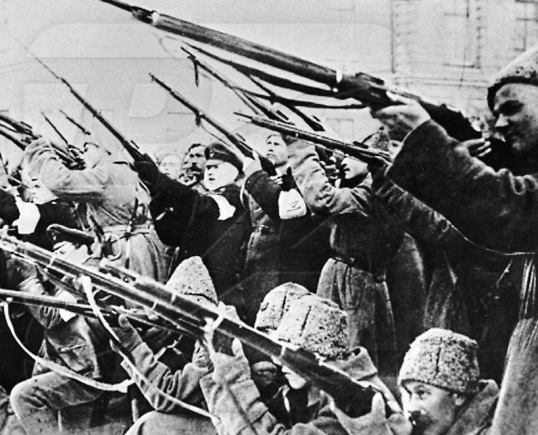
"We need history lessons primarily for reconciliation, strengthening public, political, civil consent. It is unacceptable to drag a split, anger, resentment and bitterness of the past into our life today. In our own political and other interests, to speculate on tragedies that affected almost every family in Russia." So on December 1 last year, Vladimir Putin spoke in the message to the Federal Assembly. On the eve of the anniversary of the Russian revolution, the authorities generally talk a lot about peace, consent, reconciliation, setting the tone for the upcoming ceremonies and events. One of them has several ironic shade (which was clearly not conceived by the organizers): the discovery of the “Monument of reconciliation” to the Civil War to the Crimea annexed by Russia.
What is behind these initiatives of the Russian tops: a thoughtful historical policy or a kind of spell of demons of the past in a potentially unstable country? What were the reasons for the split of Russian society in 1917, and how does this split see in Russia today? This is reported in an interview with Radio by Freedom by the doctor of historical sciences, a specialist in the history of Russia in the early twentieth century, an employee of the St. Petersburg Institute of History of the Russian Academy of Sciences Igor Lukoyanov .
- When the organizing committee was created, which will prepare events for the anniversary of the revolution, the Russian historical society, which is put at the head of this process, said that the main motive of the anniversary would be national reconciliation. In your opinion, how relevant this topic is - and is there, from a historical point of view, whom to reconcile in Russia a hundred years later?
- I think that there is no one in connection with those events. Apparently, it is not worth expecting some massive emotional reaction after a hundred years. But I’ll add that such euphemisms are somewhat at a standstill - "a hundred years of revolution." What revolution are we talking about? If the term "great Russian revolution" is used, which the authorities tried to introduce in the educational standard, then it seems to me that this is not entirely correct. The revolution as such can be carried out only in relation to the events of February-Mar, 1917, the overthrow of autocratic power. Further events, in my opinion, would be too expanding to call the revolution.
-Why, in your opinion, the Bolshevik revolution of October 1917 does not fit into this concept?
- You yourself answered - it was a revolution, so it was perceived by the participants in those events. And in the first years after 1917, the Bolsheviks themselves continued to call him that way. Five years - it was the anniversary of the coup, not a revolution. Meanwhile, February is a revolution, undoubted. There is still an important feature: the February Revolution did not split the society, but rather even several mobilized it to win in the continued war . Although there were also quite complex processes there. For example, the terminology of the "bourgeois" type appeared and widely spread, which meant a negative characteristic of wealthy people. It was a marker of a certain split in society. Nevertheless, the mobilization of the society to win the war was strong. Subsequent events, especially the end of 1917, on the contrary, have not been mobilized by anyone. There, on the contrary, we need to talk about a serious split.
The February Revolution did not split the society, but rather mobilized it to win the war
- That is, there was a gradual displacement from the revolution as a public recovery to the civil war as a public split, I understood you correctly?
- In general, yes. At the same time, the Bolsheviks themselves provoked the civil war, I think, in many ways consciously. They wanted it.
- For what? The Bolsheviks seized power, why did they need a civil war? She put their regime at risk?
- The fact is that civil war is an inevitable consequence of their policy. When they declared their task to build a completely new system, where there will be no place for fragments of the old world, including entire former classes, according to Marxist terminology, these are classes, the resistance was inevitable - this time. And the second: they responded to this resistance with the most cruel methods, including total terror. Accordingly, this was the outbreak of civil war.
- Let's go back by February . Was the collapse of the monarchy, in your opinion, inevitable? Could nothing stop the revolutionary process at that time?
- I believe that the 1917 revolution itself was not predetermined by previous events. These events, if we take more or less deeply, at least the beginning of the twentieth century, predetermined the need to change the political system. An ideal option would be the transition from autocracy to a truly constitutional monarchy. And the revolution itself was caused by a combination of a number of circumstances. At the beginning of 1917, practically none of the serious political forces in Russia wanted the revolution. The reason was simple: a clear awareness that the revolution would mean the end of participation in the war, and the victorious end of the war, and here there was no particular contradiction between the authorities and the majority of society, everyone considered it a matter of necessary in all respects. I do not take into account the revolutionary parties that always insisted on overthrowing the existing system, but they were still not too popular. There are two poles: on the one hand, unwillingness to bring the matter to political cataclysms, until the victory in the war has been achieved, and on the other, an increasing internal conflict. The events that occurred in Petrograd at the end of February 1917 fell like snow on his head, unexpectedly completely.
- That is, the fatigue of society that already objectively existed in the fourth year of the war, the most influential political forces at that time did not feel? Why did they stubbornly continue to believe that victory was possible and even inevitable, and the slogan of the cessation of war, except for the Bolsheviks, was not nominated?
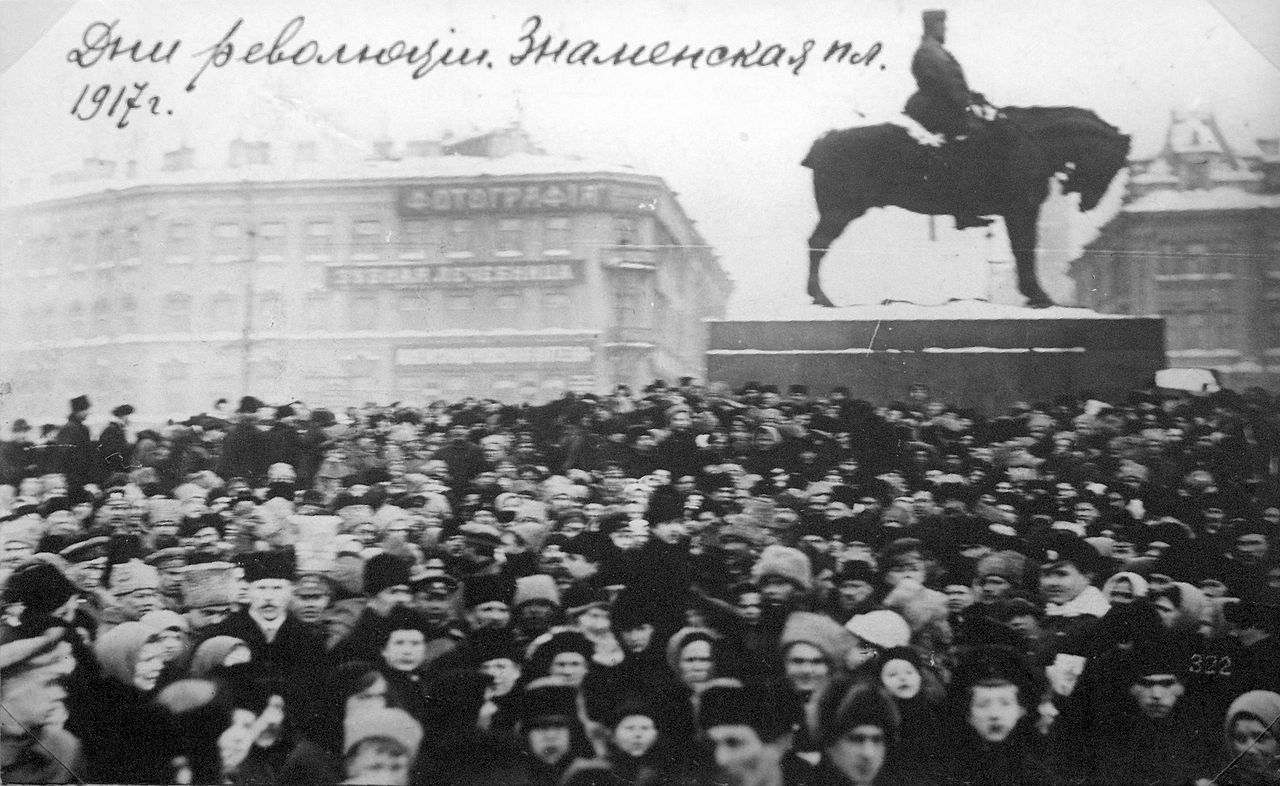
-There was fatigue, but she did not wear some irresistible, intolerable, fatal character. After all, the revolution itself mainly went under the slogan of the “war to the victorious end”, and the surge of the mass movement was caused in many ways to suspicions that the tsarist family could not bring this war to victory . I mean rumors about the separate world, about the betrayal of the empress, all sorts of absurdities went about a direct wire from Tsarskoye Selo to Berlin and so on. What happened in the days of the February Revolution? Here is the first event on Znamenskaya Square, when the manifestations began, speakers began to perform - this is before February 27. There were people who said that overthrow or at least the restriction of the autocracy is just necessary in order to fight before victory. There were no Bolsheviks there, they were simply rejected at that time. This is a completely different picture than in the second half of 1917, when the continuation of the war was already considered almost as a crime against Russia and the people. This is the result of the decomposition of the army and the action of propaganda.
- And how did it happen that during the entire couple of months there was such a change in the public consciousness?
- I think that propaganda played a colossal role, which was included in the full power of the Bolsheviks. Plus, a factor of soldiers of spare parts appeared, which were in a huge amount in the rear garrisons, they were a colossal number of them in the capitals and other cities. These people are mainly from among the peasants, not so many workers were mobilized. After 1916, when the warriors of the second category were called up - this, of course, is mostly peasants. They fell into the city, in another environment. They did not burn with the desire to go to the front. They were convenient objects for Bolshevik propaganda, which worked to decompose this soldier's mass. And in principle, in a few months they succeeded, because their agitation fell on very fertile ground.
The colossal role was played by propaganda, which was included in the full power of the Bolsheviks
- If you look at the examples of many revolutions - French is considered a classic example - then radicalization occurs there along the revolution, and the most radical revolutionary forces, in the French case, the Jacobins come to power. But radicals usually do not hold in power for a long time, various kinds of thermidors occur, and more moderate regimes come to replace the radicals. Why, in the case of the Bolsheviks, this pattern did not work? What was the secret that they allowed them to stay at the slippery peak of power?
- This pattern worked, only a little in another version. The revolution really always runs ahead, it “brings” it with radical slogans that the majority of society does not accept. Then inevitably there is a rollback back. In Russia, it turned out that the Bolsheviks, the force that symbolized this radical movement forward, managed to roll back-I mean the NEP and the subsequent mitigation of the regime in the 20s. In addition, I note that our revolution, it seems to me, is better to compare not with the great French, but with similar processes that took place in the east. This is partly, for example, the Meiji coup in Japan. And the closest analogue just in relation to the forward and rollback movement was the Sinhai Revolution in China in 1911-1913. In many respects, we are closer to the east.
- In 1917, the idea of the Constituent Assembly was popular, which eventually tried to form, but the Bolsheviks instantly dispersed it. It was a symbol that representatives of all layers of society will gather and decide how to continue to live the country. What was it: an illusion or rather a missed historical opportunity?
-This was not an illusion, because for a long time, almost until the end of 1917, the majority of society was with this idea according to, and the "founder", albeit almost in a parody form, nevertheless gathered. It seems to me that this is rather an lost opportunity. Of course, now it is good to be a strong back mind, but, apparently, after February, the victorious revolutionaries should take care of the convocation of the Constituent Assembly early, without waiting for the victorious end of the war, without delaying this process. Then, perhaps, they would have managed to "saddle" the situation.

-What played a role in the collapse of the Provisional Government - his own inability or nevertheless subversive activities of revolutionary forces, led by the Bolshevik party?
- There was a complex of reasons. It is very difficult to weigh, which is more to a lesser extent, because I honestly do not know if there are such scales. Firstly, those who received power in February, in general, fell into her hands, they were not ready for this. They had neither thoughtful plans, nor a clear understanding in which state is the country. Everything was done literally on the knee, and this improvisation was not very good. Many of February figures then retroactively admitted that the tsarist authorities, which seemed so bad to them, was an order of magnitude more practical than themselves. The second important factor is, of course, the activities of the Bolsheviks. She was underestimated from the very beginning. Meanwhile, the Bolsheviks got the opportunity to openly act, using colossal support from Germany. German money is a fact. Their size is still really unknown, but it is obvious that the Bolsheviks could not have such propaganda without external support. Simply, while there was an autocratic system, he crushed them hard, and as soon as he was gone, it was possible to take advantage of the situation. The money went to the river, and this played a colossal role. Lenin and his environment deliberately led to the decomposition of the country, to blur this goal "everything for victory in the war", in order to come to power. And they succeeded in the atmosphere of chaos.
German money is a fact. The Bolsheviks could not have such propaganda without external support
- And why did the government turn out to be so mediocre and toothless and could not stop it? The country is fighting, while one of the parties receives funds from an external enemy. It would seem that this party should be prohibited, its leaders are immediately arrested and so on. Attempts were, Lenin and Zinoviev were hiding in a hut in a spill , but in the end all this turned out to be unsuccessful. Why?
- As I said, at first the new authorities underestimated the possibilities of the Bolsheviks. Still, they were never considered a dominant force, they were treated with some neglect. Another factor is the nature of the power itself after February. The regime never feels too firmly if it does not arise as a result of some political processes, but as a result of the actions of the crowd. The crowd received power in February-March days in Petrograd. And this crowd, figuratively speaking, gradually spread throughout the Russian Empire. The main role there was played not even by some local figures, but by the very soldiers of the spare regiments that were able to decompose. This man with a gun, with an absolutely marginal consciousness, began to determine a political configuration. The Provisional Government had no strength and opportunities to really fight this. The revolution simply swept the country.
- As a symbol of this spontaneous revolution, one can take the dual power of 1917, when a system of tips that exist parallel to the temporary government and its power is formed, and then it is opposed to it. What was it? On the advice of that period, as I understand it, there are different views: on the one hand - as a force that ultimately led to the decomposition of the country, and on the other, as a might fail, but attempt to spontaneous revolutionary public self -organization. What is right, which of these approaches?
- both of them have the right to exist. It is simply necessary to keep in mind that at different times, in different conditions and places, the tips played unequal roles. The creation of tips itself is the result of the activities of revolutionary parties that remembered the former practice, the events of 1905, and tried to recreate it. At first, the existence of the Soviets, no matter how strange it may seem, was partly beneficial to the Provisional Government, so it did not even try to slam them somehow. And the Petrograd Council itself was afraid of its own capabilities, so he "dived" a little under the Provisional Government. But then the situation began to change, many local tips arose. And they had different nature. If the Petro -Council was rather a political instrument, then in some cases in the field, even in certain areas of Petrograd, these tips were less politicized, served as a prototype of the self -governing system of power. This all got along very contradictory. It is clear that this whole system in the conditions of the revolution did not have time to settled, and the Bolsheviks then drove it into a very strict frame.
- To what time can the conditional point of no return attribute, when the transition from revolutionary events to the total rash and the civil war became inevitable? Is this an October coup, acceleration of the Constituent Assembly, or some other moment?
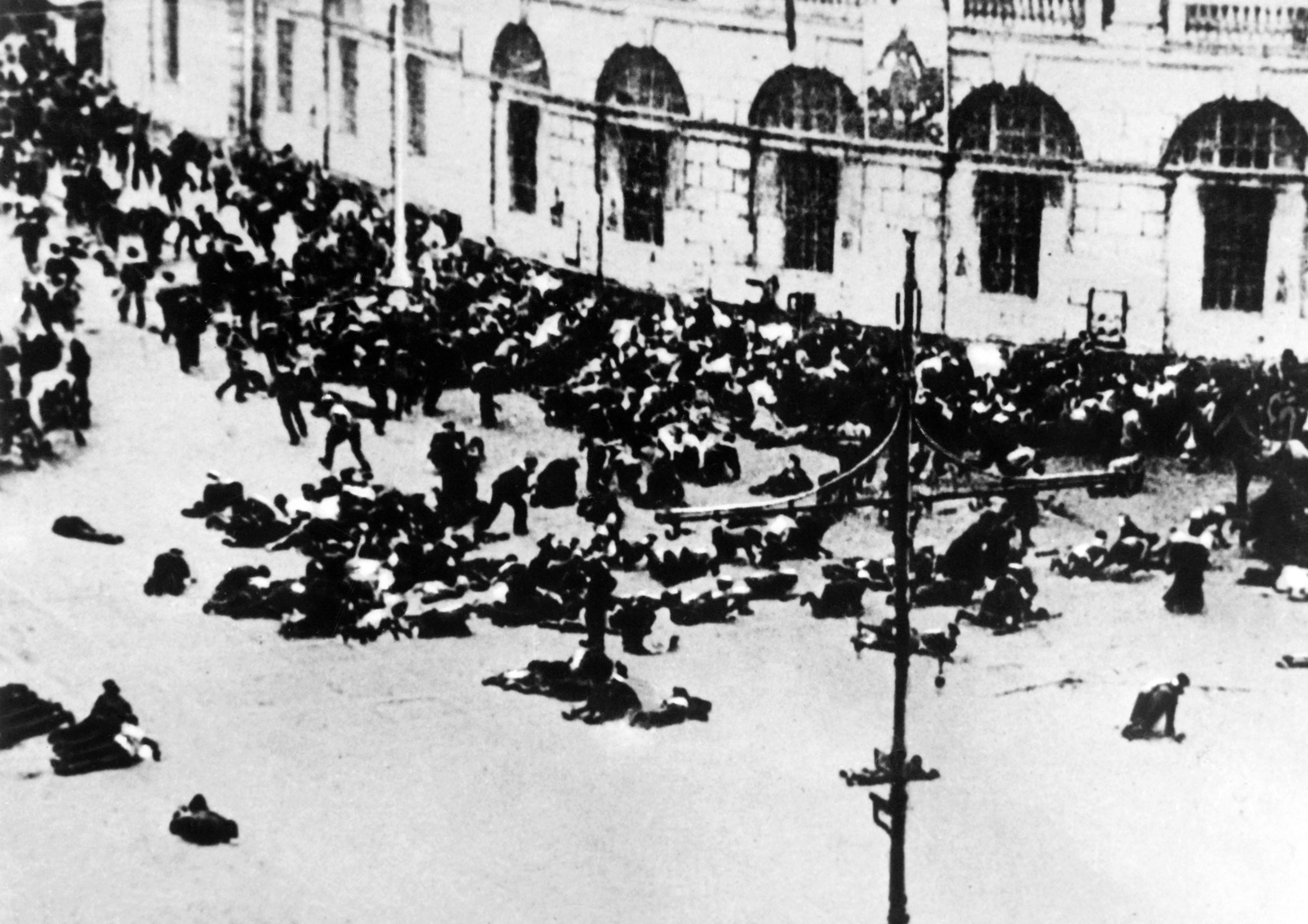
- The October Revolution, I think, is already a logical end of the process. It seems to me that in reality the test of energy took place, probably, in July, when the Bolsheviks went to storm. (This refers to the so -called "July days" in Petrograd, when the Bolsheviks and other left -wing radicals provoked soldier unrest under the slogan of the transfer of power from the Provisional Government to the Soviets - RS) . Then this assault on the Provisional Government with difficulty, but repelled. But as it turned out, it was not able to eliminate the danger itself, which continued to grow. Somewhere in the summer of 1917 everything was determined, then there was a Kornilov performance (or, in another terminology, rebellion). The authorities of revolutionary Russia, not yet the Bolshevik, demonstrated that they, alas, were not a capable government that would bring war to victory, as said in February. This was what the Bolsheviks took advantage of.
-I got the impression that very early during the Russian revolution showed a craving for the search for a dictator-saving. We see how the figure of Alexander Kerensky appears, at one time it is almost praying to him as a person who will lead the revolutionary Russia to victory, then the figure of Kornilov arises, and, finally, the Bolsheviks, headed by Lenin, who establish the dictatorship and establish a completely different flank. In Russian society was this tendency to search for the "Savior", or did it happen due to a combination of circumstances?
- I think it's about society. The monarchical principle, which sat deeply in the head, has not gone anywhere. It is no accident that then Lenin in the mass consciousness was the same king, but red. Public consciousness reflected this. In addition, any political cataclysm gives birth to leaders, the crowd needs a leader. They will always find him. For some time, Kerensky turned out to be such a leader. He was the first to feel that he could talk to the crowd. Kerensky turned out to be a good psychologist, a man who catches the mood of the crowd and plays them. If not for Kerensky, it would have been someone else who would also know how to communicate with the crowd.
Lenin in the mass consciousness was the same king, but red
– Но эта игра на настроениях толпы удавалась ему очень недолго.
– Эмоциональный подъем в обществе всегда надо чем-то подтверждать, либо успехами, либо еще какими-то популярными шагами. Иначе эйфория – а после Февраля она возникла – проходит, и люди начинают думать: а что, собственно, происходит, а кто это такой у нас в лидерах и так далее. Конечно, это происходит не в один момент, но за месяцы – вполне, особенно когда ситуация меняется так быстро, как в России в 1917 году.
– Вернемся в сегодняшний день. Есть множество недавних событий, которые показывают, что революция и гражданская война всё еще вызывают резонанс в обществе, что белые и красные – это достаточно значимые символы для многих. Допустим, открывается в Питере мемориальная доска Маннергейму, против нее возникает довольно острое недовольство . С другой стороны, шла бурная дискуссия по поводу того, что нужно наконец переименовать станцию метро "Войковская" в Москве, названную в честь цареубийцы Войкова . Насколько образы, существующие в сегодняшнем массовом сознании в связи с революцией, соответствуют тому, что было в истории? Или речь идет скорее о решении с помощью исторических мифов и метафор сегодняшних политических проблем, или по крайней мере манифестации каких-то взглядов?
– Пока я как-то не вижу попыток удачного розыгрыша исторической карты, связанной с революцией. Такого, который дал бы кому-то из разыгрывающих ощутимые политические дивиденды. Можно, например, вспомнить циркулировавшие одно время слухи о предстоящем выносе тела Ленина из мавзолея. Тут власти могли бы разыграть, наверное, серьезный политический спектакль, но все-таки не решились на этот шаг. То есть серьезные вопросы стараются не бужировать, а более мелкие, частные регулярно возникают, вроде той же доски Маннергейма. Как работает механизм современной исторической памяти? Сто лет – это слишком много, это поколения три-четыре. К тому же нынешняя жизнь, в отличие от средневековой, быстрая. Происходят разрывы, следующее поколение уже не живет полностью представлениями предыдущего, оно довольно легко от них отрывается, и враги твоих дедов-прадедов уже не являются твоими врагами. Так устроена сегодняшняя историческая память.
Но у нас была в советские времена колоссальная идеологическая машина, которая работала на формирование исторического сознания в определенном ключе, который власть считала желательным. Отсюда извечные враги – буржуи, какие-то злобные зарубежные силы, которые все время мешали жить Советскому Союзу. Сейчас подобные представления распространяются официальной пропагандой в постсоветской России. Это создает мифы, которые становятся частью общественного сознания. Это, мне кажется, в большей степени и предопределяет реакцию на давние события. Если завтра, условно говоря, выключить федеральные телеканалы, то через какое-то время всё успокоится, реакция на прошлое станет нормальной – они будут восприниматься не как фактор сегодняшнего дня, а как события, которые были когда-то давно. Да, там могли пострадать предки, родственники, но это не является причиной того, что давние счеты надо немедленно свести.
– Так вот идеологическая стратегия нынешних властей по отношению к революции и гражданской войне вроде бы к тому и сводится, что они создают своего рода синтез. Вот красные, вот белые, все воевали за Россию, все по-своему любили Россию, так давайте устроим национальное примирение. В общем, в гражданской войне победил Путин . С одной стороны, при нынешнем президенте перезахоронили в Москве генерала Деникина, а с другой – при нем же произошло во многом возрождение популярности Сталина. Да и Советский Союз особо не ругают в последние годы. Это перспективная линия, такая амальгама , или это что-то, что на самом деле невозможно слепить воедино?
В нынешнем политическом контексте примирение – составная часть конфронтации
– Мне кажется, это составляющая более широкой линии. Вместе с декларациями о примирении настойчиво проводится мысль, что Россия окружена врагами. Роль извечных врагов чаще всего уделяется Англии и США. В массовой псевдоисторической литературе они чуть ли не оказались виновниками русской революции. Хотя они были союзниками России в той войне, разлагать изнутри союзника, когда война еще не закончилась, это, мягко говоря, неумная политическая линия. Но массовому сознанию иногда можно скормить и такие "блюда". В этом контексте примирение – составная часть конфронтации. Для того, чтобы противостоять внешнему злу, нужно быть внутренне едиными, монолитными, именно такой урок из прошлого следует извлечь. Не имея всесторонней информации, можно воспринимать действительность, исходя из оценок, которые тебе предлагают, иногда навязывают. Так оно сейчас и происходит. Это все не очень хорошо, это все когда-нибудь взорвется, но это может существовать, как показывает практика, довольно длительное время. Единство превыше всего, единство перед внешним врагом. В ходе нынешних официальных юбилейных мероприятий, наверное, мы найдем отражение такого подхода.