
Translated material
Social acid
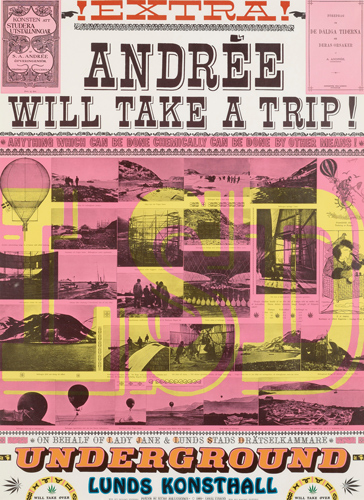
For the first time in Russian - the translation of the text of the historian and curator Lars Bang Larsen “Social Acid”, dedicated to psychedelic (artistic) activism. The article was first published in 2006 in the Finnish magazine Taide ("Art").
Psychedelic art and subculture of the 1960s are usually (and generally fair) are associated with the joys and sorrows of mental research. In this regard, the archetypal psychedelic image is multi -colored bubbles of paints that pulsate in the hot light a lamp of the projector hanging above the head, throwing reflexes on the walls of a disco or concert hall: a kind of kinetic abstract painting, which imitates the effect of intoxication from the effects of psychoactive drugs that circulate in the bloodstream. Of course, the introversion of psychedelia was indicated by all the laws of the genre: “liberation of the mind”, the study of “expanded consciousness” and enjoyment of magnificent types of “internal hebrides”.
However, the history of psychedelia, combining pleasure and protest, costs something more. In terms of space, the idea of psychedelic challenged the human and social scale of reality, trying to break the barriers that share internal and external reality: what was happening during Trip at the cellular level became akin to cosmic events. It was not only about sensations at the bodily level, but also about what happened outside the body and consciousness.
It is noteworthy that the development of psychedelic counter -culture took place in parallel with the struggle for civil rights, anti -war performances in the United States and youth protest: all these phenomena introduced the ideas of emancipation into the patriarchal society. Thus, the idea of a “breakthrough on the other side” also implied the introduction of otherness into the social space: the ethics of the subculture was not only psychedelic (that is, “being consciousness”), its action was largely related to activism. In this regard, we could add an etymological component of the subculture and call it sociodelic, that is, “being social”. This would emphasize the fact that psychedelic counterulture embodied various attempts to give a new definition to political.
 The work of Stura Johanson
At the first festival , Human Be-in ("party"), which took place in San Francisco in 1967, the line between introvert and extrovert activism became obvious. The article in the underground newspaper International Times talks about a conflict between those who have brought their political disappointment on the streets, and those who have fallen from society and have gone into their senses.
The dichotomy between the political action and the loss is perhaps the main problem, which was posed by the first Human Be-in . The editors of the San Francisco Oracle , the main organizer of the event, criticized this view of the problem: yes, of course, the war in Vietnam needs to put an end, but “first you need to put your own head in order. The existence of a serenely happy society is possible only if everyone reaches his own nirvana. ” What political activists from Berkeley (and the author of this article with them) are answered: what will happen before this moment will happen? They will further torture, shoot and burn people alive? How long will it take [American president] Johnson to decide to put his head in order?
From this we can conclude that underground engagement was represented by two scenes - activist, aimed at confrontation, and the one that was busy with spiritual searches. Obviously, these two ways will never converge and will not allow the dilemma, what approach should be considered a priority in determining reality and how to behave in relation to it. The issue of authenticity of behavior remained open. And, of course, the indicated rupture indicates a state of affairs, which in the 1970s will only aggravate and accept a more radical nature, when one direction becomes openly belligerent, and the other will go to New Age.
The anti-war performance of 1967, during which thousands of demonstrators gathered around the Pentagon and sang OM to expel the evil spirits of the military-industrial complex.
But, as the end of the 1960s showed, the third path arose that incorporated the attitudes of both poles: not the one that should certainly have to patch up the gap between society and the sweet inner nirvana, but the one that showed how the social space, along with the nervous system, can become a platform for action.
In the era of reassessment of the established political discourses, the political in itself becomes a limitation, and the concept of resistance is considered by activists of the most diverse. In part, such a reassessment was a reaction to the authoritarian, bureaucratic “implementation” of socialism by the Soviet bloc: in contrast, it needed to create such political forms and content that would not be heard from the stands and were not registered in the party program.
The statement of Antonen Arto, directed against authoritarianism - “all literature is dog shit”, International Times said that “all politics is dog shit”: an unambiguous indication that the subject of criticism is an ideological sequence and conventional mobilization methods. Thus, the struggle for a new definition of political turned to the very essence of human behavior.
In the counter -culture, which goes beyond the political convention, “be oneself” becomes a political statement: act, dress, consume and speak in a certain way, take a certain position, live in a team or inhale a youth culture with psychoactive smoke - this has become forms of a political statement.
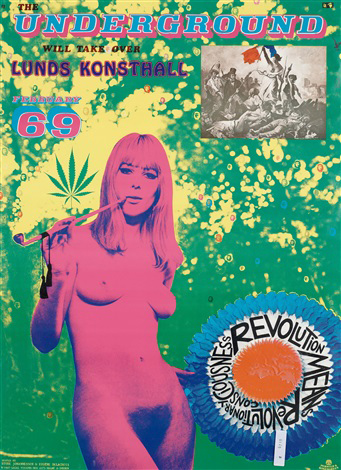 The work of Stura Johanson
The social body could also be “warmed up” and sent on a “journey”, holding stocks that turned the street to the theater. In the United States, the counter-culture has found a characteristic form of expression in a freely organized movement, which called itself the International Youth Party (The Youth International Party) -Yippy, non-Party without formal leadership.
One of their most famous actions is the anti-war speech of 1967, during which thousands of demonstrators gathered around the Pentagon and sang OM to expel the evil spirits of the military-industrial complex and force the headquarters of the American army to inflate over the ground and disappear.
A year later, on the occasion of the Democratic Party held at the Chicago Congress, Yippy nominated their own presidential candidate-a pig named Pigasus , ridicuating the status quo in American society. These actions, imprisoned under the television prime time and a photo in the press, are examples of how the political goal itself is deconstructed in a social event: the purpose of such shares can be the overthrow of the government, but with the same success it can be a demonstration of freedom to “do its job”. Resistance was not formulated, it was played out in creative madness and with deliberate frivolity.
- Hippies see politics in us, and politicians see hippies in us. Only the right see who we really are.
Incomprehensibility was a sign of radicalism in the 60s. Jerry Rubin, one of the main ideologists of Yippy, ironically lamented: “The left immediately attacked us as apolitical, irrational, pumped with acid of freaks (SIC) , which canalize the“ political uprising of youth ”in drugs, rock music and a party. Hippies see the Marxists in us in psychedelic appearance using drugs, rock music and a party for political radicalization of youth and acting under police pressure. Hippies see politicians in us, and politicians see hippies in us. Only the right see who we really are. ”
As I already mentioned, creative insanity often took the form of media events (which was called Media-Freaking , “media friction”). The Japanese artist Yayoi Kusama, who worked on the New York stage in the 1960s, zealously made sure that there were always enough naked dancers and dancers to attract the attention of the media in her street happy. As a result, her glory outside the artistic circle was comparable with the glory of Andy Warhol and other luminaries, and the media dubbed it with the affectionate name “Dotti” (from the English dot - “point, pea”) for her corporate “cosmic” peas, which she usually covered people and objects.
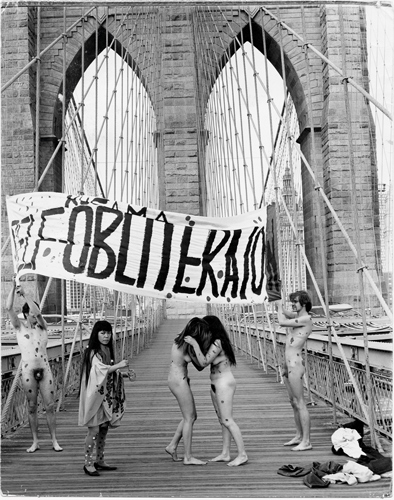 Anti -war action of Yayu Kusami with co -authors in 1968
And for the Swedish artist Stura Johanson, it was not enough to pour acid and breathe psychoactive smoke ( “in the end we Became too StoneD,” he joked (playing the ambiguity of the verb stone , which, in the form of a suffering collateral, can be translated as “being in a state of narcotic intoxication”, “to be broken by stones,“ to be ”to be Turned to the stone ”). Instead, he believed, it is necessary to turn to society and make his own social being whole and bright.
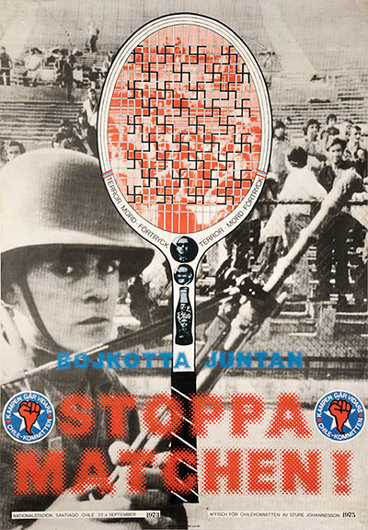
Johanson was an atypical representative of psychedelic counterculture in the sense that his psychedelic art grew from his joint activity with the Swedish wing of the situationist international. His posters were rather connected with the art scene, and not with the musical, as it usually happened. Not limited to graphic works, he, together with his wife Anna-Sharlota, created the Galleri Cannabis gallery (“Marijuana Gallery” ”), where representatives of the underground of the city of Malmö could meet, take drugs and arrange exhibitions.
The development of psychedelic counter -cultures in the United States and in Europe struck from the connection of the underground with cybernetics.
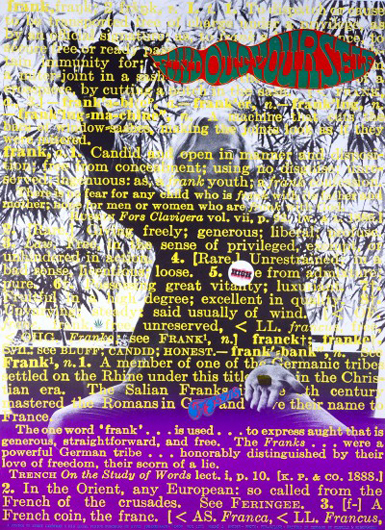
In the poster of 1967, “Zhvet the Institution: the Kingdom of You” (Turn On the Institions: The Kingdom is with You), Johanson urged his internal kingdom along with institutions. A black and white image of the royal castle in Stockholm was placed in an oval blue frame with yellow letters in the ar-nuvo style, on which a neon sign with a strengthening faith is being addressed to the Swedish people: "The kingdom is inside you." The poster was completed for an artistic competition on public topics, but, of course, the Johanson project was never implemented on a democratic revision of the Swedish monarchy. However, in the poster, political and mental events merge together and occur simultaneously. It seems that the plan of this work is to point out the need to make the mental, as well as the public, space to shine and shimmer with new ideas (which are embodied by a pink neon sign).
Having caught up, you can drop the king from the throne, become a monarch of your own internal kingdom, and also force public institutions to fulfill new functions that expand consciousness! In the ecstatic society proposed here, the mental and public kingdoms are parts of the same spatio-temporal continuum-or, using a metaphor from the world of sculpture, are created from one material that was processed under the influence of drugs and visionary ideas, and united into the composition, creating soft and plastic reality.
 The work of Stura Johanson
This was not written much, however, the typical development of psychedelic counter -cultures in the United States and in Europe struck from the connection between the underground with cybernetics, “the science of control and communication in complex machines, such as computers and human nervous system,” according to the formulation of its founder Norbert Winer. In the late 1960s, Stura Johanson left the production of underground posters to joint work with IBM in Stockholm to create digital graphics, and on the western coast of North America the minds of San Francisco met with Silicon Valley, creating the world's first microchips, with the help of which lighting shows were to be controlled during acidic acids during acidic acidic Rock concerts.
The hobby of the psychedelic scene with new technologies is partly due to the fact that it was a new trip for her: now, it seemed, it was possible to use the computer for the same purpose as LSD and other drugs, namely for spontaneous communication with another and inside the social body. The Finnish scientist and musician Erkka Kurenniyi brilliantly described the connection between man and a machine in terms of feedback at the biofidback. Such a connection implied the connection of the human body and reason to the computer so that the machine could filter and accelerate the information passing through the human nervous system, connect it to others and ultimately improve and immortalize the human body, creating something like a cyborg. Thus, flesh and mind could go beyond the limits of the mental space and for all known social horizons.
Is there a way to restart the forms of resistance invented by psychedelia in the context of the globalization of capitalism, which commercialized the representations of psychedelic art?
In a truly avant -garde manner, the demolition of borders made it possible to see the path lying in front, which consisted of a radical rethinking of the world, which deconstructed the fundamental concepts of political activism. For example, if there is no more individual subject (and only a certain number of nerve systems interconnected), then how can a mass be created and, therefore, mass movement? It would seem what power those who wrote computer programs were endowed!
That social horizon is what we have now, although not at all in a utopian form. In his famous essay “Postings to the Society of Control” (1990), Gilles Deleuz discusses how social control today turns out to be modulation, “a kind of self -deforming form that changes at every moment in time”. Thus, control no longer fulfills the discipline function, but becomes a kind of message in which the information itself is rubbed to our subjectivity or subjectivity is rubbed into social instrumentality.
 The work of Stura Johanson
In the control society no longer there is an opposition to mass and individual: the individual becomes a dividend (from English divide - “divide”), an object that is separated from the rest and goes in separate packaging. With the help of such modulations and objectivity messages, capitalism expects to sell their services and buy human support. Using the term of Kurenniyi, this is the biofidback in the capitalist way, since the idea of self -deforming forms is quite psychedelic: it is the idea of constant change and transformation of the form of control, which weaves the nervous system into social space.
If you do not limit yourself to the opportunity to use psychedelic art and culture for understanding the development of late capitalism, there is a question of whether there is a way to restore infectious anarchist forms of resistance invented by psychedelia in the conditions of the globalization of capitalism, which commercialized the representatives of psychedelic art and turned many of its key terms into ideological paths. However, the questions that psychedelic (or sociodelic) art did not lose their relevance today, when contemporary art sets us the task to re -create relevant forms of activism and criticality: what political forms and languages are relevant today? What is the limit of communication? How is the subject connected with society? How to understand the media and constructively use them?
Translated from English Elena Napresenko
Download the entire issue of the magazine "Disagreements" (No. 12) "What a party?": PDF , mobi , epube