
Translated material
Negotiation disorder
Why is Nursultan Nazarbayev the main beneficiary of the Syrian settlement in Astana
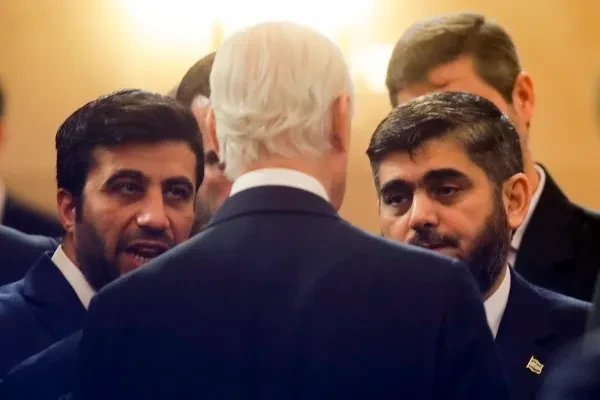
On Monday, in the capital of Kazakhstan, negotiations began between representatives of the parties fighting in Syria, as well as countries, one way or another participating in a military conflict. It is understood that at this meeting some solutions to stop the fire in Syria can be developed, which on February 8 can be fixed in continuing negotiations in Geneva, and then put into practice.
Astana herself participates in negotiations only as an observer and “landlord” of the site for dialogue. Russia, Türkiye and Iran, represented by the President’s special representative on the Syrian settlement of Alexander Lavrentiev and two deputy foreign ministers, respectively, rule. Syria from the side of Bashar al-Assad is represented by a permanent representative at the UN Bashar al-Jafari, from the opposition-15 delegations, including those who refer directly to armed structures (which, however, is still a smaller part of the opposition). The United States did not send a full -fledged delegation, limited to the ambassador to Kazakhstan.
Officials of Kazakhstan, speaking of a meeting in different interviews, in every possible way emphasized its significance for both Syria itself and Kazakhstan itself. “The efforts of Astana are emphasized to facilitate the humanitarian situation in Syria and provide appropriate assistance to the Syrian people. Kazakhstan and his President Nursultan Nazarbayev intend to further contribute to international efforts to strengthen the ceasefire and the search for a political decision for the intra -Syrian conflict, ”the local media outlets of the Kazakh Ministry of Foreign Affairs are distributed. Representatives of other countries did not skimp on compliments: though, basically, they all sounded before the meeting.
However, by the end of the first day of negotiations on a few news from the RIXOS hotel and on the mean comments of the negotiation participants, it becomes completely clear that the meeting is somewhat declarative in nature.
The statements of the parties do not differ in novelty. Dmitry Peskov in an interview with BBC before the meeting in Astana said that there is a problem: Iranians do not want to see the US negotiators, so "the situation is complicated." At the event itself, the representative of Bashar Assad de facto accused the Syrian opposition that they want to disrupt the peace process. Earlier, the representative of the Syrian opposition, Muhammad Allush, said that the Syrian government and Iran want to pull Russia to their side, which, according to Allyusha, “retains neutrality” in relation to the Assad government. And there was also a statement that Türkiye supports terrorists - from the same representative of Assad.
In such conditions, it is difficult to count on a specific result, and all the intrigue ultimately boils down to whether the warring parties can say something in common about the need to cease in Syria.
In the meantime, the media are forced to have fun with news that the organizers of the meeting had difficulties with the seeding of guests, many of whom did not want to sit nearby or opposite each other, as well as that Arab journalists arranged a brawl due to interference in the shooting. Moreover, the Syrian negotiations were uninteresting in Kazakhstani society: on popular information sites in the top views there are news about the Kazakhstan singer successfully speaking at the China.
Meanwhile, the only one who may win from the entire event is Kazakhstan himself, whose positions in the international arena as a peacekeeper can be strengthened - especially taking into account the fact that Kazakhstan wants it. But even more this wants Nursultan Nazarbayev, who is constantly trying to act as a mediator in various global conflicts. He does this with varying success: during the acute phase of the conflict between Russia and Ukraine, the Kazakh president talked a lot about the need for peaceful dialogue, but there his role was not even secondary (which, however, not his fault at all). During the Russian-Turkish conflict, it was Nazarbayev who was called a key figure that managed to establish a dialogue between Putin and Erdogan. Nazarbayev took a direct part in the negotiations on the Iranian nuclear problem, and the Syrian negotiation attempt was in Kazakhstan a couple of years ago - but then it did not end in nothing.
If at a meeting in Astana on January 23-24 there will be at least a drop of hope for a ceasefire, Kazakhstan and Nazarbayev will undoubtedly write it for a plus.
In Kazakhstan, they joke that this will be another reason to put forward the president of the country to the Nobel Prize of the World (his supporters only officially tried to get this award for the president about ten times).
But even in the case of the complete failure of the negotiations, Kazakhstan will also not be left. “Our contribution is very important. In the future textbooks of the history of international relations, even in the event of an unsuccessful outcome of negotiations, a line about the participation of Astana will appear in the process of peaceful settlement, ”the former diplomat Kazbek Baisubaev told the correspondent of Novaya Kazakhstan radio Azattyk.
In the end, these negotiations are an attempt to distract Kazakhstanis from internal problems. The country continues to dissatisfaction with the introduction of temporary registration for citizens of the country leaving the house for 10 days, and in the west of the country, 700 oil workers were publicly starving for two weeks, dissatisfied with the closure of a large trade union organization. The oilmen were eventually dispersed, and its leaders were arrested for two months on suspicion of criminal crimes. In this regard, many independent commentators have an excess reason to recall that Nazarbayev was trying to reconcile power and opposition in a foreign country, completely destroying an alternative point of view in his republic.
Astana