
Translated material
Mr. Contractor
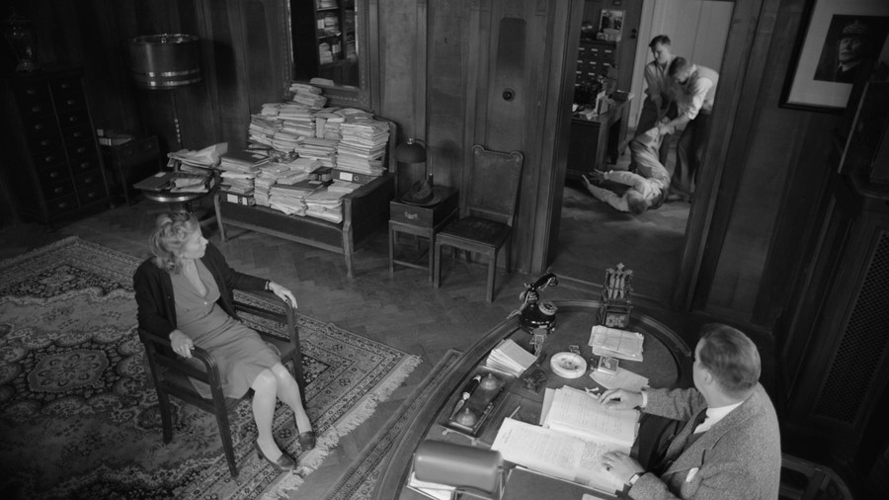
Almost half of Konchalovsky’s new film consists of monologues of heroes at the Gates paradise. The invisible interlocutor listens to the main characters: the Russian princess (Julia Vysotskaya), who saves Jewish children in occupied France; French collaborator-police (Philip Duke), who conducts its case; The German officer who wanted to save the princess herself, but as a result, did not even save himself (Christian Class). This technique is not new, but here - this was noted by many - very successful. All people appear before the Supreme Court naked - in the literal and figurative sense, they have nothing more to hide even from themselves. This is an ideal distance - for the artist; The most distant and objective, it equalizes the chances of even irreconcilable enemies, people and nonhumans, creating that delicious convention, which allows the viewer to distinguish good from evil. But Konchalovsky himself decisively destroys the entire effect of this technique.
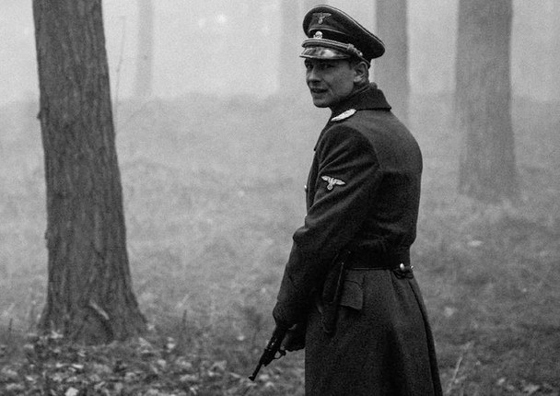
Konchalovsky wrote the script, as we can judge from the credits, himself; And in general, it is easy to reconstruct where what is taken here. The image of the Nazi, apparently, is inspired by the book of “Field” Jonathan Littlela (it is known that, unlike tenant, the director was read for sure): in one of the episodes there is an officer-legal officer who is engaged in the identification of corruption among the leadership of concentration camps, and in the midst of hell. The author looks at this initiative with fresh bewilderment; Meanwhile, an attempt to observe formal legality in the space that is generally outside the human law is a well -known incident of totalitarianism, described, even with Neomann in the “hippo” and even more so among Hannah Arendt in the “origins of totalitarianism”.
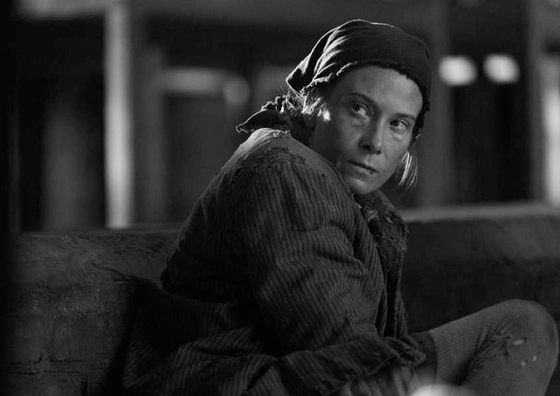
The princess also has a prototype - however, the famous Vicki Obolenskaya was just a member of the French Resistance, she was part of the underground Organisation Civile et militaire , was engaged in reconnaissance activities, as well as the organization of shoots and the export of British prisoners of war abroad.
But the third hero - the Frenchman - is taken, so to speak, from the head; Imported. And therefore, it is most interesting to all - because the most non -angid and Freudian way gives us a direct path to an unconscious author.
 © Svetlana Malikova / Andrei Konchalovsky film company
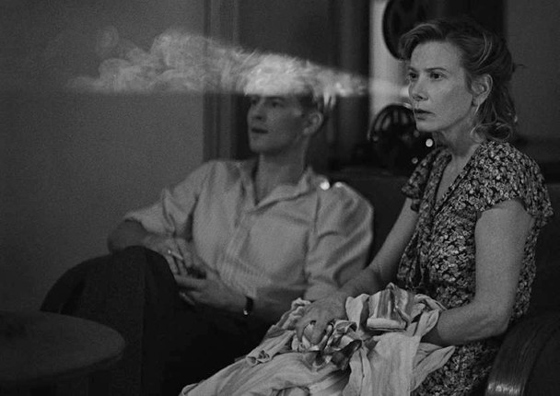
The collaborator Jules is a collective image; The Western layman as such is a symbol of betrayal and ethical illegibility, agreement and moral uncleanness. The author is necessary to pronounce the “verdict of Europe” - which “lay down under Hitler”, and then the hero becomes not needed - so he suddenly, in the middle of the film, disappears.
The general idea of the enlightened Russian conservatives (which, of course, Konchalovsky belongs to) - that the Western layman, the basis of the consumer society, which still does not want to end in collapse, is the reason for all the troubles of mankind. But to blame the layman of that he is a layman is not the most successful move, especially since in the 1990s such an attempt to become inhabitants in a “good sense” was made by us, but failed. As a compensation for this failure at the site of the hypothetical layman, the figure of the prophet, the Eshatologist, the very one who today predicts “collapse of everything”: both European values and capitalism in particular. This is called “compensation for the injury”, but this injury is now not so stupid as to go into a frontal attack and criticize the layman from the standpoint of some abstract, ideological ones. She criticizes the European layman with one single, but reliable side of Godwin’s law-each time recalling him cooperation with the Nazis during the war. This invulnerable technique was used by Soviet propaganda starting with Ehrenburg. The recent film by Alexander Sokurov “Francophony”, disguised in question, also about this: “While we fought, you drank wine, engaged in art and agreed / did not interfere / or even helped the enemy.”
The behavior of people during the war is an occasion for reflection in France itself and not only (recall the “Black Book” of Verkhoven). But, of course, no one from the other side will dare to object to Konchalovsky; Needless to say, this is a strong and noble position of the artist and public figure - and completely safe: to scold someone else's non -resistance to evil . Although our collaborators could also be remembered, and a single film has not yet been shot about our layman of the war - with the exception of, perhaps, luster. Instead, Russian directors launched a wide ethical “care for something else”: about the Frenchman, about the European. Since propaganda also enjoys the same technique, it looks today not as a search for truth, but as a search for a place where it would be more painful.
 © Svetlana Malikova / Andrei Konchalovsky film company
Konchalovsky immediately applies an elegant injection of an umbrella in the tolerance itself, which is also a symbol of evil in the representation of conservatism. Almost before the Frenchman is executed by members of the French resistance (they appear here only for a moment, like God from the car), he has a conversation with his son: his son admits that “does not love the Germans”, to which his father answers passionately to him, that, they say, this cannot be said aloud - because it is stupid, indecent and dangerous. Then the shot sounds.
Actually, the fact that some images of Konchalovsky are borrowed, and some hollywoods are before transparent, there is no particular problem; It is important that all of them belong to completely different discourse. The German (conditionally) was taken from the “new objectivity” - although Littlela’s book was out of 10 years ago and this look is also not news. The news, perhaps, is the position of the Hungarian director Laszlo Nemesh (“son of Saul”), where the concentration camp appears as a space from which the air is generally pumped out and where only the simplest physiological instincts are possible. This space is fundamentally extra -human, and therefore it is impossible to measure it with the standards of humanity. Note that Nemesh’s film was shot from the perspective of the same “layman” who became a victim; And this is real, and not mocking, like Konchalovsky, an attempt to "understand everyone." With this position, one could continue to go further, giving the word to the hero “Shoa” Lancmann - to the very one who simply drove the trains to Auschwitz and who assures after that there was nothing to do that the work had to “feed the family”. This position of maximum dissolution in the victim/inhabitant just puts us in a situation of the impossible ethical lesson and gives us the opportunity to awaken even in the 21st century the conscience itself, shake it as strong as possible.
But the rest of the heroes of Konchalovsky are taken, as it were, from the previous art era, which is already an archaic; This, in fact, is the “position of party literature”, where good and evil are devoid of freedom of choice. This creates an amazing general effect of the film - the discourses of good and evil sound here, as if not intersecting with each other; The dialogues of the paradise should be in absentia, afterlife polemic - but speakers simply do not hear each other.
 © Svetlana Malikova / Andrei Konchalovsky film company
At the same time, Konchalovsky cannot be reproached for the fact that he "does not see difficulty." He sets out the internal motives that brought the German nobleman to serve the Nazis; Moreover, this officer is able to commit human actions in the middle of general inhumanity; The director is not even afraid to insert a well -known Grossman message about the similarity of two modes (“If I lived with you, I would become a communist”). But all the same, both the situation and heroes are needed by the author only in order to confirm his own, pre -known conclusions - and they are already known from his many interviews. The problem is not that someone needs to convince someone of the obvious things; It’s just that the Russian director is most often simply incapable of talking on himself personally - but only on behalf of, as they say, large concepts: state, goodness or truth. This is one hundred percent totalitarian discourse in which the artist is a relay speaking on behalf of a large other, higher all -seeing instance. This position reliably protects Konchalovsky from personal responsibility (he is “just a performer” - a sentence of history, for example) and deprives the slightest freedom of choice of his viewer. This is the main paradox of this film: with the very nature of totalitarianism, the author fights totalitarian methods. Such art is a scorched field, in the middle of which a single tree grows, and it grows because it is ours; Or is it a dark forest through which only one path is laid - and it is true.
All this is an unacceptable position for contemporary art: in a more or less experienced viewer, this causes the worst of possible reactions-boredom-from this dictatorial tone. It's not even a matter of agreeing or not agreeing with the author; It’s just that these notations fly past the ears today - and this is the worst that can happen to the film on a topic where involvement, indifference and sympathy are just required.
“Paradise” is a kind of symbol of the entire commercial cinema of the Putin era, the only peculiarity of which is the absolute artificiality of the structure and pre-and pre-and the distance of heroes, plots and conclusions. The soldiers and sergeants of this urgent service, daily sin, entitled “The Television series about the Soviet era,” or some major and lieutenant colonels who make a feature film on the great victories on land and at sea, are still not free and not so artistically gifted. Konchalovsky - a general, even a marshal, of these troops - creates in its kind the highest, perfect designer, where the seams are invisible at all, but its essence is the same: this is a pre -set and designed paradise “for their own”.