
Translated material
Trojan code
Hackers and Chekists are suspected of treason and transferring secret data to Americans

The arrest of the head of the 2nd operational department of the Information Security Center (QIB) of the FSB Sergey Mikhailov is overgrown with details. Our sources confirmed that Mikhailov really detained during a meeting of the College of the FSB. At the same time, the detention was theatrical and indeed: the FSB officer, suspected of treason, put on a luminous bag on the head of an officer of the FSB.

This information was the first to distribute to the Tsargrad website, created by the Orthodox oligarch Konstantin Malofeev. Malofeev is attributed to friendship with Andrei Ivashko, the head of the Center for Information Protection and Special Communications of the FSB (Ji). QIB and Ji are to some extent duplicate each other and therefore competing structures in the FSB system. Therefore, the appearance on the site controlled by Malofeev does not surprise the details of the arrest of Mikhailov. Although the version put forward by the publication that the arrested FSB officer was associated with the hacker group “Shaltai-Boltai” looks somewhat unexpected.
Mikhailov allegedly patronized and supervised the hackers who became famous for hacks of personal correspondence of Dmitry Medvedev, Deputy Prime Minister Arkady Dvorkovich, officials of the presidential administration, the Ministry of Defense, and Roskomnadzor.
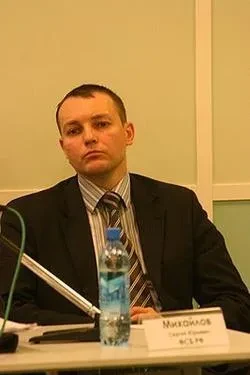
"Tsargrad" writes that the CIA can stand behind Shaltai-Boltai, and therefore Mikhailov could cooperate with the US intelligence. In any case, the officer is incriminated not an official or corruption crime, namely state treason (Article 275 of the Criminal Code of the Russian Federation), which provides for up to 20 years in prison.
For the first time, I heard about Sergey Mikhailov in 2012, when I conducted a journalistic investigation about the criminal case against the founder and general director of the Chronopay processing company Pavel Vrublevsky. The businessman then accused Mikhailov of a criminal case factory.
Later, during the process in the Tushino district court, Sergey Mikhailov, interrogated as a witness, confirmed his long -term acquaintance with Vrublevsky: “Vrubblevsky is a talented person who was interesting to us with his connections ...”.
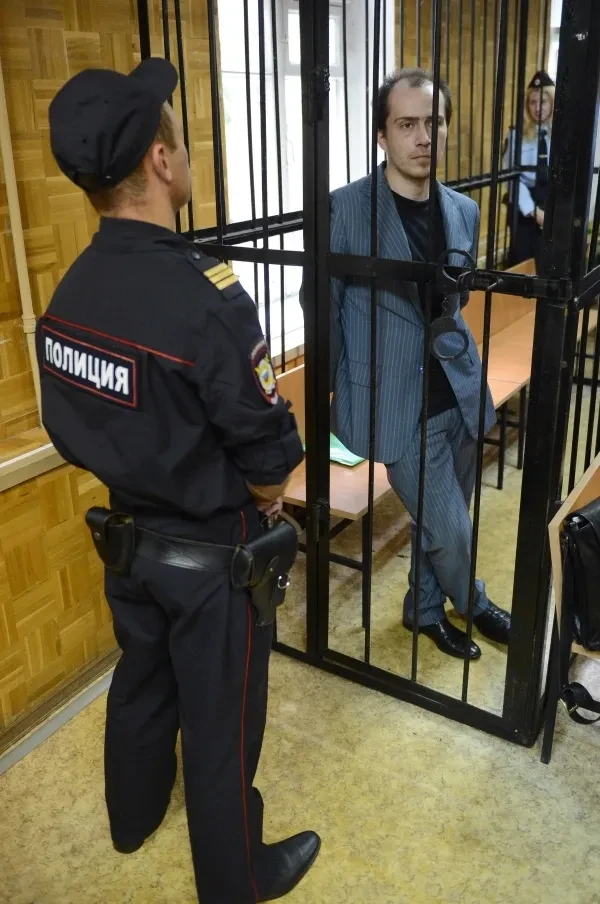
Tushino district court sentenced Vrubblevsky to 2.5 years in prison. He served the term in one of the colonies in the Ryazan region. Returning to Moscow, the businessman again took up the operational management of Chronopay, which once controlled 45% of bank cards in Runet, but greatly lost his position.
In September last year, the surname Pavel Vrublevsky again surfaced in the information space when the United States accused the owner of the King Servers company Russian Vladimir Fomenko of the electoral systems in the American states of Arizona and Illinois, which was allegedly produced from eight servers, six of which belong to King Servers. Fomenko, in turn, rented these servers from the Dutch company, controlled by Vrublevsky.
According to our sources, this story did not go unnoticed by the FSB. In September, the special services management department began an official audit and in December allegedly came to the conclusion that the information about King Servers, Fomenko and Vrublevsky received American intelligence from the head of the 2nd operational department of the information security center (QIB) of the FSB Sergey Mikhailov. Arrests were immediately made ...
Pavel Vrublevsky refused any comments.
To date, according to our information, together with Sergey Mikhailov and an employee of the Kaspersky Laboratory Ruslan, two more people have been arrested. Including a colleague of Mikhailov, an officer of the FSB information security center.