
Translated material
Qatar for sanctions
Rosneft helped with privatization for the sake of "national interest"?
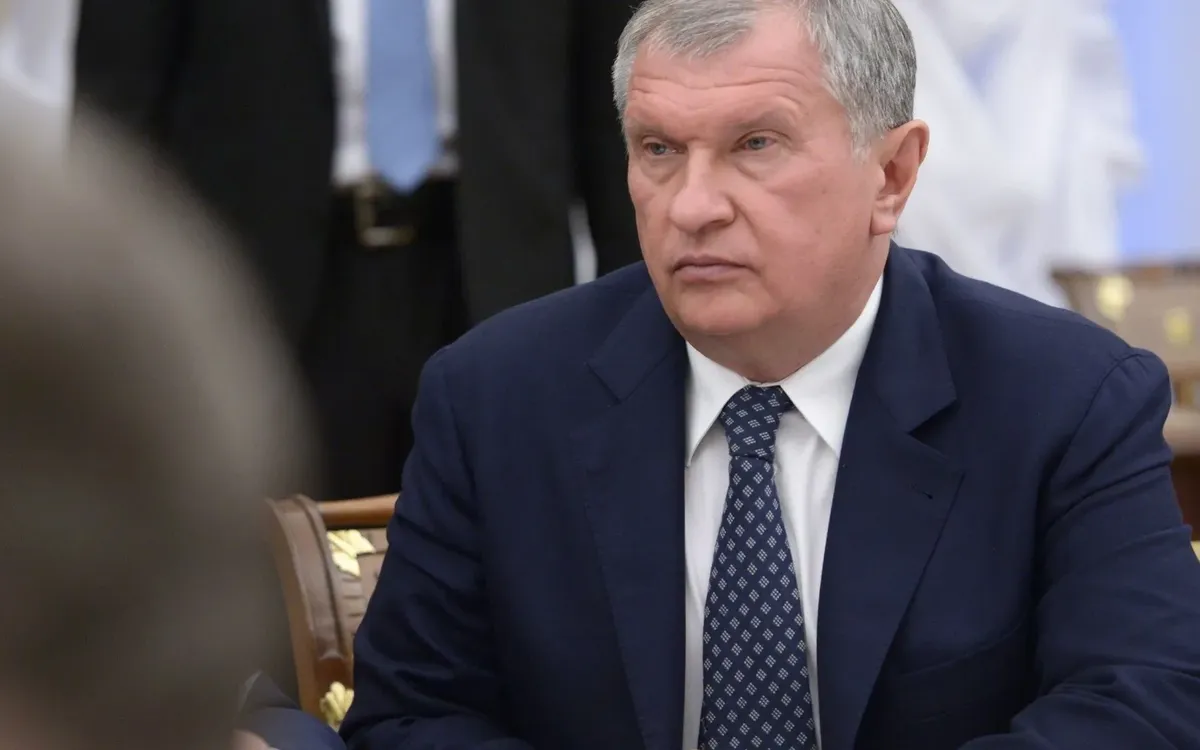
Since the report of Igor Sechin on the completion of the privatization of 19.5% of Rosneft shares by foreign investors (the Swiss trader Glencore and the QIA Catar Suvenue Foundation) has passed more than a month, but the key details of the transactions have not been disclosed. The public is still deprived of access to detailed information about what happened with state-owneds in the form of a package of shares of the largest oil company. Economists and political scientists are forced to build a variety of versions about hidden beneficiaries and shadow schemes.
While the whole world is surprised at the “complex structure” of the transaction, members of the government calmly talk about high external demand for Russian assets. In fact, large Russian business feels the pressure of the sanctions: Sberbank hired a group of American lobbyists to fight for the abolition of restrictive measures, and the privatization of the VTB stake can be postponed due to the lack of interest from foreign markets.
Printed privatization
Even basic things are unknown about the sale of a share in Rosneft - who will receive the right to vote on realized shares, whose money is transferred to the Russian budget and what role the VTB State Bank played in the transactions. It is obvious that such secrecy is not accidental: in December, the government allowed Rosneftegaz (through this structure the state owns the shares of the oil company, as well as Gazprom) not to publish its financial statements. Formally, this is due to the change of legal form (from OJSC to JSC), but subsequent events show that this decision could be made specifically for the upcoming “privatization”.
The privatization of Rosneft is also a PR campaign that was supposed to demonstrate to the Russian public the effectiveness of the government even in international sanctions and help the authorities replenish the budget, political scientist Dmitry Oreshkin believes. “The fact that privatization is planned was announced for a long time. If it had not taken place, it would mean that our ministries work poorly and the rating in the world is not high. In addition, it was necessary to somehow facilitate the next cycle of printing rubles. ”
We are talking about the emission mechanism for financing the sale of a state company, which today is considered the most plausible. On December 5, two days before the transaction closed, information appeared on the urgent placement of Rosneft bonds worth 600 billion rubles. Applications for the purchase of papers, despite the clearly “non -market” volume, were closed in half an hour. It is assumed that they were bought by state -owned banks, who received the refinancing of the Central Bank on the security of these bonds. The printed money was transferred to the Singapore Offshore, created by buyers of the share in Rosneft, and from nowhere fell into the Russian budget.
“We do not know anything reliably, but most of all it is similar to the emission lending to the budget deficit through a pseudo -proceeding transaction,” says Metalinvestbank analyst Sergei Romanchuk.
“This is an intentionally confusing scheme,” said Mikhail Krutikhin, partner of Rusenergy. The day after the message about the completion of the transaction, Glencore hastened to declare that only 0.54% of the shares in indirect property would own, that is, in fact it is a sign, and the Qatari fund does not even disclose how much he paid, the expert says. Who is the real owner of the Russian state -owned company is still unknown, Romanchuk agrees. “From the statements of Intesa ( *the Italian bank, which was supposed to issue a privatization loan - A.Kh *. ) And other participants are clear that they are invested in a deal with very small capital, and their Russian banks are credited.”
History about geopolitics
“The markets are growing, trust in Russian assets increases. We saw successful privatization, including Rosneft, last year, so there is demand for Russian assets, ”said the new Minister of Economic Development Maxim Oreshkin at the forum in Davos. The head of the Ministry of Economy on duty of the service assures that this is an absolutely normal transaction, and Russian loans are needed in order to prevent a strong influence on the ruble exchange rate, experts say. “This, probably, is the essence - to create an image of the fact that you can attract investments in Russia,” says Romanchuk. “Perhaps someone will buy this story, not all investors delve into subtleties.”
Sechin, in his own words, found 30 potential buyers on Rosneft, and everyone refused: "What is the attractiveness of Russian assets?" - Mikhail Krutikhin asks the question.
Most market participants do not perceive the transaction as normal and do not believe that after it the investment climate in Russia has radically changed for the better. To make sure of this, it is enough to read the Western Business Press. The Financial Times, for example, called the deal “too muddy” to increase the confidence of investors. Therefore, a significant share of the PR effect, if it was really implied by the authorities, was aimed precisely at the internal audience.
In modern Russia, there has never been privatization in its purest form - for the state it has always been a political experiment, according to political scientist Gleb Pavlovsky. The expert emphasizes the ambiguity of the role of Sechin in these processes: “In this transaction, he is not an individual, not a statesman and not a successful entrepreneur. This is a certain phantom figure that personifies the complete inseparability of power and property in our system. ”
Whether such a scheme was far from optimal from the point of view of the country's reputation in world markets, it was originally approved by the leadership of the country as an operation to approve the “geopolitical greatness of Russia”, it is impossible to say. Dmitry Oreshkin believes that transactions of this scale cannot be circled in the first person, so Vladimir Putin was originally aware of the details of privatization.
But in the case of Rosneft, everything is so confused that even among officials there can be different versions of what is happening, Pavlovsky notes: “This is a very complex scheme that has many hidden beneficiaries and benefits. I’m not even completely sure that the president knows everything to the end, although he, of course, introduced a rather convincing lining. ”