
Translated material
The middle finger of the election commission
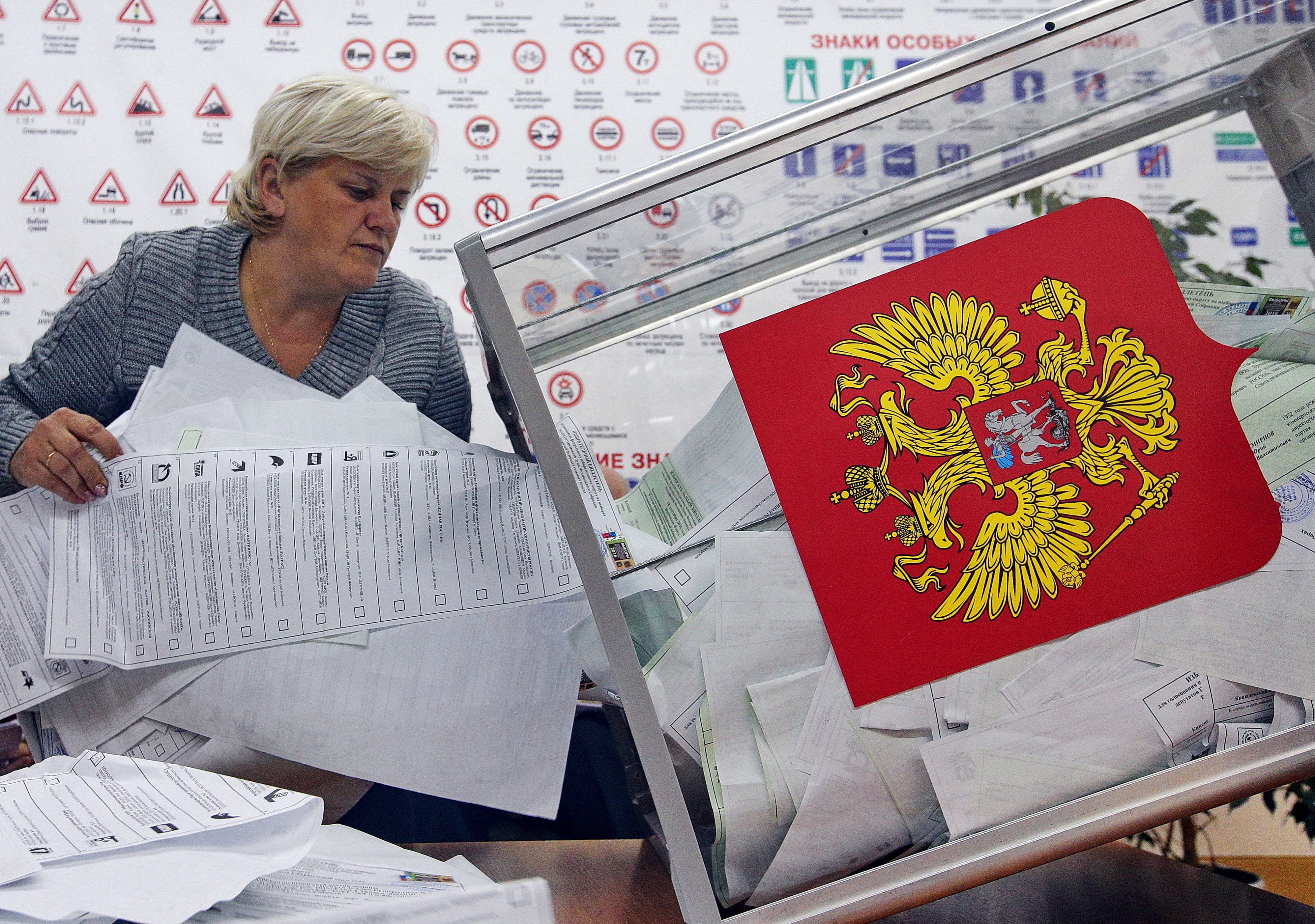
Last year’s elections to the State Duma of Russia have been the most falsified since 2000 - this follows from the article “When the Russians are harming the results of their elections, they may show us a statistical“ middle finger ”, which was published in Washington Post, researchers Kirill Kalinin and Walter Furniture.
The article mentions the results that Radio Liberty already talked about immediately after the election: Sergey Spilkin, an independent electoral analyst, noticed the phenomenon of the “beard of Churov” - an abnormally high number of plots with a turnout, a multiple of 60%, 65% and so on. The schedule of such a turnout resembles a saw and rational explanations, except as the desire of local election commissions to "draw" beautiful results, on the surface, there is no. The so-called “right tail” discovered by Spilkin in favor of the Pillar Polar Distribution in favor of the Plane Distribution schedules in favor of the Party: the analyst came to the conclusion that, firstly, the appearance in the 2016 parliamentary elections was less than 37%, and not official almost 48%, and secondly, United Russia gained about 40%, and not 54 more. The scale of falsifications in her favor was, according to Shpilkin, about 12 million votes.
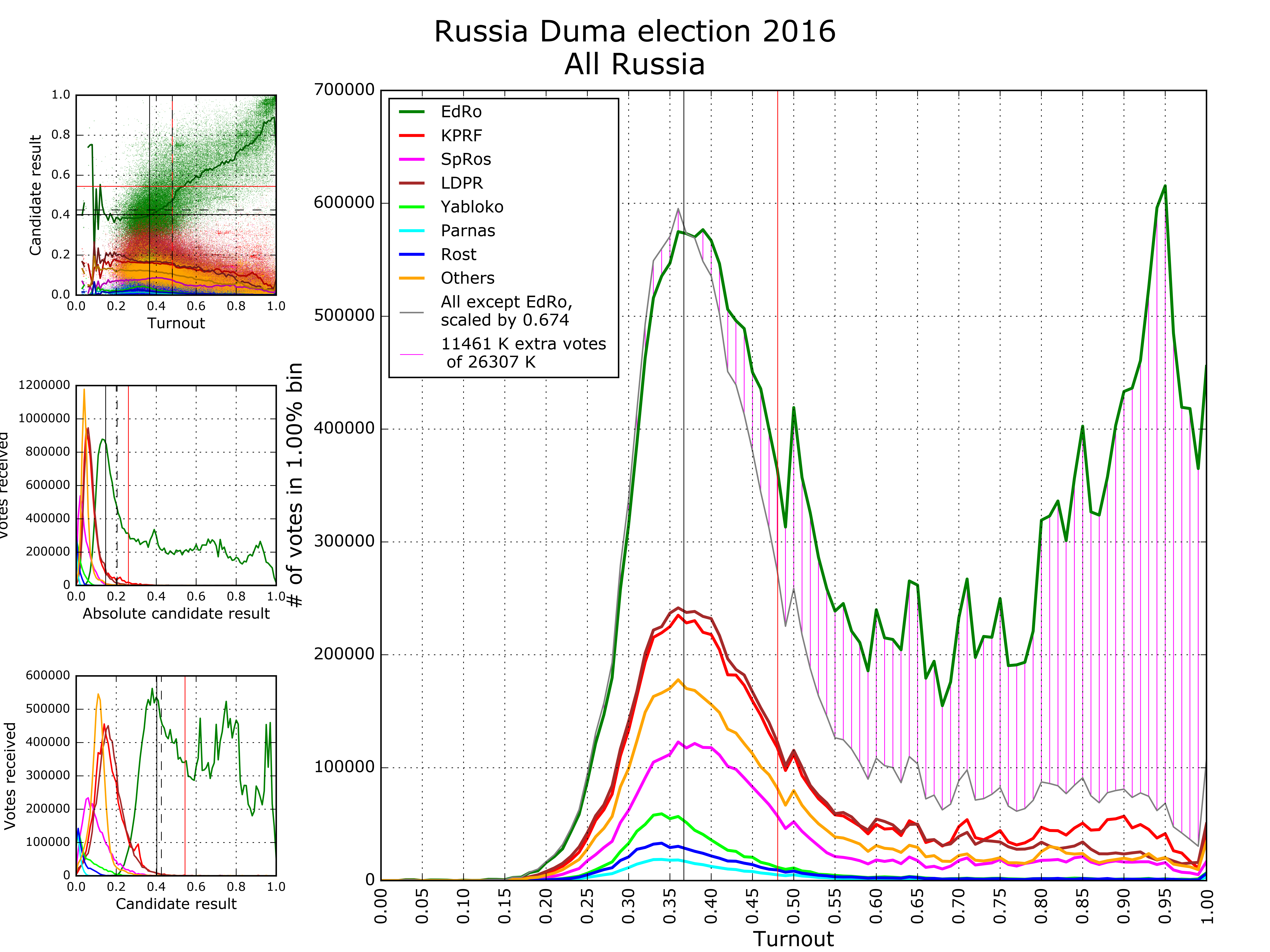
The article by Kalinin and Furniture tells about another statistical miracle of last year’s elections. Two indicators describing the official results of the parliamentary elections in Russia, namely the average value of the second significant figure of the turnout and the average value of the last significant figure of the results of the United Russia, exactly coincide with ideal values predicted by the well -known electoral theory: 4.187 and 4.5. The terms are specific, but they do not need to be scared - in general, we are talking just about the average values of all the second or the last digits after aim in the results of votes in all areas. With the latest numbers, it is quite simple: in theory, all numbers from 0 to 9 should meet in the last positions of all data about the same number of times (uniform distribution), which means that their average value should be the sum of the numbers from 0 to 9, divided by 10, that is, 4.5. This is ideally - but in life usually ideal meanings does not work. Kalinin and Furniture concludes that the alleged taces are well aware of which indicators are considered ideal, and draw them, without even changing them slightly, are the authors of the article and call “show the statistical“ middle finger ”.
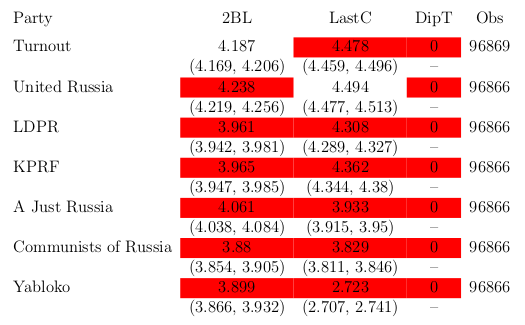
On the Internet, a discussion of these conclusions arose , commentators questioned that some people in the election committee centrally adjusted the voting results according to the significant number of polling stations of the country (and in a different way to manipulate with the indicators that Kalinin and Mebane are not written about), but they leave the “saws” and “tails”. Kalinin in an interview with Radio Liberty notes that he now does not use in his studies a method that gives the number of 4.187 and 4.5, since it is imperfect. But in 2012, Kalinin, who worked at the University of Michigan in the United States, came to Moscow to give a lecture, and at the same time met with representatives of the Central Election Commission, and then that statistical model was discussed, and the cherished values of 4.187 and 4.5 sounded. When he met the same “correct” number when analyzing the elections several years later, he was “very surprised”.
Peaks serve as a signal to demonstrate loyalty to the Kremlin
Kalinin is not surprised at the appearance in the graphs of the "saw of Churov":
- I have developed the theory according to which the peaks of the turnout [on numbers, multiple 5] are mainly signals. Local elites, governors organize the electoral process in such a way that falsification gives rise to peaks. And these peaks serve as a kind of signal in order to demonstrate loyalty to the Kremlin, to demonstrate the falsification of the vote itself. That is, if zeros and five are found in the voting results of a certain region, the governor receives a greater transfer from the center.
The more the authoritarian leader uses fraud, the more the opposition is demotivated
-That is, it is not only necessary that the “party in power” won, but you need to be able to show later: look, he won, because we worked here and the result of 70%, and not some incomprehensible 67.3%?
- Studies are talking about this. If we talk about the need for falsifications, then there are at least three reasons why autocrats need them. Firstly, they minimize the uncertainty regarding the election results favorable for the authorities and prevent the victory of the opposition. Secondly, falsification, as a rule, gives the opposition signal: the more the authoritarian leader uses fraud, the more the opposition is demotivated, this undermines its attitude to participation in the elections. And thirdly, falsifications allow us to test the loyalty of national and, especially, subnational elites, provide the necessary and reliable level of support. And zeros and five in the indicators of the turnout are a manifestation of the loyalty of local elites.
More than a million votes could be attributed to "United Russia"
- Can you evaluate with the help of these methods how much the results were changed? Do you have an idea of real voting?
- To evaluate how much the results were changed, we use more complex statistical models, in this case, the model that Walter developed. With its help, we recreate the mechanism of flowing voices from the opposition towards the authoritarian leader or "party in power." The calculations are also quite difficult, on average it takes a week to calculate everything. According to our calculations, more than a million votes could be attributed to United Russia.
- But this is precisely scientific work, you won’t go to court with these numbers?
- Of course, this is scientific in nature. It is also necessary to prove that such a flow has occurred. Actually, the model has established itself well, but to speak with one hundred percent confidence that we really are dealing with falsifications is quite difficult.
-Imagine, statistics are sitting on the other side, now they will read your next article, come up with something else how to draw the results correctly so that the fraud cannot be noticed.
Studies become the property of autocrats who seek to falsify the elections imperceptibly
- There is such an opportunity, and its probability is high. The more we develop our methodology, the more we write about it, the more such research becomes the property of not only the public, but also autocrats who strive, using our research, to falsify the elections imperceptibly. The main vulnerability of science about the study of falsifications is that we are trying to be transparent, to be published everywhere, all our methods, data, scripts are available, and this can use the authoritarian International, the leaders of authoritarian regimes. Within the framework of one of the projects, we created a prototype of the site , which allows any person to make calculations on any electoral data, not only Russian. And the calculations of the level of falsifications in the 2016 elections, like 2012, are available to everyone interested . In the future, I think, many of our methods will be ineffective. But our goal will be to invent new and new methods for analyzing falsifications. This is such a kind of permanent struggle, the arms race, in which we are all included.
Bulletins are added to the urns or protocols are faked
-In some elections it was discussed that during the frauds they take part of the votes cast for different parties in favor of the ruling party, that is, some redistribution. Now we are talking about the added turnout, stuffing votes in favor of the ruling party. Is it possible to say that some methods go out of fashion, some are included, or is there a mishmash, everything is used?
- I will refer to our main model. During the 2000s, we observed that most of the falsified votes are not just taken from various parties or candidates, they are usually taken from nowhere-they are added to the ballot boxes or protocols are faked. Whether this will change in the future, it is difficult to say. In general, building forecasts for the following elections, what will happen with falsifications is a ungrateful business. In order to change the situation with falsifications, it is necessary that something in the system itself changes.
- That is, no preliminary work from the point of view of statistics before the upcoming presidential elections in Russia is impossible to make, you just need to wait for the vote and see what is happening?
- Undoubtedly. Most likely, the elections will be the same as previous elections. It is not possible to build forecasts about scale. But, rather, everything will be exactly the same: the methods and scale of falsifications before that showed their effectiveness. To change it for the sake of something new, I think no one will.
- Did you write that the past elections were marked by the largest falsifications for all the time of observation?
We came to the conclusion that the falsifications were the largest since 2000
- We, having calculated the statistical model, came to the conclusion that falsifications really turned out to be the most large -scale since 2000, from the presidential election.
- This is unexpected, because after the protests of 2011-12 it seemed that the authorities were a little scared and would be more modest. And here it turns out that this is not so, at least from the point of view of mathematical models. On the other hand, you are talking about a million votes. On the country's scale, this is relatively little. If you follow this logic, the “party in power” wins and so, no frauds are needed.
- Our method records only certain falsifications. It is limited by the mechanism of flowing voices from opposition to incumbent. Other models may reveal other scale of falsifications. If we talk about "small" fraud - they are needed, first of all, so that we talk about them. Even now, discussing the problem of falsifications, we indirectly strengthen the autocrat. We are talking about how actually a strong, powerful is an authoritarian leader, what a powerful election organization he has, how much the elections are controlled by the authorities. That is, talking about falsifications themselves contribute to the fact that in the eyes of the opposition they enhance the power of autocrat and demotivate it.
- Are the conversations about falsification beneficial to the authorities?
- Undoubtedly. They show how serious the control of power over the elections is.
Authoritarian leaders receive less support in the areas
- That is, the authorities may not hide, but on the contrary, demonstrates its capabilities?
- The authorities, most likely, can demonstrate what is capable of such falsification. By the way, she demonstrates this not only to the population and opposition, but also to the potential opposition in the elites and the elites themselves, showing that everything is under control.
- From this we can conclude: it is generally accepted that the authorities in 2011-12 were frightened by protests against falsifications. But if the authorities are not afraid to show what is capable of them, then he is not afraid of such protests. So it turns out logically?
- This is a good question. The authorities have the need to organize elections and falsification in such a way as to ensure maximum reliability of the results, because protests are possible otherwise. But Autocrat has a choice of how to behave: to openly falsify and thereby demotivate the opposition or to falsify to a lesser extent to demonstrate reliability. In authoritarian regimes, surveys that measure the electoral support of incumbent or “party in power”, the leader’s ratings are usually infected with “socially approved behavior”. People are more inclined to deceive survey organizations, interviewers, saying that they support Autocrat - this leads to inflation of the rating of Autocrat, a "party in power." To compensate for this inflation - and in fact, authoritarian leaders receive less support in the areas - these are the same falsification, ”explains Kirill Kalinin.
Of course, adjusting the results for parameter 4.187 is an too sophisticated way to show the opposition - through electoral researchers - that its business is hopeless, in the hope that the wide circles of voters will consider the numbers too difficult and not to notice the frauds. But it is difficult to believe in her accident: perhaps, widely fading the election results with one hand, the state electoral machine with the other hand left a small “Easter egg” for specialists - “We know that you follow us and not be shy”.