
Translated material
Russian worm
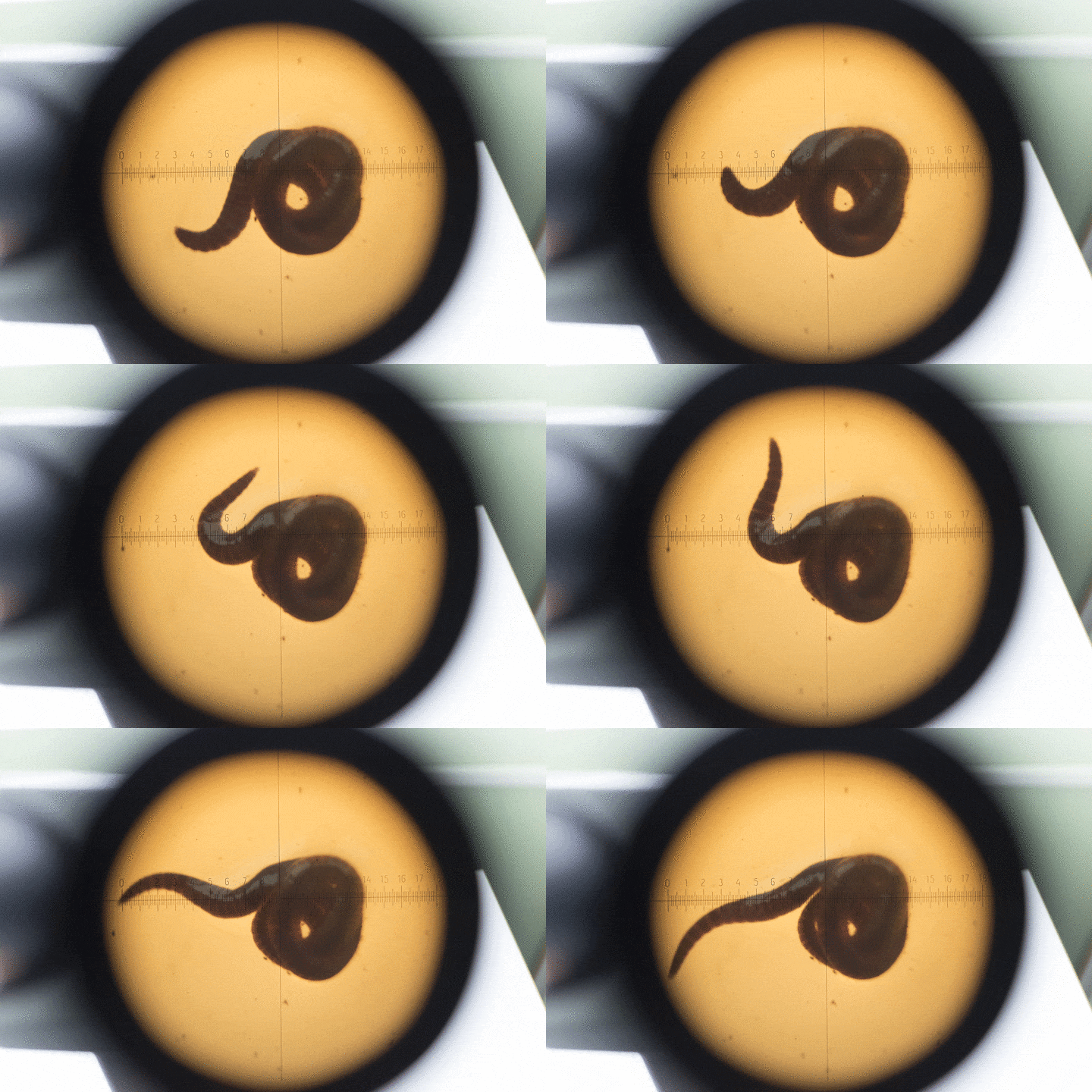
"Such things" found out how the rainworms turn manure into gold
In the city of Kovrov, the Vladimir region live the most thoroughbred, voracious and titled rainworms in the world. Any Olympic will envy the number of medals, cups and international diplomas. “Such things” became interested in the breeding of rainworms and learned how worms turn the manure into gold.
***
The definitions of “elite” and “thoroughbred” in relation to the usual, seemingly rainworm, in themselves seem extremely strange. Well, who in childhood did not conduct experiments on worms, lazily crawling out from everywhere in rainy weather. More than seven thousand species of rainworms live in the world. In any garden near Moscow, they can be accumulated by 14-15 different types. But, most likely, these will be incorrect worms, not gold -bearing.
This story resembles a plot with expensive varieties of coffee such as “black tusk” and “Luvak”. Only coffee "gold" additional cost is given by eating grains and funny palm martens. And the “golden” radiance of soil with manure and other food waste is given by special correct worms. The secret of the right worms in the lifestyle and endless consumption. The fact that they eat is turning at the output into an excellent effective organic fertilizer of the biohumus. The same gold. The relatives of other species are constantly in a nutrient medium in a nutrient environment and die from protein overdose. The correct worm is an ideal biorobot. Not sick. Not tired. Eats and breeds.
The correct worm is an ideal biorobot. Not sick. Not tired. Eats and breedsAbout eight years ago, I accidentally got to the site where a cartoon worm crawled over the screen, and in the photographs a gray -haired gentleman with a beard held a handful of land with red veins in his hands. The stories about the breeding of worms and the magical properties of the fertilizers they produce were so promising that I was flooded, read out and went to the carpets to stare at the worm. I expected to see a crazy science fiction scientist. But the former military, serious uncles, who believed the ideas of this very scientist's dreamer, unexpectedly turned out to be wormers.
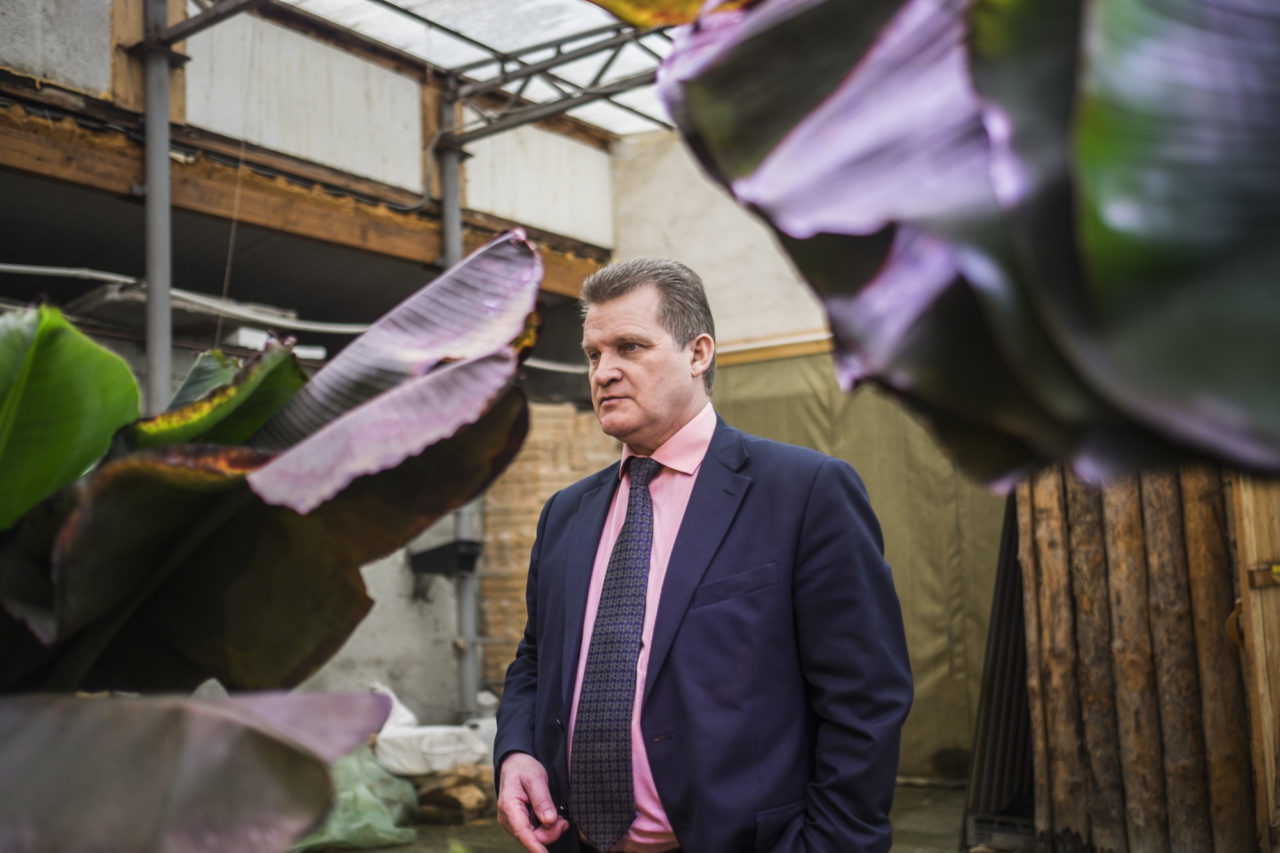 Sergey Konin and banana palm trees grown in sunny bio-vegetaria photo: Vasily Kolotilov for TD
Fantasies were grounded and turned into a highly reliable business. That first trip to Kovrov resembled the king’s walk from the fairy tale “Cat in Boots”:
“And this is whose meadows? - Marquisa Karabas. - And whose fields? Earth? Lock?"
There was a feeling that a quarter of the city was bought for gold worms: an asphalt factory and a fitness center, and a line for the production of dumplings, and an abandoned cinema, and the production of building blocks. In the piggy bank of the assets of the Green Peak Corporation, which was not there. For eight years, the company has matured. I got rid of non -core assets. And a cheerful worm was removed from the site. And since then, the breeding Vladimir worm has actively sat down in Russia and reached China, crowding out a more famous overseas relative.
Turn the worm
The rainworms enthusiastically studied Charles Darwin and assigned them a special role in agriculture. But with special selection and breeding of the rainworm, it first occurred to American Tomas Barrett in the mid-30s of the last century. His book “Handering of the rainworm” became a bestseller. And the compost red worm bonded by Barret was called California. The scientist spent a lot of effort and eloquence, convincing local gardeners and farmers of the usefulness of a California in the agricultural department. Over time, the Californians “spread” around the world except the Soviet Union. There were no interfered in the union on worms. More precisely, one was found - a military physician Anatoly Igonin.
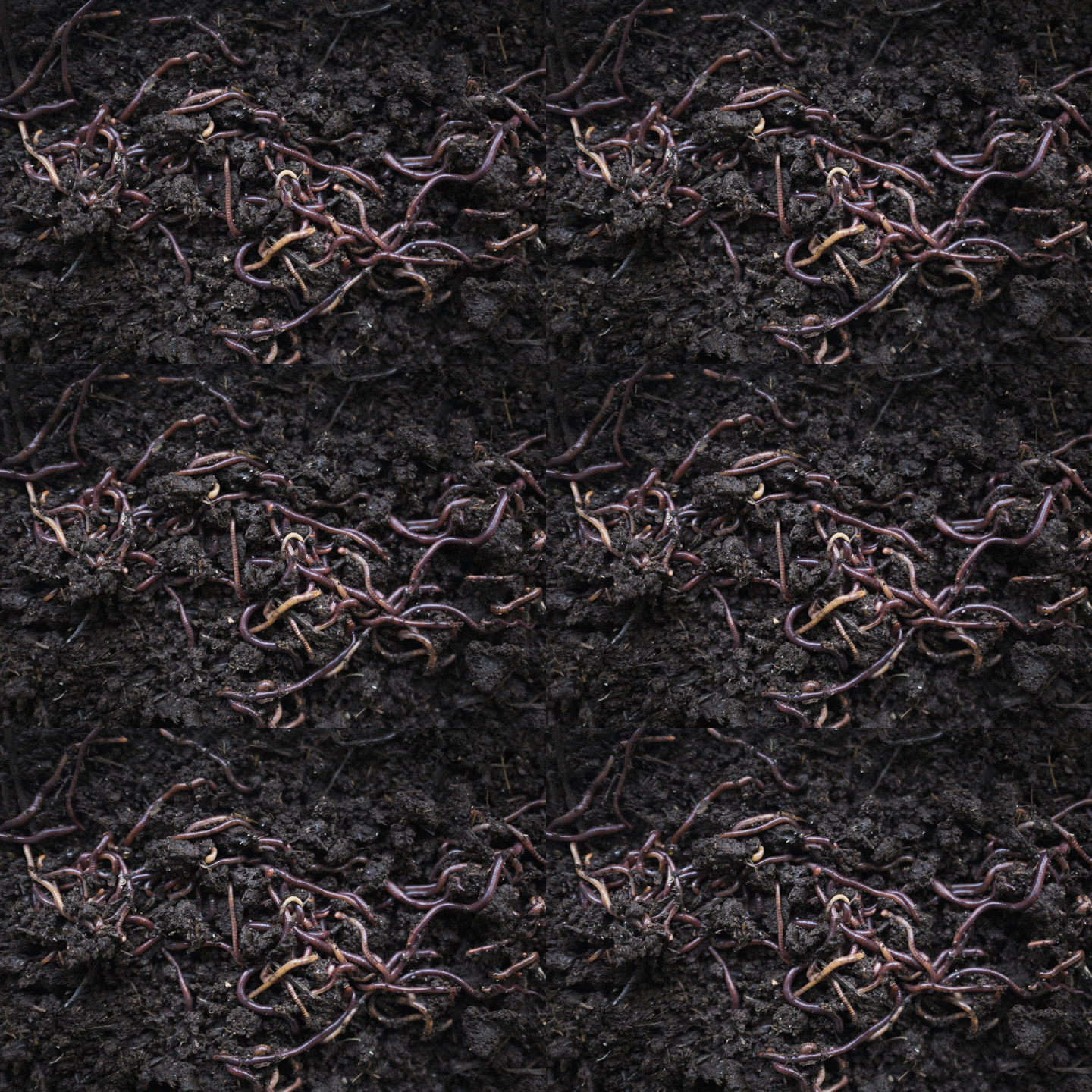 Vasily Kolotilov for TD
 In 1983, he resigned, headed the department of military medical training at the Vladimir State Pedagogical Institute. Of course, I did not hear about the work of Barrett, the Vladimir professor. Instead of a California, he practiced a vermocultivation technology on a wild rainworm - a native of the Vladimir region. He experimented in the cellars of a pedagogical institute for money allocated by the Ministry of Fisheries of the RFFR. It is not difficult to imagine how the elderly professor around the elderly professor treated. But after a couple of years, crossing the local northern plain worm with a high -mountain southern inhabitant of the Chui Valley from Kyrgyzstan, he received a unique highly productive hybrid - gluttonous, prolific and active.
In 1991, Igonin received a patent to invent a method of obtaining technological (specialized) rocks of the compost rainworm. He wrote a couple of books on how to increase fertility with rainworms. But behind the walls of the basement, a story was already raging: perestroika, a pile, the collapse of the USSR. And so not the most popular topics of fertility and environmentally friendly agriculture washed away from the agenda at all. So Igonin with his unique worm would have sunk into obscurity if, after the 1998 default, another former military man, who was very burnt on transactions with securities, did not look for himself a more reliable mundane lesson.
An ideal animal
Sergei Konin was not particularly eager for agribusiness. In 1989, after fifteen years of service in the ranks of the Armed Forces, Lieutenant Colonel Konin quit the reserve and went to commerce. The cooperative “PIK”, which sewed with overalls, tried strength in furniture production, construction in the city of Kovrov, successfully played in the stock market. Things were going well until the default struck. A new business, Konin decided, should be more reliable, industrial and exported. There were several criteria: a cheap source of raw materials, a growing market with a prospect of 20-30 years and a simple technology that allows you to get the maximum additional cost.
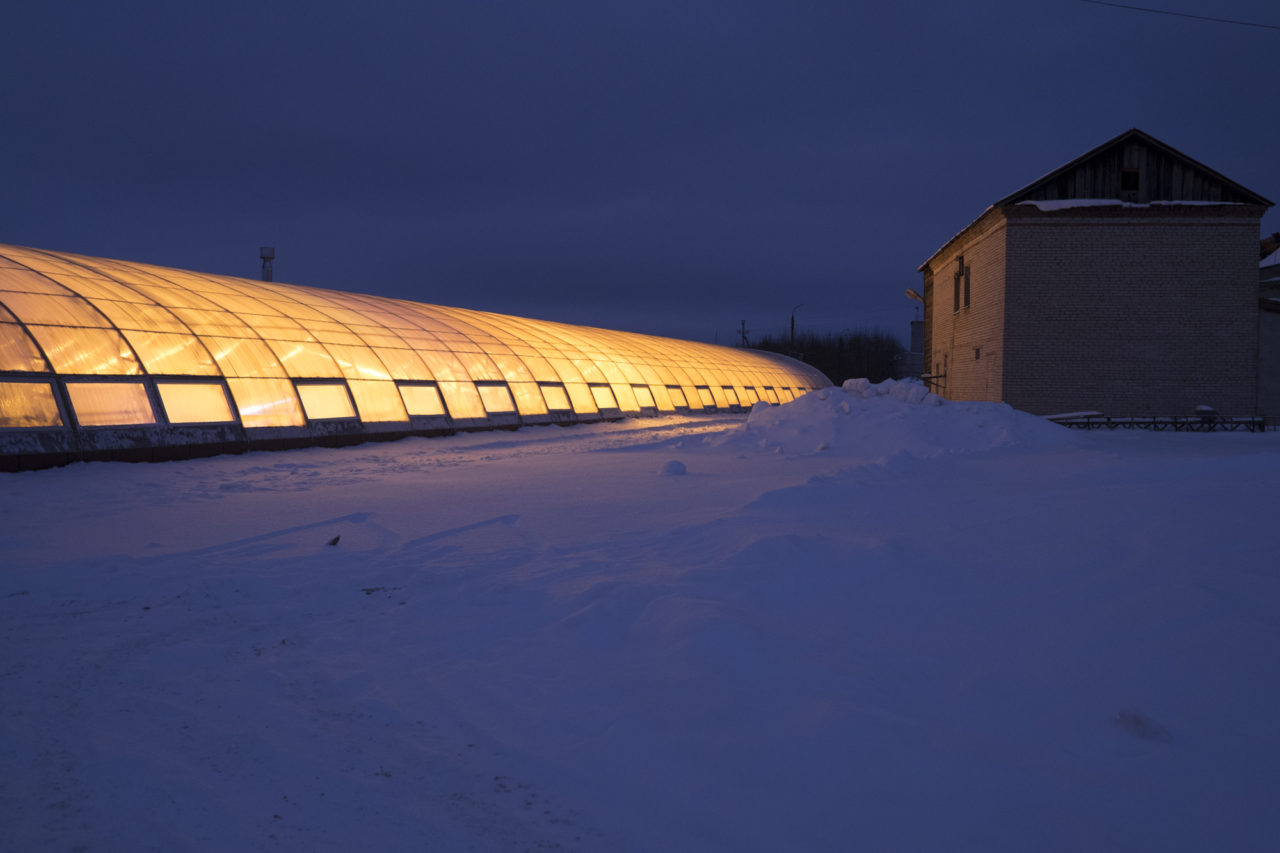 Sunny bio-vegetarian view
 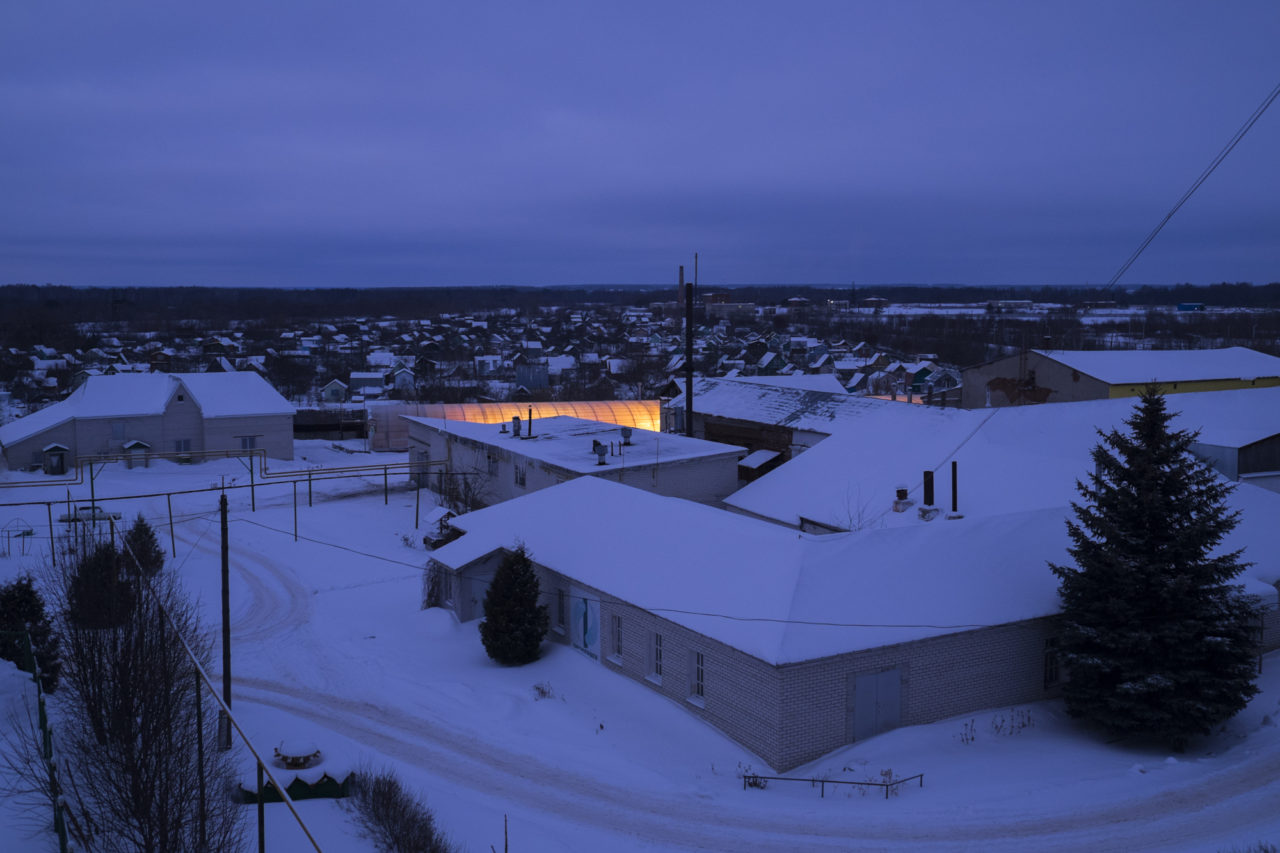 View of the solar bio-vegetarium from the window of the building of the company Sergey Konin photo: Vasily Kolotilov for TD
At one of the exhibitions, Konin's attention was attracted by the biohumus - organic fertilizer, a product of processing organic agricultural waste by rainworms. The idea seemed simple. And the entrance to the market is undesirable: a kilogram of the cheese (these very rainworms) cost only 30 rubles. He found out that the founder of Russian technology, Professor Igonin, also lives in the neighborhood of him, in Vladimir. I invited Igonin to work in his corporation. And he bought a root patent to the technology of breeding the rainworm and the entire supply of worms in addition - all six kilograms. The professor dispelled fears that the business may not go: "People failed me many times, worms - never." And he did not deceive.
"People failed me many times, worms - never"In 2000, a biotechnological experimental laboratory was created for a new project, and then production using the Green-Pik technology.
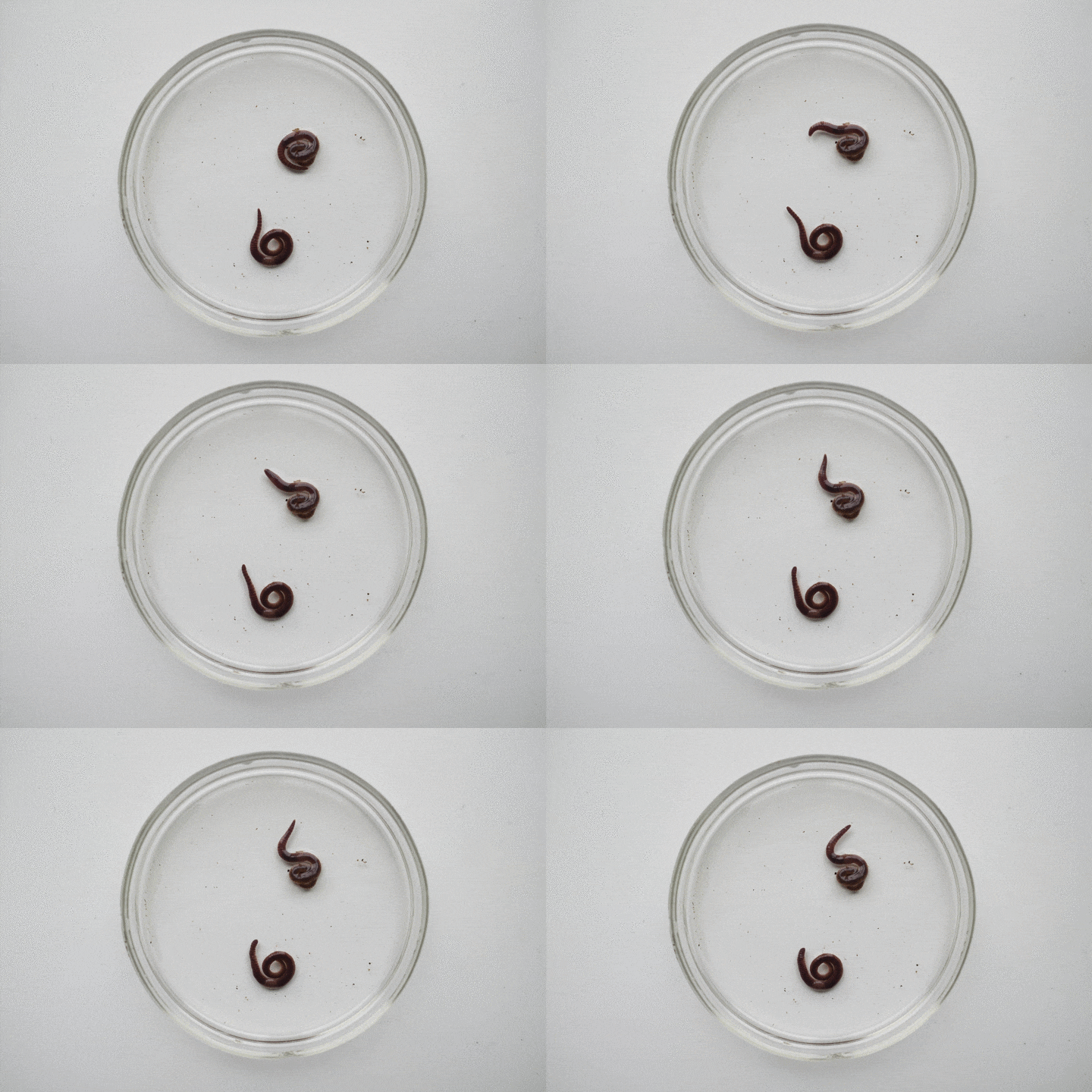
If an American container technology was used before in the world, then in Green Peak they came to the conclusion that without containers and drawers of worms from the place where they are fed, they would not leave. Instead of containers - rows of beds, in the upper layer of which manure is regularly placed. Worms, like all living things, do not like waste of their own life, so they move behind a new food, leaving the finished product. About two centimeters pass per day. This made it possible to reduce the production cycle from 140 to one or two days. And three times reduce the cost of the biohumus. And the worms really did not go anywhere. In addition to eternal travelers. There are 2%of them. The craving for the change of places in them is laid genetically, which ensures the growth of the population and the resettlement of the species.
A thoroughbred worm with a light hand of Konin was given a prospector. It seemed to him a successful association with gold hunters who could also give a worm. Usually, two or three grams of gold are washed out of a ton of golden soil. The worm is more effective. From a ton of manure “eats” values equal in terms of eight grams of gold in the domestic market and up to 50 grams in export. In the domestic Russian market, the price of biohumus is $ 200 per ton, and the world reaches two thousand.
 Vasily Kolotilov for TD
 “A ton of composite manure costs 600 rubles, biohumus at the output - from 12 thousand rubles per ton. From one ton of manure, 600 kilograms of biohumus and an increase of 10-15 kilograms of worm are obtained, ”Sergey Konin reveals to simple arithmetic. - Worms multiply perfectly. Do not get sick. Do not tolerate infections. Feed waste. They do not need electricity. Under the correct conditions of the content per year, one kilogram of the worm breeds up to one and a half tons. ” Indeed, ideal animals.
Konin is so convincing that you involuntarily begin to pretend, where to settle a small herd of worms in the country. It seems not difficult at all. Indeed, it is farm and utility farms and summer residents that bobberry fertilizers buy, experiment, concern about the purity and quality of products, first of all. According to the Ministry of Agriculture, 80% of vegetables produced in Russia are grown on personal subsidiary farms and summer cottages.
Large agricultural producers still prefer a variety of chemistry to organic fertilizers.
Chinese trace
Businessmen did not hide the technology and the "prospector" did not hide from people. They willingly shared with those who were interested at first for free, and when they opened the school named after Professor Igonin (the ancestor of the “prospector” died in 2005), more than 1300 people from 19 countries were trained. The largest group was comrades from China: 37 people led by party organizer and spongose from the competent authorities. The group has completely leaders of large farms and party leaders. Attentive meticulous Chinese recorded everything, delved into everything. And then they bought a technology, a party of "prospectors" and transferred four large Chinese factories for the production of biohumus for Russian technology.
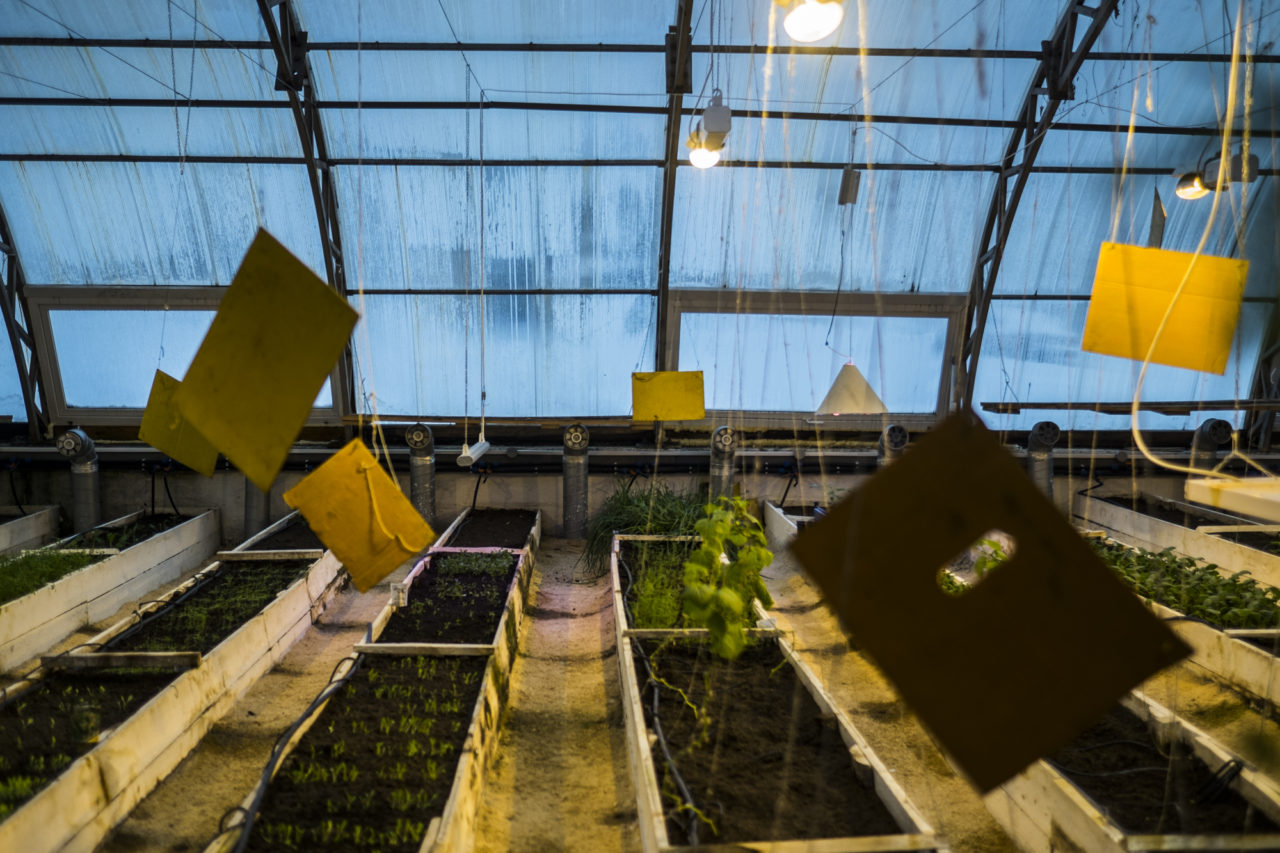 Experimental solar bio-vegetarium, where on the biohumus, vegetables of photo are grown: Vasily Kolotilov for TD
 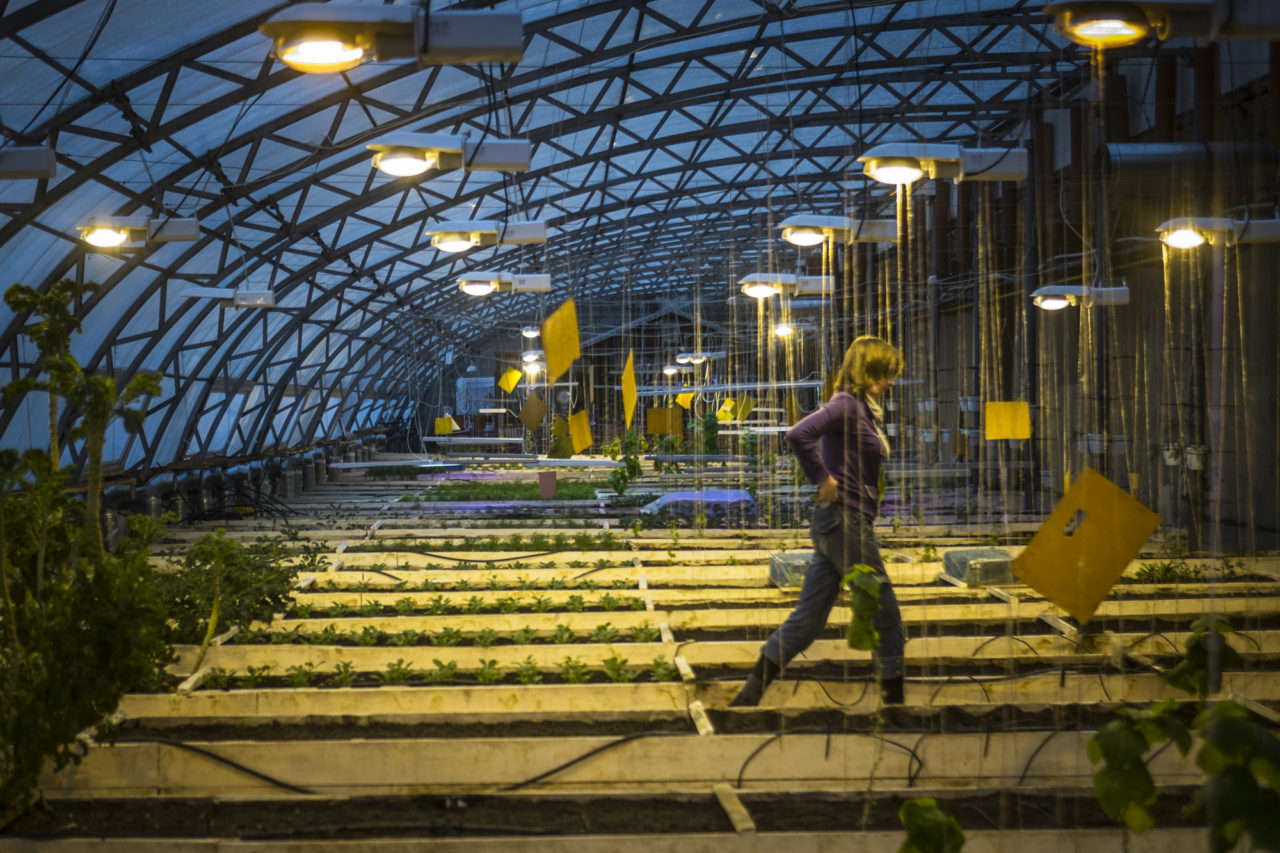 Experimental solar bio-vegetarium, where vegetables are grown on the biohumus
 Konin does not believe that he breeds competitors. On the contrary, he assures that this is the only way to create a market. Even 20 years ago, in Russia, no one heard about biohumus. And now all together has advanced the idea of pure organic fertilizers. “Biogumus can be of different qualities. Someone adds peat, we know some manufacturers who boast that they feed the worm with overwhelming cardboard. I would like to raise the quality bar. How this happened, for example, in the taxi market. There are different Uber, Gett, Yandex and others, they began to work according to standards and almost removed bombing from the market. When ordering such a taxi, you can see what service you will receive. I would like something like this to happen in the biohumus market, ”says Sergey Konin.
The largest biohumus exporter is today India. Consumers are Arab countries. “Palms grow perfectly on the biohumus,” Konin notes. “We are now growing an experimental batch of banana palm trees in our sunny bio-vegetaria.”
The task of the year is to achieve the rainworm in the register of agricultural animalsSunny bio-Vegetarium is another local miracle. A sort of greenhouse of the future. A high -tech greenhouse of a continuous cycle, which uses the sun, including for the accumulation of energy in heat accumulators.
From the frost, you get into the tropics through the vestibule. Palmas, tomatoes, a variety of greens and seedlings, outlandish muzzles, funny curly cabbage - a cale, which, after the raid of hungry guests, overeating the lower branches, also becomes like a palm tree. Everyone is grown, of course, on the biohumus. Experienced farm and at the same time an exhibition of achievements, and at the same time a green supermarket. Collect what you liked, weigh and buy.
Konin tells how the Chinese, with the help of his vegetarians and with the support of a state that abolished the tax for farmers, had been produced by a vegetable revolution in 25 years. They provided themselves with vegetables and became the largest exporter of vegetables in the world, and thousands of families got a job. Konin also dreams of something similar to Russia, talking about the project of farm clusters and eco-parks. But so far the task of the year to achieve, finally, adding a rainworm to the register of agricultural animals. Bees, for example, for a long time there.
The tax inspector came and asks:
- So how many worms do you have?
- 15 million. Will you count?