
Translated material
Romance with the screen
Why the series?
- Category: Time skin. Read all materials
A few years ago, Philip Roth, without waiting for a long time due to him, according to the Nobel Prize, announced retirement. This decision among writers would be unprecedented, if not for one exception. I mean the beloved poet Brezhnev Yegor Isaev, who publicly announced that he was throwing poetry due to the complete indifference of readers to them - not due to censorship, but after its cancellation. It is curious that both author who were unlikely to guess about the existence of each other resorted to one argument.
“All my life,” Philip’s mouth reached 80, ”I focused on normal people who read two hours before going to bed. Upon learning that there were almost no such ones, I threw the feather and resigned.
It is difficult for me not to sympathize with him, because I myself did not know others. A series of generations leaving for Gutenberg every day occupied himself with reading, considering the book indispensable happiness. I grew up with this belief, knowing firmly that it will always be so. And how could it be otherwise if all adults spoke about books. In the thaw years, the names and names served as a password and united the intelligentsia, forming the only opposition regimen party. These were not only the books of Hemingway, Faulkner or Bell, but also the "lucky Jim" Kingsley Emis or the "fourth vertebrae" of Marty Larney. Everyone got it, borrowed or stole the same books to read them with sectarian rapture. Perhaps today I can restore the flow of time (like on a stump with annual rings) according to book signs - whether it is the summer of the “centaur” or the winter of “Winter of our anxiety”. And this is not counting Samizdat. I remember very well how often I found the strength to tear myself away from the pillow only because I hoped to return with the book in the evening.
“Martyn,” wrote Nabokov, “was one of those people for whom a good book before bedtime is precious bliss.”
Finding this paragraph in the “feat”, I realized that the norm was always and did not depend, as I thought, on the nature of power. Two evening hours with the book were sacred for us. But now, as Philip's mouth stated with sadness, it all ended, and two protected hours left the competitor.
“You noticed,” I will ask an honest reader, “that, having met friends, we already ask that they read and not even what a movie we watched, but - with which series they live.”
It is characteristic that in America the best prose writers - like Franzen, and the directors - as the Cohen brothers, are going to the series from both sides, but with one purpose: to recreate the world of a drunken reader who became a spectator and did not notice this.
To reveal the secret of the series, you need to tear it off from an adjacent but outsider, which belongs to the postmodern genres. The soap opera is a child of the radio. She was born from the need when the manufacturers of the washing powder needed a plot frame for advertising, addressed exclusively to the women's audience. Having collected a successful set of techniques, the soap opera did not refuse them even when it moved to the blue screen. In her arsenal there is a confusing ligature of illegal love relationships, the usual cast, constant, as a set of relatives, sincere manner of communication, the priority of dialogue (women love with ears) and the general leisureness of the narrative designed for eternity. You can follow such a spectacle, glancing at the screen while linen is erased and lunch is cooked.
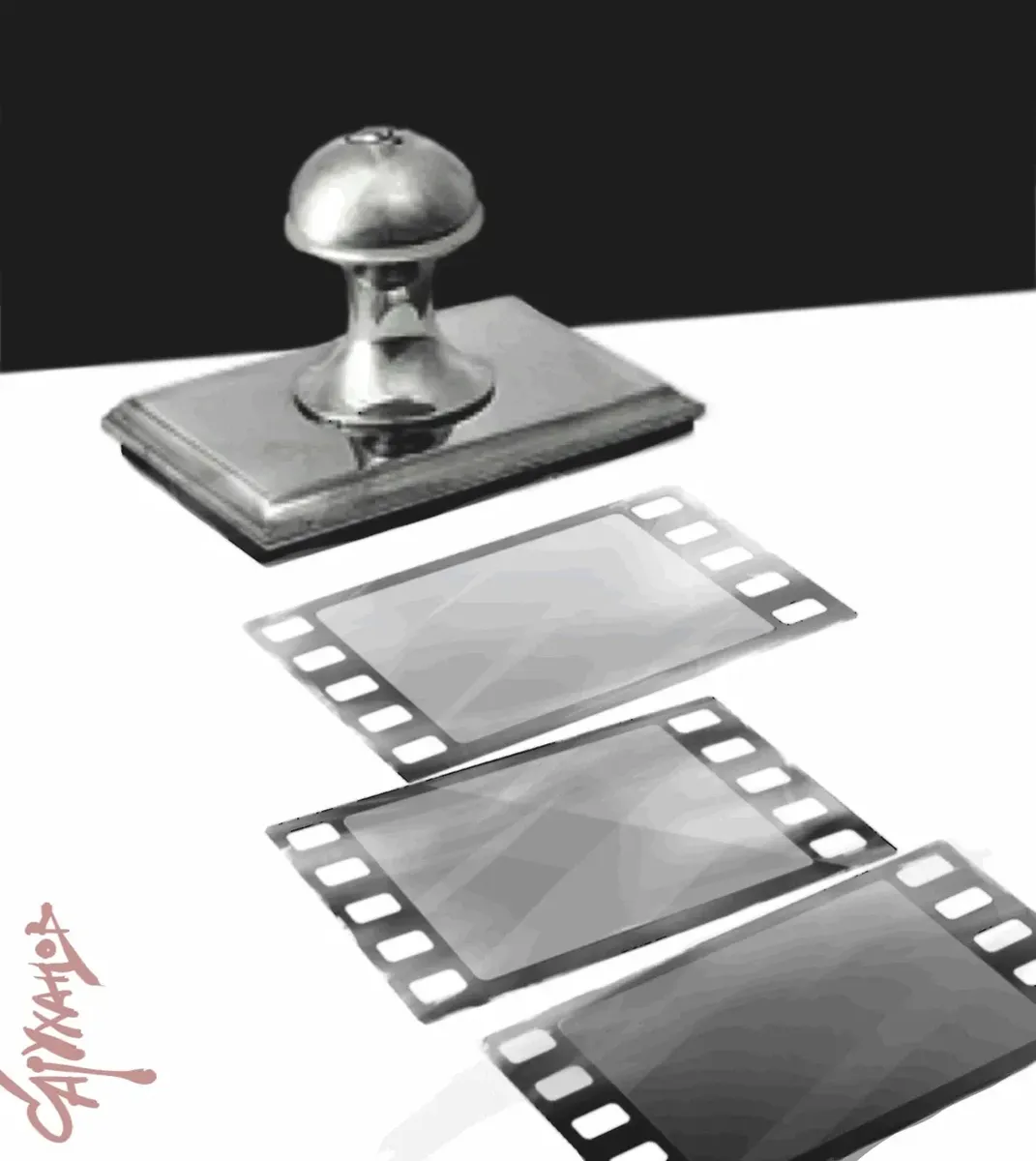
However, in the midst of the struggle against “dead white men”, the feminists opened and fell in love with the soap opera, recognizing it purely female, such as embroidery with a cross, a version of mass art. This - Nemuzhskaya - aesthetics used a nonlinear story and Bakhtinsky polyphony. In the soap opera, each, and not just a positive hero, has a competent and convincing point of view. Within the framework of this extremely peculiar genre, no one can finally win, and this means that until the laundry is getting dirty, the soap opera is immortal.
Unlike it, the series is the brother of the book and cinema cousin - the fruit of a long evolution and a series of crises provoked by progress.
Old, every sight seeks to become a mirror. Shakespeare theater did not look like a living, because the Elizabetans have not yet discovered realism, which allowed Ostrovsky to populate the scene by merchants who drink tea on it. The phenomenon and growing up the cinema took reality from the stage and transferred it to the white screen. The robbed theater became poor and turned asceticism to the symbol of faith. Becket on the stage has almost nothing: a tree with a single leaf, two garbage buckets, a tape recorder, a pit in the ground. And the actions in his theater are no more: nothing happens and nothing changes, except for the viewer, of course.
Left without a roof, the drama moved from the theater to the cinema, who was taught believable, like Hitchcock, to tell the most puzzling stories. I still love old cinema. The best in it is a conditional, as if in ballet, the language, with the help of which films, usually in Hollywood, retell life so that it is indisputable and infinitely far from ours.
Fighting with the naivety of escapism, the cinema of high modernism was looking for himself outside of words and plot. In an effort to find your own, and not a dictionary borrowed from other muses, the cinema costs pictures, like Parajanov, or landscapes, like Antonioni. The plot returned to a large screen when new masters of a large, branched, catharsical drama appeared: Keslevsky, von Trier, Tarantino.
Meanwhile, while the swing of our beloved art flew back and forth, imperceptibly, like a dawn in a fog, a series that lured the viewer on a small screen, tearing us away from the big.
This war is inconspicuous, because the series does not replace the movie and does not pretend to be for it. The film, like the performance previous to him, operates with a one -time emotional and intellectual salvo. Cinema is the total experience of passive immersion in an artificial (dark) environment. Entering the hall, you give up the film, promising not to be distracted without extreme need. Now, however, cinemas, faced with competition of a small but rapidly growing screen, are experiencing a Renaissance of luxury. To turn an ordinary trip to the cinema into an infrequent holiday, new halls offer bedchairs, as in the first grade of the aircraft, and hot, as there, lunch with drinking. But it is unlikely that this will help them.
TV shows take others. They require the viewer at once and less and more. On the one hand, we look at them on a rack and in a dressing gown, on the other, they expect patience and fidelity from us. This is a lazy and stretched entertainment, and its duration, calculated not by hours and minutes, but by everyday evenings and days off, is a substantial sign of the series. He is crushed and stretches, organizing our leisure on his conditions. Entering the home schedule, the series promises a painless and comfortable movement to an alternative universe. It doesn’t matter which one: love affairs, detective stories, political squabbles - all the same. The main thing is that the series is seriously and for a long time. He pretends to be on the screen for real, we pretend that we believe him.
The naivety of such poetics is a quiet retreat, a sweet rollback, the holidays of the soul, tired of the lifeless peaks of art. Having reached them, the masters have long said goodbye to the obsolete skill of straightforward convention. She was destroyed by the best artists of the last century - such as Picasso or Joyce, Brecht or Fellini. Opening their own insidificant, their art exposed the technique, demonstrating the magic of fiction and exposing it.
The series is easier and more reliable. Having stepped back, he was just where his nearest analogue reigned: Victorian novels. Contrary to the adjective, and thanks to the form, these include not only the masterpieces of Dickens and Tekkestea, but also Tolstoy with Dostoevsky. All of them are built the same. Pull -up, cunning, crowded, skillfully dissected, they are designed by the head of the evening, unless, of course, they go into a binge, as it was in my youth with Dostoevsky, whom I read without looking up for sleep, food and cards. How to watch is only our business, for today the series, finally breaking away from television, always wait for us like novels in the library.
Having achieved an independent status, the series made an unexpected revolution: the rearguard took revenge, the art turned back, and the artistic fiction repeats the previous moves, starting - and I like this most - like Walter Scott and Pushkin from the historical genre.