
Translated material
Falls from awarding
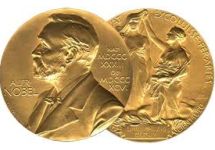
The Russian special services tried to influence the Nobel Committee of Norway in order to prevent the award of the President of Ukraine Petro Poroshenko in 2015. This was reported by NRK with reference to the Safety Service of the Norwegian Police (PST).
The operation began withthe publication of the Russian media of the forgery on behalf of the then speaker of the Verkhovna Rada of Ukraine Vladimir Groysman to the attorney in the affairs of the United States in Norway, representatives of PST said. The letter was about the support of the United States, the candidacy of the Ukrainian president. "Poroshenko is important firm guarantees for the award of the Nobel Prize of the World this year," the letter allegedly said.
After some time, two people came to the secretary of the Nobel Committee Ulav Nielstad who introduced themselves to the employees of the Russian embassy. The conversation lasted an hour and a half. According to Njelstad, the meeting "came out absurd," and he turned to the special services. As PST later found out, one of the visitors was an employee of the SVR.
It is assumed that the publication of a fake letter on behalf of Groysman was organized by Russia to discredit the Nobel Committee, if he really awards the Poroshenko Prize, they said in PST. Allegedly, this would confirm the control of the committee to American intelligence services.
The Russian Embassy in Oslo said that the meeting of diplomats with the secretary of the Nobel Committee was the usual visit of politeness with the aim of maintaining relations and better to know about the life of the country. The assumptions about the special operation at the embassy were called "paranoia" and the desire to explain their own failures from outside.
In 2015, the world received the Tunisian quarter of the national dialogue "for the decisive contribution to the construction of pluralistic democracy in Tunisia following the results of the Zhasmin Revolution in 2011." Whether Poroshenko was among the candidates is unknown. The list of nominees will be published in 50 years.
In February last year, PST head Marie Benedict Bjorland called the most threat to national intereststhe activity of Russian special services . "According to our assessment, Russian intelligence has the most abilities to harm Norway in one way or another," he said.
The PST report on the assessment of threats for the current year notes that the activities of intelligence services of foreign states have more negative impact on Norway's national interests. The Russian special services have all possible resources and they actively use them. “This applies to persuasion, conviction and threats to their own citizens who have access to Norway's secret data. Another tool that Russian intelligence uses is computer espionage,” the report emphasized.
According to Bjorland, large -scale computer espionage against Norwegian interests is already being conducted, and national companies and educational institutions will be the main goal of the illegal activity of intelligence services.