
Translated material
Nightmare Andy Warhol
On April 8, 1991, the vocalist of the Mayhem Pen Ingva Olin (Dead) shot in his room from a shotgun. He left a small dying note - “Sorry for all this blood”, having previously cut the veins. The body was discovered by his friend, the guitarist and ideologist of the group Eystin, who is known as Euronymus. Instead of the necessary phone call to the ambulance, he quickly left the building and went to the electronics store for a new camera. So the cover of the Dawn of the Black Hearts appeared. On it we see a dead teenager with a broken head, in a white T-shirt from the I Love ... popular in the 1990s. Many musical critics believe that it was at that moment that the second wave of Black Metal was formed, which became canonical. She gained not only her sound and paraphernalia, but also something like a “ritual sacrifice” that formed a whole community around her. Today, Dead (dead) has also become a well-known Internet meme: “Dead Was Dead Before that Became a Mainstream” . And indeed: he was dead long before he became dead, coinciding with his own name.
The photographic gesture of Euronymus was an expression of the contradictions of the subculture as such, a subculture as a historical form. As part of the situation after the Second World War, the subcultural association of young people is very sensitive to its injury. Many groups return to World War II, trying to introduce the horrors of the middle of the century into the free game of signs. So interprets the glory of the slurry of two famous groups - Rammstein and Laibach . According to Zizhek, they introduce into ideological meaning element of ambiguity, turning them through music into pleasure. This is a way to say about the injury, simulating it through the pop chita. The hit itself is a way to split the historical ones meaning in two and hold two opposite poles together. This is the function of the notorious “postmodern irony”, which they talked about so much that they almost forgot how this technique is serious in essence.
Pop culture hides and relieves death, pushing a concentration camp and a disco among themselves.
The war and ideological totalitarian devices were so extreme experience that they can only be accepted by replacing and moving them into musical tissue. Popular music contains historical anxiety in its catchy motives, which is discharged by means of a disco bit. The sociologist of art Pascal Gilen recalled how he met in his youth with the songs of Joy Division . He and his brother danced under monotonous airless tracks and, not knowing English, considered it a fun music. Later, when they found out that Joy Division , or “Joy detachments”, is a special place for sexual pleasures in the concentration camp, where Nazi officers raped captives and arranged perverted dates with them, all the ambiguity of the popular culture opened before them. Pop culture hides and relieves death, pushing a concentration camp and a disco among themselves. Simulating joy, she talks about horror. In the most famous pop hit of the 1980s from Orchestral Manoeuvres in the Dark, a pleasant voice sings:
Enola Gay, Is Mother Proud of Little Boy Today?
AH-Ha This Kiss You Give, It's Never Going to Fade Away.
(Enola Gay, is the mommy proud of her son today?
Ah ha, your kiss, he will never disappear.)
Even the experts of the British radio stations did not immediately realize that for sentimental, at first glance, the words about love are hiding a reference to the bombing of Hiroshima by the Enola Gay airplane. His "kiss will never disappear." The “Society of the performance”, which Gi Debora wrote about, is a puppet scene, behind which the conflict of cultural life around the shock experienced is played behind the curtains. To experience the war again and again in an attempt to neutralize it-this is the goal of a significant part of pop culture. However, Black-Metal of the 1990s is not so much neutralization of war as subordinating the logic of its affects in the capitalist conditions of cultural consumption.
Black-metal originated in the 1980s in Britain with the efforts of groups such as Venom . The first they began to use the satanic style and built a recognizable figurative series of Baphomet, pentagrams and bright stage images. The musical trend pointed to the line of the gradual weight of Black Sabbath , the vocals became tougher and anger, but in general, the features of shocking theatricalization were the main genre -forming element. When this tradition was adopted by groups from Norway, it was subjected to a series of strange displacements. Misreading took place: adolescents from Oslo and Bergen perceived everything deliberately seriously. Instead of playing darkness and death on stage, they became them. If we turn to the practices of the St. Petersburg group of Necrorealists (they are chronologically coincided with the crystallization of Black Metal ), then we note how the themes of death and simulations become central to the radical subcultures of that time (in the early 1990s, there is also a peak of the popularity of extremal noise). However, the early shares of the Necrorealist Yufit and his friends are the exact opposite of the orientation of Mayhem , Burzum , Dark Throne and Gorgoroth . Necrorealists have always shown that death is a bureaucratic procedure and has never been given in “direct experience”.
Yufit never interacted with real corpses, he simulated or “played” the corpses, indicating that dying is the function of writing, entry and clinical accounting. Black-metal walked exactly in the opposite direction.
Death is always simulated and mediated by such instances as forensic medical examinations, forensics and documentation. That is why Yufit never interacted with real corpses, he simulated or “played” corpses, indicating that dying is the function of writing, entry and clinical accounting. Black-metal walked exactly in the opposite direction. The photographic gesture of the EuroNimus, capturing his dead friend on the cover of the album, reveals that the culture itself and the distribution of shock are now indistinguishable from everyday life. Accustomed to shocking gestures, we cannot believe that death can be real. The main star of the pop art Andy Warhol, when they shot at that, lamented that no one had grabbed the camera. In paradoxically, Euronymus embodied the covenants of the chief artist of the pop art. Pop Will Eat Itself . If the necro -regionalism was an epiphenom of the Soviet necropolitan jeweling, a kind of necrocepertulism that understands everything, and primarily death, as a text or instruction, then the Black Metal of the second wave developed a new aesthetic category - True (present, entry, true). She entered the abbreviation TNBM (True Norwegian Black Metal) , pointing to the radical mixture of extreme pop culture and life. “Tru” meant “to live evil”, to reach the limit in their own life practices. The MAYHEM vocalist transferred the elements from Venom and BatHory to everyday life, removing and turning back the ironic distance. So, it is considered the first to come up with Corpsepain (cadaveric makeup) is a characteristic mask of Black-metal-college from the 90s. Corpsepain was different from the makeup of the Kiss : Dead covered his face with lime and earth, and sometimes asked to bury himself in the ground in order to “breathe a rot” at the concert. He also cut himself on stage, which led to hospitalization a couple of times. The fact that in pop culture has always been an element of an autonomous musical field was postulated in radical metal as ethical maxim.
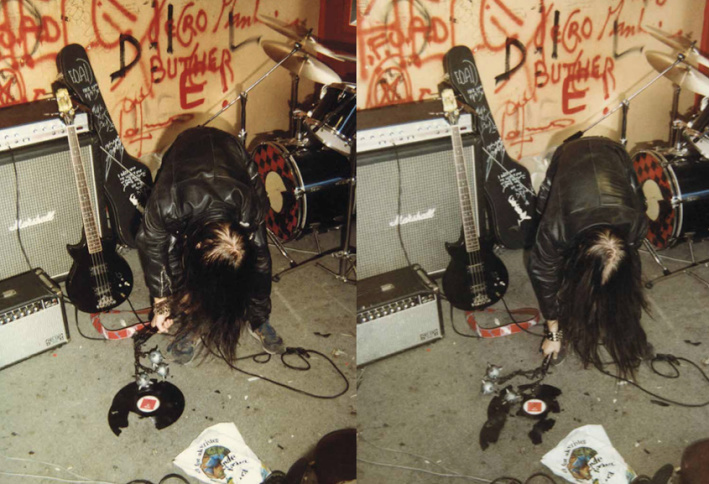
Mayhem Rehearsal with Dead
In June 2016, the impressive collectible series “ The Death Archives: Mayhem 1984-1994” was released. In it, MAYHEM member Necrobutcher is trying to demifologize the image of the group. He shows how this desire for True was included in a series of conflicts with a typical teenage life. The catalog has many photographs from the rehearsals of the group, scattered cocoon banks, the first attempts to print a “bloody cover”, which, due to the cheap press, is pale pink. Parents carefully asking about lessons and homework. About another French, Black-Formations of the 1990s Les Légions Noires on Wikipedia significantly written:
“ Krissagrazabeth Auveenant was a member of the group up to the album “ Vampires of Black Imperial Blood ” . Then Criss was forced to leave the country due to the relocation of his parents, among the “legions” this act was perceived as betrayal. ”
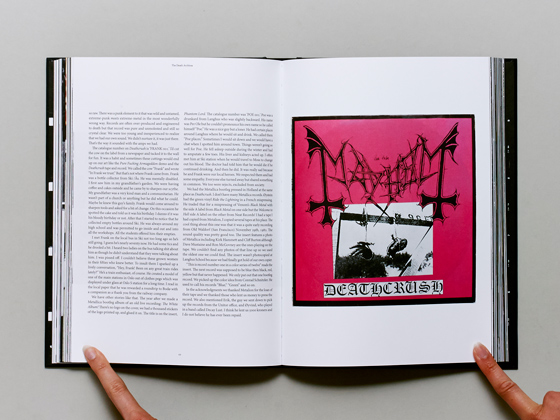 The Death Archives: Mayhem 1984-1994
The “death archives” of the necrobutcher show how the contradictions of the musical component are completely reflected in the contradictions of the socialization of adolescents - their Satan comes during school holidays, the evil open until the parents look. Nevertheless, these elements of the contradiction do not remove each other, but, on the contrary, strengthen. The worse the event, the more banal its conditions. The stronger the injury, the wider the smile. DEAD ' blood is as red on the cover as the heart on his T -shirt. Later, the suicide of Dead ' and gave rise to the direction of Depressive Suicidal Black Metal , where this contradiction is most often expressed in the names of groups. The most heart-rending and depressed teams choose a strange-firing slogan as a name. The best example is the Lifelover team. In the field of contemporary art of the 1990s, such a logic unfolds, perhaps, in the works of Santiago Sierra. Presenting the world of the most blasphemous operation, this artist emphasizes that the modernist autonomy of art is actually based on constant everyday oppression and is held only thanks to him: he tatto his famous line on the back of the heroin drug addicts, showing how the most “purified” art, minimalism and formalism, in a literal sense, literally It is sewn into the skin of excluded social groups. Thus, he takes on the functions of “evil”, makes evil in the world of art visible. A similar conflict also gave rise to Black Metal of the 1990s: it is the result of a consumer society and a performance, but this performance is an indistinguishable from will to death that pursues young people. By purchasing a Mayhem Butleg with a photo of suicides, you connect to music, you consume pop culture, but you also consume the real death of Dead ' A, turned into an attribute of the group.
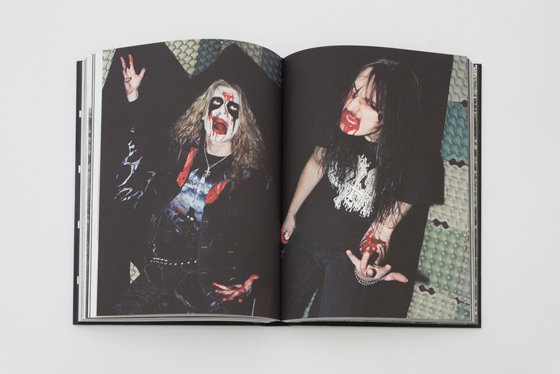 The Death Archives: Mayhem 1984-1994
Microfashism: community and passion for nothing
In the early 1990s, the main musical language of the second wave of Black Metal is formed: this is a blastbit (continuous fast drum queue), screaming (special technique of voice splitting) and primitive repeated gloomy riffs recorded using a cheap DIY equipment. The peak of the development of these techniques can be considered the network esoteric organization Les Légions Noires . Then we can state the fusion of Black Metal and the fascizoid type of community organization. A network of national-socialist Black is growing. These groups are characterized by radical chauvinism, the return “to the roots”, nationalism and homophobia, which are largely originating from the influence of Burzum songs and ideas. Blastbit handed over the state of constant war with musical means, these were machine -gun lines of drums and the cries of a divided transgressive creature, on the basis of which a white teenager often found himself. Can we separate the music of the Black Metal of the 1990s from its ideological outcome? In my opinion, this is problematic. Benjamin Neus, quotes from an interview with Peste Noir , a team fighting for “purity True Black Metal ” in his text “Remain True to the Earth!” It indicates that the very musical structure of the Black 1990s is the epiphenom of nihilistic, right affects. In my opinion, these affects are best expressed in the text of the deed of “microfashism”:
“In fascism, we are really talking about a war machine. And when fascism is building a totalitarian state, it is not in the sense of the state army, which is taking power, but on the contrary, in the sense of a war of war, exciting the state. The strange remark of Virilio shows us the way - in fascism, the state is not so much totalitarian as it is predisposed to suicide. In fascism there is realized nihilism. The fact is that, unlike a totalitarian state, trying to clog all possible lines of elimination, fascism is built on the intensive line of elusion, which it turns into a line of pure destruction and complete destruction. It is curious how the Nazis announced to the Germans from the very beginning what they carry - at the same time weddings and death, including their own death and death of the Germans. They thought that they would die, but their enterprise would be resumed throughout Europe, in the world, in the planetary system. ” [1]
Satan comes during the school holidays, the evil open until the parents look.
This quote shows an important addition introduced by a case into the theory of fascism. Fascism is not a totalitarian character of the central axis of power: it can be a network. Its main affect is a passion for non -existence. It captures groups of people at the level of micro -communities. Deleuze speaks of the fascism of the family, about the fascism of small organizations. In my opinion, the Black-metall of the 1990s is the fate of similar affects realized already in the society of globalized capitalism, in the same planetary and concrete European scale. When we describe the subcultural groups of the 1980s-1990s, we find many non-romantic trends built around the romanticization of war. In the Black of the 1990s, war and death seemed to froze in their musical constancy. The ideology of the transgression of the human state promised by the war was beckoning many radical communities. They were organized all according to the masculine type with the most aggressive and self -destructive hero as a leader. That is why the icons of this party were Dead and Burzum (subsequently killed Euronymus and received a cult status). In his interview, Peste Noire leader emphasizes: "Black-metal is double nationalism: temporal and spiritual, vertical and horizontal."
These provisions tell us not only about Black’s history, but also about the strange essence of the “network” fascism - it is connected not so much with groups whose desire is inhibited by an authoritarian personality, but with the resonance of the group’s affect with vertical structures, which together begin to move towards collective suicide in the passion of death. This aesthetic and political coupling appears before us in the True concept. If we are talking about playing an injury in the track "Enola Gay" or a fire show of Rammstein -we always deal with a distance that has disappeared from Norwegian teenagers, turning a gloomy imagination into an everyday position.
But is another Black possible? In recent years, more and more often they say that Black is rapidly left and radically modified. If we listen to the last albums, especially played in the genres of Atmosphereic and Cascadian Black Metal , we will practically not see anything in common with the groups of the 1990s. The sound became clamped, very high -quality, and the musical finds of Mayhem and Burzum began to be perceived exclusively stylistically, almost as avant -garde jazz experiments. At one time, Mayhem strangely read the legacy of British metal. Today, their legacy is subjected to a series of shifts.
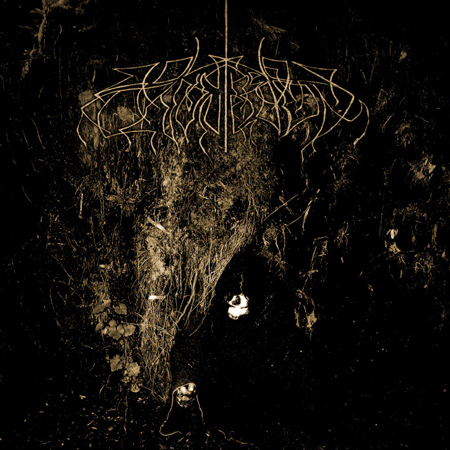 Wolves in the Throne Room - "Two Hunters"
Life -affirming noise: the left wing of Satan
Black is amazing that all three waves had great influence and their popularity among fans of heavy music never fell. This is largely due to the fact that under the signifier “Black” in fact, three different independent currents are hidden, only partly inherited by each other. We meet something similar in the interpretation of the Black Square (also Black ). Someone may say that this is the “icon of Satan”, someone talks about the peasant nihilism of Malevich, and someone sees in this the beginning of a new minimalist modernist style. So with the blackness of Black Metal . In his book “Horrors of Philosophy”, Eugene Tekker explains that a whole series of musical and cultural meanings is hiding under Black. This is: 1) Black as Pagan (pagan); 2) Black as Satanic (Sataninsky); 3) Black as nihilistic (nihilistic); 4) Black as cosmic . Blackness can be different, the absence always means the absence of something specific (God, goal or cosmic teleology). Today's interesting Black has in many ways environmental and space connotations. He is trying to recreate, already by means of strong reverb and fusion with Shugais (this direction is called BlackGaze ), the integrity of the ecosystem undergoing destruction.
You consume pop culture, but you also consume real death.
The center of this type of thinking is no longer placed in the National Socialist Communities, but by Rabm (Red Anarchist Black Metal) , which bring more to the sound of the 1990s more and more embedded punk. One of the most interesting projects is Botanist . This musician does not use guitars at all, but plays on other, more baroque, string instruments and builds his tracks from the fantastic world of flora and fauna, which bloom after millennia of oppression. However, we can still hear the harmony and blastbits characteristic of Black. Ecofilosof Timothy Morton, perhaps the most popular Wol v Es in the Throne Room group today, even carefully interprets the name of the team. For him, this is music, which has come to the place of a selfish and already burned man in order to free the “throne” for animals and wildlife. In addition to scream, elements of living vocals and hippies-stylistics are woven into their musical structure. They create powerful melodic meditations, returning a heavy sound back to the protest roots of eco-motion of the 1960s.
Botanist - A Rose from the Dead
Группа Liturgy написала целый манифест, озаглавленный «Transcendental Black Metal» , в котором они призывают уйти от страсти к Ничто и раскрыть иную, солярную, волю к власти (solar) . Этому соответствует новая техника ударных — burstbeat , обладающая более цветущей и сложноразмерной структурой. Мелодика становится празднично-гимновой и лишается любых элементов «мрачности».
Liturgy — Returner
Группа Oathbreaker смешивает блэк и хардкор, практически полностью десакрализуя блэк-метал-звучание. Находки начала 1990-х здесь являются почти модернистскими экспериментами со звуком. Космические и возвышенные падающие массивы гитар заставляют слушателя сливаться с чувственностью тотальностей, или, как их называет Мортон, гиперобъектов. Это не просто атмосферная музыка: она и есть сама атмосфера, воспроизведенная при помощи педалей реверба и дилея. Традиция скрима начинает пониматься как попытка освободиться от антропоцентрической перспективы и на уровне крика совпасть с нечеловеческим. Иногда эти направления называют hipster black , что подчеркивает их отпадение от стандартных категорий эстетики 1990-х — «тру»/«нетру». Вместо этих категорий atmospheric и cascadian возвращают эстетику резонанса и катарсиса как совпадения с космическим. Некоторые теоретики же указывают на то, что блэк-метал может быть музыкой эко-квир-логики с ее вниманием к нечеловеческому.
Oathbreaker Live
В отличие от «классической волны» 1990-х, история современного блэка еще не сложилась, так же как еще не сложилась судьба экологических движений и антикапиталистического сетевого активизма. Музыкальное поле блэка сегодня — поле борьбы различных политических интерпретаций, и мы можем занимать в этих спорах сознательные позиции, потому как популярная культура является важным теоретическим полем, где способны возникать новые ощущения и возможность альтернатив.
Автор благодарит Диану Селин за ценные комментарии в работе над темой.
[1] Это фрагмент из 9-й серии «Тысячи плато» — «1933 — микрополитика и сегментарность» .
Скачать весь номер журнала «Разногласия» (№12) «Ты из какой тусовки?»: Pdf , Mobi , Epub