
Translated material
Boarding school | Colta.ru
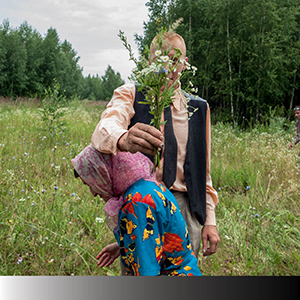
In 2017, photo projects on colta.ru will be divided into several blocks. One of them, dedicated to the Ongoing Projects, or development projects, will represent long -term copyright works, which are currently not yet completed, which means that they can still be rethought by the photographer. And there is no guarantee at all that all the pictures presented in the publication will be included in the final author's selection. The published projects can be in different stages of readiness, but most often the author himself has no idea what exactly will serve as a final point in work; Nevertheless, we hope that comments and criticisms for this publication will be useful to the author to continue fruitful work on the project.
From the author
According to statistics in Russia, there are more than 1300 neuropsychiatric boarding schools for adults (PNI) and 200 orphanages for mentally retarded children (Wood). More than 150,000 adults live in boarding schools, which means that they spend a significant part of their lives there.
Most boarders are located in rural areas, away from the eyes of residents of large cities. It’s difficult to get into them: it is not easy to get, but the main thing is that the system of boarding schools is closed, as well as prison.
When I first met the inhabitants of the boarding schools, I was fascinated by them, life in the countryside seemed quite organic to me. But what I saw did not correspond to reality, but was a special presentation arranged for me by directors of these institutions.
I still remain fascinated. I expanded the list of boarding schools in which I managed to get to see something close to reality, and my interest was shifted towards patients' rights: restriction of freedom of movement, the right to education, living conditions, lack of personal space, the ability to express my feelings and so on.
About 70 percent of boarding schools are just persons with disabilities. Many of them are capable of and even must live independently.
A third of patients in neuropsychiatric boarding schools come from orphanages for mentally retarded children. After reaching the age of 18, they must undergo a medical re-examination. If the patient receives a conclusion that he is able to take care of himself, he should be released, and the state should provide him with housing. But in reality, this procedure is often absent or is exclusively formal. The intellectual disability of people who arrived from orphanages for mentally retarded children is often a consequence of pedagogical neglect, lack of education and rehabilitation programs.
During my study (since 2011), little has changed, except that the beautiful blue-high stele was painted in a miserable gray color, and patients began to be called "recipients of services." Therefore, I will continue to monitor the life of boarding schools.