
Translated material
The nets are large and small
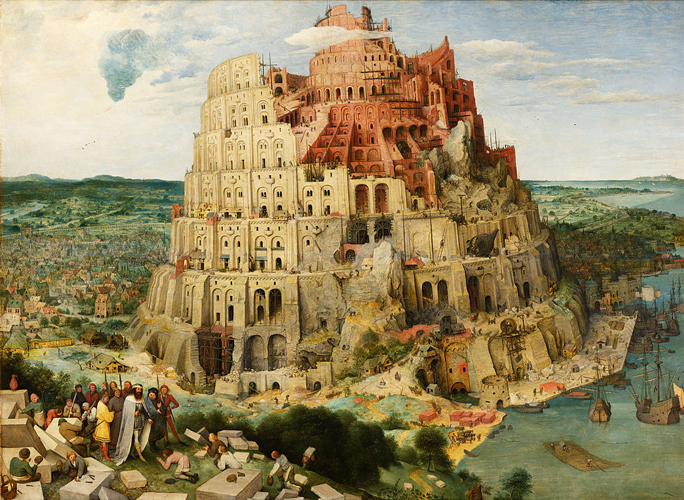
Gleb Navparenko as an editor of Disagreements and Boris Klyushnikov as a co -editor of this number open a new issue of the magazine - “What kind of party are you from?”
01/21/2017. 21:25
-The problem is how to build something that would be kept not only on personal relationships. Which would not crumble so simply when these personal relations of specific people experience a crisis.
-No matter how cool we are together, we need some kind of mechanism for transmitting knowledge. This is the institution.
-We need some kind of external another, before which there was a need to represent something ...
- Before which it would be ashamed.
- Yes, one of the problems of our community was that everyone stopped being ashamed of each other.
-We need some kind of external frame. For example, someone who would not be included in the buzz of our friendly communication with each other. Some boundaries. Dates.
- Dedlines. Some specially go to the office to work. Or to the university to study.
- Yeah, and to the church to believe. Not the worst way out. But I would like to get away with this somehow more cunning ...
01/19/2017. 23:37. Boris klushnikov:
In 2004, Pavel Althamer invited to prolong at his personal exhibition of teenagers from the Brudny district in Warsaw. These were, as they are called, "difficult teenagers", Bad KIDS are representatives of the working class from the outskirts. Someone brought beer, someone put music.
Around the same years, we were hiding in the cellars of computer clubs in the Moscow district of Tsaritsyno. I recall this climate, this weather: you go along a gloomy dirty bunch to the gray house, and only red hats of syringes, scattered along the roadsides, accompany you - like an alley of flowers. We were also taken to the Tretyakov Gallery and Pushkinsky, thrown into a smelly bus to show us the impressionists and, of course, Serov. Pictures about how calm, quiet, rich people bathe in the grass lit by the sun. I then thought about Oleg Kulik: in fact, he was not a dog. I looked at my friends, all in the curves of bright hats and stooped boots. He was not a dog, for us he was a kind of Capitol Wolf, a capitalist she-wolf. Funny, wild and desperate - we often learned these moods in the eyes of our parents, trying to earn or fall under shootings in vegetable markets. We were stuffed into a school bus, like a flock of puppies, and at night we scattered in search of virtual bones-someone went to the rave, someone in the "computers", someone preferred to read.
We were also taken to the Tretyakov Gallery and Pushkinsky, thrown into a smelly bus to show us the impressionists and, of course, Serov.
In the seventh grade, my friend became a satanist. He went to the radio market and bought up the black series “ MP 3 -collection”, and the elders took him to strange rituals for the railway. When you remember all this, it becomes clear: our youth was a cybergotic phenomenon. Lovecraft horror outside, carefully packed in the first pentures and shooters, the first “ Tomb Raider " . All this resembled the texts of the writer Anna Kavvan: you go from nowhere in the ice from nowhere, and periodically you are haunted by violent porno -chairs, you meet Zeregov and Zilotov, look at half -naked heroines, build the city in Simcity . I then went to the book, where on the shelves in the section of esoterics and philosophy stood Confucius and Nietzsche. He extended his hand and took out a “treatise on the nature of man” Humah. In the introduction, the Doctor of Philosophy said that Hume believed that the laws of nature are not laws and we can never be sure that by throwing the subject up, we will see its fall. Even gravity is not guaranteed by 100 percent. The subject holds things only by the power of his memory. The subject is faith and invention. I shared this consideration with the guys at school. It was a strange reding group. But in fact, we all knew this: gravity is disconnected in the console line “ SV _ Gravity 0” .
Yes, culture was split - modernist culture. But it was clearly not in our favor. Perhaps Althamer meant this, inviting teenagers to their exhibition. We then focused on data in the darkness, but also did not miss our pleasure. We philosophized, read, played, discussed difficult situations, helped each other and ran away somewhere together. School, its routine did not determine anything. I determined the practical reality in which we found broken textures and tried to turn off gravity, tried to fight with monsters to the music. This condition is called "microculture." Either sects, or hobbies, or survival. In short, "occupation." When I think about contemporary art - I think about this state. Everything that is supplanted by the highway and is not connected with your network, all these “sulfuries, korovins” (as Malevich said) - they leave, as the concept of Artwork also leaves. The lesson remains, and, unlike Artwork , the classes are pragmatic and possibly savvy. This can be called education.
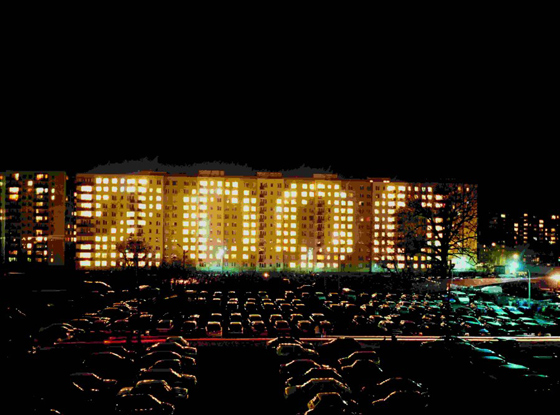 Pavel Althamer. Brudny 2000
01/13/2017. 22:47
- Do not treat you with a cigarette?
- I do not smoke.
- What is your name?
- Gleb.
- And I am Jacob. Do you know what the Jacob means? I'm a cross. I have two faiths. Not only Christianity. You see, what do I look like?
- Jacob? Are you a Jew?
- And then. Everyone knows me in the synagogue. Are you a Muscovite?
- Yes.
- And I am also a Muscovite.
- Serega. Seryoga, let me smoke.
- Tokuri.
- We are talking to a fellow countryman. Center. Do not bother us, Seryoga, go. Yes, Gleb, how to smoke. You see, my hand froze. Because it is without gloves. And on this double.
- Yes, she turned blue a little.
- There were frosts.
- And what did you sleep on the street?
- Yes, froze.
- Horror. But you look good for the homeless.
- And the cane looks good, right?
- Yes, beautiful.
- I was hanging out for 29 years on Arbat. And he did not study in his life for a day and did not work. - Why so? - I didn't want to. I am punk.
-I am half paralyzed. And hypertension. But when hypertension, you can call an ambulance at night, they will take, you can warm up there. On Monday, we all gather at the Novodevichy at Glinka.
- At Glinka?
- Lisa has in the cemetery.
- Ah, Dr. Lisa? Did you know her?
- Everyone knows me.
- And how did you stay without an apartment?
- Fabrication. In the 98th year.
-And you can't get something?
- Ah, bureaucracy. As it was, she remained. Seryoga, Seryoga, come here. On, drink.
- What is this?
- Water.
- How water? Red?
- Water, I tell you.
- Yes, Yasha, you e ** there in this Tver in two years! As you returned from prison, I see you, you’re all your garbage all the time! .. I am Sergey.
- Gleb.
“I have known Yasha for a long time.” I was hanging out on the Arbat for 29 years. And he did not study in his life for a day and did not work.
- Why so?
- I didn't want to. I am punk.
01/20/2017. 01:39. Boris klushnikov:
Increasingly, artists around the world prefer to say that they make “things” , or Stuff . This stuff enters the place of art and turns out to be ex-art. Thus, the autonomy of a work of art and interpretative experience connecting art and aesthetics, expressed in the concepts of beautiful and exalted, is undermined. The elevated is a "stranger" or reptage of Zergov. Autonomy gave art the opportunity to disconnect from social conditions, from the market, from everyday experience and dialectically contrast itself with the world of conditions and determinations (Theodore Adorno). Staff is a deautonomized and deesthetized experience. But this means that it is not disconnected from the world of conditions, but immersed in them. The thing does something, it somehow works and changes something pragmatically. It is included in the network existence and is determined by this inclusion. If the work was a rule ( rule ) , then the thing has only a role ( Role ) . She is performive. However, this position does not cancel semantic consistency of pieces . They can “mean” something, but never in themselves-they are only links of a wide chain from objects, relationships and connections. Classical arts that protect his autonomy in this state actually lose their role. The art of art is like patriarchal ponds this summer, which local residents suggested closing from children like us. Neither the museum, nor the gallery, nor the workshop can no longer determine the current state of affairs, unless, of course, their functioning itself is revised. The figure of the artist in these conditions, like the artistic community as a whole, is endowed with other socio-pragmatic meaning, which is more indistinguishable from what is usually called “post-sock”.
Raver is a role within the network situation.
For sociology, the post -sockleture is a new type of association and connection, which has a temporary character. Say, the Goths are a classic subculture that completely changes your identity. To be a goth is a rule of life. However, the 1990s rave was something much more mobile. You are River only when the party is in full swing, you may remember that you were a raver that evening, but you do not merge with identity at the essential level. Raver is a role within the network situation.
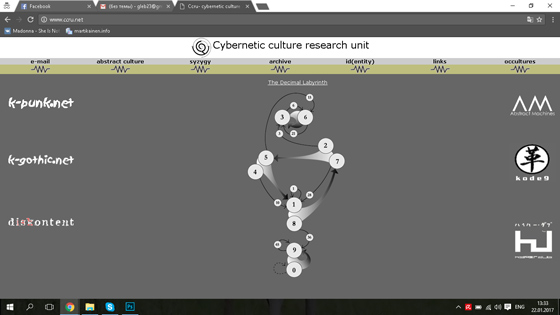
However, I believe that the term “post -sock”, although it indicates the right genealogy of modern communities, is still tied to the hierarchical model of attitude towards a certain culture with a capital letter, to the culture of the modernist type. Therefore, it would be true to call today's state microcultures. This term was actively used in the semi -mythical cyberpositive organization CCRU ( Cybernetic Culture Research Unit ) , about which they often say that it "never existed" and it "will never exist." It was there that the first theories of Rav, Jalla, studied science fiction and neurochemistry. Microculture does not consist of “people” and their identities, but of the viral cross streams of information stiff - visual, audio, chemical or ideological. Specific people are just kampfplatz flows, they were lucky to supercode these processes. This is not just a “decay” process. In fact, the 1990s showed that a person is no longer the political scale necessary for solving global problems. The totalness of either more, as climatic threats and ecological destruction, or less (on infrauds)-this is the culture after AIDS when your life depends on something inside you. A person is stretched between viruses, microbes and black cosmos. The music of the 1990s was designed to regroup the chemistry itself and the bodily movement of the ravers, Black Metal placed the inhuman screening of the external into the music. Microcultures sought to turn people into a bodily synesthetic community, but, as usual, everything came down to normal entertainment - Ravelution did not become Revolution .
If we look at the addition of modern microcultures, then we note that they produce many objects, it is pieces , which, however, can be evaluated only in aggregate. These are not singular works, but rather multiple community indices - logos, posters, ways to dress, ways to speak. They come from unity with practical life. In our case, with a neoliberal capitalist life. To make things means to be neoliberal - after all, it is through the logic of networks that the sociologists of Boltan and Kyapello determined the transition to a new spirit of capitalism [1] . But what is the network and the network community in relation to production? From this comes the stitcher of this number of “disagreements”.
01/13/2017. 16:25
- Yes, Gleb.
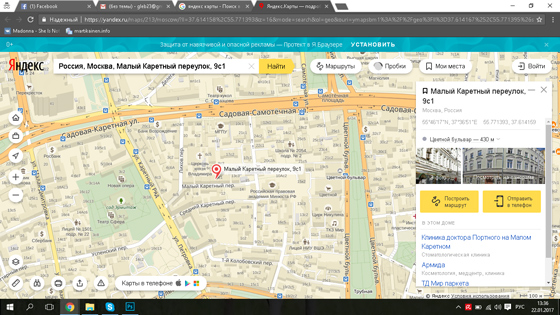
- Sorry, Borya, this is again, I do not understand. I’m standing at the house 9, building 1 in the small carriage lane. I can’t understand where to go.
- Such a blue house?
- Well, green soon. Yes?
- Yes, green. There is an arch, you see?
- Arca? Well, yes, with the gate. I was there, there is nothing like that there.
- Go to the arch, I will explain to you.
- I went there, found nothing. Now, I’ll get there back. I'm going. Wait.
- Did you go?
- Now. Yes.
- You see garages there? They should have such a blue gallery sign.
- Garages? But there is no sign.
- Blue.
- So. I’m going, yes, there are garages. Well, I came up. Garages. I do not see. A! Here is a sign. But there is closed!
- And what does the sign are not on?
- Not burning. And the castle hangs.
- Did you call in advance?
- No, but I looked at the schedule before coming, the gallery should work with four.
- You are in vain. We must call! Do you want me to send you the phone of Sasha Burenkov?
- Yes, they came, please.
- I'll send it now.
01/20/2017. 03:21. Boris klushnikov:
Classical Marxist analysis is based on a particular economic and technical model. This model is “energy”, or “energy”, which means “machine” production, factory. At the factory, the worker alienates itself and its body in favor of the car. However, in the 19th century, another philosophy of technology begins to form - informational. In this economy, profit is extracted from data flows. The machine breaks physically, depreciates, while the information is infected and transferred more like a code or virus ( viral ) . Modern capitalism of networks is the second model where coding logic and computing come to the place of factory and machine. The network organization of communities is a way of attitude to the means of production, and the network itself is a modern means of production [2] . An important theoretical and ethical maxim is based on this. We cannot equate networks with their design logic with capitalism as such. Although it is this identification that suggests itself when reading the "new spirit of capitalism." But, I think, on the contrary, as the value of the factory is not limited to its connection to capitalism, but is the place where this capitalism can be overcome (as Marx saw), so the network today is a place that must be politicized and expanded to overcome capitalist contradictions [3] .
The artist, introducing on the network today, signs the network segments, as Duchan signed the Pussar. This situation leads to the fact that the network is never in a genuine sense.
What are these contradictions? The network or project is anonymous and global. The world moves from the hierarchical structure to horizontal, but capital imposes well -known restrictions and still stops the life of its own invention. This is because network projects are still attached to authorship. I say: "Pavel Althamer gathered children." The artist, introducing on the network today, signs the network segments, as Duchan signed the Pussar. This situation leads to the fact that the network is never in a genuine sense. It is privatized: the Internet and post -institutes of art become places of separatism - a conscious “disconnection”. The network is global, but it spreads National Chauvinism. If Perry Anderson wrote that the formation of the national state needs Print Capitalism ("Press Capitalism") and National Art Museum ("National Museum of Arts"), then Hito Steierl correctly notes that the formation of the national state today needs Internet Capitalism ("Internet capitalism) and Contemporary Art Center ("Center for Contemporary Art"). Yes, art has become a stuff, occupation, but not everyone is allowed to extract privileges and benefits from this: for example, in the course of the relations, art “updates” the poor areas, aesthetizing their status of urban slums, and when they become fashionable, contributes to the eviction of their former inhabitants. Therefore, art is involved in structuring, hierarching, capturing, increasing or lowering the prestige of space, as well as in equipping time, its embezzlement or pre -provision for dubious entertainment or conscious implementation of unpaid permanent activity. And also it distributes the roles of artists, spectators, freelance curators, or even those who load videos taken to the mobile phone on the museum’s website. By and large, art is a component of the unbalanced global system, which does not develop enough of the world, while others are excessively; At the same time, the boundaries between the two zones are closed and applied to each other [4] . That is, the network allows unity and super structure to be everywhere and nowhere. Do bad KIDS has an althamer project and at the same time redistribute roles over and over again - in this logic, each of us is an eternal trainee and the Internet. Contemporary art as ex-art is global, but this global is privatized.
01/13/2017. 18:47
- Maybe I need to go to study at the university for anthropology? Sociology?
- Do you see yourself in the academic world?
- No. I do not see at all.
-Just the Russian Academy now is something completely dull. And in the West ...
- Having left west, you immediately find yourself on the lower step of a neurotizing academic career.
- And you see around not only those who arrived, but also autochthones, so to speak, who are also in complete fucking. They are torn to academic success and are no longer interested in anything. I see this very much on my friends.
- And I.
We have changed, and we need something new, but it is not. There are no such forms in society.
-Previously, it seemed to me that there was some way of life that caused me a desire to be the same. And now I understand that nothing of what I see around does not cause me a desire to move in this direction. Not even literature. No art. Maybe this is really social.
- Putin's stagnation? Or world.
-It seems that we have changed and we need something new, but it is not. There are no such forms in society.
- Maybe I need to become a writer ... or a psychoanalyst?
01/20/2017. 04:48. Boris klushnikov:
In this situation, it is important not to deny the network and network microcultures, but to analyze and politicize them as global. We see these problems everywhere. Take, for example, the "inside" of our network of contemporary art. После склок вокруг десятого номера «Разногласий» и критики фонда V - A - C многие отметили, что этот журнал является «тусовкой». Кто-то заявил, что это «художественный проект Глеба Напреенко», то есть авторски подписанный сегмент сети. Здесь обнаруживается противоречие сетей в капитализме — они анонимны, делают штуки , производят временные виртуальные идентичности, но все же продолжают привязываться к авторству. Да, это тусовка — это такая же «микрокультура», но ее логика должна быть переосмыслена стратегически. Именно поэтому мы решили сделать этот номер о микрокультурах, постсубкультурах и их (а)политичности. С одной стороны, это самокритика, но с другой, это попытка взглянуть на политические перспективы реального сложившегося положения дел. Не стоит критиковать тусовку как таковую, необходимо сделать ее в подлинном смысле сетевой. В этом номере вы прочитаете о популярной музыке, о сообществах, об искусстве «ВКонтакте», о сатанистах и фотолюбителях. Все имеет значение. Как у осьминога. У осьминога мозг в каждом щупальце, в каждом тентакле. Логотипы групп мыслят, рейверы и металлисты мыслят, bad boys и «ВКонтакте» мыслят. Вопрос в том, как далее разворачивать эту мысль политически. Пусть «Разногласия» — тоже осьминог (или Кракен), пусть кто-то даже думает, что мы — щупальца Глеба, но мы его не слушаем: кто в лес, кто по дрова.
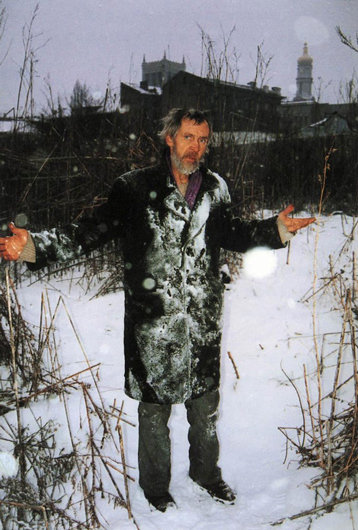 Борис Михайлов. Из серии «История болезни» (1997–1999)
13.01.2017. 22:35
— Привет, Глеб. Have you called?
— Да, звонил. It doesn't matter anymore. Боря, это какое-то проклятие. Я пришел в Центр «Красный», и там тоже закрыто.
- Yes? Там же финисаж выставки сегодня до одиннадцати.
— Я знаю, но там заперто. День маразма.
Иду между этой большой культурой и малой, и кажется, что в обеих ни хрена нету мне места.
— И к Буренкову ты не попал?
- No. Но зато я теперь знаю, что написать про субкультуры. Что это ваше современное искусство — на хрен недоступная субкультура и есть... Точнее, не так. Я тут иду по этому мосту от «Красного», и, знаешь, тут такой теперь прекрасный вид на эту ГЭС, где теперь фонд «Виктория». Все пристройки снесли, поставили вагончики для рабочих, музей строится. И не хочется иметь к этому никакого отношения. Я тут иду между этой большой культурой и малой, и кажется, что в обеих ни хрена нету мне места. Что я бездомный. Наверное, на самом деле я просто хотел бы где-то сейчас уместиться. Но не могу.
[1] Болтански Л., Кьяпелло Э. Новый дух капитализма. — М.: НЛО, 2011. 976 с.
[2] Об этом см. встречу «Технотеология vs. коинсидентология: анархизм vs. большевизм» . Там Михаил Куртов говорит о том, что марксизм не может быть адекватен информационной экономике из-за философии техники, разработанной Марксом. Однако я считаю, что это не совсем так. Например, в позднесоветской философии (вокруг Щедровицкого, о котором в этом номере журнала идет речь) наметилась линия информационного понимания мышления.
[3] Эта позиция в искусстве высказывается Сухейлом Маликом в книге « Exit not Escape — On The Necessity of Art ' s Exit from Contemporary Art » и отчасти совпадает с аналитикой Дэвида Джослита в книге « After Art » .
[4] Хито Штейерль. Искусство как род занятий: претензия на автономное существование (Art as Occupation: Claims for an Autonomy of Life) . 2012.
Download the entire issue of the magazine "Disagreements" (No. 12) "What a party?": PDF , mobi , epube