
Translated material
“Doctors do not treat our doctors, but calculate whether to give or not a medicine, and if you give, then to whom”
President of the Association of Oncological Patients "Hello!" Irina Borovova talked about why people patients with cancer need to unite
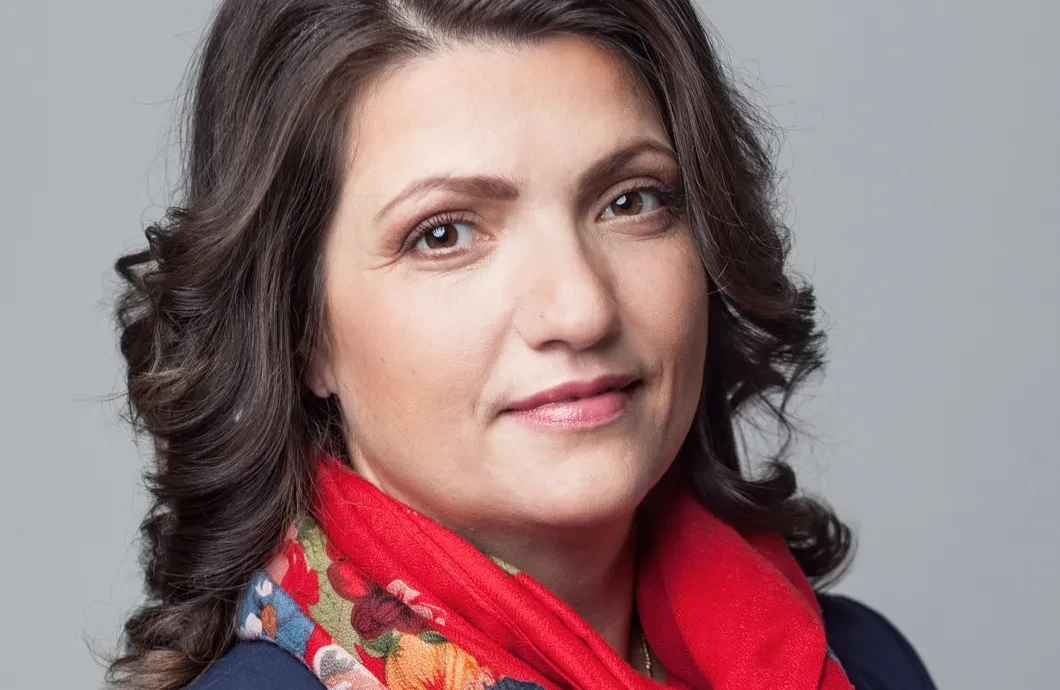
- Why do people, weighed down, unite in the association? The disease is a purely personal and difficult test.
- Exactly because it is a difficult test, such people need support. Better professional. This is my personal belief, because I am a patient with experience. Professor Tulandin brought me to the idea of creating a patient organization of cancer patients. Apparently, I somehow behaved too actively during treatment. In Russia and before us, communities associated with oncology were created, but they were created not by patients, but by lawyers or doctors, they have a different focus of interests. We are focused only on those who personally fight the disease. We registered in May last year, the Congress of oncopacients was held in October. And immediately they received a great response - people from 56 regions arrived at the forum.
“Why do you think your attending physician has given this idea?” In a sense, the doctor’s active life position is not too beneficial to the doctor. He is in the mass of his grip of very limited finances. Why does he also have “activists”?
- After the first congress, many doctors said that the patient organization is very needed. In Russia, there is no medical tradition of cooperation with the patient. The adopted format of interaction is often formal. Add the eternal timekeeping time to an appointment with the doctor. In fact, as partners, these two sides do not interact.
Congress showed how important the doctor and the patient is to talk on an equal footing. We have a group of mutual assistance among women with a diagnosis of breast cancer. We invite doctors - physiotherapists, mammologists, plastic surgeons to our meetings. It is significant that at these meetings, patients completely freely asked doctors about all the nuances of the disease. And this allowed doctors to understand what problems the patient really had, because in the office they usually do not talk about their own doubts and experiences in the reception. I would never have thought that a woman who was removed at the age of 80 will suffer due to a cosmetic defect.
The second problem, and the doctors themselves say this: “We do not know how to tell the patient a simple language about his illness, tell about the diagnosis - all the details that the patient needs to understand what consequences the treatment will feel, what he will feel.” By the way, the inability of the doctor to “translate” the medical language to accessible often prevents a person from adequately treated. He simply does not understand the doctor.
- And why do the patient from the region come to the patient organization, because he certainly will not fall into the next congress, on meetings with the doctors that you organize?
- Their main resource is our site. People read about their disease, find information about where to go in order to get help quickly. They come for psychological support. A typical situation - a person was made a diagnosis, and he is in a panic. And then the escalation begins: "I am mortally ill, life is over." Communication at the forum removes such people from a stupor. It happens, however, that some patients begin to write on the forum: “Do not undergo chemotherapy, lemon, salt, vodka, yoga helps very well. I have recovered ... ”We correctly stop such moments, because these tips lead people from treatment.
- What is the largest request for patients to you? What is the most important to them?
- The most painful and acute topic is a problem with drugs and methods of treatment. Sometimes doctors in the regions themselves do not understand how to further treat the patient. And we send such a request to a collegial decision. Doctors from the central clinics help choose the tactics of treatment in difficult cases. An even bigger problem is medicine. It happens that in the province we have not even heard of the medicine that the patient was prescribed, and it has been used for five years. The same applies to treatment methods. Modern methods are very difficult to propagate in the regions.
- Suppose in the province a woman finds out that there is a medicine that will help her, but one ampoule costs 28 thousand rubles.
- 28 thousand is great, and there are 400 thousand each.
“And before that, she’s like a cosmos.” Is it harmful to her to know all this?
- Doctors regularly ask me this question: “Why will we tell this to the patient if he cannot get it? Will it drive him into great depression? " I believe that the patient should know everything about his disease. And we must fight for this treatment. After all, in our legislation it is stipulated that cancer patient can, regardless of the region, get treatment if the region where he lives cannot financially provide it. Then they must send a person to the federal center.
- It turns out that you are peculiar "underground". You undermine the healthcare system, which is already staggering, directing another “mouth” to the power source, which barely copes with the mass of patients.
- Oncology is generally politics. I used to have an illusory idea that the theme of oncology was a special topic for the state and it is trembling. Nothing of the kind. The policy is terrible, competition even between public organizations is tough. Not everyone is interested in the truth to reach the patient.
I am always on the side of the patient. To the last. I do not want to conflict with doctors, with ministries, power, but I believe that the state is not so poor and exhausted its resources that it should be saved on cancer patients.
A few years ago, the country was very high mortality from vascular diseases, but they found funds, and help became qualitatively different. We fight to declare the year of oncology in 2018 and find finances in order to revive our service, give it a chance not to survive, but to develop.
I have the least complaints about doctors. Doctors make maximum possible.
A sore subject surfaced at the Congress. As you know, protocols are developed for the treatment of cancer - treatment and dosage schemes for drugs. They are one for everyone in the world. But since these protocols in some poor regions are generally impossible to implement, RUSSCO (Russian Clinical Oncology Society - N.Ch. ) wrote the protocol specifically for Russian regions, reducing the standard from 16 ampoules to 12. Because it is a minimum dose that can have an effect. Doctors do not deal with effectively treating, but calculated, let not give medicine, but if you give, then to whom?
When I received my drug in the Moscow oncology Center, the head physician of the clinic openly said to me: “We will give you the drug now, and dozens of women will not receive anything after you. Shame on you?". I replied: "I'm not ashamed, I am the mother of seven children, I want to live." And I also heard from her: "You are not so young to treat you so intensely." In fact, I am sincerely sorry for this doctor: she has no money for all those in need of treatment.
"We will live"
The charity television marathon with this name in support of cancer patients will be held on February 4, on World War II day. All funds raised during the marathon will be sent to the Association of Oncological Patients "Hello!" To organize free measures for early cancer diagnosis, purchase equipment in federal cancer centers and assistance to patients.