
Translated material
"Do not catch us on a word"
Lawyers comment on the court decision on a hidden audio record
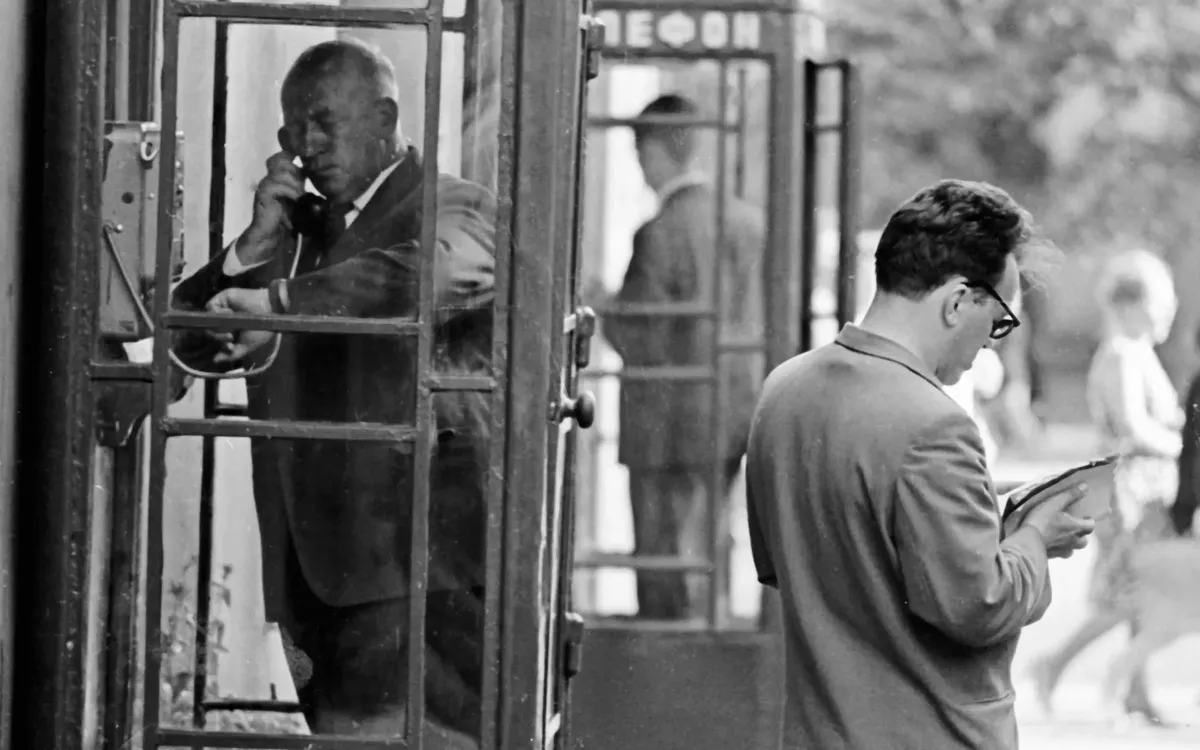
Hidden audio recording - now permitted evidence in court. The Supreme Court made such a decision the day before, agreeing to consider the recording of the conversation made without the knowledge of the speaker, with sufficient evidence in the material of the case. The New Gazeta talked with famous lawyers and lawyers about whom and under what circumstances this law is extended, how the record is different from the record from the record “live”, and how officials have the right to behave with a new decree.
Dmitry Agranovsky
advocate
- In my opinion, this law contradicts the constitution. The hidden audio recording is actually a form of interrogation, without any procedural guarantees for the interrogated. And in accordance with the 51st article of the Constitution, everyone has the right to testify against himself and their close relatives. Firstly, a person does not know about the very fact of the record. Secondly, it can be provoked. Thirdly, it can be brought to some expressions or words that he would not say. The fact is that the constitutional and European court has repeatedly spoke out on this subject. It is unlikely that the Supreme Court will directly go against them.
It is unlikely that surveillance and wiretaps in films such as “Anatomy of protest” can fall under this law. I must say that we have a rather liberal legislation in this regard. Say, if we take the Udaltsov and Razvozhaev case, the point is not that the legislation made it possible to accept wild audio recordings received incomprehensible as evidence. The legislation did not allow. Just the court accepted them. We have law enforcement practice and legislation very much. In the legislation, everything is well scheduled. But the court simply accepted them and that's it. Despite the fact that our witness with NTV said that the audio road was separate and the video road was separate. And when we asked how they drove, in court he answered directly: well, we pulled around about the eye.
The problem is not that someone is allowing something. If there is a need to pronounce a conviction (especially, in a political case), eyes are blind in any violations. This sphere must be adjusted. In the order of operational-search measures, audio recording is allowed. But the private person on his own initiative should not collect evidence outside the criminal case. There is a concept of inviolability of private life.
By the way, for example, last year I bought an American car. And I look, she has something like a registrar in front. In the event of an accident, this registrar records 30 seconds. I could not understand in any way and turned to the car service, why is such a wonderful recorder, only 30 seconds records? They tell me: do not you know that in America DVRs are prohibited? This violates the principle of inviolability of private life. The other day there was a program on TV, where a police officer said that when you install a camera for surveillance for your neighbors, this is wonderful and beautiful. There is a law on the protection of personal data, and the voice and image are also related to personal data.
Ilya Novikov
advocate
- The decision in the specific case (the debt collection is ed.) The very decision. We just have such a strange taboo: you speak on the phone, write down the conversation, and then you have no right to use it. This is such a police law enforcement that "is not supposed." And why not supposed, no one can answer.
You just need to understand that surveillance and wiretaps are generally a different situation. This is not a conversation on the phone. Listening to others in other cases is, it means to throw a bug to someone. This is criminalism. Here, you are talking to me on the phone. I have an application on my phone that records calls. The collegium of the Supreme Court said very correctly that there is nothing wrong with using the hidden entry. Another thing is that if the conversation concerned his personal life, its publication or its use could have any consequences. But when the conversation is about money, about debt, and extortion - this is important.
I would not overestimate, of course, this decision, because there is a favorite judicial phrase "In Russia, an indiscriminate law." If you translate it into a human language, it turns out: "Do not catch us on a word." Today we said one thing, and if we want to say another tomorrow, we owe you nothing.
Sergey Pashin
Former federal judge, expert in the field of law
- Audio recordings that people do as self -defense have always been recognized as evidence in the case. Because by virtue of the 45th article of the Constitution of the Russian Federation, everyone has the right to protect rights and freedoms independently. Therefore, a person who writes his conversation with someone else does not violate any laws, and such a record can be used as evidence.
Another thing is if law enforcement agencies arrange an operational experiment. They give a citizen a voice recorder, he is fixed on his body, a citizen goes to the person to whom he reports, provokes him to a conversation, where he, say, confirms the desire to get a bribe. And this record serves as the basis for conducting an operational experiment, for example, on a proposal to him of the bold bills.
I considered such things. In this case, it is necessary that the head of the operational unit submit a resolution on this event, having sufficient reasons for that. But you need to understand that if there was no decision, the court does not have the right to consider such a record.
If we are talking about recording telephone conversations, it is necessary that there be a court decision. Different methods of recording that officials keep are subject to different regime and different rules. Let's say the interception of telephone conversations requires the decision by the head of the operational unit. And the record of private conversations requires nothing.