
Translated material
Not a time for domestic violence
Appeal to the speaker Valentina Matvienko on the eve of the voting in the Federation Council
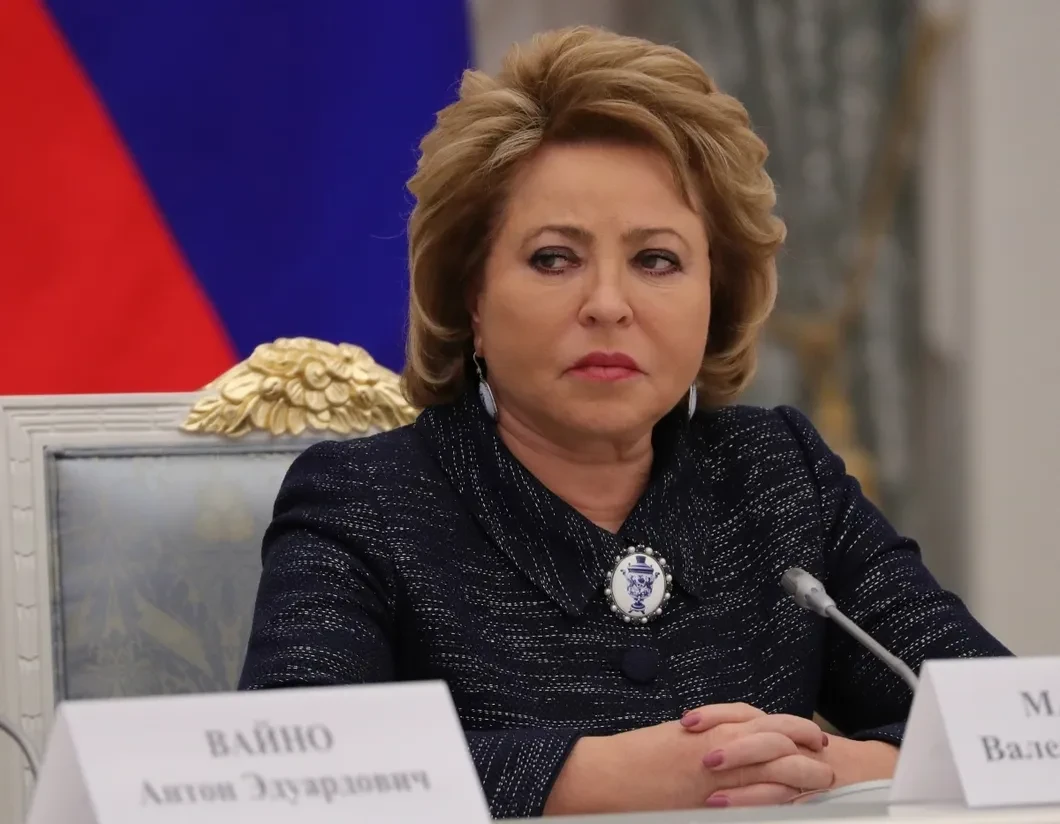
Appeal
Chairman of the Federation Council
Federal Assembly of the Russian Federation
Valentina Ivanovna Matvienko
Dear Valentina Ivanovna,
We turn to you as the co-organizer of the Eurasian Women's Forum, the chairman of the Council of the Federation of the Russian Federation, the initiator of the development of the national strategy of actions in the interests of women for the period of 2017–2022, the most famous woman policy, a mother, who repeatedly expressed in support of the interests of women. The final resolution of the Eurasian Women's Forum contains very important words in Russia for solving the problems of domestic violence in Russia: “We emphasize the importance of preventing and eliminating any forms of violence against women and children.” In your heading in the Russian newspaper you wrote: “ There is only one conclusion: our efforts to protect children from cruelty are insufficient. And if you call things with their names, then they are simply bad from this. This problem in our country is still far from the solution. It is still to work and work on it . ”
The problem of domestic violence is acute in Russia and is not at all imposed by the West, as it is customary to say. It is enough to look at the last VTsIOM survey, where among 1800 respondents a third of respondents (33%) reports that such cases have been in the families of their acquaintances, and every tenth (10%) personally encountered this family. In Part 2 of Art. 21 of the Constitution of the Russian Federation it is said: " No one should be tortured, violent, other cruel or humiliating human dignity or punishment ." According to the official statistics of the Ministry of Internal Affairs of Russia for 2015, 50 780 people became injured from violent crimes in the family, of which 36,493 were women, 11756 - children.
Last week, the State Duma adopted in third reading the bill No. 26265-7, which provides for the exclusion from Article 116 of the Criminal Code of the Russian Federation “in relation to close persons”. Thus, the changes translated the beatings against family members and other close persons from the category of a criminal offense into an administrative offense.
Supporters of this project call the beatings “slaps” and claim that these are minor offenses that should not be strictly punished for the first time. At the same time, judicial practice and experience of specialists (police, lawyers, social workers) speaks the opposite.
Beaters are not slap, beatings are blows, often repeated, often extraneous objects that, by a happy chance, have not led to more serious damage than hematomas and abrasions, which at the same time can live on the bodies of the victims for months.
That is why since the USSR, an article on the beatings was contained in the Criminal Code. The main task of this, the so -called preventive corpus delicti, to prevent more serious crimes, which may end for the victims much more deplorable.
Despite the fact that the Criminal Code of the Russian Federation provides for criminal liability for the application of beatings by a person subjected to administrative punishment (Article 116.1 of the Criminal Code of the Russian Federation), i.e. In the event that causing beatings occurred again, it is not easy to achieve punishment for such crimes, since the procedure for private prosecution is provided for these types of crimes (part 2 of Article 20 of the Code of Criminal Procedure of the Russian Federation). Private prosecution cases are initiated only at the request of the victim, filed in the established form to the magistrate court. At the same time, the functions of a private prosecutor, who must independently maintain the accusation, submit evidence, participate in their study, must be present in every court session, apply petitions, etc., which in situations of domestic violence is almost impossible for the victim.
Being or causing harm to health committed by a family member or relative, presents a greater degree of public danger than the same crimes committed by an outsider,
T.K. Most often, the offender and the victim live in the same room (apartment, house), in this regard, the victim is forced to constantly experience fear for his safety.
In addition, crimes committed against family members are encroaching on family relations, leading to more serious consequences (divorce, disputes against children, and in tragic occasion - orphans) than the same crimes committed by an outsider.
As indicated above, due to the complexity of the private prosecution procedure, most of the victims completely refuse to protect their rights. Thus, a person who has already been administrative liability will not be criminally punished under Article 116.1 of the Criminal Code of the Russian Federation “Beating beatings by a person subjected to administrative punishment,” since most of the victims will refuse to appeal to the magistrate court. Consequently, it is the malicious offenders that will remain unpunished, which clearly contradicts the goals that the lawmakers pursued.
Voting for the decriminalization of beatings, the state gives a signal to home boxers that
You can beat, and the fine can also be paid from the family budget. We all understand that the family budget in Russia is common. And the beaten victim will also be punished financially. Often the rapist will be able to pay her money for the fact that he beat her.
Valentina Ivanovna, we believe in your words that "... women-parliamentarians can really make decisions, take steps that are able to direct the course of events into the creative channel in the interests of all mankind." We, human rights activists, lawyers, public figures, experts in working with victims of domestic violence, indifferent citizens of the Russian Federation, women and men, ask you to personally protect our interests as citizens of the Russian Federation and the interests of victims of domestic violence and oppose the beatings for the fine and for the comprehensive solution to the problems of domestic violence in the form of a separate law. We ask you to support the norms of non -violence and inadmissibility of violence, especially with the family. We believe that in the family, every person should feel more, and not less protected, we believe that the family is based on mutual respect, love and creation, and not on the admissibility of bodily punishments and domestic violence.
We ask you not to vote for such changes in the legislation, but to create a conciliation commission to finalize the bill, and also not to vote for the decriminalization of beatings in the family before the adoption of a separate Federal Law “On the Prevention of Family-House Options”, which provides for the mechanisms of prevention of this phenomenon, the norm to protect the victims of the home (the introduction of a security order system for the victim), the system of state assistance to the victims) (development of a network of crisis centers, the provision of free legal, psychological and social assistance).
Anita Soboleva, Ph.D., member of the Presidential Council for the Development of Civil Society and Human Rights
Svetlana Aivazova, Doctor of Authority, Member of the Presidential Council for the Development of Civil Society and Human Rights
Irina Kirkora, member of the Presidential Council for the Development of Civil Society and Human Rights
Alena Popova, public figure, the author of the petition in support of the draft Federal Law “On the prevention of family-household violence” (collected over 250,000 signatures), co-founder of the Women's Mutual Easter Project project
Anna Rivina, Ph.D., Executive Director of the Fund for Assistance to people living with HIV “Speedes Center”, head of the Vasily.net project
Marie Davtyan, lawyer, co-author of the draft Federal Law “On the Prevention of Family-Housebuilders”
Alexey Parshin, lawyer, co-author of the draft Federal Law "On the prevention of family-household violence"
Marina Akhmedova, writer, journalist, co-founder of the Women's Mutual Assistance Project project
Natalia Evdokimova, member of the Presidential Council for the Development of Civil Society and Human Rights
Information and methodological center "Anna"
Independent charitable center for helping the sexual violence of "sisters"