
Translated material
Roads of transportation
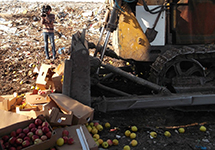
Rospotrebnadzor proposed to fine citizens for the storage and transportation of goods prohibited for import into Russia. The draft law providing for amendments to the Code of Administrative Offenses and the addition of it with a new article is posted on the portal of draft regulatory acts.
"The sale, storage, transportation of goods prohibited for import into Russia entails the imposition of an administrative fine in citizens in the amount of 3 thousand to 5 thousand rubles with confiscation of administrative offenses or without it," the document says.
In addition, it is proposed to fine officials in the amount of 30 to 50 thousand rubles, and individual entrepreneurs - in the amount of 30 thousand to 50 thousand rubles with confiscation of administrative offenses or without confiscation.
A fine for legal entities is proposed to be set in the amount of 75 thousand to 100 thousand rubles with or without confiscation.
In Rospotrebnadzor, they explained that these measures would not affect citizens who import prohibited products for personal use. "Administrative liability for citizens is implied only in the implementation of foreign economic operations that provide for the sale, storage, transportation of prohibited products to the territory of the Russian Federation for sale," the press service of the department said in a statement. Earlier it was reported that private individuals are allowed to import up to 5 kg of prohibited products to Russia.
Russia has been banned for the import of a number of food from the EU, the USA and Canada in 2014. On June 29, 2016, Vladimir Putin signed a decree on the extension of the grocery embargo until the end of 2017 . Measures suggest the ban on the import of certain types of agricultural products, raw materials and food from the USA, EU countries, Canada Australia, Norway, Ukraine, Albania, Montenegro, Iceland and Liechtenstein.
In August 2016, the Rosselkhoznadzor reported that more than 7.5 thousand tons of sanctions products were destroyed in Russia over the year. According to the agency, the main share was vegetable products - 7.282 thousand tons. The remainder fell on livestock products.
Most of animal products were destroyed in St. Petersburg and the Leningrad Region (71 tons), Belgorod region (54.065 tons), Kaliningrad (32.59 tons), Omsk (26.492 tons), Orenburg (21.06 tons). In total, these products were destroyed in the 31st region.
The rating of regions, where vegetables and fruits were most often destroyed, were headed by the Bryansk and Smolensk regions (2.76 thousand tons), then the Tver and Pskov regions follow (1 thousand 891.6 tons). 643.7 tons of plant products were destroyed in the Rostov and Volgograd regions, as well as in Kalmykia, 521.98 tons - Moscow, Moscow and Tula regions, 221.3 tons in the Orenburg region.