
Translated material
15 recent music books that are worth paying attention to
From classics and academangard to Kisha and existential punk
Gorky continues the music week - we published monologues of Pankov about their reading practices, a review of John Sibruk’s “Song Car”, a fragment from the book “Bowie” by the philosopher Simoni and excerpts from the autobiography of Miles Davis. At the request of Gorky, Oleg Sobolev compiled a list of the most curious recently published books about music: biography of sheet, Cage and synatra, the history of the musical system and Internet piracy and much more.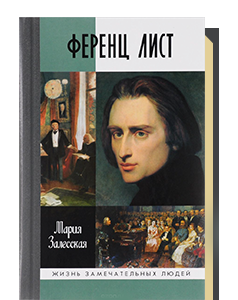
"Ferenz Liszt." Maria Zalesskaya. M.: "Young Guard"
Incredibly, there was still no biographical book about Liszt in ZhZL. In the seventies in the series, Dierdy Gaal’s artistic novel was published, but the explanatory biography appeared only now. Musician Maria Zalesskaya, who made thorough books about Wagner and Beethoven for ZhZL, and here did not move away from her style. The life of Hungarian virotosis, which turned into a fanatical secretive Catholic, is painted in it by day. To screw some great idea to the text (as, say, in ZhZL about Prokofiev, where the poet Vishnevetsky 500 pages proves that the composer was an Eurasian in a direct Duginsky sense) Zalesskaya simply had no volume, and probably there was no desire. This pleases: in Russian, first of all, it is the biography of the great (and many underestimated) composer, and in the latter - the ideological justification of his work.
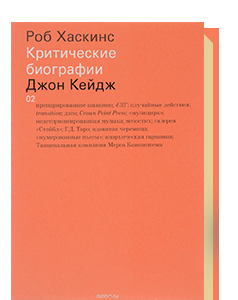
"John Cage." Rob Haskins. M.: Ad marginem and "garage"
Following the “conversations with Cage”, Ad Marginem and Garage released a biography of one of the main American composers of the 20th century. The name of the series in which it is published is “critical biographies” - here falls into the very point: the professional musicologist Haskins is not interested in the retelling of the life of Cage (although this is happening), but puzzled by its fundamental ideas. He rather does not attack these ideas from the standpoint of cultural studies, but disassembled from the standpoint of art history - which is more likely for a reader who does not know about Cage, rather a plus. Unfortunately, the translation was not fully successful, but one of the most successful was chosen from numerous books about Cage Ad Marginem and Garage. The next logical step would be the translation of the ingenious work of Kyle Gann about “4'33” ”.
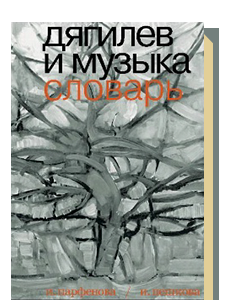
"Diaghilev and music." Irina Parfenova, Irina Peshkova. MARCH"
Encyclopedic dictionary dedicated to Diaghilev and his relationship with music. Corpopards, musicians, singers, chormasters, conductors and other people who worked, gathered to work or crossed with the lives and interests of theatrical impresario were gathered together. It turned out, surprisingly, a thing far from academicity, reporting about his heroes on the verge of popular biographers and documentary prose, is not an encyclopedia, but something very close to the format of the “dictionary” in domestic media.
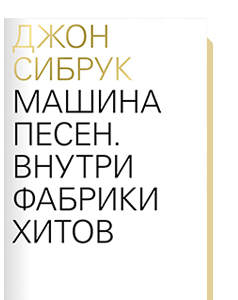
“The car of the songs. Inside the hits factory. " John Sibruk. M.: Ad marginem and "garage"
Perhaps there is perhaps nothing to add to the said Makarsky in the expanded review of the author of the author of Nobrow: yes, this is a rare “smart” book about mainstream pop music; Yes, it really has more Sibruk itself than music itself; Yes, by a rare translated publication non-fiction about the huge industry, domestic publishers do not fill their prices. However, Sibruk, with all its shortcomings, is at least terribly exciting and fluently read and may interest the most distant from the pop music of the reader. As a good mainstream book about mainstream, this is a good job. I would like to believe that step by step domestic book publishing will still grow to more inventive texts about mass music.
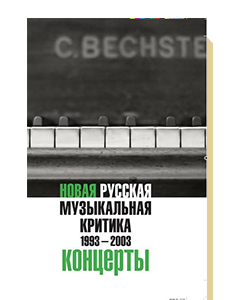
"New Russian Musical Criticism 1993-2003: Concerts." M.: UFO
Three -volume anthology of Russian criticism from the UFO publishing house began “opera”, continued “ballet”, and ended with “concerts”. With all due respect to the authors and compilers of the first two volumes, it is “concerts” that are the best. It is read not as notes about the nearby past, but as a chronicle of some other world: Svetlanov plays the eighth Malera, the first mysterious authentists come to Moscow and St. Petersburg, here he died, and so on. Almost any report is worth its weight in gold, the notes of Peter Pospelov and Boris Filanovsky give special pleasure: the first has anger and rage that has disappeared in his current work, the second has completely virtuoso language, humor and amazing musical erudition.
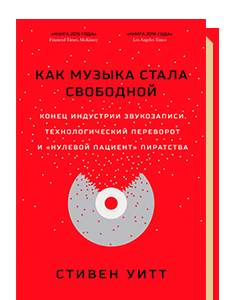
"How the music became free." Stephen Witt. M.: "White Apple"
Almost detective non-fiction about the origin of musical Internet piracy. Economist, mathematician and journalist Stephen Witt investigate the circumstances of how noticeable mainstream albums began to flow on the dawn of the zero on the Internet. Witt works in the genre of smart and expanded to Longrid's book from some intellectual American magazine, informatively and gracefully building and resolving a dramatic conflict, with a small degree of cultural reflection and necessarily with a super-skeleton. The most curious story is the disclosure of people who were behind the massive leaks of albums in the Napster or Audiogalaxy era. These people are not at all the same as they can be presented - but it is better not to spoil.
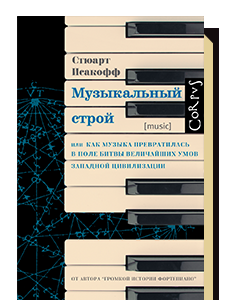
"Musical system." Stewart Isacoff. M.: AST
The grandiose history of the musical system in Western classical music is how much uninteresting to the general public, just as fascinatingly described by the pianist, teacher and theoretician of the piano Isakoff. As a person deeply immersed in the questions of the musical system and the problems of perception of sound, he is interested in the slightest details - therefore, the author rushes from the actual music to the problems of physics, philosophy, religion, and so on. However, as is characteristic of the venerable professional, Isakoff sometimes has difficulties with the narrative for the wide masses, which is sometimes difficult to read. It will become very difficult if there is no way to listen to the composition mentioned by the author - keep in mind.
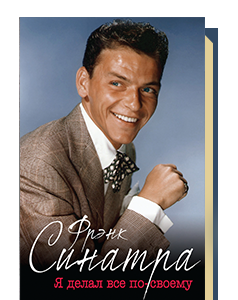
"Sinatra: I did everything in my own way." Randy Taraborelli. M.: Exmo
A detailed and painted synteric magazine, a synatra biography, published back in 1997. The latter lies its drawback: since then, journalist James Kaplan has published his two -volume about a synatra - even more (2000 pages), even more interesting and written in more detail that the book of professional biographer of American celebrities Taraborrelli instantly lost its relevance and weight. A rare Russian reader will master 2000 pages about the synutra, but Kaplan’s work is an incredible masterpiece in the genre of musical biography, much more worthy of the speedy publication in Russian than Taraborrelli.
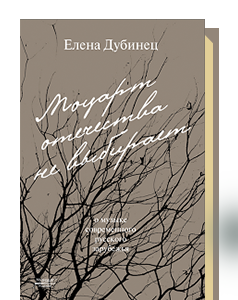
"Mozart does not choose the fatherland." Elena Dubinets. M.: Muzizdat
The thorough work of the professor of the Musical Department of the University of Washington on a close -up topic: fate, life and music emigrated at the end of the past and beginning of this century composers and performers from Russia and the former USSR. Corndof and Firsov, Rabinovich-Barakovsky and Batagov, Frankogiz Alizade and Efim Bronfman-Dubinets covers different generations and different schools and, most importantly, completely different attitude. The opening article Dubinets and the conversations closing the book with the heroes form a canvas about the absence of a Russian composer and even more so performing community abroad. The book Richard Taruskin, a fact requiring mentioning, spoke about the book as complimentary as possible.
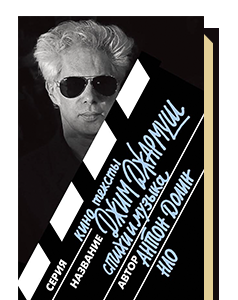
“Jim Jarmush. Poems and music. " Anton Dolin * recognized in Russia a foreign agent . M.: UFO
The book of the famous film critic Anton Dolina, timed to the Russian rental of the new film “Paterson”, is partly researching Jarmush’s films, partly poetic initiation, partly a collection of articles of Russian muscriticals about music in the films of the American director. The scatter of the studied musical phenomena predictably amazes: Ilya Ovchinnikov wrote a wonderful and unexpected text about Malera, Ilya Miller-the most accurate note about Wu-Tang Clan, Yuri Saprykin-a brilliant essay about Nile Yang. Full Disclosure: The author of this text is also present among the contributors.
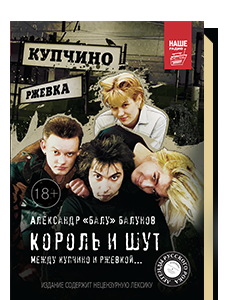
“The king and the jester. Between Kupchino and Rzhevka. " Alexander Balunov. M.: AST
The first bass player of the “king and jester” has long been living in California (on the “Afisha” website, his amazing story about emigration once came out), but the thoughts of the main thing of life still do not give him rest, which is evidence of its almost 400-page story of the most popular punk group of the post-Soviet space. It is not easy to read it to a person familiar with the work of the prince, the pot and ball no further than the “damned old house”, at times it’s not at times - too much in the text is focused on Kisha fans. But in general, it turned out to be a cheerful and cognitive documentary essay, not shy of either lyrical digressions, nor pure documentary. Not a brilliant book, but memoirs of this quality about Russian rock rarely come out.
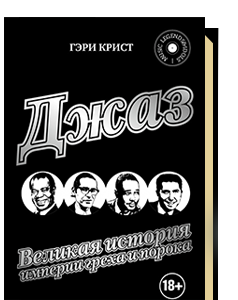
"Jazz. The great history of the empire of sin and vice. " Gary Christ. M.: AST
The next book about the history of jazz is actually a brilliant documentary novel about the criminal story of the new Orleans of the late XIX and early XX centuries. The Maryland writer, journalist and litcrit Krista tells in detail about the formation of jazz in the city and about his key figures. But still, Jazz is one of the through topics that allow us to talk about the murders, crimes of the mafia, prostitution and corruption. Hence the natural question to the AST publishing house: why focus on the design of a book on lovers of jazz, who will most likely be disappointed and not sell excellent documentary fiction of the crysta to the mass reader? There is no answer.
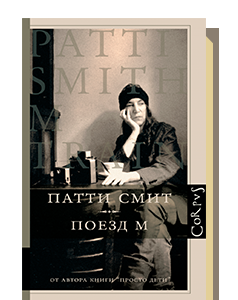
"Train M". Patti Smith. M.: AST
The nineteenth book in the bibliography that does not need Patty Smith's ideas is a collection of poetic sketches about the life of Smith herself, her travels, meetings with interesting people. Bobby Fisher, Yukio Mishima, Jean to his wife, Roberto Bolanyo - Smith reveals the memories of the great episodes through varying degrees of interest. Sometimes, as in an episode about the relationship between Smith with the work of Sylvia Plates, a penetrating confessional prose is obtained, sometimes, as in the story about Fisher, the “train m” suddenly turns into a collection of anecdotal sketches.
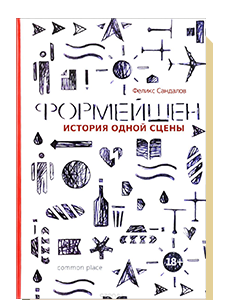
“Formyshn. The story of one scene. " Felix sandals. M.: Common Place
Nominated for last year’s “National Bestseller” and criticism of the study of form “Formyshna”-concentrated mainly in the group “straw raccoons”, its leader Boris Usove and the musical-artistic and political cell of the Russian (almost always Moscow) punk. Really powerful documentary text about "raccoons", the Lisichkin Bread group, NBP and other entertaining phenomena, which cannot be pulled from even in the absence of the most superficial knowledge about the subject. True, the absence of at least some internal chronology is embarrassed. Considering that the “form” is full of details, stories and characters of different scale, the torn structure of the text quickly disorients.
“The twentieth century. Music of war and peace. " M.: "Progress-Tradition"
A collection of materials of the conference of the same name, which was held in 2015 at the Moscow Conservatory and issued by the Publishing House "Progress-Preparation" with a circulation of 300 copies. Finding a 600-page volume is difficult, but it is possible. The collected reports are disarmed by the historical range (from the First World War to the Kosovo conflict), the geography of objects (from Turkmenistan to China through Russia, America and Europe), a parade of surnames, which are always interesting to read (Meskovsky, Miyo, Messian, Xenakis and so on) and which is simply curious (Rafail Kasimov, NSUEN. Lantuatite, Margarita Rittich), and an amazing ideological scatter. The reports vary from the purely academic “Bu-bo-boo” to fascinating historiographic essays. In general, a very good way to kill several evenings.