
Translated material
Assigned guilty
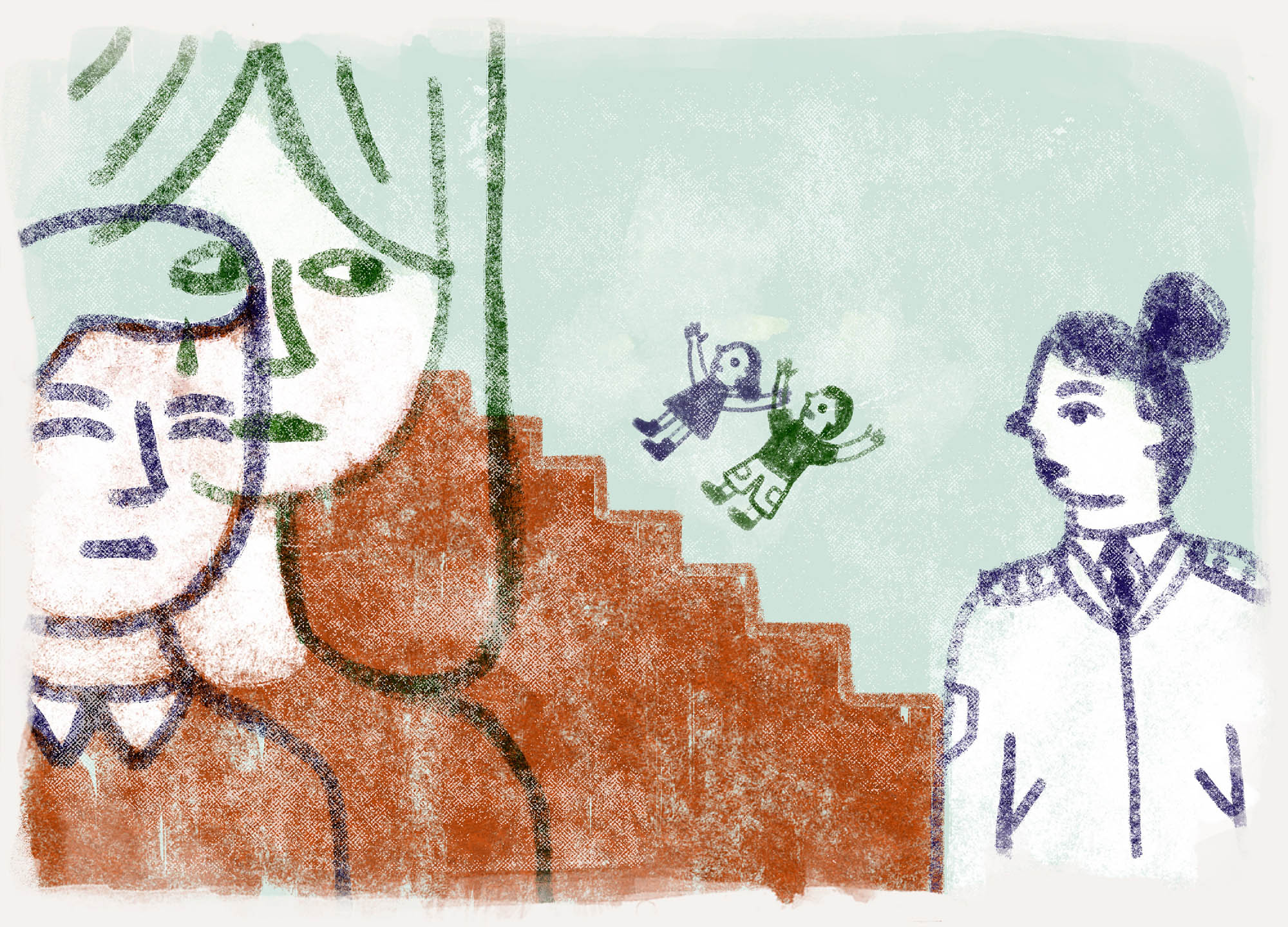
The society has a short memory. It does not want to recall the mistakes made in the story with the foster family of the Ageevs, whose business is very similar to the work of the Del family
Now no one remembers the removal of adopted children from the family about the “Ageev case” and the removal of adopted children. Although it is very similar to the story of the del family, from which on January 10, 2017 ten foster are seized - adopted and located under guardianship - children on suspicion that the adopted father beats them. A week after the seizure, the Moscow Department of Social Protection terminated the guardianship agreement with the Del family. Yesterday in the Zelenograd court a preliminary meeting was held on the administrative lawsuit of Svetlana del about the recognition of actions to the seizure of her children from the family.
The Ageev family went through seven trials until the European Court of Human Rights. In 2009, the fate of Gleb and Polina was discussed in federal news and at the talk show with Malakhov, the leaders under their history were given respectable Izvestia, the government “Russian newspaper” and the tabloids “Life” and “Komsomolskaya Pravda”. The situation with the seizure of children from the family was interested in the whole society: the interests of the Ageevs were represented by the lawyers of the Memorial, and the rallies were organized by the extreme right -wing nationalist organization People’s Cathedral. The Ageevs case opened a wide discussion about possible forms of juvenile justice in Russia. Now, in connection with the Del case, they are again discussing the relations of the state and foster families, but they will not turn the past.
Parents or kettle
January 28, 2017. Anton and Larisa Ageevs gather in a cemetery to their blood son. Such a tradition - after the New Year and Christmas, they bring a Christmas tree to the grave and decorate it. Anton and Larisa are literally standing in the doorway, but they talk to me for two hours, they are ready to talk longer. The eldest son of the Ageevs died seventeen -year -old in 2001 from a rare illness. They did not have more blood children.
Read also The touching story of a photo station about the birthday of a girl living in an orphanage for blind men
The Ageevs decided not to become adoptive parents immediately. The family was wealthy enough to try to conceive another child, they were treated both in Russia and abroad - Anton Ageev worked in high positions for many years, was the general director of several large factories, then the chairman of the board of the Moscow Bank. His wife also worked in the banking sector, was a lawyer and was engaged in arbitration proceedings. In April 2008, after unsuccessful treatment, they took to a family from the Moscow orphanage of a three -year -old Gleb and one and a half year old Pauline, brother and sister.
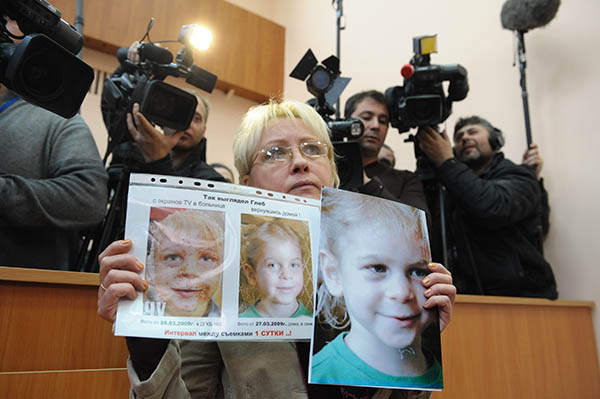 Larisa Ageeva at a meeting of the city of Vidnoye, at which she was found guilty of the torture of the adoptive son of Gleb and sentenced to the year and eight months of correctional labor. November 15, 2010 photo: Stanislav Krasilnikov/TASS
 “Everyone tried to put us up with some eager people,” says Anton, “and between the decision as such and the fact that we took Glebk and Polina, several years have passed. We specially built the house for this, we do not have a single unprotected outlet there. ” Larisa went to remote work and was with the children all the time - the Ageevs had neither nanny nor assistants.
In March 2009, Little Gleb got to the hospital. According to his parents, he knocked over a hot kettle, scared, ran to his mother and fell from the stairs. But according to investigators, it was the final point in the year of the bullying of Larisa and Anton Ageevs over their adopted children.
At first there was no investigation - Anton took the child to the hospital near Moscow, he was transferred to the burn department of the DCB No. 9 named after Speransky. Almost immediately, Gleb's photos appeared in the press. The child’s head was bandaged, part of the burns hid the ointment. There were assumptions that the bruises on the child’s body were also inflicted on parents. Subsequently, the head of Leonid Penkov was fired for the transfer of these pictures in the press to the head of the surgical department. The photographs were repeatedly shown on television, a frequent guest in the programs was the assistant to Vladimir Zhirinovsky Dmitry Gerasimenko, supposedly the first to receive pictures from doctors.
“Did you read Pelevin’s novel“ Snuff ”? - Anton Ageev asks sadly. “If the press appointed someone guilty, the authorities of the authorities confirm this.”
If the press appointed someone guilty, the authorities of the authorities confirm thisAn interview appeared in the press with the little Gleb Ageev, where he said that his adoptive mother was beating, his words were confirmed by little Polina. “Do you understand that all this was built on the words of children who fell into a family from the system of orphanages? - says Larisa. “And not psychologists asked them, God with him, albeit without the presence of parents, namely journalists.”
At one of the seven trials, the testimony of little Gleb is heard:
- You got burned and ran to mom?
- Yes!
- And what?
- And he fell from the stairs.
“Mom didn’t push you, Glebushka?”
- No!
- You yourself, that is, fell?
- Yes!
We won to no avail
In August 2009, Anton and Larisa were deprived of parental rights, children were placed in a shelter. Initially, criminal charges were brought against both parents, then the state prosecution proposed to be found guilty only by Larisa under three articles of the Criminal Code: “Failure to fulfill the duties of raising a minor”, “causing average harm to health” and “torture”. The court decided to recognize the woman guilty only under the article of the Criminal Code of the Russian Federation No. 156, “Failure to fulfill parental duties”. She was released from criminal punishment and sentenced to correctional labor.
Some journalists and public figures were outraged by the ease of punishment. Others, including the Commissioner for Human Rights of the Russian Federation Vladimir Lukin and the children's ombudsman Pavel Astakhov, performed on the side of the parents. Applications for the return of children to the Ageev family were written by the employees of the shelter, where Gleb and Polina were placed. The deputy director of the shelter Alexei Tarasov spoke in favor of the Ageevs in court. According to him, Gleb and Polina Ageevs constantly asked home and did not understand why they were separated from their parents.
The seven judges of the ECHR unanimously decided that the abolition of adoption was unreasonable to read also Freedom of choice, the Polish priest discovered a shelter for pregnant women and young mothers in difficult situations in Vyatka
Anton and Larisa Ageevs continued to challenge the court decision on the seizure of children. This path ended in the European Court of Human Rights. The case “Ageevs against the Russian Federation” was considered in priority on April 18, 2013. The seven judges, including the ECHR judge from the Russian Federation, Dmitry Dedov, unanimously decided that the abolition of adoption was unreasonable, noting that national procedures on this subject need to be resumed, and the decision was revised. Russia very quickly paid Anton and Larisa 55 thousand euros of compensation and 12 thousand euros of legal costs. The children were never returned to the family.
“We turned to the ECHR with a request how to return the children,” says Ageev, “but in fact, what can they do? NATO tanks introduce? "
Twice a week, the Ageevs go to the shelter, they take the children in themselves on the weekend. This is allowed, but only without an overnight stay. “We lost everything,” says Anton. - work, opportunities, financial reserves. We rent an apartment and live for it. Honestly, we no longer hope that we will be able to return the children home on an ongoing basis. ”
Indicative process
Like the Del family, the Ageevs believe that their business was related to legislative amendments. Now the law on the decriminalization of beatings has been adopted, in 2009, the State Duma, on the proposal of Elena Mizulina, was going to amend the Federal Law “On Basic Guarantees of the Rights of the Child in the Russian Federation” and other legislative acts of the Russian Federation on ensuring guarantees of children's rights to proper education. Now Elena Mizulina is consistently opposing the introduction of juvenile justice, emphasizing that it contradicts traditional Russian family values, but earlier her position was different: in 2000, she even became a co -author of the bill on the creation of juvenile courts in Russia.
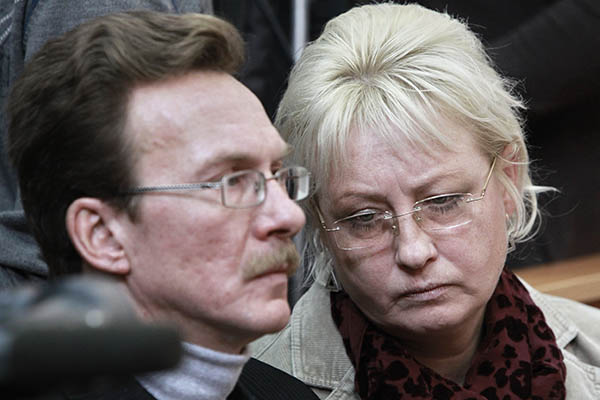 Anton and Larisa Ageevs are listening to the verdict in the hall of the Vidnovsky court of the Moscow Region. 2010 photo: Andrey Stenin/RIA Novosti
Irina Yarovaya, an active supporter of the introduction of juvenile justice in Russia, took a direct part in the Ageev family. Anton Ageev is convinced that Yarovaya earned political capital in their case, and claims that she said that she personally went to the general prosecutor Yuri Chaika in their case. A transcript of the meeting of the Commission of the Public Chamber of the Russian Federation in March 2009 fell into the network, where Irina Yarovaya says that the Ageevs should become indicative: “We must accurately understand the conditions in which the child is brought up. The fact that he is well fed and dressed does not mean that they love him and care about him. ”
Selected fairly
Olga, an employee, first of the guardianship, and then the minors of the minors of one of the central regions of Moscow, says that over all five years of her work, only one family fell into the focus of guardianship, which “fed and dressed” children well.
“We received a complaint from representatives of the HOA that one family does not pay for the apartment, so, probably, their children are starving,” says Olga. -We came, talked to mutual pleasure, found out that parents have a long-standing conflict with HOA due to high prices. They wrote a conclusion - there are no complaints from guardianship, please do it yourself. ” In principle, anyone can initiate a check, from a doctor in a children's clinic to a neighbor, custody is obliged to respond. The punishment is not supposed to be for false testimonies.
Anyone can initiate a check, from a doctor in a children's clinic to a neighbor, guardianship is obliged to respond“I read endlessly that guardianship walks and checks the refrigerators,” says Olga. “Honestly, I personally climbed into the refrigerator once, because I was looking for vodka.” According to her, the vast majority of problem families have alcohol problems. This is the reason for the attention of social services to the family, and the reason for the possible removal of the child. At the same time, social services employees should not only stop a dangerous situation, but completely remove it. According to Olga, the prosecutor’s office, which is all reports from the commission on minors, deprived her of a bonus for the fact that her parents did not quit drinking.
“I am surprised by the work of the Del family, especially how quickly they took the children from them,” says a guardian of the guardianship authority from another area. “The fact is that when Vladimir Petrosyan became the head of the Moscow Department of Social Protection, we had an unspoken order of children from families to seize with very great care.” She says that each case of the removal of children from the family was personally transferred to the head of the capital's social protection, before his decision could have passed several days, or even weeks.
Read also The road back as several women from Nizhny Novgorod saved more than 100 children from the orphanage
According to Olga, the number of dysfunctional families in its area always ranges from 35 to 37. “Someone is correcting, getting out of the pit,” she says. -Someone on the contrary does not even plan to do this. One mother was so drunk that she could not get up from the couch when we came to take the child. ” The restriction of parental rights can only be imposed through the court, the plaintiff in which the guardianship officers become. They then explain to parents how it can be removed, however, not everyone is interested in this. "We call the mother, we ask:" Well, how are you, what are we going to do, how to return the child? " - says Olga. - And she drinks a week, her grief, the baby was taken. He will also give birth to the next, they will also take it away, she will be grieve again. ”
Corrected, at least for some time, still more often. One man was limited in rights when he drunk fell asleep on a bench, leaving an unattended three -year -old son. It turned out that his wife died, and it was a one -time breakdown. With the help of social workers, he was restored, encoded and went to work, ceasing to be considered dysfunctional.
There were complaints about strong mud and devastation of the house to another family. “The children were sleeping on some kind of greasy underwear, everywhere it was not just smelled, but stinking, they had problems at school,” says Olga. “We warned that this could end badly literally in the very near future.” I ask if the stress outweighs from the placement of the child into the shelter in the apartment. “They instantly corrected, not just removed, but even made a small cosmetic repair,” says Olga. She does not answer right to the question.
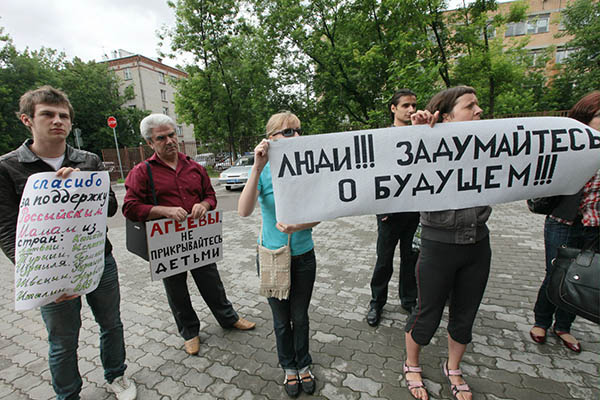 At the building of the Preobrazhensky District Court of Moscow, where a lawsuit is being considered to cancel the adoption of Gleb Ageev, whose adoptive parents are accused of beating a boy. 2009 photo: Ruslan Krivobok/RIA Novosti
Once, employees of the commission on minors, including Olga, took away a four -year -old child from a drinking mother and her boyfriend who recently freed from the zone. The mother of the child drank in front of social services employees and behaved defiantly. Olga says that this is absolutely not surprising, but the fact that the next day the sober and assembled woman was sitting at the appointment with the head of the guardianship was really surprised by everyone. She said that she would no longer drink, she does not plan to bring dubious men to the house either. The child was returned to her, then the life of the family was safely. Olga says she does not know what would happen if the child would be left in the family.
The most terrible case in her practice was associated with a possible pedophilia. Paying attention to a completely different problem in a family with two children, representatives of the guardianship suspected the father’s relationship and the eldest daughter of his wife from his first marriage. Suspicions were strengthened after the conversation between the girls with a shelter psychologist. Olga does not know how the case ended - in such cases, the investigative committee takes the case, they do not apply about the results.
Representatives of social services do not consider the removal of something irreversible from the familyRepresentatives of social services do not consider the removal of something irreversible from the family. According to Olga, many parents themselves write a statement about the placement of the child in a rehabilitation center, in some cases they are helped to make such a decision. “For a short period of time, you can have time to establish life, work, remove, generally put your life in order,” she says. “Well, if there is such a desire at all.” If this desire is not, in the shelter the child will be better or at least safer.
Instead of an epilogue
Read also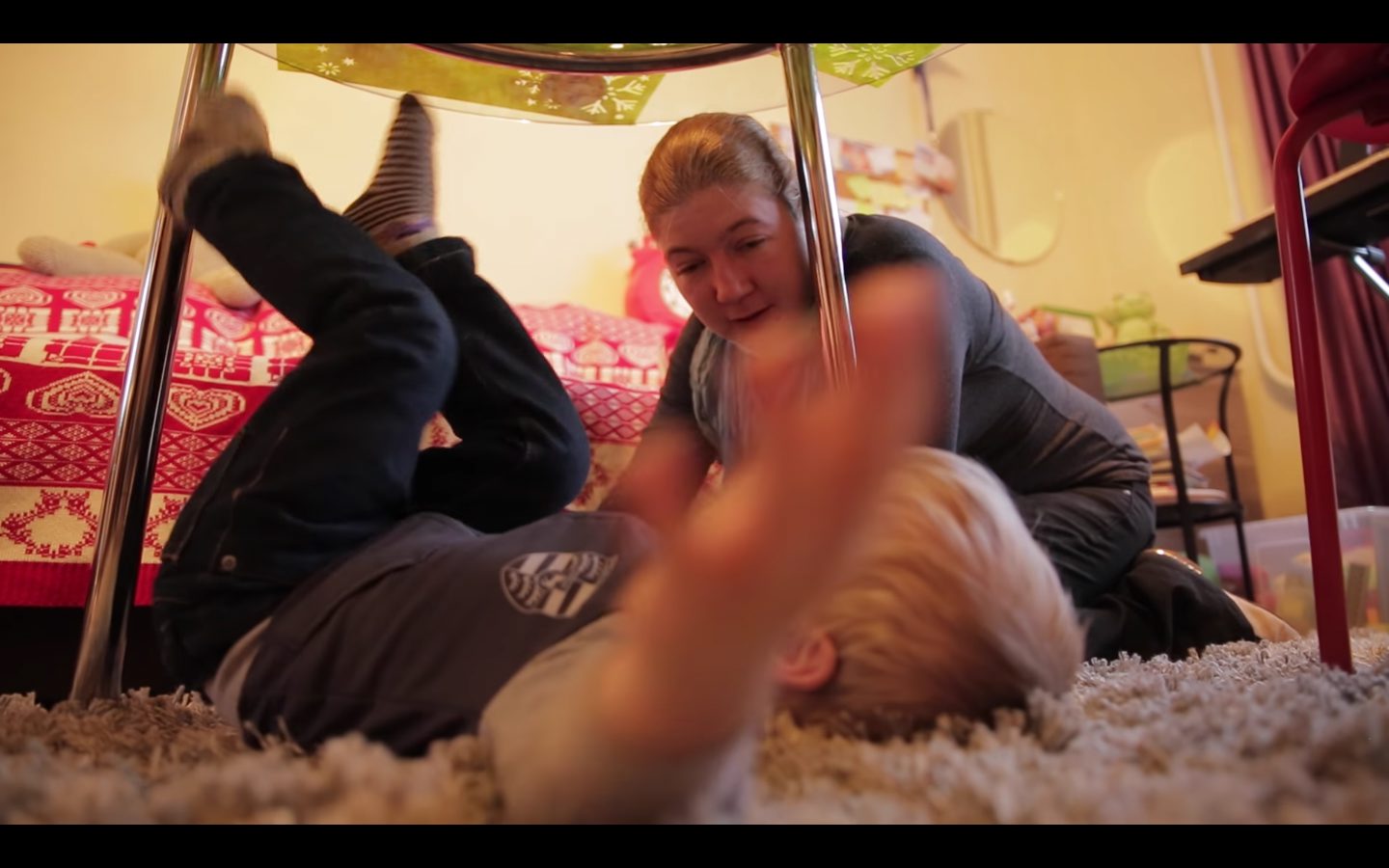 The first day of Judgment in the Zelenograd District Court considered the lawsuit of Mikhail and Svetlana del the Department of Labor and Social Protection
In 2017, not a single person who would remember the Ageevs would remember in the social department of the population of Golyanovo. In 2009, the guardianship was an active participant in the events, its representatives testified in court, gave interviews. The head of the district Alexei Ustinov, who wrote to hospital No. 9, was also replaced by: “The return of Gleb Ageev to his parents poses a threat to his life and health. I ask you not to give a child. " “Nobody will comment on such old things for you,” said the reception department of social protection.
- Anton, you can ask an awkward question, who is Gleb and Polina now?
- This is a very clever question. And then and now Glebka and Polina consider us their parents. I myself grew up without my father, I know what it is, how important someone is to be close to you. They know that they have us, that we are mom and dad. Now we are separated with them, but we will not be anywhere and will remain relatives, even if we do not live together.
The foster family