
Translated material
No, they are not lost
What a good (and bad) in new Apple Airpods wireless headphones: Review of Medusa
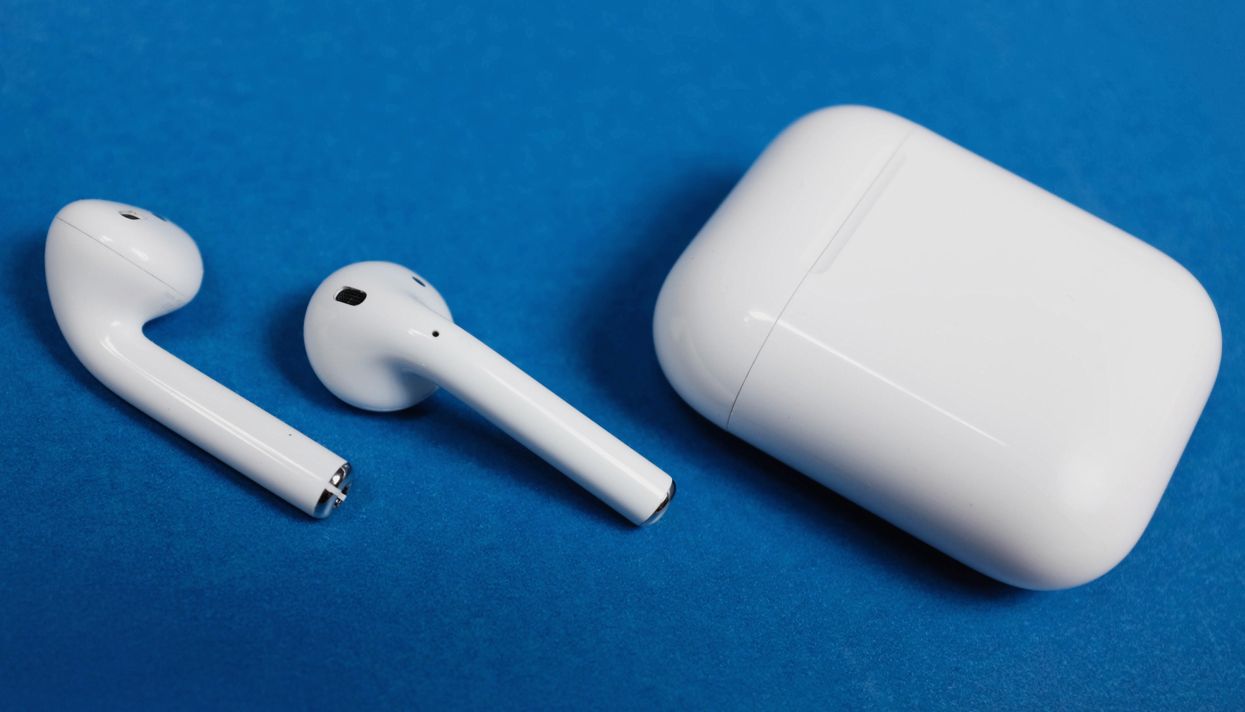
Having abandoned the audio output in the iPhone 7, Apple tried to come up with convenient wireless headphones - and introduced Airpods worth 11,990 rubles. Medusa journalist Pavel Borisov listened to music in Airpods for a week in different situations - and talks about his impressions.
Apple announced Airpods in September 2016 simultaneously with the iPhone 7, which lost its headphones entrance. Airpods are similar to the classic Apple headphones, which are attached to any iPhone and iPode - but they look like they had cut off the wire. This circumstance, of course, was the basis for the festival of jokes about “Home -made Airpods” - and the reason to think that the headphones will be catastrophically quickly lost. The headphones went on sale only in December 2016, although Apple promised to put them in stores a month and a half earlier.
Airpods is wireless “smart” headphones with an unobtrusive noise reduction system operating on the Bluetooth protocol. Airpods can be connected to any device that supports wireless Bluetooth nashers, although they are designed primarily for working with iPhones and macbooks. The headphones consist of a) Directly pairs of wireless “plugs” and b) a white case for storage. The headphones operate continuously for about five hours, and charge in a case, which itself needs to be charged through a Lightning port.

If you do not forget to connect an elegant white case with headphones to charging at least a couple of times a week, there will be no problems (unlike many other wireless headphones). AirPods should not be considered headphones with an outstanding sound, they are not created for audiophiles, but for people who listen to music in Apple Music.
What is good?
There were two fears about AirPods: such headphones are easy to lose, such headphones will be poorly held in the ears.
The first fear turned out to be completely unfounded: the Airpods concept does not imply that the headphones are stored outside the case, and it is not easier to lose than any ordinary headphones. It is worth saying about the case separately: this is one of the most pleasant and human design in terms of the design of things that Apple have ever produced.
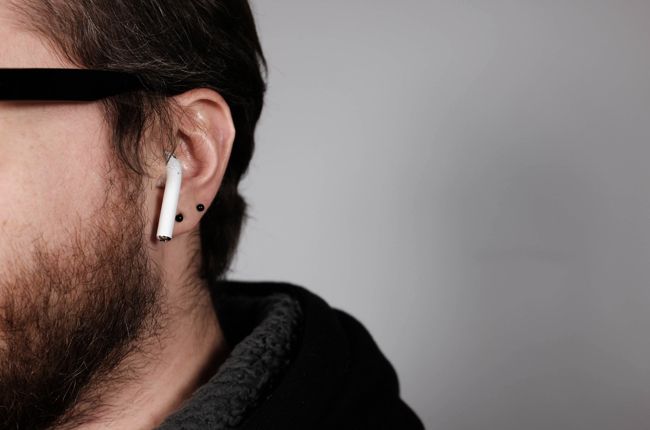
As for the convenience of wearing, the situation is approximately the same as with Apple wired headphones: someone is suitable for someone, someone does not. Airpods from the point of view of ergonomics from old headphones for iPhone are almost no different. Apple knows that not everyone is suitable for their headphones, but they believe that if most people have everything okay, nothing needs to be changed. In my case, Airpods was well held in my ears (and seemed completely invisible) in any situation: in a relatively calm atmosphere at work, and during a run, and under a hat, and under a hood - but the editor of the Shapito section Sultan Suleimanov complained that they were not very well kept in his ears.
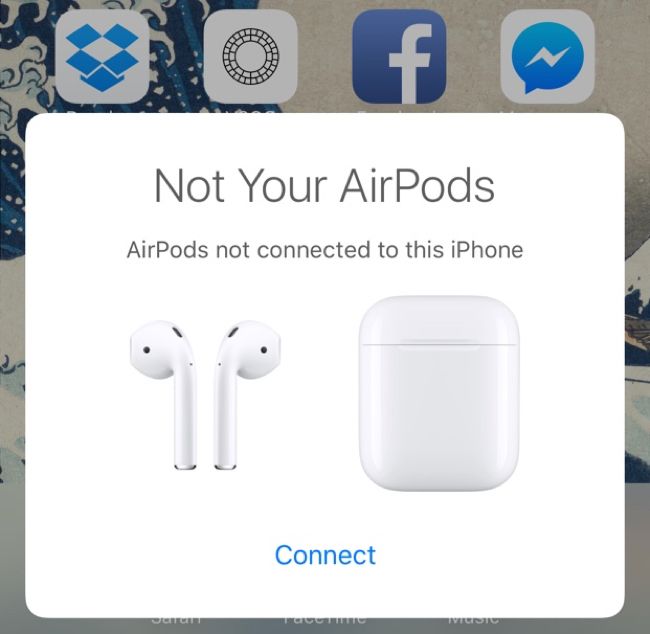
The best that is in Airpods is a wireless technology based on Bluetooth. Each of a pair of headphones is assigned its own channel, a microchip W1 built in AirPods is responsible for synchronization. To make friends with an iPhone, you need to bring the case to the phone and open it - a pop -up window will appear on the iPhone screen and the proposal to synchronize them. Compared to how Bluetooth devices usually work, Airpods seem to guests from the future, in which all wireless problems have already been resolved. The headphones unnoticed and without unnecessary efforts are connected to the phone, then to the laptop, then back to the phone - without the inherent Bluetooth confusion; Nothing like that with Beats Studio Wireless, or other wireless headphones that the Medusa got acquainted with, did not happen close.
There is one magical function: a sensor on Airpods, which pauses the music, if you pull out one headphone out of the ear - and continues to play the track as soon as the headphone returns to its place. Perhaps this simple function is amazing in Airpods most of all - but, unfortunately, sometimes it works imperfectly: it confuses the ear with a palm and removes from the pause when the headphone is in the hand. If you get only one headphone from the case, AirPods will switch to monorage.
And yes, Airpods really sound. For that kind of money you can buy a sound with sound and better, but they are unlikely to be wireless-and they will definitely not be as convenient to use as Airpods.
What is wrong?
One of the main disadvantages of Airpods is the minus of any other wireless headphones. With all the advanced wireless communication in Airpods, the headphones sometimes lose their connection, and synchronize them with several laptops in one room may not be easy. With Android, they behave like ordinary Bluetooth hobby-magic relying with iPhones with an inconspicuous connection does not work. Unfortunately, they are not spared from the curse of Bluetooth - sudden and nervous interference. These obstacles arise much less often than in the case, for example, with Beats Studio Wireless, but they strongly remind of themselves, especially during running or quick walk.
The main drawback of AirPods is the inability to change the volume without taking out the phone. The headphones have a Siri call function with a double touch; Apple suggests that you need to change the volume and switch tracks, but in reality it is terribly inconvenient - and it looks strange. Obviously, if you can call Siri by touching the headphone, there is probably any option with the volume (however, the call of the voice assistant works one time). Double touch can be reconfigured to the function of the pause, but the volume will still have to be adjusted on the phone.
An automatic pause does not always work perfectly, and once during testing, no explanable and prolonged interference were observed, which only managed to cure the rebooting of the phone. All these little things show: AirPods - a prototype of headphones of the future, very successful, but in need of improvement. And they can not be turned into wired ones (beats - you can) and stick into the old IPOD Classic. However, this is rather another sign of dying of old technologies, which have lasted unchanged for the past 50 years.
Pavel Borisov
AirPods headphones are provided by the editorial office of Apple. The company was not able to influence the test result - and did not see the material before the publication.