
Translated material
The second echelon
I will return to you / from the silence is torn off / from my silence and oblivion / and dark memory for the kiss I / Laugh the throat
The death of the poet always causes a revival (wow phrase) of literary life. <...> Usually follows a list of quotes from the deceased, and a set of such persuasiveness and integrity that it seems that this itself is an individual work of extracts.
M. Gendeleev
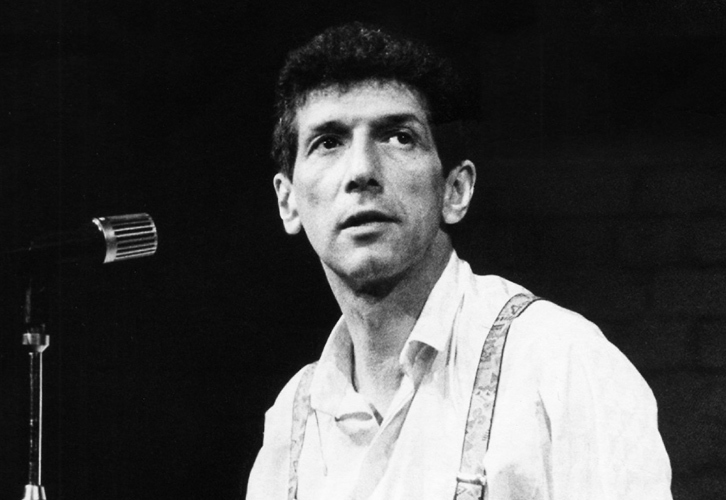
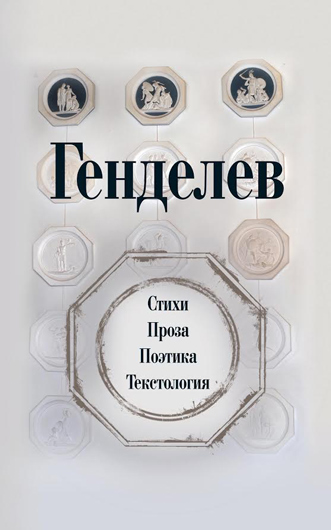
The publishing house "New Literary Review" was published by the book "Gendeleev. Poetry. Prose. Poetics. Textology ”, dedicated to the work of the Russian-Israeli poet Mikhail Gendelev (1950-2009).
The existence of a great poet cannot be completely ignored by the community, language, it changes speech and consciousness that have never heard and did not directly read it. And, despite this, he can be absolutely unknown to the general public. Its influence is not later literature - like watermarks on running bills: at the same time, it is clearly visible and unreadable. This situation is actually quite rare in its pure form, but in the twentieth century, for obvious reasons, such cases occurred more often. For decades, the continental Russia forgot about the dozens of the authors of the beginning of the century, who did not have time for the seventy -earnings in whole schools and currents slipped away from readers, emigrant stars returned to their homeland with a delay in “poems”, but their time in literature turned out to be lost.
Of course, in the future, many hidden authors had a certain public Renaissance-Gazdanov returned to the everyday life of the educated class, from Leningrad communal, in different years, the voices of Kholin, Grigoryev, Schwartz, Aronzon, once, somehow made their way through the embankments of the border laziness and oblivion Gorenstein and Sokolov. But there are still authors whose place in the literary hierarchy, objectively high, remains implicit, whose fame is narrow-hearted, whose texts are little-known, but the influence is very strong. Such a “secret” poet was Stanislav Krasovitsky, to some extent Alexei Tsvetkov, fortunately, a lot of performing and published in recent years, the writer Leonid Girshovich, poets Evgeny Khorvat and Inna Bliznetsov, who were unknown to the reader, who survived the three foreign publications, the incredible novel by Eli Luxembourg and the works of Philologist Maya Kaganskaya remained; I am not even talking about younger authors working in more complex genres. Most of them suffered from a mutation of the late emigrant literary space and erosion of the post-Soviet cultural and especially publishing landscape, for some the tightness of their literary work was a conscious choice, someone claimed the insecurity of the heirs and the jealousy of colleagues, because the return of such names to literary everyday life, their authenticial weight is not only a matter a whimsical context, but also the duty and work of their loyal readers, researchers and students.
 © New Literary Review
In this sense, Gendelev was lucky. The poet, it would seem, is an unusually narrow auditorial group - Russian -speaking Israelis, that is, not Russian emigrants, not Jews of European or even Russian diaspora, not Israelis of the nee, but this relatively small and non -consuming circle (“We, at the place of death - local”), and he reached the Russian vehicles of unimaginable skills, and tanning. Without paying the real price of personal loneliness for this - on the contrary, the number of his friends within the literary and media establishment could be the key to his posthumous fame and even glory, if it had not been imposed on any serious conversation about him about his playful reflection of his friendship and non -nobility.
Mikhail Gendelev, author of 11 poetic books, novels, hundreds of articles and essays, dozens of excellent translations and texts of songs, perhaps the only modern successor of the Lermontov-Gumilev tradition of the tragic development of the space of life and culture using military technology, perfect metric, open pathos and tragic skepticism-not as my friend and teacher, but as a poet. and by the way of the soldiers ”, the practitioners of the Russian regular verse, expanding his semantic and syntactic limits.
But he was my friend and teacher, and it is impossible to distract and refuse it, it is impossible not to succumb to the temptation of memories, and it is not difficult to understand the difficulties that the compilers and editors of the new Tom “UFO”, dedicated to the unrelated work of Gendelev, and also collected translations, essays, criticism and comments (there are not enough letters that the deceased never wrote. Bypassing offensive notes and epigrams, not completely, but also included in that).
One of the problems of the compilers was akin to a person standing in front of me when writing this review is to find a balance between the impartiality of the researcher and the involvement of the witness. But their main problem was much more serious - to present the body of the texts of the “second echelon” to the public, in fact, unfamiliar with the main collection of the poet. This is a job that famous authors usually receive. Sometimes such an attempt to “sell” at least something else unrelated at the demanded classic is pronounced commercial in nature. It happens in a different way: a reprint of the classic or poorly read well-known texts in full, sometimes with comments and accompanying materials that make up for the lost context. So recently Ilf and Petrov were released in the associate professor, Koval with detailed comments, Oleg Grigoryev and Leonid Aronzon were published in the new publications.
In this series of volume "Gendeleev. Poetry. Prose. Poetics. Textology ”stands apart, from which the main thing was taken out, but left a lot of low -value details and objects: bronze trinkets brought from wanderings, random photos, keys to old apartments. This was what the famous attic Gendelev looked in the center of Jerusalem, not only after his funeral, but also before them, when the poet had already lived in Moscow, a lively, full meaning and memories for an expert and strangely abandoned for a random guest.
Gendeleev was a completely ruthless writer: he excluded even the first book published from his official heritage, while early texts appeared in the released “UFO”, which were not included in the author’s collections. Nothing from the official code of his poems in Tom is given, as there is no prose in him, neither artistic nor even culinary. In fact, an inattentive reader does not have a way to understand what scale a poet is in question in the critical works and reviews of contemporaries immediately (I will mention Mikhail Weiscompr, Elena Tolstoy, Peter Kriksunov). In this book, Gendeleev actually appears as excellent, although not deep, an essayist (the daily newspaper corvee is affected), a good translator of poetry of small peoples (Israeli authors unknown in Russia) and a joker, whose best knights and so long ago are known for literary Moscow. The book has a lot of Gendelev “External” - his biographies, his illness, Kot Vasenka, in different places there are long lists of interlocutors, friends and colleagues. At the same time, Gendelev’s poems from the mid-80s were the exact opposite of this apparently-so whole, consistent, accurate, the world created by them, so laconic, weighty, legislative was its syllable that even the “baroque” exercises in sarcasm did not break the construction. And it was this Gendeleev - the invisible Michael, not a writer, but to the Old Testament degree, a poet, fought with his own book, still needs research, reselling, and teaching.
All of the above does not detract from the merits of the compilers of Sergei Shargorodsky and Evgeny Soshkin (thanks to which a large layer of Israeli Russian -speaking literature was previously preserved and previously published, for example, the verses of the deceased poetess Anna Gorenko), carefully and pedantically working with the poet’s heritage, preserved by Mikhail Gendelev,. The preface of the compilers, like a biographical essay at the beginning of the book, gives an adequate idea of both the subject’s subject and the understanding of the complexity of the complexity of the tasks that they had brilliantly coped with them, given the described restrictions. But for a “wide circle of readers” this collection cannot and should not be the first acquaintance with such a significant author as Mikhail Gendeleev was actually, but only the reason to turn to his main heritage, which is not so simple - the circulation of intravital publications were not large enough and almost ended. Perhaps the release of this volume in UFO will remind the publishers of the possibility of a reprint of his key works, in reading which this volume with his criticism and comments will help very much.
While this has not happened, it is worth recalling that at Gendelev.org the Mikhail Gendelev Foundation collected a huge number of materials on the Internet, including all the most important poems and poems of the author, archival photo and video materials, bibliography. The released “UFO” labor can also serve as the most important application to this archive until it itself becomes an integral part.
Gendeleev: Poems. Prose. Poetics. Textology / Comp. And prepare. texts of E. Soshkina and S. Shargorodsky; comment. P. Kriksunova, E. Soshkina and S. Shargorodsky. - M.: New Literary Review, 2017. - 728 p.