
Translated material
Who is Maxim Reshetnikov, the new Governor of the Perm Territory
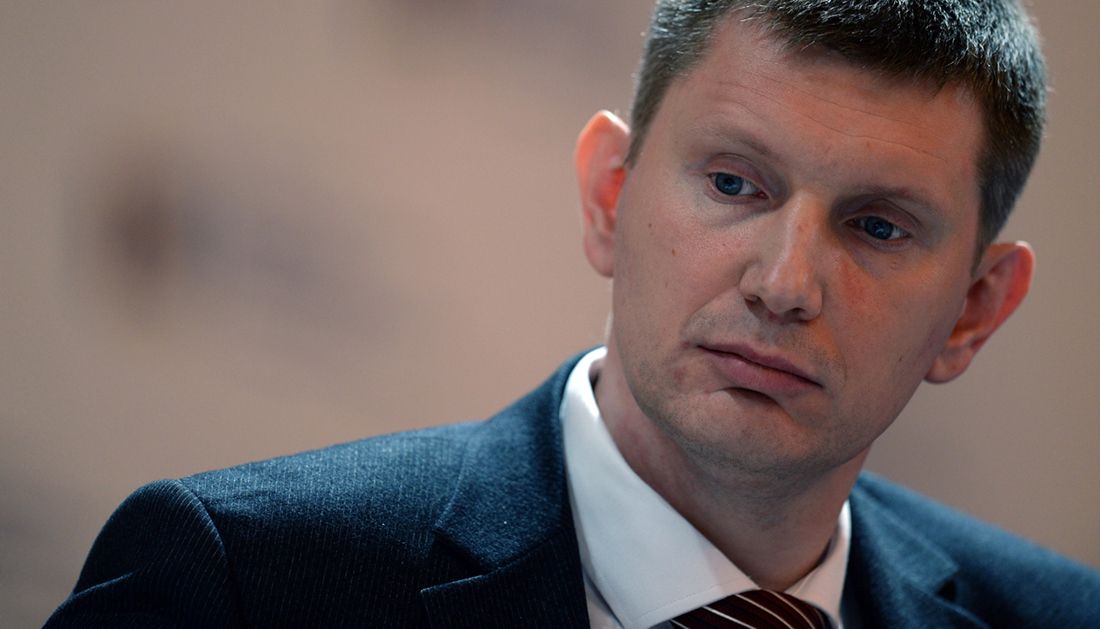
On February 6, another governor was replaced in Russia: instead of Viktor Basargin, Maxim Reshetnikov, a 37-year-old Perm native, who had been working in the Moscow government,was appointed temporarily acting governor of the Perm Territory. The appointment took place shortly before the elections of the governor of the region - they will be held in September 2017. Medusa says what is known about Reshetnikov.
Maxim Reshetnikov comes from Perm - that is why Vladimir Putin, inviting him to lead the region, spoke about the "small homeland." The new acting governor was born in July 1979, graduated with honors from one of the local gymnasiums, and then Perm State University in two specialties at once: “economist-mathematician” and “linguist-translator”.
As a student, Reshetnikov began working in the Forecast IT company, which developed technological solutions for government agencies. In 2000, at the age of 20, with a few years, he moved to the administration of the Perm region. Governor Oleg Chirkunov (led the region from 2004 to 2012) called him a reasonable "supporter of competitive development and market principles in the economy."
In the first half of the 2000s, Reshetnikov worked in the economic departments of the administration of the Perm region -he was engaged in budget planning, investments; He was the deputy head of the main regional department of economics. In 2005, Chirkunov announced the need to increase the efficiency of government agencies-and appointed Reshetnikov as the head of the Committee for the Development of the Public Administration. The young official was supposed to realize the ambitious plan of the Governor to turn the Perm Territory into an experimental platform to run into federal ideas. In the next two years, Reshetnikov replaced several more posts, having risen to the first deputy head of the governor’s administration-and in 2007 he moved to raising to Moscow: he oversaw the effectiveness of the regions in the Ministry of Regional Development.
In 2009, Reshetnikov for six months was the head of the administration of the Governor of the Perm Territory. In his own words, he only managed to "approach some issues." The most memorable decision was the resignation in July 2009 of the Chapter of the Tchaikovsky district Yuri Vostrikov, organized by Reshetnikov at the command of the governor. The dismissal of the mayor at the initiative of the regional authorities was a noticeable precedent. Reshetnikov himself, commenting on it, stated that control over the activities of municipalities must be strengthened - and that "the end of the heads of constituent entities of the Russian Federation to initiate the dismissal of mayors is not an interference in the activities of municipalities."
In October 2009, Reshetnikov returned to work in the Government of the Russian Federation, and a year later he went to work at the Moscow City Hall. Anastasia Rakova, the former head of the secretariat of the head of the presidential administration, Sergei Sobyanin, who worked with Reshetnikov when he worked at the Ministry of Regional Development, called him there, and left with the chef when he was appointed instead of Yuri Luzhkov. In April 2012, Reshetnikov became - and until the present moment remained - the head of the Department of Economic Policy and the Development of Moscow.
Reshetnikov is one of the main reasons for the departure from the Moscow government Andrei Sharonov , former assistant German Gref. Sharonov headed the Deputy mayor of the economic bloc of the city administration. As the sources in the city hall said then, Liberal Sharonov proposed to develop the rules for regulating business with entrepreneurs, and not to put them before the fact. Reshetnikov and Rakov believed that lobbyists from business would only interfere with the work of regulators. Sharonov, the released place, tried to Reshetnikov, but in the end, Sergei Sobyanin decided to add powers to his deputy Natalia Sergunina, and Reshetnikov remained the head of the department.
As the head of the Moscow Department of Economic Policy and the Development of Reshetnikov, in particular, he was responsible for the reform of street trade : if the city earlier passed the land for the installation of kiosks, now he set his own kiosks, which are leased through auctions. In addition, under Reshetnikov in Moscow, trade fees and a system of patents for individual entrepreneurs were introduced, as well as property taxes for owners of elite apartments were increased.
With the transition of Maxim Reshetnikov to the Moscow government, the Forecasting company, in which he once worked, became one of the key contractors of the capital's city hall to create information systems and electronic services for citizens-in particular, the our city, Electronic Diary and others. The former subordinate Reshetnikova, deputy head of the apparatus of the City Hall Natalya Kataeva, oversees the implementation of these projects.
Olga Deryagina, Perm
Ivan Golunov, Ilya Zhegulev, Moscow