
Translated material
The most fair in the world
The sentence in the second case of Kirovles, apparently, will be indictable. The main difference: prosecutors this time require a conditional, and not real term - five years to Alexei Navalny and four - to Peter Officer. How they judge and who judges in Kirov - in the report of The New Times from the scene
Kirovles-2, despite the fact that interest in it is much less than in the previous process, is no less indicative than Kirovles-1. Although nothing fundamentally new from the point of view of the evidence and testimony of witnesses presented by the parties compared to the previous trial does not sound on it. Well, perhaps the words of the prosecutor Sergei Bogdanov, who outraged lawyers, that references to the decisions of the European Court of Human Rights (ECHR) and the Presidium of the Supreme Court do not have a legal basis. It seems that the Russian judicial system has never demonstrated its bias so clearly and undisguised, and managing the process from above, from the Kremlin, was not so obvious.
It seems that the Russian judicial system has never demonstrated its bias so clearly and undisguised, and managing the process from above, from the Kremlin, was not so obvious
Unprecedented pressure
On the eve of the first meeting in the Kirovles case in April 2013, the chairman of the Leninsky District Court Kirov Konstantin Zaitsev, showing journalists the hall prepared for the meeting, to the question of NT correspondents about the possible dependence of the Kirov judges on the political decisions made in Moscow, showed sincere bewilderment: “Even if we hypothetically imagine that his judge will say: it will say: it will say: it will say: it says: it says: it says: it says: it says:“ “You will make such a decision, otherwise ...” - this will not! Here you may not believe me, but I can swear the health of my own children that I have not heard about such things here. I hope and believe that this will not happen from the side of my higher management. They will not do this. If there is evidence of this, we will be able to discuss it then. ”
After almost four years in the same court, Peter Officerov’s lawyer, Svetlana Davydova, announcing her next statement about the allocation of the judge of Vtyurin, talks about the meetings heard in the hall of the courts between the court officers that the chairman of Zaitsev went to the Supreme Court for instructions, and there he was told to give the defendants the real terms. It is not known how much this is true, but a number of documented events have already occurred around the Kirovles-2 process, which force me to doubt that they judge Navalny and Officer in the Kirov district court ( see Kirovles 2.0 in *NT No. 2 of January 30, 2017 *).
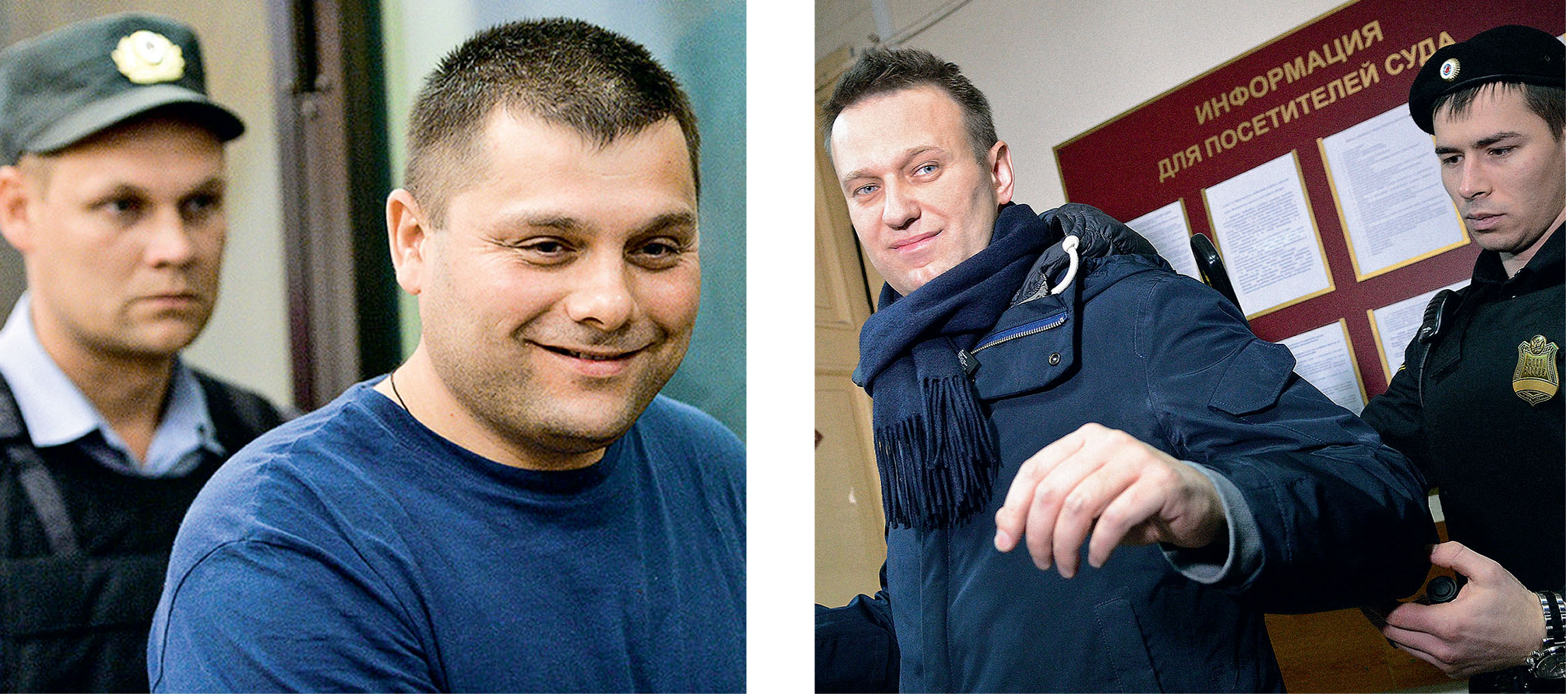
The most incredible story was the hospitalization of Peter Officer, who felt unexpected malaise and was hospitalized with suspicion of acute pancreatitis in one of Moscow hospitals on Monday evening. When we said goodbye to him in the evening, he lay under a dropper and talked about several procedures prescribed the next day, but already at 6:40 a.m. the next day a doctor entered the ward and said that they had “called from above” to the hospital authorities and would be written out. The officers did not object. “Everything was clear right away, and after half an hour I stomped to a taxi,” he recalls.
It is curious that Officer's discharge speed in the end against the system: the patients who came to the hospital did not find the patients on the spot. In the afternoon of the same day, they knocked loudly on the door of the office of the lawyer Svetlana Davydova, demanding that they miss them, but received a refusal: the college of lawyers was not a dwelling, but the lawyers - special dryers, had to explain to the bailiffs.
At some point, Davydova’s lawyer called Judge Vtyurin to ask him to cancel the drive: they already bought a plane ticket on their own and are ready to fly to Kirov. “He (the judge) told me then on the phone:“ I cannot stop my decision, ”says Davydova. - I tell him: “Listen, how can you torment a person? He has no medicine with him, but a lot of children at home. He was only discharged from the hospital, let him get together calmly. His situation is worse nowhere. ” And then he with a pause, thoughtfully said: “I agree with you. Officer's situation has nowhere worse. ”
On the old rut
The Supreme Court had every reason, following the decision of the ECHR, to terminate the criminal prosecution of Navalny and Officer for the absence of a crime in their actions, but he entered a different way, sending the case to the Leninsky district court of Kirov for a new consideration, not only giving any instructions, but even a hint of which decision should be considered correct. Perhaps that is why the Kirovles-2 process from the very beginning-reading the indictment-to the very end went along the same path trodden in 2013. Repeating all those mistakes that formed the basis of the solution of the ECHR.
Not a single application of the defense - neither about the demand for evidence, nor the exclusion of unacceptable evidence, nor about calling witnesses and experts to the court, nor about conducting an additional examination - the judge Vtyurin did not satisfy. As a result, not a single witness from the defense performed in the process. However, even if they performed, this changed much: the main violation of the past process, recognized by the ECHR and entailed the abolition of the sentence by the Supreme Court, was the fact of the conviction of Navalny and Officer for acts, indistinguishable from ordinary commercial intermediary activities. These acts have already been committed and cannot become others, and therefore, from the point of view of the decision of the European Court, the only true action would be the termination of criminal prosecution. Such a petition was stated twice: at the very beginning of the process, Vthurin recognized him “premature”, and at the end - refused to satisfy.
And a little surprises
“Your honor, will we sit here for a long time? What are our plans? " - asks Judge Vtyurin as a lawyer of Navalny Vadim Kobzev. - “Alexey Anatolyevich asked to finish today. I'm ready to sit! Up to 24 hours! " - the presiding judge cheerfully responds.
"Do you have a visit to the doctor today?" - Judge Svetlana Davydova is interested. - “My visit to the doctor was at non -working hours. And yesterday we did not have enough of those 30 minutes that you were late from dinner. ” “I came from dinner on time.” “No, the bailiffs reported me when you came.”
When it comes to household or organizational issues, the presiding judge marks noticeably. He immediately begins to speak loudly and clearly, which contrasts sharply with the barely audible bubbling of decisions on the refusal to satisfy the petitions.
Judge Vtyurin had almost no questions to the defendant Navalny. His predecessor - the judge of Blinova ( for details, see NT No. 13 of April 15, 2013 - was interested in much more details. “Why are you, your honor, do not ask, your honor? Ask me questions, ask why I did not abduct 16 million where I have money. How did I press on Opalev? - called by Navalny. “You know that this was not.” But these events are recorded here. ”
“Why are you, your honor, do not ask, your honor? Ask me questions, ask why I did not abduct 16 million where I have money. How did I press on Opalev? - called by Navalny. “You know that this was not.” But these events are recorded here "
The most unexpected for the entire time of the process was the decision to change the defendants to prevent prevention. This idea was announced by the presiding hearing at the end of the court hearing on February 1, completely unexpectedly, at the moment when the defense was just about to announce the procedure for presenting evidence in the process. With his unexpected offer, Vtyurin interrupted the lawyers. "Very timely!" - Only Svetlana Davydova blurted out, and those present in the hall began to catch each other's eyes in search of confirmation that they did not rush. “I have the right,” answered Judge Vthurin.
Nobody argued with this. But it was not very clear why this is to do this now, when the process is obviously moving towards completion - a judicial investigation may well end at this pace until February 12, and the defendants and their defenders made it clear that they were not going to be more of missing. Even in the morning, when Navalny appeared accompanied by the bailiffs following him from Moscow, such a statement of the question would seem more explained, but in the morning the judge offered nothing.
“Due to the fact that the defendants did not appear at two meetings ...” Vtyurin began. “What city subscription from which city? How long? " - Questions from the bench of protection fell.
“We will discuss,” Vtyurin answered with Zador.
Since the beginning of the first process, all proposals on changing the conditions for the defendants at large came from prosecutors: they demanded drives and detention whenever Navalny for some reason was not in court. But now, when Vthurin invited them to speak out, both prosecutors were confused, and this was the second surprise. "We are talking about what period and what city?" -asked the prosecutor Bogdanov, and saying that they could not offer anything yet, he asked for a 10-minute break-obviously, to call the authorities, and having returned to the hall, he said that the accusation was “sharing the initiative of the court” as a whole, but he would expect specifics from the court.
The third surprise was that Judge Vthirin had no answer to the question about the city and the deadline at that moment. Without waiting for the clues from the lawyers who refused to help the court in deprivation of the excessive freedom of movement, the judge once again retired to the deliberation room, and only leaving it in half an hour, announced the banner of the defendants to leave the Hilton hotel until February 10. “What happens when the judge called and ordered a subscription, but they didn’t give any instructions more,” Leonid Volkov commented on his Twitter, on his Twitter.
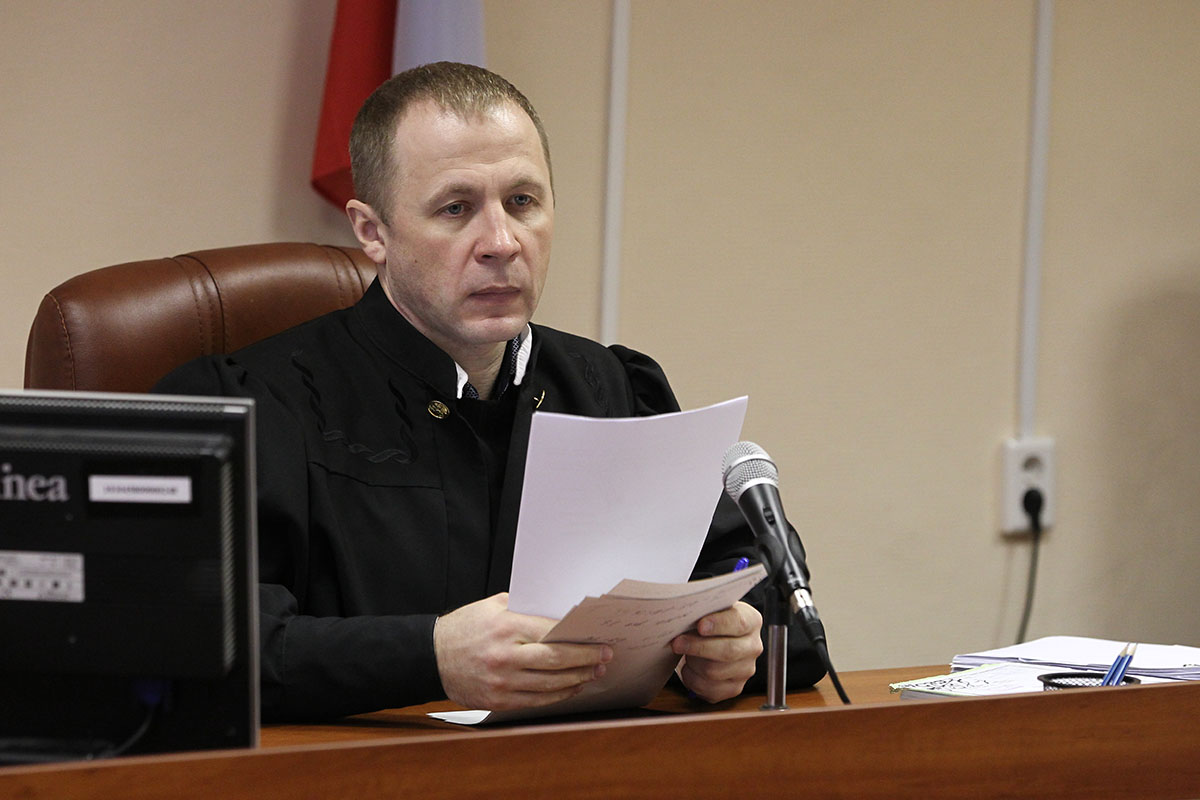
"Good guy" Judge Vthurin
41-year-old Alexei Vtyurin, the son of the former chairman of the Bogorodsky District Court of the Kirov region Leonid Vtyurin, moved to Kirov in 2015 from the urban type of Kilmez, where from June 2008 to July 2011 he was a judge of the Kilmez district court, and from July 2011-the judge of the Malmyzhsky district court, which was part of the Kilmez court.
As follows from the characteristics given by the VTURIN by the qualification collegium of judges of the Kirov region when assigning him to the 6th qualification class, he “established himself as a disciplined, responsible and conscientious worker. He has good theoretical knowledge, confidently orientates in the current legislation, applies it correctly in practice. ”
Practice, however, was quite monotonous for Vthirin. In the latter before moving to the regional center for half a year, Vtyurin issued several accusations, but rather soft sentences: twice he awarded 3 years in prison on a conditionally for the acquisition and storage of drugs on a large scale; for the acquisition and storage of drugs in a significant amount - a year of correctional labor and the obligation to be treated from drug addiction; 8 months of restriction of freedom with the obligation to be at the place of permanent residence from 22 to 6 hours the next day for the theft of the VAZ-21063 car; Fulfillment of 10 thousand rubles. For the theft of 10 liters of gasoline at Kilmezsky Leskhoz LLC. In all the mentioned cases, the defendants found their guilt completely, repented and went to a “special procedure” - a simplified consideration of the criminal case, in which the verdict was sentenced without a judicial investigation with the full consent of the defendant with the accusation. The cases and sentences after the transition to the Leninsky District Court were similar: minor thefts, drug storage without the purpose of sale - and almost always a special order. Thus, Vtyurin had almost no practice of conducting adversarial processes, but he received a reputation as a soft judge.
The NT correspondent has heard more than once that getting a matter of VTURIN is considered a success - you can count on condescension. One of the former accused judges Vthurin, who brought the NT correspondent to the court, described him as a "good, understanding man." But there are other opinions: “He may seem a good guy, but he is masked under a good guy,” said NT, a lawyer, representing the interests of one of the convicted people to insult the representative of the authorities. “Not without a sense of humor, he jokes a lot, but at the same time brazenly ignores the arguments of complaints.”
Very soon, perhaps this week, Judge Vthurin will read out the verdict. And, it seems, not a single person from participating at the hearing, as well as those observing his course, admits the thought that this sentence may be justifying. After a performance in the debate of the prosecutor, it became clear that the term would be most likely conditional.