
Translated material
If not Putin, then Trump
The actions and statements of the new owner of the White House are ridiculous to the style of Putin’s third term, and against this background it is easy not to notice how dangerous their differences are
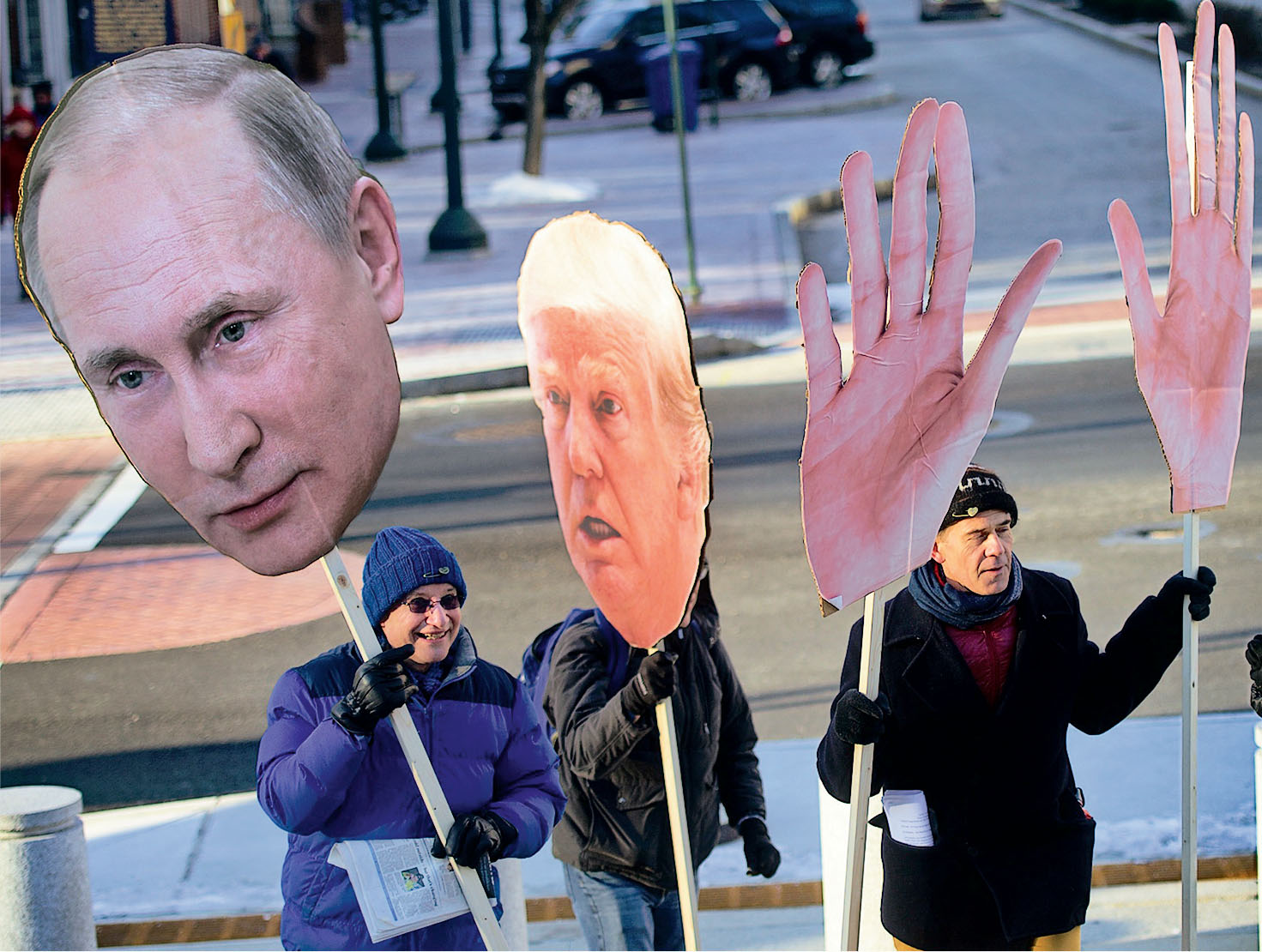
The first days of the reign of the new US administration for a person who is familiar with Russian politics look like nostalgic posts from Facebook-"Remember what happened on this day so many years ago." The parallels between mass shares in the first days after Trump’s inauguration and protest rallies in Bolotnaya suggest by themselves - celebrities on stage, people in carnival costumes in the crowd, the lack of obvious leaders and understanding how mass movement can affect the actions of the presidential office. News of the type “Trump adviser called to check Madonna’s statements for extremism” already cause a comic effect - exactly in the same expressions, Russian hawks require the authorities to deal with their opponents (and often achieve this); Moreover, in 2012, the Russian Investigative Committee had already tested Madonna after her Moscow concert with a performance in defense of Pussy Riot. Students protesting against the extreme right in university audiences, presidential advisers explaining to journalists that they have come off the people and do not know their country, threats to get out of international agreements, the war with NPOs - the details may not coincide, but the general picture, if you look at it from Russia, seems suspiciously similar. Even the scandal around the number of people on the inauguration seems to be played according to the scenario repeated after each Moscow rally, when the number of participants according to the authorities and according to the opposition’s calculations differs by orders of magnitude, and the blogs have been studying the photographs shot from the same point for a long time: see how many people they had, and how much we have.
Perhaps the most sinister similarity is the rhetoric of the two presidents, Putin’s sample of the third term and Trump at the beginning of the first. Both rely on a certain conservative majority - in the case of Putin, its presence is confirmed by sociological surveys, for Trump, who lost the vote on the absolute number of Golos (Popular Vote) and trying to justify this loss in violations in polling stations, everything looks not so obvious. However, the mass support of the ban on the entry into the United States of migrants, which is recorded by sociologists, proves that Trump also has some reason. In any case, as can be judged by Russian experience, the conservative majority does not so much pushes leaders to certain actions how they themselves are created by these actions: how many Russians were thinking about how they relate to the adoption of Russian children by the Americans before the parliament prohibited this adoption? It is the rhetoric of the authorities - the search for internal and external enemies, the assertion of “traditional values”, the protection of public morality from decaying influences - and transfers unformed, spilled in the air, fears into a sustainable and mass political request. The more the Trump administration will fight migrants from Islamic countries and liberals in media, the stronger the number of supporters of this struggle will grow - primarily due to people who had never previously thought about migrants and liberals.
Perhaps the most sinister similarity is the rhetoric of the two presidents, Putin's sample of the third term and Trump at the beginning of the first
However, it would be wrong to say that Trump mechanically copies Putin - against the background of similarities, differences are even more noticeable. In Putin’s actions there is always hidden logic, even in the most unexpected events, like the accession of Crimea, it can be restored retrospectively. Its method is a special operation, a complex combination taking into account different options for the development of events; It is always carried out non -public; The public and experts remains to guess about its content, based on a complex mixture of facts, propaganda and deliberate misinformation, which seeps out. Trump, on the contrary, is published to the last limit, his Twitter is not a way of communication, but a direct political action tool. Even judging by the first weeks at the presidential post, his method is improvisation, he acts without thinking about the consequences, and makes sharp turns on the go, he is subject to emotions and, by and large, is little predictable. The hopes of the Russian patriots that Putin and Trump are about to divide the world into two and test something like a conservative international, caused by purely Russian aberration of vision: people seem to be in the center of the universe and all the intricacies of world politics are caused by the desire to harm Russia or, on the contrary, to bring it benefits. But the meaning of Trump improvisations is not at all; And the point is not that the need to protect American interests, as the republican establishment understands them, will sooner or later lead to conflict with Russian interests in the understanding of the Putin elite; It’s just that the emotional improvisations of one president are completely unacceptable with the ingenious combinations of another, and their clash threatens in the future a short circuit of such a scale that tension in Russian-American relations during the time of Obama may seem like a good quarrel.
(Continuation of the topic is this marvelous? Novyi? Mir )