
Translated material
Romanian Maidan against the Government of Corruptions
The half -million protests were taken by surprise both the power and the opposition. Officials retreated, politicians - joined, but people did not leave
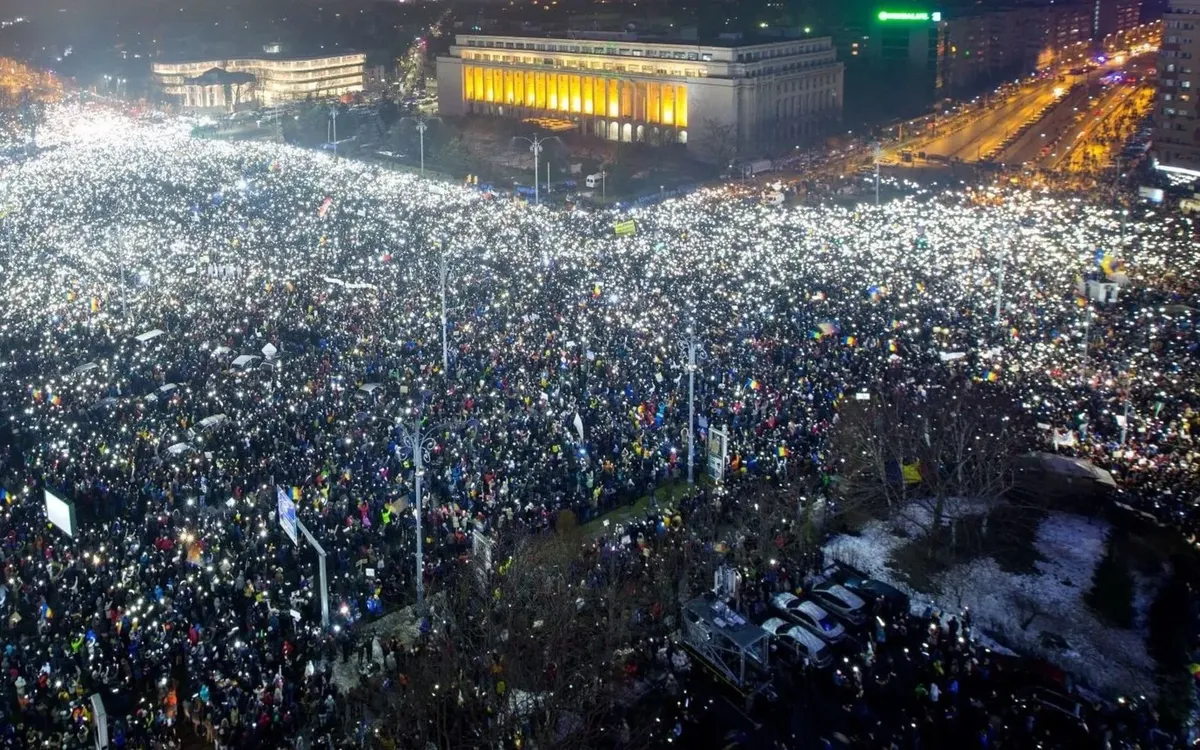
In the last parliamentary elections in Romania in December last year, the Social Democratic Party (SDP) won. The train of corruption scandals and criminal cases did not interfere with the social democrats who generously distributed the populist promises of high salaries and low taxes during the election campaign, to regain the reins of government. The leadership of the SDP, having formed the government, first decided to fundamentally revise the anti -corruption legislation, from which hundreds of party functionaries had already suffered. Bypassing the parliament, the Prime Minister signed a resolution on an amnesty of associates-corruptions and the introduction to the Criminal Code of Slovers for official crimes of government officials. Nobody and nothing seemed to prevent the social democrats to realize the plan-the forces of political opponents were crushed and were in the minority. However, they did not take into account the opinion of the Romanian people, for whom corruption in power is a sore subject.
Bucharest, Victoria Square, every day at 17.00
The main scene of civilian resistance, starting on January 31, was Victoria Square in Bucharest, where the residence of the prime minister and the Council of Ministers is located. Every day, by 17.00, tens of thousands of inhabitants of the Romanian capital gathered here to express their protest against the plans of the authorities to neglect corruption. The rallies were delayed until midnight.
National flags and thousands of home -made posters were fluent over the human sea: “There is no amnesty for thieves!”, “SDP - a party of corrupt officials!”, “The government is resigned!”. Delights representing leading social democratic politicians in striped prison robes were enthusiastically accepted.
Most demonstrators are young people and middle -aged people. A lot of young dads and mothers with children. So, for example, the 30-year-old Dana brought 5 and 7 years to the square of her daughters. “Let them study,” the woman said to reporters. “They live in this country, and for freedom and civil rights you must be able to fight.”
All shares were exclusively peacefully. True, on the second day of protests, when more than 100 thousand people gathered in Victoria, a group of football fans tried to arrange a battle with law enforcement forces. But the participants in the civil protest did not support hooligan antics.
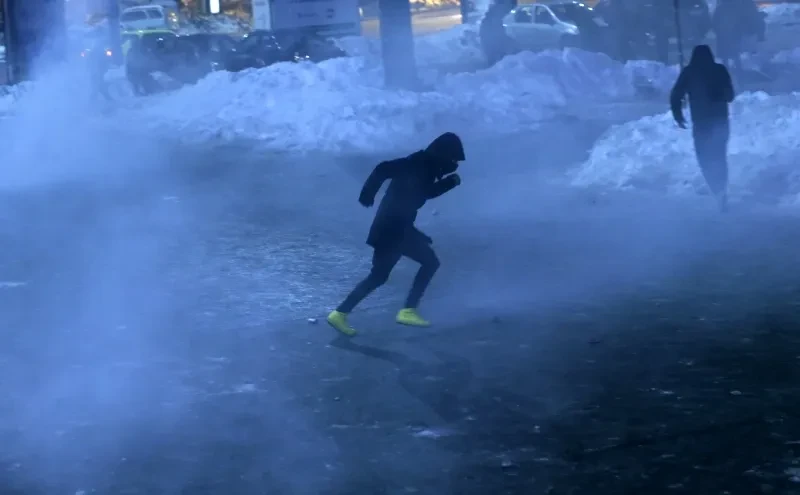
Very soon it turned out that behind provocative actions were people close to the leadership of the SDP - the Brothers Neboits, who own the metropolitan football club Dynamo.
On their assignment, as the ex -wife of one of the brothers wrote on Facebook, the fans were specially gathered and delivered to the area by bus to destabilize the situation and accuse the demonstrators of trying to arrange a coup d'etat.
The provocation failed. But the next evening, many demonstrators appeared in the square with bouquets of white carnations and tulips, which were handed out to the police. A very little girl, having made her way to the fence, boldly ran to a solid guard of order and gave him a flower. The policeman, bending awkwardly, sternly kissed the girl in both cheeks under applause.
By their scope, as local observers admitted, the protest performances of the Romanians surpassed the revolutionary events of 1989, as a result of which the chauscu regime fell. In the first February week, hundreds of thousands of people participated in daily rallies and demonstrations throughout Romania, and last Sunday their number exceeded half a million people.
On the side of the people is president, prosecutor, patriarch and Europe
Spontaneous protests did not have any specific political organizers and leaders. Opposition parties, taken by surprise by the surge of popular indignation, were not able to lead him. It only remained to join.
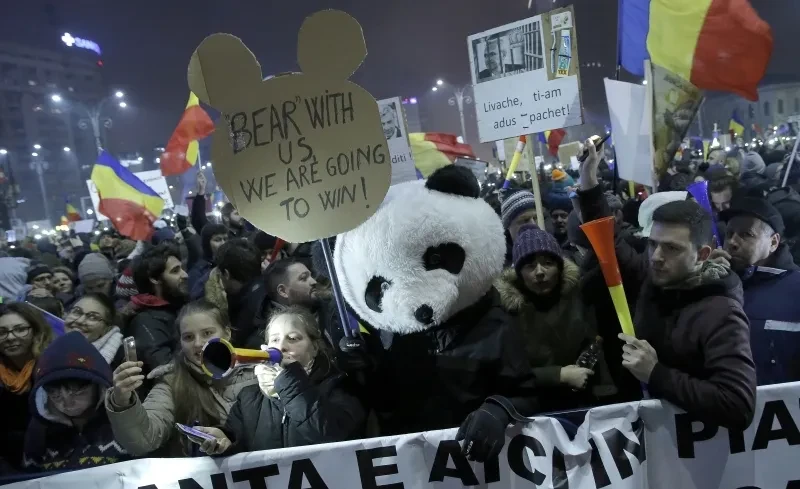
The first to do this was Romania President Klaus Johannis, elected with the support of the National Liberal Party (NLP). He could hardly have done otherwise, because, taking office, he oath to fight corruption in the state.
Johannis not only personally took part in the street procession, he made a proposal for the national referendum to the parliament, saying that only the people themselves should decide whether to stop the fight against corruption. The president also sent a request to the Constitutional Court on the legitimacy of a government resolution.
As the protests increased, other public forces and official representatives were activated. The parliamentary faction of National Liberals promised to raise the question of the vote of no confidence in the government. The Prosecutor General called the decision of the Cabinet of Ministers contradicting the constitution and not having the strength, because it was accepted bypassing the legislative branch.
Even the Romanian Patriarchate did not stand aside, who called for the prime minister to withdraw a scandalous decree that has split society and threatens the country's security.
The foreign partners of Romania also gave their vote. The diplomats of the five European countries and the United States sent a joint letter to the head of the government, in which, indicating the obligation taken by the Romanian side to eradicate corruption crimes, they warned of the detrimental consequences of an erroneous government decision.
From the European Commission, concern in the situation in Romania was expressed by its chairman Jean-Claude Junker and his deputy France Timmermans. The European Parliament put forward a proposal that if the Romanian government does not revise its position, then to deprive the country of access to Euro Funds of lending and programs of economic and investment development.
"Local Baron" of a national scale
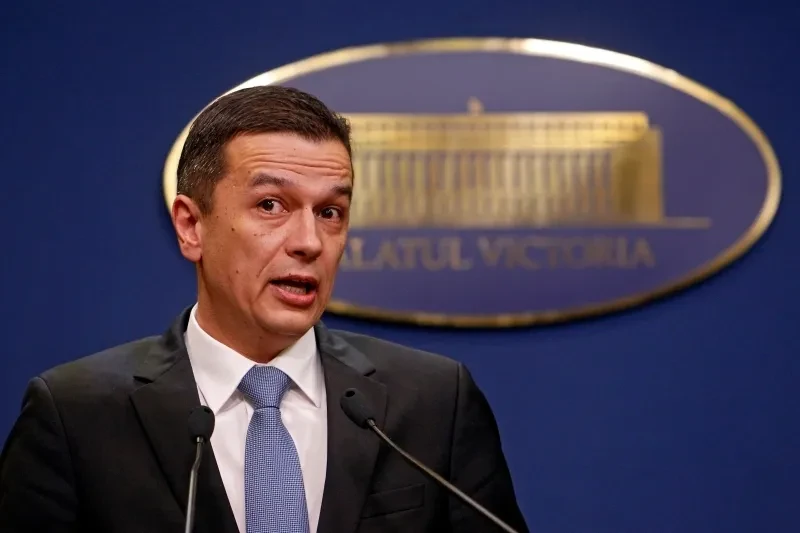
Social Democrats pretended not to notice the growing protest wave. Prime Minister Sorin Grindan categorically refused to recall the document he signed. The leader of the Party of the SDP Dragne said that rallies were paid by forces interested in destabilizing Romania, in particular, by the money of Soros.
What was the reason for such perseverance?
The answer lies on the surface. After the departure of the scandalously known Viktor Ponte from the post of party chairman, at the head of it, the already mentioned Liviu Dragne - a politician with great ambitions, a dubious past and problems with the law.
At the beginning of the zero years, the young dragon was already a noticeable regional figure: the prefect of the county, the president of the regional council, a member of the National Bureau of the SDP. The growth of political influence was supported by commercial activities, the success of which was ensured by official position.
With each new step career, the personal well -being of the politician increased. Soon, the dragon owned several land plots, a construction company, three hotels and a rest house, two suburban residences. In the press, the nickname "Local Baron" was assigned to him.
In parallel, Dragnee stubbornly moved to the main goal - to become a politician of a national scale. In 2009, he succeeded - he was appointed Minister of Regional Development and approved by the Executive Secretary of the SDP.
Doubtful commercial affairs of the dragon repeatedly fell into the field of view of law enforcement agencies. However, the case did not reach concrete accusations until the National Corruption Office (DAN) was headed by Laura Koveshi, which was implacable to the bribes.
In 2015, Dan convincingly proved that the dragon at the ministerial post, using the bribery of voters, falsified the results of the national referendum. The ex-minister received a year of prison conditionally, and when trying to challenge the lower instance sentence, the Supreme Court of Appeal added him another year.
Thus, the chairman of the ruling party lost the right to claim public office. And he really wanted to. So the ill -fated decree of the government was born,
which was supposed to complete a double task. Firstly, decriminal corruption crimes, raising the bar of material damage from them to 200 thousand lei (drags are charged with damage to 100 thousand), and secondly, to amnesty already convicted corrupt officials, among which social democrats make up the lion's share.
The crisis is aggravated
The stubbornness of the Social Democratic Government only strengthened the popular protest-every day the number of rallies and demonstrations grew, drawing all new sections of the population into the shares. Against this background, representatives of the SDP tried to create the appearance of concessions.
At an emergency meeting of the Cabinet of Ministers, the decision was revoked. But immediately after him, Prime Minister Grindyan said that the government will seek the acceptance of the desired changes to the Criminal Code through the Parliament, where the SDP in the coalition with the alliance of liberals and democrats has a majority.
Such a frank ignoring public mood by the head of government caused a new angry indignation of the Romanians. In addition, the public was the property of the authorities to disband the Dan, uniting it with the anti -corruption divisions of the police under the guidance of their person from the SDP. In this regard, the more popularity among the protesters is gaining opinion to turn a protest into an unlimited until the Cabinet of Social Democrats will resign and early parliamentary elections will be declared.
For its part, the SDP clearly does not intend to voluntarily leave power, resting on the fact that she legally won the elections.
In response to the demands of the people, the Social Democrats are trying to mobilize their supporters. Last Sunday they managed to gather several hundred people for an alternative rally at the Presidential Palace.
At this time, more than 250 thousand opponents were on Victoria Square, and there is no reason to think that tomorrow they will not come here again.