
Translated material
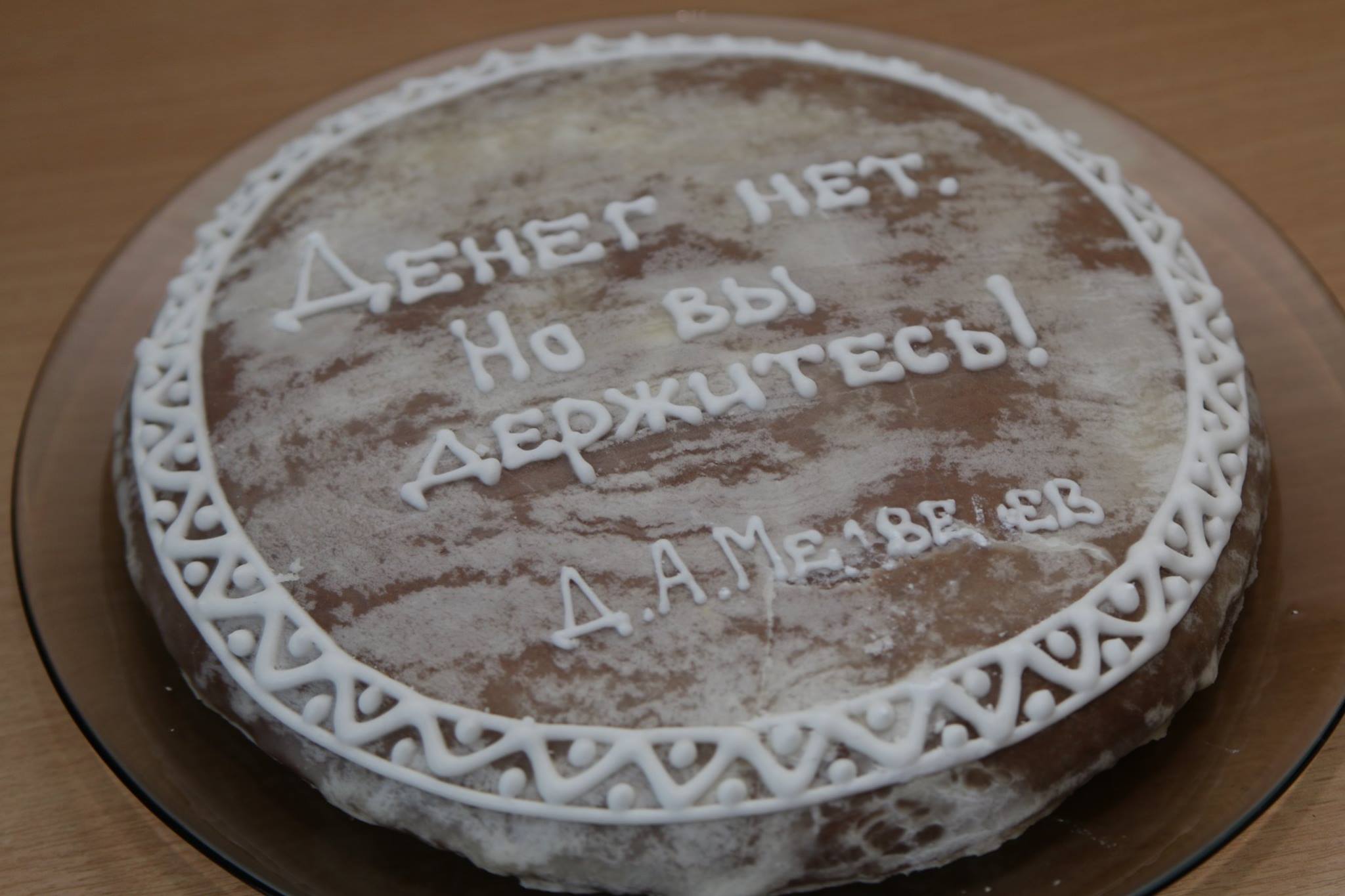
Russia will be offered a gingerbread
"Europeans are waiting for what grenade Donald Trump will be thrown into the Russian-Ukrainian pond. European diplomats will be careful and try to maintain the status quo." So the expert of the Brussels Center of Ceps Michael Emerson answered the question of Bloomberg about what the future is waiting for the sanction of the European Union against Russia this year.
Most analysts agree that in a few weeks, personal sanctions imposed against 146 individuals and 37 legal entities (among them are persons from the environment of Vladimir Putin, including Arkady Rotenberg and Yuri Kovalchuk ), will be extended for another six months. More general sanctions regarding the complex of trade and economic relations with Russia are extended in December last year and will be valid until July 31.
What will happen later? There is no definite answer to this question. Indeed, in the coming months, numerous political events await Europe, primarily a series of important elections - parliamentary in the Netherlands, Bulgaria, France and Germany and the presidential in France. As the recent visit of Vladimir Putin to Hungary showed, the Moscow in the EU has devoted lawyers: the Hungarian Prime Minister Viktor Orban once again complained to the damage caused by the sanctions of both Russia and Europe. Perhaps in the near future, European leaders sharing this point will add one more: according to polls, the Bulgarian Socialist Party has good chances of winning the March elections, and its candidate for the premiere of Cornelia Ninov resolutely speaks out for the abolition of sanctions.
Different surprises are not excluded this spring. So, the colossal mass protests continuing in Romania can lead to early political changes. True, so far the new Social Democratic Government Sorin Grindan refuses to meet the requirements of the demonstrators and resign. The reason for the unrest is the decree issued by the cabinet, which exempted from the punishment of convicted corrupt officials, if the damage caused by them did not exceed 200 thousand lei (about 50 thousand dollars). Under pressure from the protesters, the office was forced to cancel his decision, which, according to the official version, was supposed to help unload overflowing Romanian prisons. Demonstrators were supported by Romania President Klaus Johannis .
Corruption, populism, relations with Russia - such will be the main topics of the advancing political season in Europe, says in an interview with Radio Freedom the former deputy chairman of the European Parliament, political scientist, specialist on the problems of European integration of the Libor of the Rouchi (Czech Republic).
- Let's start with the mass protests unprecedented since 1989 in Romania. This, in your opinion, is a purely local phenomenon caused by long -standing Romanian problems with corruption, or can it be considered in a pan -European context, because now people are dissatisfied with the political elites of their countries almost everywhere?
- Of course, the problem of corruption concerns not only Romania. What kind of post -communist countries you will take, including the republics of the former USSR, everywhere the picture is the same: corruption is one of the reasons for the demoralization of society and the decomposition of democratic institutions. The outbreak of mass performances in Romania is associated with a specific law approved by the local government, but in general we are talking about a common problem, which is characteristic primarily for the post -communist world.
- Do you think that in Western Europe things are completely different? But there, even there, we are observing the rise in the popularity of parties and candidates who present themselves as fighters with an establishment. You can recall the Brexit and the populist party of the UKIP , which played an important role in the campaign for the Great Britain out of the EU. In France, in the upcoming presidential elections, according to surveys, the most popular candidates are the leader of the extreme nationalists Marine Le Pen and ex-minister of economics Emmanuel Macron, the “fugitive” from the social party, which claims to be “third” between the left and right. People are unhappy, this is obvious. What is the matter?
- If you continue to deal with the problem of corruption, then just the other day, Transparency International has unveiledanother corruption rating . Everything is traditional: the worst in Europe (I take not only the EU) things are in post -Soviet countries and in the Balkans, as well as in Greece and Italy. Ahead - Scandinavian countries, a little more "polluted" Western European ones. But there is sensitivity to corruption disorders above. So you mentioned the French elections, where Francois Fiion was in the center of the scandal, which a couple of weeks ago was considered the main contender for victory. He, as they suspect, employed his own wife as an assistant for a lot of money as an assistant and can now explain what kind of work she received hundreds of thousands of euros for. So in general, yes, the problems are common, although the scale is different. The system discredits itself, and populists use this, unfolding criticism of the so -called elites. As you can see, the United States was not free from this - this was so elected President Donald Trump.
The system discredits itself, and populists use it, unfolding criticism of the elites
- To what extent corruption, errors and miscalculations of the establishment became "fertilizer" on which populists grew up? European politicians do not, figuratively speaking, take a closer look at yourself in the mirror?
- Of course, I'm not going to blame the populists in everything. If we take, say, Italy, where there are two populist parties in the "Higher Political League" at once - the League of the North (its leadership, by the way, has excellent relations with the Kremlin) and "The movement of 5 stars" , then there is a discredit of the ruling elites - the problem of many years. In the 90s, for this reason, the former political system even collapsed there. Populists would be fools if they had not taken advantage of the situation. But there is one important feature: in contrast, say, from the Communists or radical socialists of the last century, the current populists do not offer the replacement of the current political system of some other. They want to win democratic elections, act within the framework of this system, but with the aim of decomposing it, without offering a specific alternative. And, as in the case of the French National Front or the "movement of 5 stars", they primarily seek to destroy the European Union.
- Since you called the new US president on a par with European populists - do you think that the election of Trump will become a significant incentive for these political forces?
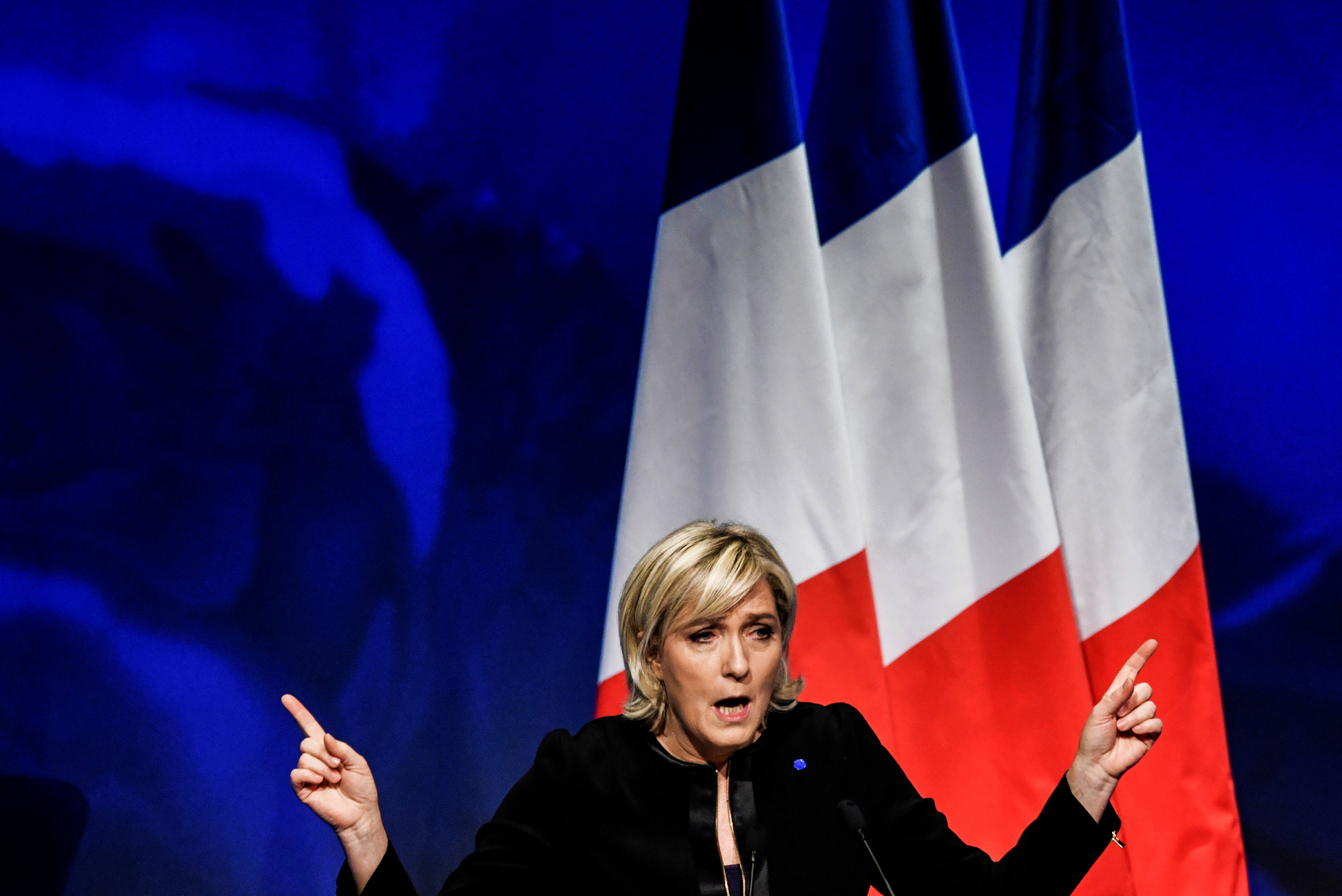
“As far as I can judge, they themselves still think that yes.” Hope and even copy certain techniques used by Trump in the election campaign. For example, Marin Le Pen stylistically clearly imitated Trump the other day at a rally in Lyon . But, as the last year’s elections of the President of Austria showed, it is not written anywhere that such tactics will certainly bring success. Democratic political forces, primarily in Western Europe, are rooted quite firmly. So it is possible that the public will soon begin to understand the lightness of the promises of populists, whose criticism of the system is often fair, but they do not offer constructive solutions.
- Nevertheless, dissatisfaction with the European Union has already become a kind of political fashion. The EU in its current form can be preserved or inevitable two scenarios: either deep reforms or decay?
- Reforms, of course, are needed. Without them, the European Union will remain inseparable enough. The crisis with migrants and the question of the joint protection of external borders of the EU clearly demonstrated this. The problem is that the European Union as a whole in this regard, as in many others, has little powers. Border protection is within the competence of individual states. As a result, problems arise, say, in Greece, and they come in as a result of the existence of the Schengen zone to many European countries. The paradox is that the EU scold the EU, calling it "super -state", but in reality it is a weak association. At the same time, in the interests of individual states, there is precisely the strengthening of the powers of the European Union, at least in the field of border protection, foreign policy and security. But in order to carry out such a reform, all EU members must agree with it, but there is no such universal consent yet.
- So for now - a dead end?
- The European Union, even in its current imperfect form, I would not call a dead end. But it would be much more effective if a deeper integration was possible, at least in certain areas. It is interesting that at the last EU summit, in Malta last week, this issue was discussed, however, not for long, only two hours. But the leaders of the Union’s countries decided that at the next meeting, she would be in March and would be an anniversary, dedicated to the 60th anniversary of the Roman agreement , this will become one of the main topics. As far as I know, specific projects will be proposed, which seems to be the “Europe of different speeds”. This is a model in which a group of countries striving for deeper integration will carry it out, primarily within the Eurozone. And those who for some reason do not want or are afraid will remain states with a more "free" membership in the EU.
I would not predict the collapse of either Schengen or Eurozone
- What - the Schengen zone will break up? What if any of the countries included in it, say, Hungary will not want to enter this "integrated core"? It is impossible to be and not to be in the general project at the same time ...
- I would not predict in this regard the collapse of either Schengen or the Eurozone. Indeed, now, even in the absence of consent, whether migrant quotas are needed and how many refugees to accept which country, general consent on the issue of joint protection of borders is being loomed. According to the model of an agreement with Turkey, an agreement with Libya is being prepared on limiting the flow of migrants heading from there primarily to Italy. The strengthening of common boundaries could intensify Schengen. After all, no one wants to restore full -scale control on the internal borders in Europe, between individual states - neither Germany, nor Austria, nor Italy, nor the same Hungary or the Czech Republic. This is not beneficial to anyone. There is hope.
- As soon as it is not easy to find consent on important issues between EU members, what can be said about the future of sanctions against Russia? To decide whether they will be extended, European leaders should already at the end of March. Even then, or later during the year, is it possible to cancel or weaken sanctions? After all, it is known that supporters of the restoration of full -scale relations with Moscow among European politicians are already many.
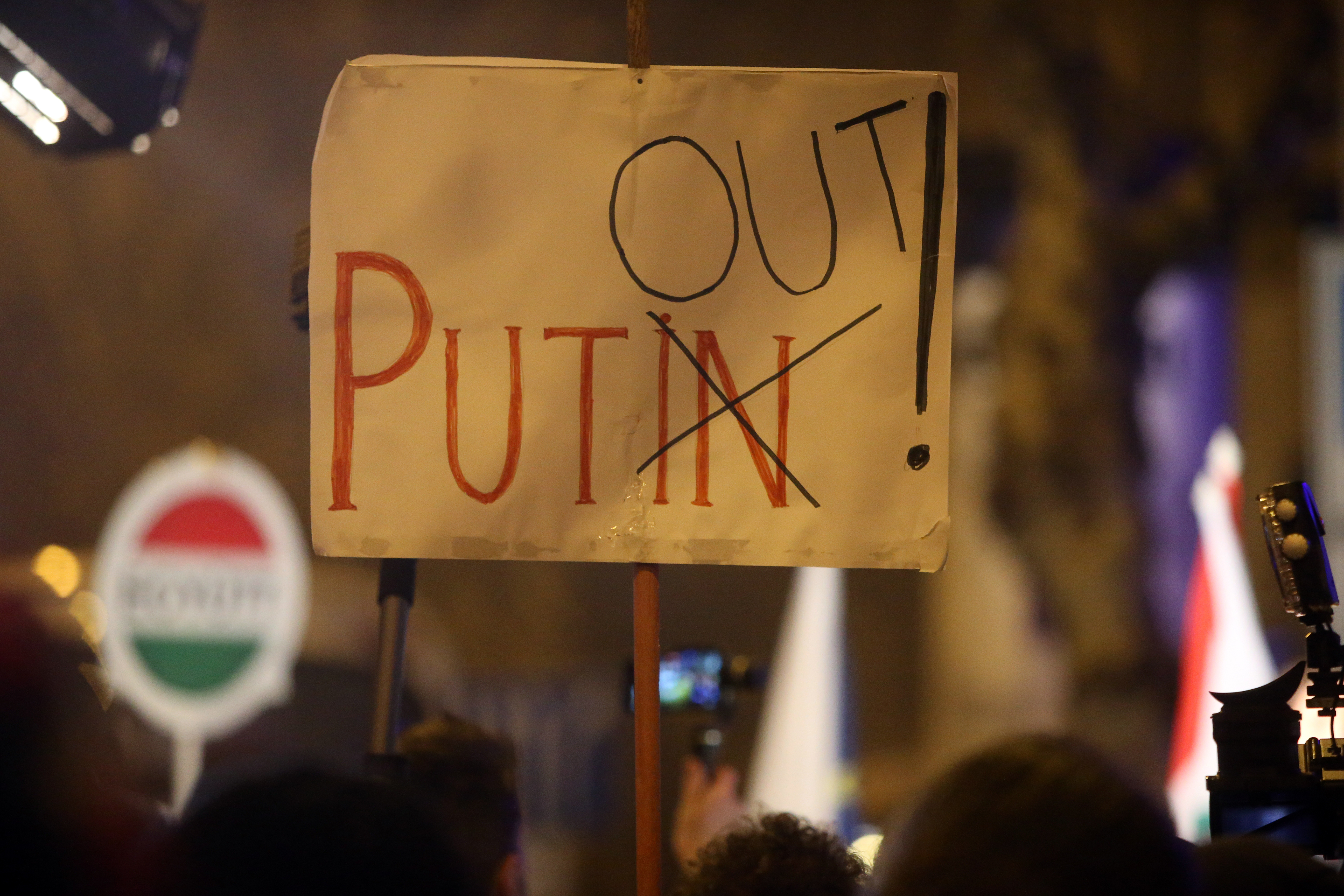
- I suppose that these sanctions will be extended. Because now, and European society sees this, the solution to the situation in the east of Ukraine has not yet been found , the Minsk agreements are not respected. On the contrary, a new exacerbation began, the escalation of the conflict threatens. But in European countries there will be elections - there are popular candidates who advocate the abolition of sanctions against Russia. President Putin had just passed to Hungary - there the receiving party also made it clear that it was not enthusiastic about the sanctions. In our Czech Republic, the government supports sanctions, but the president would like to cancel them. In general, this year there will be a lot of talk about this. The question also arises what is the position of the United States under the Trump administration. In general, in the coming months, sanctions will be continued, but it is very likely that the wording will contain a certain call or sentence in the spirit of “something for something”: subject to the Russian side of certain conditions according to certain points, the sanctions can be weakened by points or industries.
- That is, a kind of schedule of gradual abolition of sanctions? More recently, I did not talk about anything like that.
-I would not call this a schedule, in the sense that, they say, in April we will do this, in May-this, and in July-also this. Rather, if we talk about the current situation in the categories of “Knut and the Gingerbread”, Russia will be offered a certain gingerbread in order to finally bring the real resolution of the Ukrainian conflict closer. Because this sluggish conflict does not meet any interests - neither Ukraine, nor Europe, nor, by and large, by Russia itself. So I think Europe will offer some additional incentive-which one, it is difficult for me to judge here-so that at least a partial solution to this problem is possible, ”said the political scientist, a former deputy chairman of the European Parliament, Libor of the Roocons.