
Translated material
When a composer falls behind bars
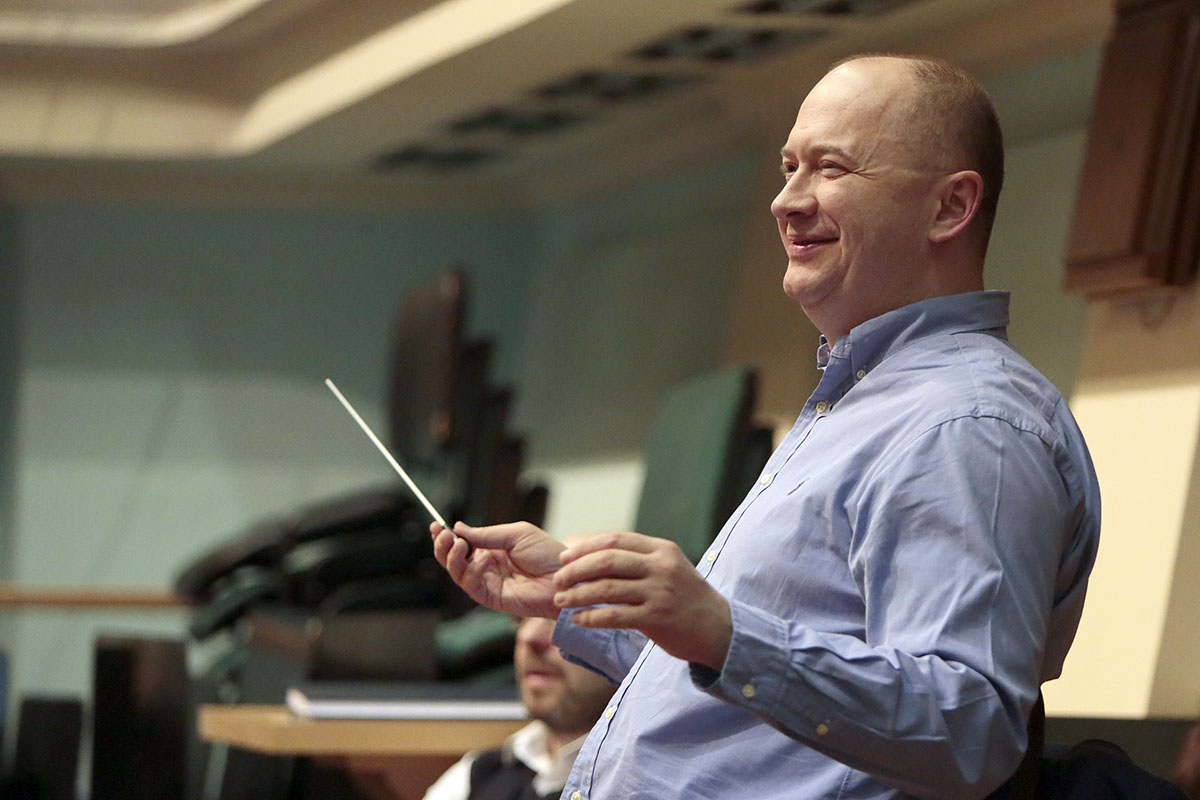
On February 12, at the Bolshoi Theater, the long-awaited Moscow premiere of the Opera Idiot Mecchalwa Vainberg, the Polish-Soviet composer, the general public, known primarily by music for the cartoon about Winnie the Pooh and the film “Cranes fly”. The opera conductor Mikhal Klauza told The New Times about humor in classical music, about how to combine Shostakovich and popular melodies in his work and why the Litaurist is an iron glove
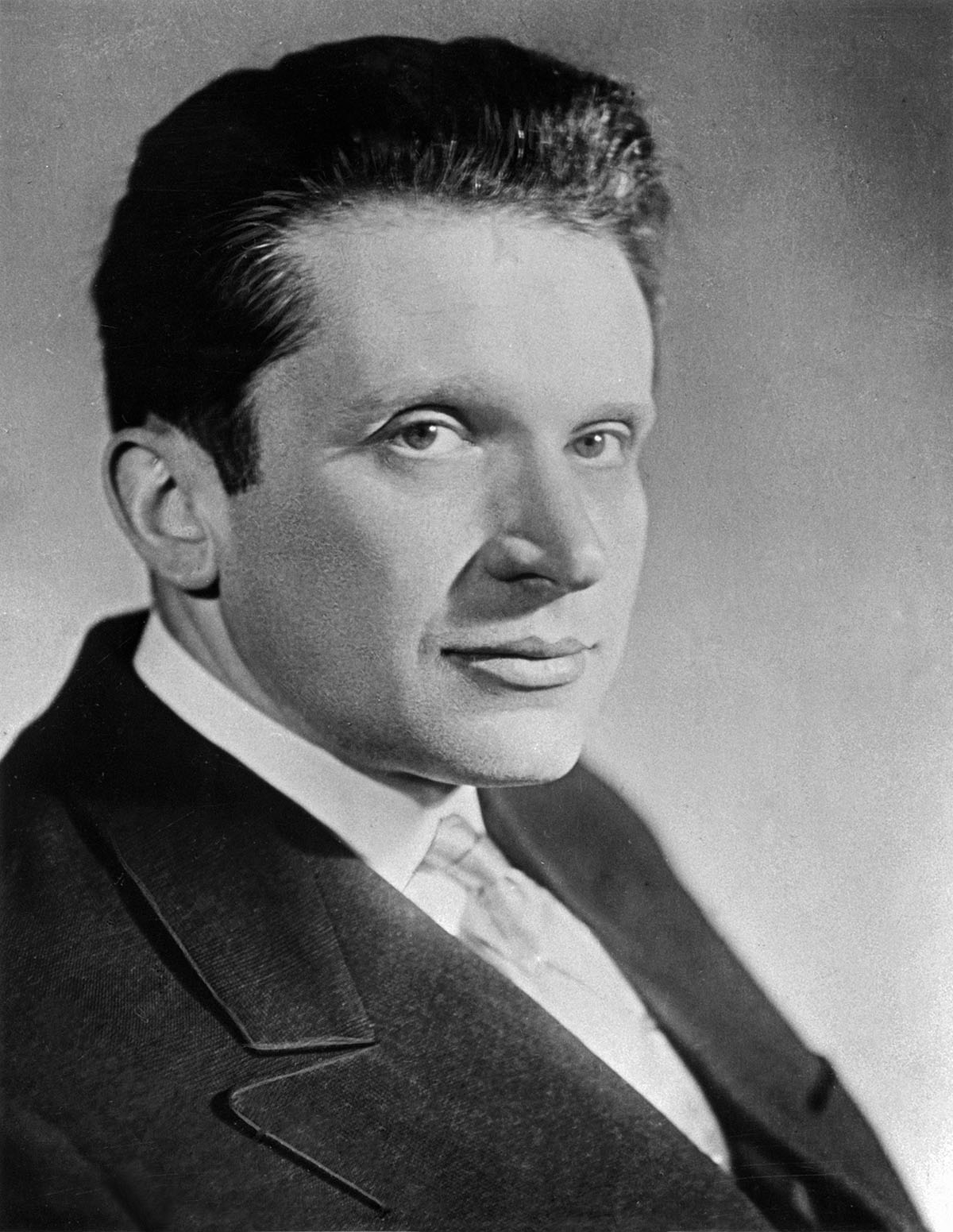
Mechislav (Moses) Weinberg is a composer of a tragic and amazing fate, whose music for cartoons and cinema knows in our country everyone, unlike its main works. He was born in Warsaw in 1919, in 1939 fled to the USSR, his relatives remained in Poland and died. In 1948, he turned out to be “under the cap” of the organs as a son-in-law of Solomon Mikhoels, was arrested in the midst of the “doctors' affairs” and was released only after Stalin’s death. His music sounds in cartoons about Winnie the Pooh and Leo Boniface, in the films “Cranes”, “Afonya” and dozens of others are flying. His symphonic and chamber works were played by the best performers of our country - from Emil Gilels and Mstislav Rostropovich to the Rudolf Barchei orchestra and the quartet named after Borodin.
After the death of the composer in 1996, they almost forgot about him. His main essay - the Opera “Passenger”, dedicated to the accidental meeting of the surviving prisoner of Auschwitz with the former supervisor - was first sounded in half -concert performance only in 2006 in Moscow. Four years later, it was put at the festival in Bragery (Austria) and has since been placed all over the world. Six months ago, in Yekaterinburg, the first Russian production “Passenger” was held ( see NT No. 31 (419) of September 26, 2016 ). On February 19, the performance will be shown on the new scene of the Bolshoi Theater, on the same days it will be possible to see another, completely fresh “passenger”: the newly -opera “New Opera” timed for the anniversary of the liberation of Auschwitz.
But the “idiot” according to the same novel by Dostoevsky is the opera, almost not known here. In 1991, its world premiere in the production of Boris Pokrovsky took place in the Chamber Musical Theater; For this incident, Weinberg made the chamber editor of the opera. Since then, an “idiot” was not put until 2013, when in Mannheim (Germany), in fact, another premiere took place - under the control of the conductor Thomas Zanderling. Last summer, an idiot was presented at the Mariinsky Theater in St. Petersburg, Moscow will now see the opera (on 12, 14, 15, 16, 17, the new scene of the Bolshoi Theater). At the same time, the three -day international conference “Mecherslav Weinberg. Return".
The conductor of the “Idiot” Mikhal Klauz told NT about his work on the opera along with director Evgeny Arya and the creative handwriting of Weinberg.
Comedy and drama
Earlier, you conducted the Donitnitti opera at the Bolshoi Theater: it would seem that nothing in common with the "idiot". Where does the proposal to do this project suddenly come from?
The first proposal of the big was just an “idiot”. The theater knew that I was engaged in the music of Weinberg, recorded his works with the National Orchestra of the Polish Radio. For example, the first symphony dedicated to the Red Army, which I told the orchestra on the last day of our work on it. Silence hung in the hall, many had their faces, then the musicians asked why the composer gave the symphony such a dedication. I had to explain: the life story of Weinberg shows that he was lucky, when compared with his family members ... And only then there was an offer to put the opera Donitnitti, whom I also adore: opera buff is my element, I did a lot of such works. In general, a sense of humor in music and in life is very important for me. And I consider myself a person who is in default a good mood.
What about the sense of humor is the situation in the "idiot"? One of the European reviews on the production of the opera in Germany says that Winberg is like Shostakovich, who had a laughter.
It is well said, but I do not agree. Listen, for example, in the fourth stage of the “Idiot” the song of Lebedev: “In me, the soul trembles and glows, // When, leaning your head to you ...”-with what stylistic accuracy this is done, like the city popular music, which Weinberg once performed. A stunning scene, a very simple waltz, without a single extra note, brilliant stylization. So Winberg also meant a lot! From the novel by Dostoevsky, he got a comedy-drama, which can be said in part about his life, the result of which in many ways became an “idiot”.
Why did the result, if after the “idiot”, Winberg managed to write a lot more?
If only because this is his last opera, written at the sunset of life. Here he completely expressed himself, giving tribute to many genres of those that influenced him. The first influence he perceived - from Warsaw life: after all, he worked as a boy with a pianist in nightclubs, helped his father in his work in the theater. The “idiot” was greatly influenced by the popular music of that time, and the one that he himself later wrote in large quantities - by responsibility, but also for love. After all, he was known in the Soviet Union for music for cartoons, to the cinema. In the "Idiot", as a few, you can hear that Weinberg has come out of three different worlds of art - Polish, Jewish, Soviet. I hope the audience will be remembered by melodies because they are simple.
Soloists and orchestra
Dostoevsky’s novels are sometimes called too gloomy. In the "passenger" glimpses are still noticeable. Are they in the "idiot"?
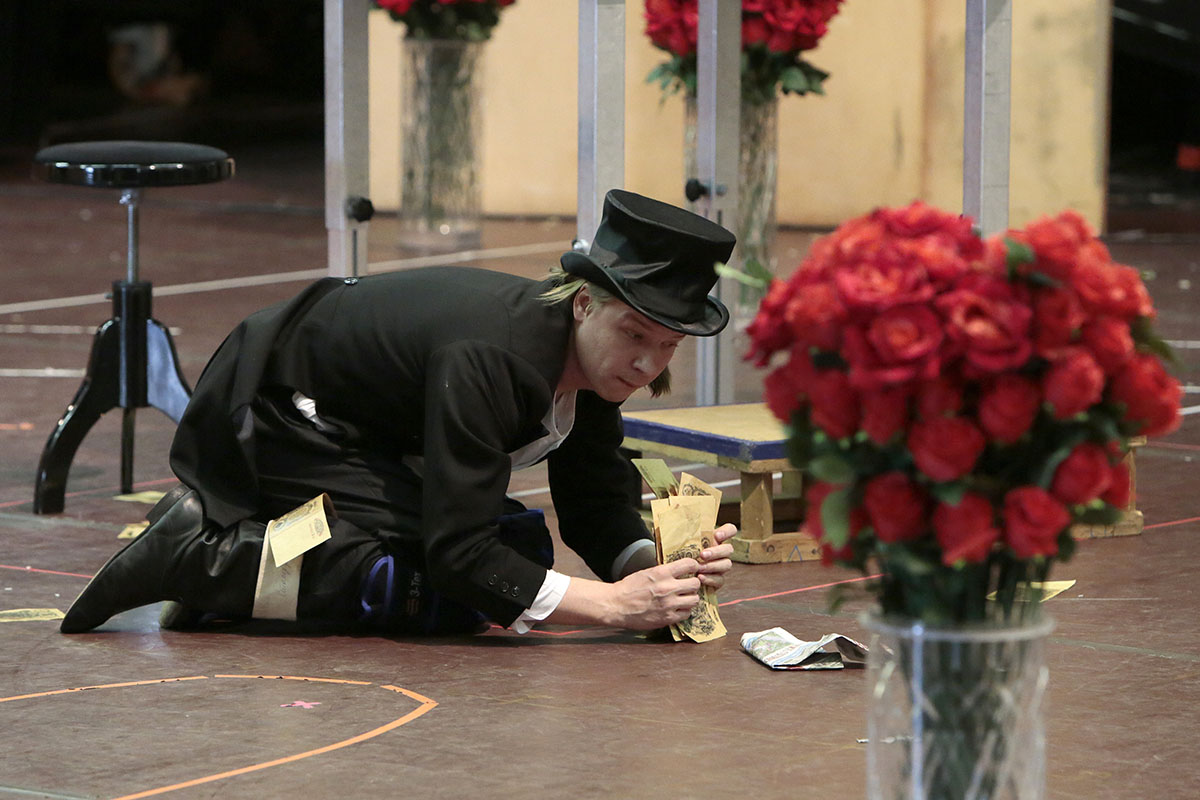
There is, of course, including the fourth scene that I spoke about before. She is hearing and gaze to relax, although she then turns into her opposite: into a situation of real madness, when Nastasya Filippovna throws money into the fire and makes Ganya jump after them. But the beginning of the picture is bright, like two points related to the image of Aglai: it was her that the composer gave one of the most beautiful melodies in the opera. One is vocalize at the beginning, when we first meet with the heroine. The other is when she sings about the "knight of the poor." It is impossible to go past these melodies: yes, the melody of the “knight of the poor” is sad, but at that moment drama is weakening.
How did the choice of soloists and your work occurred?
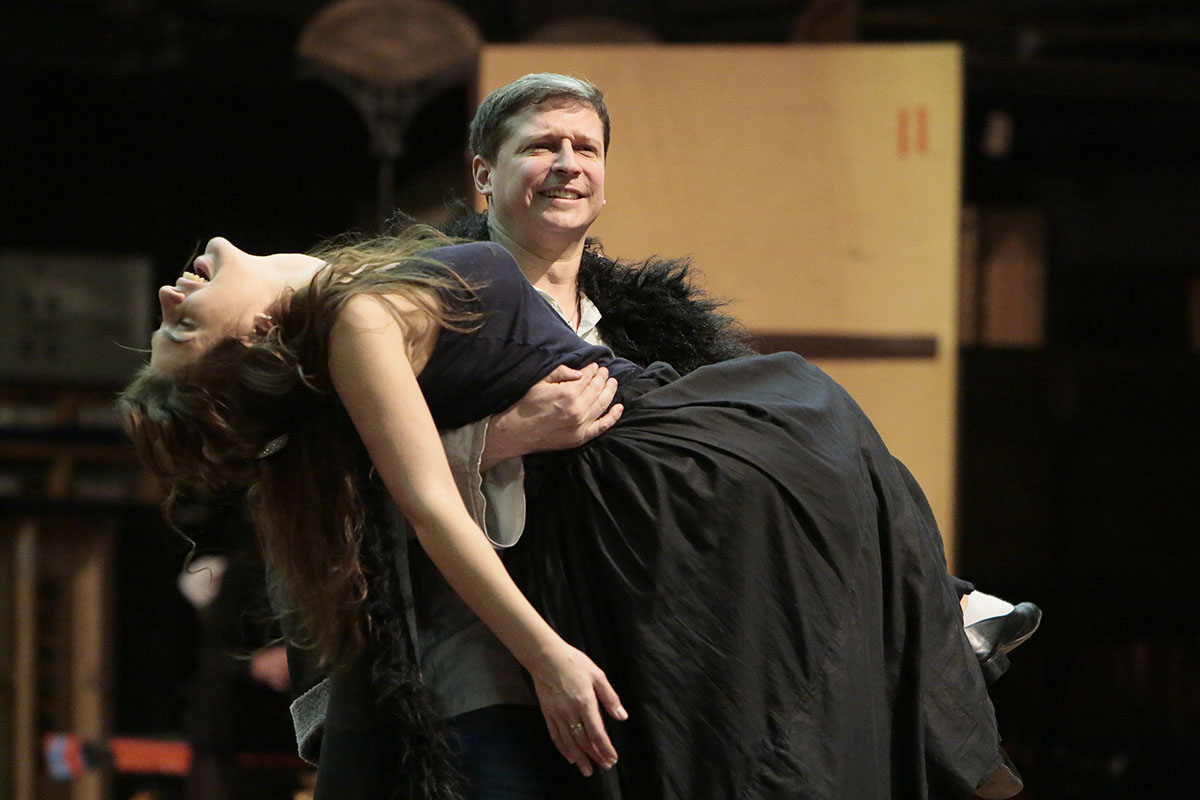
The “idiot” needs the composition of soloists who would work very together: the music is so difficult that it must be repeated many times, while tension inevitably occurs. For each soloist, to learn a party the whole thing - the rhythmic structure is very difficult. On the other hand, in this work, acting accuracy is especially needed to show the public of each hero. Not every soloist, even with a good voice, is able to be Myshkin, Rogozhin, Nastasya Filippovna. And I am very glad that we managed to choose such an amazing composition of soloists.
How in detail do you discuss with the director what exactly will happen on stage?
In great detail, and for me this is one of the most interesting moments in my entire opera life. Evgeny Arya is an amazing director, he really works with the artist and gives invaluable comments. We are very lucky that we can work on this opera with a director who pays attention to how the artist moves through the stage, who understands, for example, that there is a hole between the stage and the viewer where the orchestra is, and sometimes he should play loudly, and in this case there is no need to leave the soloists in the depths of the stage. I hope that spectators who are not afraid to come, see and listen to this beautiful music will come out satisfied.
Harmony and politics
Is there any chances to repeat the success of the “passenger”?
It's hard to say. I think when they decided to put a “passenger” for the first time, they did not expect the current success. And today it is placed all over the world, and only in February Moscow will see its two different productions: the composition receives a new life and becomes very popular. I do not want to call it fashion, but today the topic of the passenger libretto itself attracts attention and sounds as a warning, especially relevant in our time.
“I look at the score, I see a footnote: the litaurist should put on an iron glove when he will mix with a broken glass with his hand”
The “passenger” is very different from the “idiot”, including how Wineberg uses the orchestra: by the power of the sound “Passenger”, much larger than the “Idiot”, a more chamber opera. This is largely due to the text of the novel: in order to realize all the characters, Weinberg did not need such a powerful sound. If Shostakovich’s influence on the “passenger” is very felt, the “idiot” is much freer from it, all the forms that Weinberg used in life are connected here.
How to convince to listen to the "idiot" of those who expect only dissonances from the modern opera?
I had to perform many modern works; I remember a conversation with one young composer - I conducted the premiere of his composition in Catovitsy. I look at the score, I see a footnote: the litaurist should put on an iron glove when he will mix with a broken glass with his hand. And the whole score is such, without a single tact with a hint at least some caught harmony or the shadow of the melody. And I asked him why this is, what new he wants to open with a glove of broken glass. He could not answer.
Why did I mention this? Because Vainberg himself said that he did not want to look for anything new, his base on what is already open in music. Yes, he does not open a new world of sounds, like Igor Stravinsky, Bela Bartok, Alban Berg, his style is approved in classical form. Although his tongue can be recognized by several notes: it is felt that his life was tense, with a constant feeling of loss and a sense of danger, after he was behind bars during the “case of doctors”. In the 1960s, as he said, the Golden Age came for Weinberg, when he wrote a lot and performed a lot. And then - again the lull when he wrote for the most part to the table. Until the fashion has come to Weinberg. Shostakovich, apparently, was right, calling him too modest.
How long will Winberg's fascination with music will continue in the world?
Maybe it will not be as loud as in recent years, but his works are included in the programs of orchestras. In May, I myself will participate in the days of Polish music in Brazil, in San Paulo. I suggested fulfilling the “Polish melodies” of Weinberg there, and they supported me. And recently, Winberg in the USA was played by the orchestra of the Polish National Philharmonic, then - Hyonon Kremer. Here in Russia, I heard that "The Bolshoi Theater is preparing the premiere of the opera of the Polish composer." Although it would be more accurate to call him a Soviet composer, and nevertheless, such conversations are going on. In Poland, I am talking a lot about the fact that politics is politics, but there is and should be cultural ties. Winberg’s life showed how much politics can affect art when a composer falls behind bars.