
Translated material
The House of Commons of the British Parliament approved Brexit
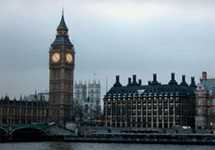
The House of Communities of the British Parliament adopted in the third, final reading an act that approves the launch of Article 50 of the Lisbon Treaty on the procedure for the country's withdrawal from the European Union. According to the BBC, the government of the government on leaving the EU was supported by 494 deputies, 122 opposed.
In the course of the final voting of the debate, deputies discussed several amendments, among which - permission to citizens of the European Union to remain in the territory of the United Kingdom after the completion of the Brexit process. As a result, not one of the amendments was accepted.
The Brexit act must still be discussed in the House of Lords, but, as expected, there should be no problems with this. It is assumed that he will be finally approved by both chambers of the British parliament to the EU summit, scheduled for early March.
After that, the British Prime Minister Teresa May will receive the right to officially begin the process of the country's exit from the European Union.
On November 3, 2016, the London high court ruled that the government has no right to initiate Brexit without approval by its parliament. In the first reading, the bill from the EU was approved by the House of Commons on February 1.
According to the results of the vote, held on June 23, 51.9 percent of subjects spoke out of the EU, 48.1 percent, respectively. At the same time, out of the four components of the United Kingdom, Brexit supporters received the majority only in England and Wales, while Scotland and Northern Ireland advocated the continuation of membership in the European Union. So, in Scotland, Brexit opponents gained 62 percent of the vote, supporters - 38 percent.
The next day, Prime Minister David Cameron announcedhis intention to resign . "I do not think that for me it will be the right decision to remain a captain who will lead our country to the next destination," the prime minister said.