
Translated material
Memory. Anatoly Koni
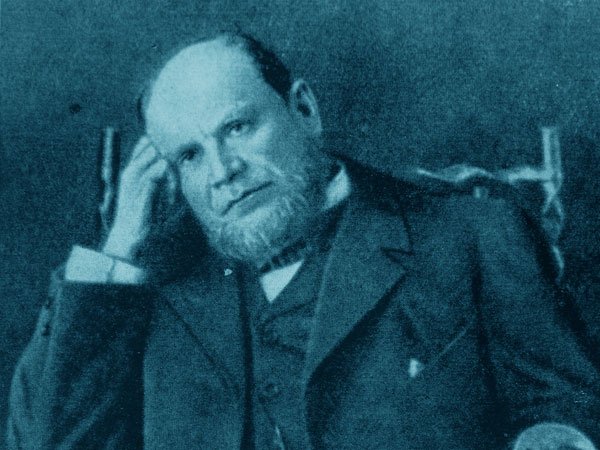
On February 9 (January 28), 1844, Anatoly Koni, an outstanding lawyer, speaker, state and public figure was born.
Personal business
Anatoly Fedorovich Koni (1844–1927) was born in St. Petersburg in the family of the famous playwright and theater critic Fedor Alekseevich Koni and actress Irina Semenovna Yuryeva (on the stage - Sandunova). Until twelve years, the boy was brought up at home, then he graduated from the three -year German school of St. Anna (Annennshule), and after him he studied at the gymnasium for another three years. In the penultimate class of the gymnasium, he passed entrance exams to the university along with the home education, without graduating from a gymnasium course.
Having become a student at the Faculty of Physics and Mathematics, Anatoly Koni decided to abandon the help of his parents and earned a living with students. Moreover, he gave lessons in various disciplines: from literature and history to botany and zoology. When in the winter of 1861 the University of St. Petersburg was closed due to student unrest, Koni transferred to Moscow University, but already to the law faculty. He prepared a dissertation for the degree of candidate "On the right of necessary defense."
In June 1865, Koni graduated from the university course with the degree of candidate of rights, and in December of the same year, his dissertation was published in an appendix to Moscow University Vedomosti. The authorities drew attention to the dissertation of Koni. Censorship discovered undesirable thoughts in it, the Minister of the Interior Peter Valuev was reported about the content of the work. The guilt of the horses was given to the following statements: “Citizens have the right to meet its [power] requirements:“ The doctor, healed himself ””, “The people whose government seeks to violate his state structure has, by virtue of the legal basis for the necessary defense, the right of revolution, the right of uprising,” “It is obvious that the necessary defense, as resistance to the actions of public power, can only be in case of obvious opposition to the law.” Only due to the small circulation of the author’s work was not pursued in criminal order. The case ended with the fact that the University Council received an official remark from the Ministry of Education for the publication of Koni's work.
The rector of the university invited Koni to start reading the course of criminal law, but he refused, as he considered himself not prepared enough. The young scientist’s trip to foreign internships accepted at that time could not take place, since after the attempt on Alexander II in April 1866, the government stopped this practice.
Anatoly Koni entered the public service, becoming a lawyer in a military ministry. The beginning of his work coincided with a serious reform of the Russian court (“Basic Provisions” 1862, “Judicial Charters” 1864). For the first time in the country, a vowel court appeared with the debate of the parties in front of the collection of elected jury, the independence of the courts from the administration was proclaimed. Koni enthusiastically accepted the reform and decided to go to work in the judicial department. He began to work in the CANKTTERSEVSKY Judicial Chamber as an assistant secretary, and in 1867 he became the secretary of the prosecutor of the Moscow Judicial Chamber. In the same year he was appointed a comrade of the prosecutor - first Sumsky, then the Kharkov District Court. In 1869 he was transferred to the same position to the CANKT-Petersburg District Court. He participated in the conduct of judicial reform in the Kazan district, as a prosecutor of the district court. In 1871 he was appointed prosecutor of the St. Petersburg District Court, four years later-the vice director of the Department of the Ministry of Justice.
Anatoly Koni became famous as a judicial speaker. A large audience was going to listen to his performances. In particular, he was the chairman of the court in the case of Vera Zasulich. Anatoly Koni also participated in other high -profile trials. He was the prosecutor in the case of Igumeni of the Serpukhov monastery Mitrofania , guilty of fraud and forgery of bills.
In 1881, at the request of the new Minister of Justice, Dmitry Nabokov Koni took the post of chairman of the Department of the St. Petersburg Judicial Chamber for civil cases. In 1888, he was the head of the investigation of the collapse of the royal train at the Borka station. In 1892, Koni became a senator. In 1907 - a member of the State Council, and in 1910 he received the rank of a real secret adviser.
After the 1917 revolution, teaching is the main occupation of Konia. He gave lectures at St. Petersburg universities, at the Cooperative Institute, at the Institute of Living Word , as well as in various cultural and educational organizations. His classes relate not only to criminal proceedings and the history of the Russian court, but also of Russian literature, theory and history of oratory. On January 10, 1918, he was elected professor at the Department of Criminal Law of Petrograd University. From 1917 to 1920, he gave more than a thousand lectures.
Anatoly Koni died in Leningrad on September 17, 1927.
What is famous
 Anatoly Koni
The most famous trial in the life of Anatoly Koni was the court in the case of Vera Zasulich . On December 6, 1876, Alexei Bogolyubov was arrested, a participant in the youth demonstration on the square near the Kazan Cathedral in St. Petersburg. He was sentenced to hard labor. On July 13, 1877, the St. Petersburg mayor, who visited the house of preliminary imprisonment, Fedor Tropov ordered Bogolyubov to carry Bogolyubov for not taking off his hat in front of him. This was a violation of the law on the prohibition of bodily punishments of April 17, 1863 and caused unrest among prisoners, as well as criticism from the public. On January 24, 1878, Vera Zasulich, outraged by Trepova’s act, shot him out of a revolver. On the same day, Anatoly Koni took office as chairman of the St. Petersburg District Court. Since the case was to disassemble the jury, the authorities were afraid for the outcome of the process. In mid -March, he was called by Minister of Justice Konstantin Palen:
“Can you, Anatoly Fedorovich, vouch for a conviction over Zasulich?
- No, I can't! - I answered.
- How so? - Definitely stung, yelled Palen, - You cannot vouch?! Are you not sure?
- If I were the judge myself on the merits, then even then, without listening to the investigation, not knowing all the circumstances of the case, I would not dare to express my opinion ahead, which, moreover, in the college, the issue is resolved. The jury is judged here, the verdict of which is based on many elusive considerations in advance. How can I vouch for their sentence? The adversarial process represents many features, and with it the matter is not amenable to the prediction ... I cannot vouch for confession of guilt! ...
- Can't you? Can't you? - Palen was worried. - Well, so I will report to the sovereign that the chairman cannot vouch for a conviction, I must report this to the sovereign! He repeated with an indefinite and aimless threat.
“I would even ask you about this, Count,” since it is extremely undesirable for me that the sovereign has hopes and obligations to me, to which I have no means as a judge. I consider it possible to be a conviction, but you must be prepared for justification, and you will greatly oblige me if you tell the sovereign about this, as I myself would tell him if he began to ask me in the Zasulich case. ”
Then Palen expressed the intention to remove this case from the jury and transfer it to the so -called special judicial presence. Koni objected: “If ... it is certainly a conviction and one possibility of justification forces you - the Minister of Justice - to lose his temper, then I would prefer to take the case from them; It obviously presents more danger to this court than honor. Anyway, since this case will not be allowed the free choice of judicial conscience, then what the court is! It is better to remove all cases from the jury and transfer them to the police. She will always be able to vouch for her decision ... But let you only remind you of two things: the prosecutor of the chamber assures that there are no signs of a political crime in the case; How will it sue the special presence created for political crimes? Even if you issue a law on a change in the jurisdiction of the special presence, then here it cannot have retroactive force for Zasulich. ”
On March 27, Palen again called horses.
“Palen told me:“ Well, Anatoly Fedorovich, now it all depends on you, on your skill and eloquence. ”
“Count,” I answered, “the chairman’s skill consists in impartial observance of the law, and he should not be eloquent, because the essential signs of resume are impartiality and calm ... My responsibilities and tasks are so clearly defined in the charters that now I will say what I will do in the meeting ...
- Yes, I know - impartiality! Impartiality! So all your “statists” say (as he called people who loved to refer to the articles of court charters), but there are business where you need to look like this, you know, politically; This damned business must be laid down more like this and make this cursed story like this (he outlined the cross in the air with his hand), and I say that if Anatoly Fedorovich wants, then he (that is, jury) will say that they will do everything he wishes! After all, so, huh?
- Count, the parties should influence the jury, this is their legitimate role; The chairman, who will bend the whole process to an exceptional charges, will immediately lose any authority among the jury, especially in developed, St. Petersburg, and, I can assure you by former examples, will provide a bear’s service for the prosecution.
- Yes, but, I repeat, from you, it is from you that the government expects services and promoting the prosecution in this matter. I ask you to leave me in confidence that we can lean on you ... What are the parties? Parties - nonsense! It all depends on you ...
“But let me, Count, because you express a completely impossible look at the role of the chairman, and I can assure you that I did not understand this role when I went to the chairmen, I don’t understand it now.” The chairman is a judge, not a party, and, leading a criminal process, he holds a bowl with holy gifts in his hands. He does not dare to tilt her in either direction or the other - otherwise the gifts will be spilled ... and if you demand from the chairman not legal, but political activity, then where is the limit of such requirements, where is the determination of the type of services that may wish to provide a different, not to the best of the helpful chairman? No, count! I ask you not to take this point of view and not expect anything from me but the exact performance of my duties ... "
On March 31, 1878, at the trial, the chairman of which was A.F. Koni, the jury acquitted Vera Zasulich. After the incident, Palen informed Koni about the discontent of the emperor and offered to resign. Koni refused to answer that he had not violated the principles of justice. However, for a long time after the case, Zasulich Koni was in an unspoken disgrace. Horses were also started in the conservative press. But the horses belonging to this calmly: “... if after the Zasulich process I would not be in disgrace and would not be subjected to various oppression and persecution, I would continue to climb the hierarchical ladder and, probably, as many predicted, would find myself in the ministerial chair. And in front of me there would be an alternative - either from the first steps to break my neck and be handed over to the archive, or, even worse, to compromise, a deal with your conscience ... and so it came out much better; I had much more free time, I wrote my book “Judicial Speech”, for which two universities awarded me the degree of Doctor of Right ... ”.
What you need to know about
Anatoly Koni also became famous in literature and journalism. In 1881, he wrote his first literary work "Dostoevsky as a crimeist." In addition to judicial speeches, four volumes of his memoirs “On the Life Way”, stories about the old Petersburg, essays about Pushkin, Lermontov, Nekrasov, Tolstoy, Korolenko, Turgenev, Chekhov were published. On January 8, 1900, Anatoly Koni was elected an honorary academician of the Academy of Sciences in the category of elegant literature.
Koni was personally acquainted with Leo Tolstoy and led a long -term correspondence with him. He told the writer, in particular, about two cases from his legal practice. In the first, in order to escape from an unloved wife, the husband staged suicide. In the second, on charges of poisoning a merchant who visited a brothel, they tried a prostitute, and a man who once seduced this girl was among the jury. From these stories, the plots of Tolstoy's works “Living Corpse” and “Resurrection” were born. Tolstoy even called the novel "Resurrection" in the letters "Konevsky Tale."
Direct speech
"The authorities cannot demand respect for the law when he does not respect him."
A.F. Koni
Caligula cited to the Senate,
It is cleaned in both velvet and in the gold.
But I will say, we have the same arbitrariness:
In the newspapers, I read that horses are in the Senate.
The epigram of Viktor Burenin, written after A.F. Koni became a senator
I don't like such irony
Like people prohibitively evil!
After all, the progress that is now horses,
Where there were only donkeys before ...
Respective Epigram Anatoly Koni
“Anatoly Fedorovich in the classroom recreated the jury, how he was supposed to exist according to the plan of judicial reform of 1864. In order for the listeners to understand everything properly, in order to the most clear idea of the role of participants in the process, real “trials” were often arranged. Anatoly Fedorovich recalled some business from his practice and proposed to conduct his trial. Of the students, the chairman, prosecutor, lawyer, defendants, civilian plaintiffs and jurors were elected. The rest were the public. First, the “process” was carried out, and then followed the unpleasant analysis of what he heard. Anatoly Fedorovich could not stand false pathos, manner of manner. He demanded that the prescription demanded the principle of “judge - a servant, not a footman of justice” ... strict logic, deep argument, subtle psychological analysis were required from the prosecutor and lawyer, and an objective and thorough analysis of evidence was necessary. A.F. Koni taught the skillful use of the wealth of the Russian language and did not tolerate vulgarisms. ”
Memoirs of A.P. Andreeva about the lectures of A.F. Koni at the University of Petrograd
“The first words of the lecturer should be extremely simple, accessible, understandable and interesting (they must distract, hook attention). There can be a lot of these hooking “hooks”-something: something from life, something unexpected, some kind of paradox, some kind of oddity, as if not going to a gesture or to business (but in fact connected with the whole speech) ... ”
From the article by A.F. Koni "Tips to Lecturers"
8 facts about Anatolia Koni
- Brother Anatoly Koni Evgeny Fedorovich became the writer and poet-humorist. The father of the brothers said that Anatoly is honest of his sons, and Eugene is good.
- For all the years of study at the Faculty of Law, Anatoly Koni of 69 examination assessments had only one four - on the history of Roman law.
- To survive in the first years of the revolution, Anatoly Koni exchanged books from his library for bread.
- The brilliant sense of humor Anatoly Koni led to the fact that many stories from his life turned into jokes. After a fracture of the legs, when the doctors reported that one of his leg will now forever remain shorter than the other, he said: “Well, then I will now be on a short leg.” When asked about his occupation, he briefly answered: “The landowner. Vagankovo estate ”, as he owned a plot at the Vagankovsky cemetery.
- Often in puns, Anatoly Koni used his surname (which, according to one sources, Finnish, and, according to another, Danish origin). Refusing from the disadvantage prohibited by the doctors, he said: "Not in the horse - or rather: not in horses - food."
- In the last years of his life, Anatoly Hors was difficult to get to the university, and a horse was sent behind him. When the former stable department was transferred to Moscow, and he had to refuse to read the university course, he joked: “Think, horses in Moscow, and horses in Petrograd!”
- Dissatisfied with the way it is usually taught in universities ethics (“for the most part in the form of excerpts from the history of philosophy, which are not particularly held in memory”), Koni created a special course called “ethics of the hostel”. He considered the ethical problems of different spheres: “The judicial (the doctrine of the behavior of the bailiff), medical (medical secret, a turnout to the patient, frankness with him, hypnosis, vivisection, etc.), economic (various sources of income), political (freedom of conscience, creed, rights of individual nationalities and their language, etc.); in the field of public order (entertainment and cruel spectacles); literature, art and theater; In areas of education and personal behavior "
- The name of Anatoly Koni is named the Higher Departmental Medal of the Ministry of Justice of the Russian Federation.
Materials about Anatolia Koni
Article about Anatolia Koni on Russian Wikipedia
Materials about Anatolia Koni on the website "Vivos Voco!"
Anatoly Koni in the Moshkova library
Judicial speeches. 1868 - 1888