
Translated material
Valaam billions. Investigation
What is the secret of the economic miracle of the Valaam Monastery
The 7 × 7 publication published a large -scale investigation about the business on the island of Valaam: its turnover is billions of rubles. Pompous structures are built on Valaam and neighboring islands - both religious and secular. The largest state -owned companies are engaged in business here, and the life of the locals is becoming harder: the builders and the main beneficiary - the Valaam Monastery - squeeze them out of the island, depriving them of housing and work. With the resolution of “7 × 7”, “Medusa” publishes the text of this investigation.
For publication at Medusa, the text was edited and slightly reduced.
LLC "Pilgrimage Service"
The story of the struggle of the inhabitants of Valaam for their constitutional rights is known: not only Russian , but also international media wrote about it. Two sides participate in this conflict. The first is local residents evicted from the island. The second is the Valaam Monastery and Hierarchs of the Russian Orthodox Church, including the Patriarch. The authorities are supported by the monastery and the Russian Orthodox Church - numerous documents and court decisions indicate this.
However, this confrontation has not only a social, but also the financial side. The editorial office of “7 × 7” has accumulated enough information about financial flows flowing onto the island. We tried to find out why the state invests so many funds in the development of the Valaam Monastery.
To evaluate the scale of financial injections into the monastery, it is enough to turn to open sources and databases. Of these, it becomes clear: the Valaam Monastery loves and knows how to earn money. In the list of commercial and non -profit (but also earning) structures established or affiliated with the monastery - one and a half dozen firms. Like the monastery itself, many of them (including the most profitable LLC Pilgrimage Service of the Valaam Monastery) are registered in St. Petersburg or Moscow, and tax registrations were also put on.
The general revenue of monastery enterprises (not counting the IP affiliated with the monastery, such as IP Valaam Agapi Pankratievich, which is engaged in the production of cheese on the monastery farm) in 2015, according to Kommersant-Cartotea, 179 million 744 thousand rubles. This amount must add 322 million rubles received from the state established by the monastery by the non -profit organization "Valaam". The funds were intended for the reconstruction of the “Winter Hotel” burned on May 1, 2016 and providing housing for people who lived in this building at that time.
Almost all monastery firms work in the field of trade and services: they sell to local residents, tourists and pilgrims products (including strong alcohol under the Balaam Monastery. Pharmaceutical Garden) and souvenirs, provide hotel services and guides, collect utility bills from local residents. All this is in a monopoly.
Monastery trade
“Previously, it was a shop of private entrepreneur Voronko. The monastery criticized him for selling vodka, beer, cigarettes next to the monastery. Under this pretext, the store was closed. And then the monastery opened his store in the same room. It also sells, among other things, vodka, beer, cigarettes in the assortment. Only the price has risen, ”says a local resident Svetlana Strelnikova.
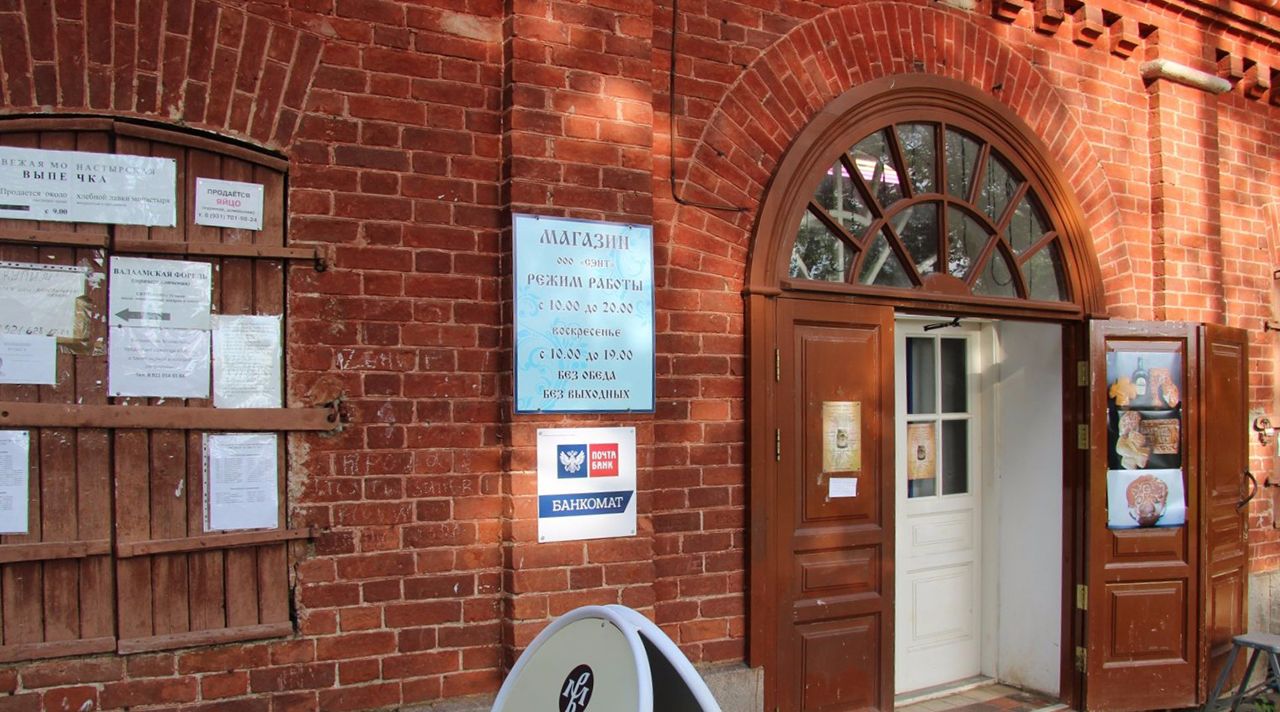
The monastery was monopolized and the sale on the island of souvenir products. Back in the fall of 2016, tents with souvenirs, which are produced by local entrepreneurs, stood at the pier of the monastery bay.
The production and sale of souvenirs brought a good seasonal income and several dozens of local residents, and the monastery - “secular” shops coexisted with church ones. The tents belonged to one of the monastery firms Valaam-Service, entrepreneurs concluded a lease agreement with her. However, after last year’s visit to the island of Patriarch Kirill, the tents decided to demolish; Like, trading prevents pilgrims from praying.
Attempts to agree with both the monastery and with the city administration of Sortavala, which belongs to the land on the island, did not bring success. Attempts of entrepreneurs to trade in a pier from folding tables were harshly stopped by the monastery security service. Even the interference in the situation of the business ombudsman of Karelia Elena Gnetova did not help entrepreneurs resume trade. Several families, including those where minor children and disabled parents are in the care of the entrepreneur, lost constant income.
The Monastery Organization "The pilgrimage service" serves all the "organized" tourists arriving on the island. The mandatory program includes a tour of the central estate and environs. The excursion program, however, is not the invention of the monastery. All methodological materials - already ready instructions for guides, schemes, maps, documents - went to the monastery in the inheritance. The current deputy director of the pilgrimage service Vladimir Rudin is the former head of the Valaam State Museum-Reserve. According to former museum employees, he “went to the monastery” along with the museum scientific and methodological documentation and received a leading post, and with it-comfortable housing on the island.
Even those who seek to get to the island not for religious, but for natural impressions, still pay the monastery, because the plying between the mainland (the city of Sortavala) and the island of the "Meteor" also belong to the "pilgrimage service". One -way ticket costs 900 rubles.
For those who want to stay on the island, the monastery offers hotels - like a modest “Igumen” or luxurious “summer”. True, after the fire of 2016, the monastery lost two hotels at once, “winter” and “attic”. This problem was promptly eliminated: already in May, the shipmaster “Admiral Kuznetsov” was moored in the monastery bay.
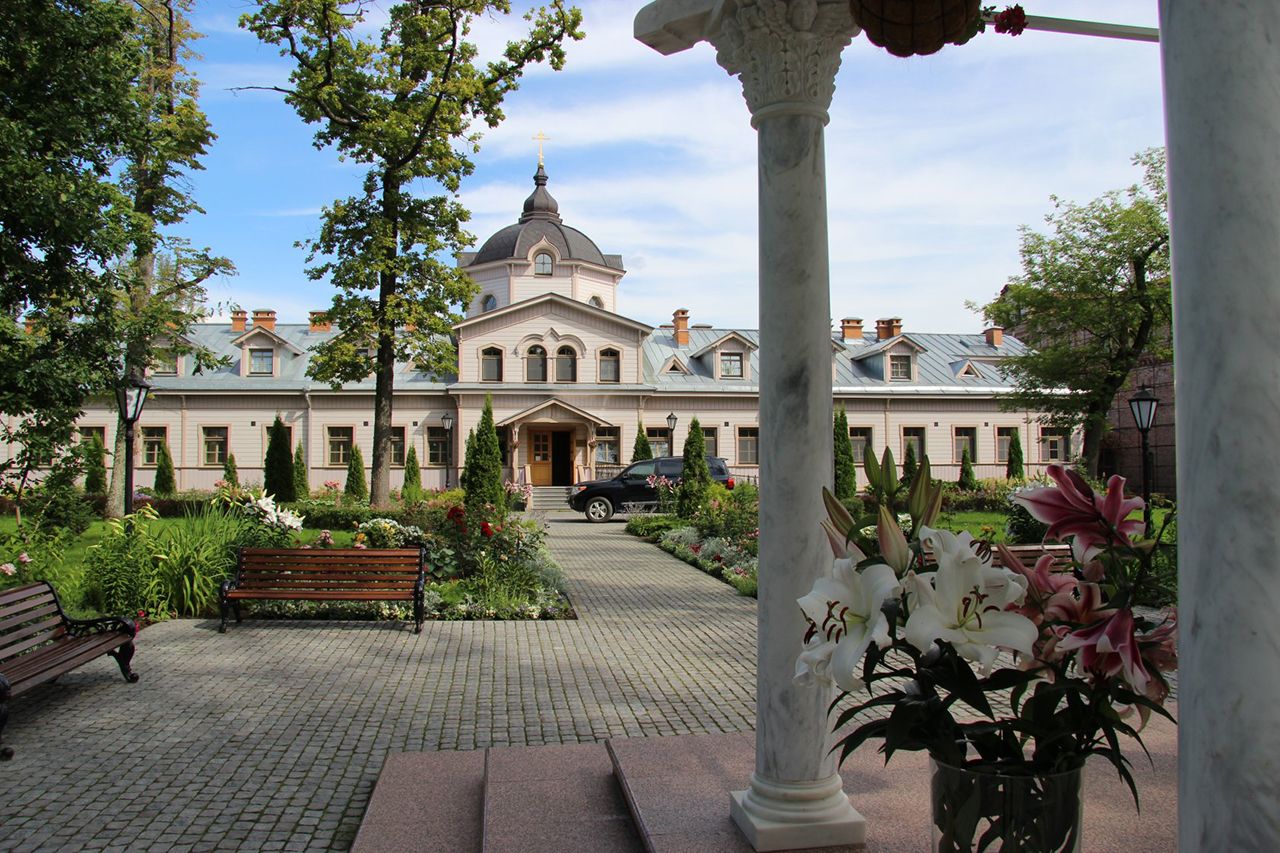
Services of Valaam hotels and catering - business established and controlled by the monastery of commercial structures. Unfortunately, his honesty in some cases is in doubt. For example, the seller of the monastery cafe “on the berth” with misunderstanding reacted to the request to provide a cash or commodity check for reporting: “We work without a cash register, and I have no commodity checks either. They never ask us this. ”
After several telephone calls, the “senior in a cafe” somewhere sent a “kitchen”, which later returned with a commodity check with a seal of the pilgrimage service of the Valaam Monastery LLC.
If you went to Valaam not on an excursion, but on official matters, be prepared for the fact that the hotel instead of a strict reporting document will give you a “donation certificate”.
Disgaming from the budget
The idea to control-more precisely, monitor-the monastery financial flows at the Karelia government arose back in the 1990s. To do this, it was necessary to put the monastery structures on tax records in Karelia. This idea, judging by the data from the Unified State Register of legal entities for 2016, failed. At the same time, the corresponding decree of the Government of Karelia is current - and therefore, if desired, the regional authorities can be repeated.
The text of the resolution reveals some details of the relations of the Valaam monastery and secular authorities, federal and regional. It refers to the existence of the federal target program “The Renaissance and Development of the Valaam Archipelago”, and the allocation of the monastery of money from the republican budget, including the construction of houses for resettlement to the mainland of local residents.
Counting church money in Karelia (as in general in Russia) is not accepted. But to spend on church needs the money of taxpayers is a very familiar thing. Moreover, the level of support is growing steadily. Even in difficult times, federal and regional authorities did not forget about the monastery. Thus, in the most difficult post -crisis 1999, the chairman of the Karelia government, Sergei Katanandov, decided to allocate 135 million rubles from the republican budget to the monastery.
Open sources give not exhaustive, but indicative data on the volume of state support of the Valaam monastery. Over the past three years, about 600 million rubles have been spent on the creation, restoration and support of the Valaam infrastructure only through the public procurement system. The state financed roads, energy and water infrastructure.
The roads on Valaam, according to the locals, were never bad. Most likely, due to the fact that there was no serious automobile traffic on the island. But the revival of the monastery was accompanied by a multiple increase in the load on the roads. Today, different -caliber equipment is traveled around the island - from low -profiles on an electric drive to huge diesel diesel diesel engines. Therefore,-as well as due to the constant growth of the flow of tourists-they drew attention to Valaam roads in the 2000s. Then the first budget money was spent on the "diluting" of island primers. Disgaming is done now. In any case, drivers tell about this. True, in their own words, this activity is completely useless: it does not save from dust, and the contracting organization often pours roads with a blasphemy composition during the rain.
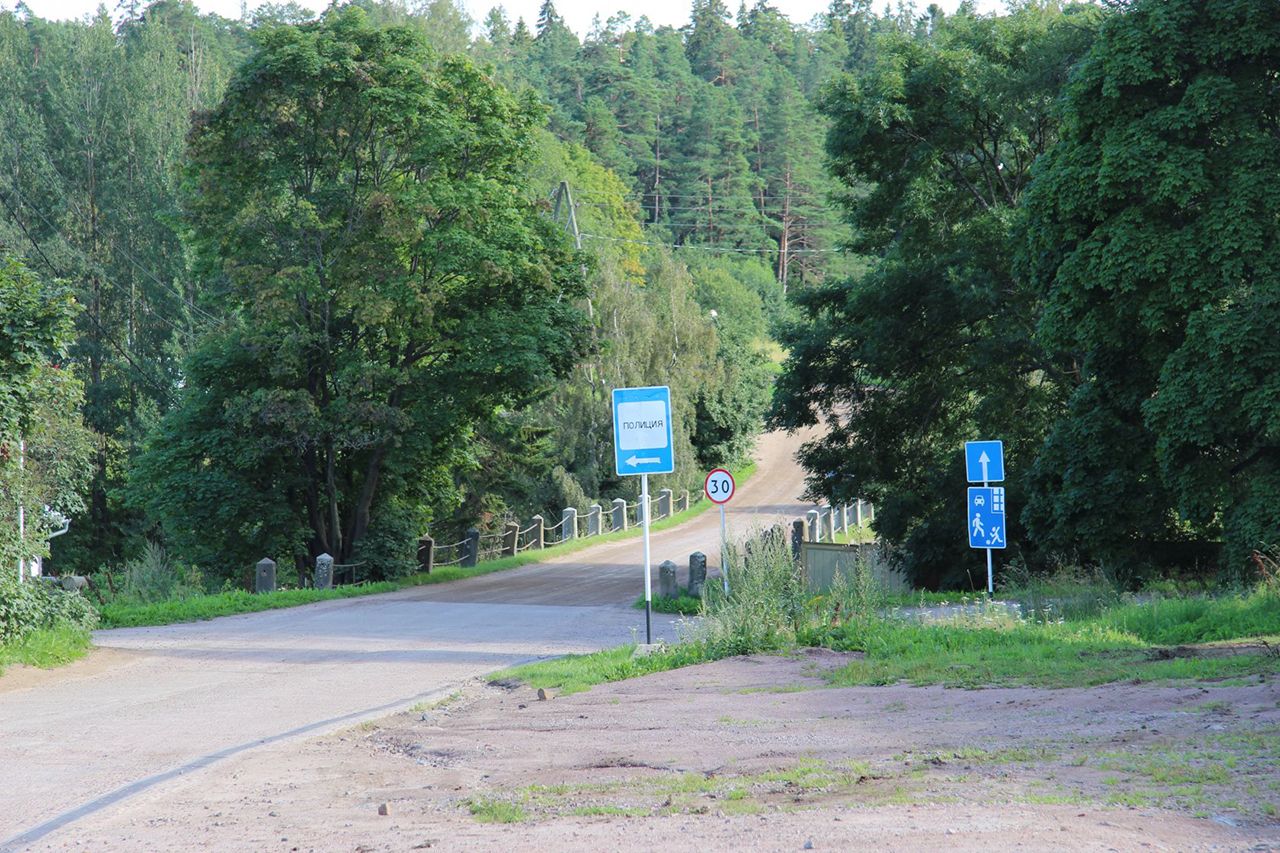
In recent years, investments in island roads from the regional budget have increased significantly. In 2015, a public procurement was made for 99 million 187 thousand rubles for “performing a set of works on the maintenance of a network of roads with a total length of 21.067 km and road structures on them on about. Valaam from January 1, 2015 to December 31, 2020. ” That is - 16.5 million rubles a year (or 800 thousand rubles per kilometer of the road per year).
The winner of the competition - LLC SK MIR - in the stage of liquidation since September 2016. However, at the time of writing the text, the contract for the maintenance of Valaam roads was still “on execution”. As a liquidated enterprise is going to serve the island is unclear. However, so far the road workers have not been very bothering. A year and a half of “thorough” road care led these same roads to the deplorable state. According to local drivers, the main works are carried out in those areas and objects that are beneficial to the monastery right now.
For comparison: for the maintenance and repair of roads in the city of Sortaval for 2013-2015, more than 35 million rubles were spent, according to the state procurement system, that is, an average of 12 million a year. The costs comparable to Valaam, even lower. But for this money in Sortaval, an asphalt coating on 12 streets was repaired (mostly).
Holy Vodokanal
Autumn 2016. In the building of the Zimnya hotel burned on Easter - the main consumer of water on the island - the water supply is blocked. The residents remained here ( the hotel is used as an ordinary apartment building - approx. Medusa ) went to the neighboring administrative building, where the office of the natural park is still located, or, as in the old days, to the lake, which was still predestinated by the current monks, the Proop of Voldonsov.
In the late autumn of 2016, the residents of the “winter” were forbidden to drown the stoves, and then they ordered the building to free the building and surrounded it with a fence. The tenants scattered where. And only after that light and water again appeared in the building, but for those who settled here and are engaged in "eliminating the consequences of the fire."
At the same time, the water supply system of Valaam should be very modern. In 2013 alone, the State Unitary Enterprise “Vodokanal of St. Petersburg” spent almost 314.7 million rubles on the modernization of the water supply and sanitation system of the Valaam Monastery. In 2014, another 26.6 million rubles were spent on the modernization of the water supply system. In the summer of 2016, St. Petersburg Vodokanal allocated another 4 million rubles for the “provision of services for the operation of water disposal system facilities” on Valaam.
It is noteworthy that all these funds went to one enterprise-LLC Alliance Electro, related to Vodokanal through the non-profit organization "Management Company of the water supply and sanitation cluster in St. Petersburg."
It is also interesting that the state enterprise conducts all Valaam auction according to a simplified scheme - through the so -called purchase from a single supplier. The purchase from a single supplier (contractor, contractor) can be carried out “due to the inability to provide services, work by others without violating complexity and technological connection with services, work previously completed by this contractor, contractor”.
The public access also contains information that the St. Petersburg Vodokanal was already working on Valaam in the mid-1990s. In 1995, the implementation of the project for the reconstruction of water supply and sewage systems on the island was launched. The total project cost was approximately 3.5 billion rubles (at the rates of the mid-1990s; in the prices of 2016 it was about 600 million rubles). A few years later, the Valaam Monastery transferred networks and water supply facilities to the Vodokanal St. Petersburg enterprise. After that, the second stage of "reconstruction" began.
As part of the implementation of the second stage of the project, water supply and sanitation were ensured not only in the central estate of the monastery, but also in some monastery. This, in any case, concerns the Holy Vladimir Signature, built several years ago. On the territory of the monastery there is a residence of the patriarch and the guest house in which President Vladimir Putin, as well as the “presidential bath” stopped.
Petersburg "Vodokanal" has been working on the island since the mid-1990s. About how, over three decades of management, its former director Fedor Karmazinov “built a multi -billion dollar empire”, in 2015, they wrote “Business News” and the Corruption Fund in St. Petersburg . After these publications, according to the authors of the investigation, Karmazinov left the post of head of the State Unitary Enterprise. On the company's website, it is now called the “coordinator of strategic programs”, and this position in the list of posts is higher than the general director.
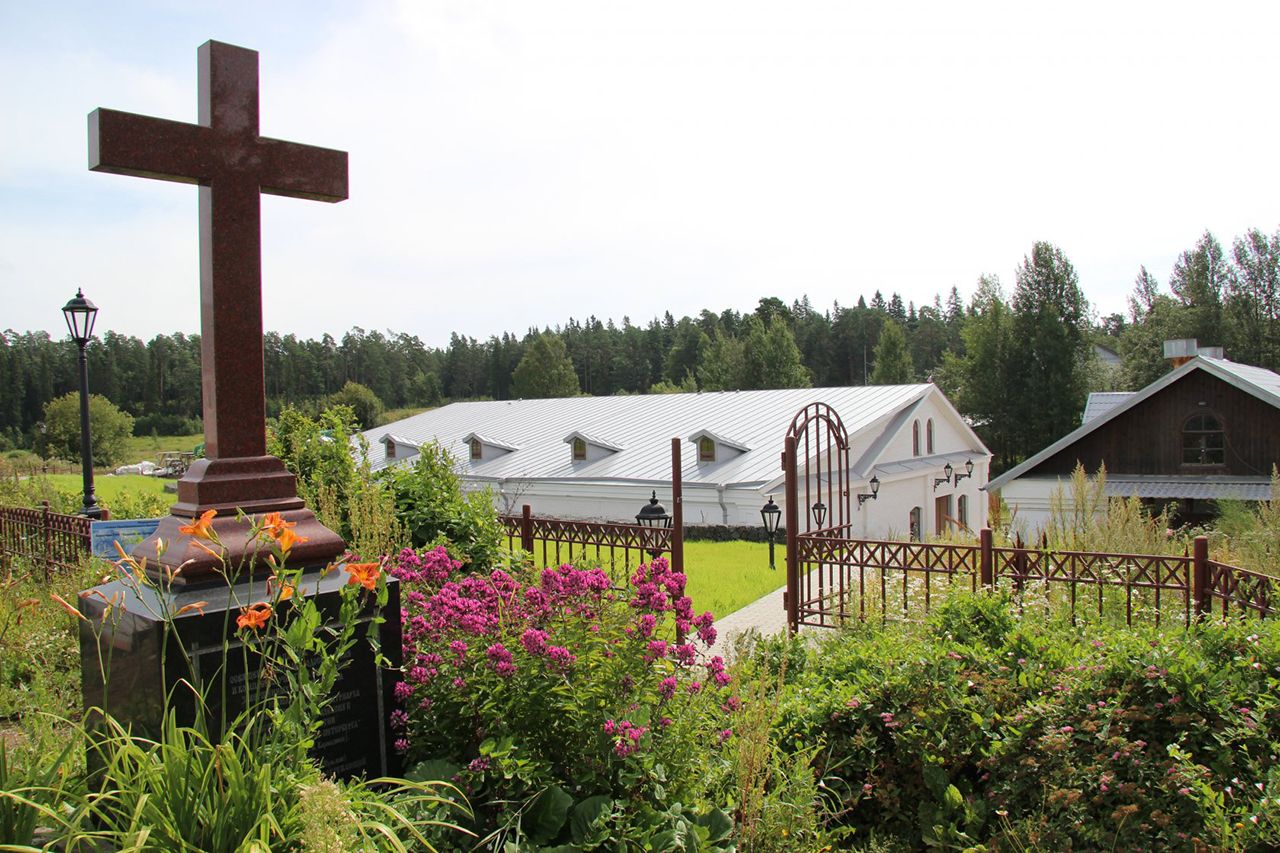
For comparison: the treatment facilities built in 2003 in Sortaval cost 5 million euros - and not to the budget of Russia, but to the European Union. At the same time, only in 2013 the St. Petersburg Vodokokanal spent more than 250 million rubles (about 6 million euros) to modernize the water disposal system on Valaam (about 6 million euros).
Also, Vodokanal elevated the “memorable cross” on Valaam. According to local guides, he often raises the question among tourists: "Is someone died here?"
"The passage is not blessed!"
Another state enterprise-the federal network company (FSK), which ensures the energy self-sufficiency of Valaam, took advantage of the “blessing” of the monastery leadership and elevated not only a huge “administrative and production building” on the island, but also a two-story floating bath with all amenities.
Halfway from the central estate to the Nikolsky monastery, an equipped path with a wooden flooring goes into the forest. At the entrance, the inscription typical of Valaam: "The passage is not blessed!" Most often, some monastery buildings are hidden behind such signs. However, in this case, someone did not bless the passage to the beautiful shore of the small bay, where local residents loved to relax and swim. Now there is an impressive sizes of a floating bath, attached to the shores of the bay with no less impressive chains.
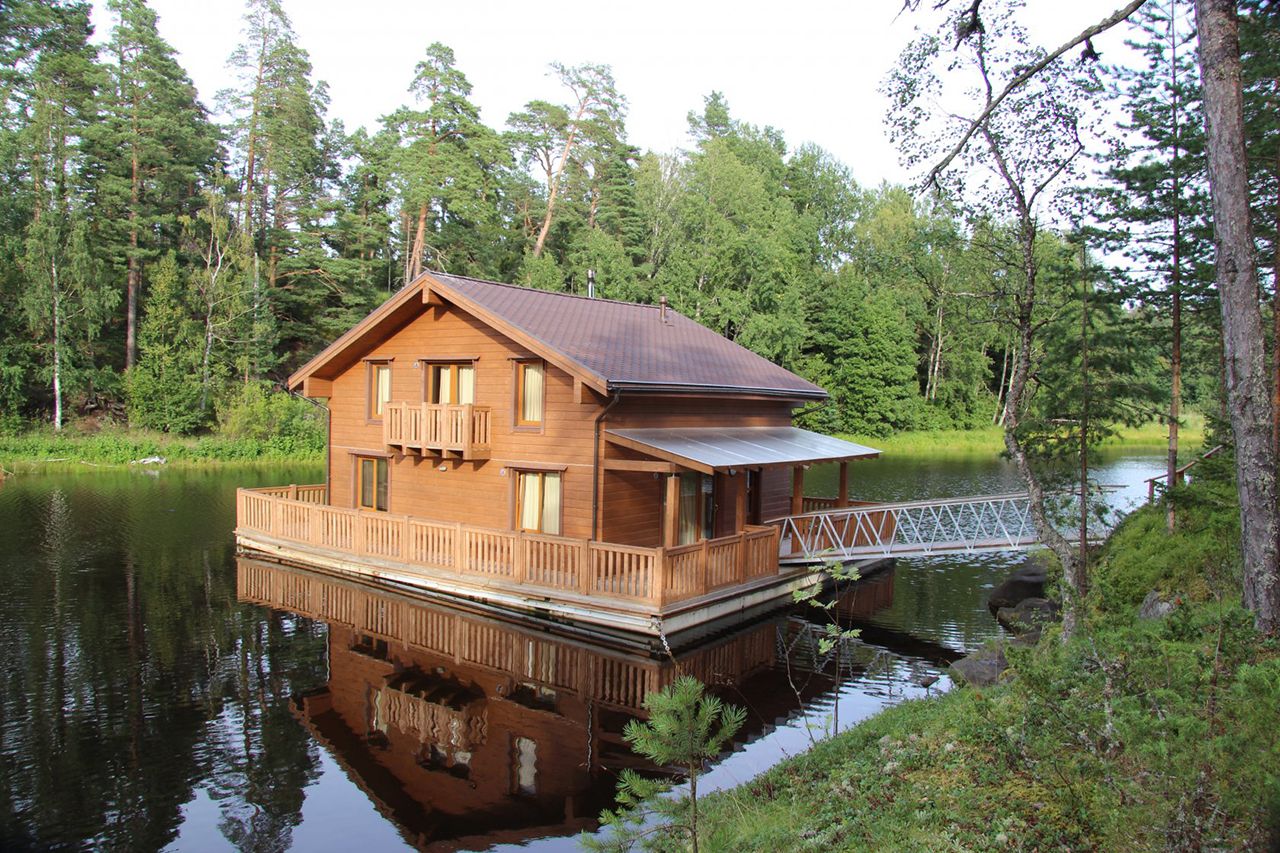
Not far from the bath is the “administrative and production building” belonging to the FSK. This is a huge non -religious structure, stuffed with expensive furniture and appliances; With a conference room and rest rooms. According to Rosreestr, the total area of the building is 512 square meters.
The building is empty for most of the year. Energy that work on the island do not live in a shift method, they rent an apartment for them in one of the buildings of the central estate of the monastery.
Why FSK needed such an impressive building, was it easy to find a place for construction on a reserved island and get permission for it - a riddle. But the building is standing, entered into the cadastre, which means that the state -owned company did not have insurmountable problems. At the same time, discussions about whether it is possible to find a place for the construction of housing for the local population on the island, end the same; The monastery and even the prosecutor’s office unanimously declare: “There is no place.”
On December 18, 2009, the abbot of the Valaam Monastery Bishop Pankrati consecrated a new Valaam substation. The federal network company invested in laying on the island of a power electric cable along the bottom of Lake Ladoga 2.3 billion rubles. This operation was widely covered on the website of the Valaam Monastery and on the official resources of the regional authorities.
25 июля 2016 года на заседании попечительского совета Валаамского монастыря глава «Россетей» (ФСК является их дочерней компанией) Олег Бударгин заявил : «Расчетная мощность перетока с материковой части составляет 12,6 МВт, а потребление Валаама в зимнее время — всего 1,5 МВт. Текущий уровень и вовсе не превышает 0,8 МВт. Это означает, что Валаамская обитель имеет колоссальные резервы для дальнейшего развития». Одна из сотрудниц ФСК призналась даже, что «мощности проложенного на Валаам кабеля, к примеру, хватит, чтобы обеспечить электроэнергией небольшое европейское государство».
«Монастико» по-валаамски
«Коровы на монастырской ферме живут лучше, чем многие на острове. Вымя им моют с мылом, тепленькой водой, а дойка проходит под классическую музыку», — рассказывает местная жительница Светлана Стрельникова, хорошо знакомая с работой фермы.
На Валааме производят сыр. Еще недавно купить его было так же трудно, как настоящий санкционный пармезан, но этим летом валаамские качотта, рикотта и «Монастико» появились на прилавках местного магазина.
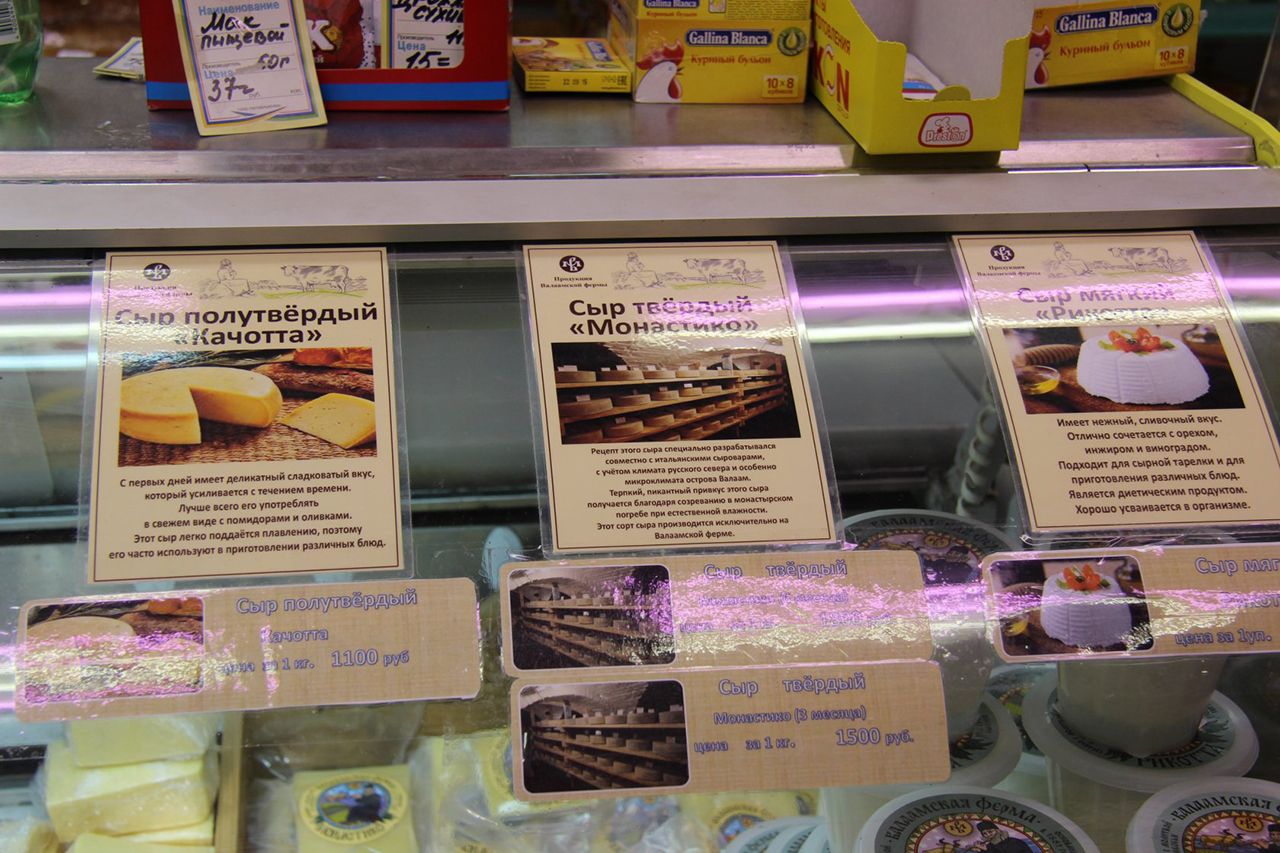
Один из монахов даже признался, что братии перестали выделять самые дорогие и сложные в производстве твердые сорта. Теперь они идут только на продажу, монахи же довольствуются «скороспелой» мягкой недорогой рикоттой (в монастырском магазине упаковка по 350 граммов продается за 300 рублей).
По валаамской ферме можно судить о финансовом состоянии монастыря и масштабах инвестиций на Валааме. Построенная еще в конце XIX века, в разные годы она исправно служила и монастырю, и поселку. Однако после перевода на материк Валаамского дома-интерната для инвалидов войны хозяйство постепенно пришло в упадок. Восстанавливать ферму начали местные жители во второй половине 1980-х годов, и вскоре она снова заработала.
В начале 1990-х годов монастырь выкупил ферму. По словам местных жителей, один из тогдашних совладельцев предприятия передал или продал документы монастырю, после чего уехал с острова. С тех пор ферма работает на монастырь.
Масштабная реконструкция на ферме была проведена в 2014 году: силами сербских специалистов отреставрированы и построены новые коровники и холодильники, завезено итальянское сыроварное оборудование, а один из монахов Валаама, Агапий, прошел стажировку в Италии. После этого на острове появился индивидуальный предприниматель Агапий Панкратьевич Валаамский (интересное созвучие и с островом, и с именем игумена монастыря Панкратия).
Монастырь не скрывает, что работы по восстановлению фермы и запуску нового производства организовал все тот же Олег Бударгин из «Россетей».
Свято-Путинский скит и другие
Свято-Владимирский скит был возведен всего за два года. В июле 2006-го началось строительство, а в сентябре 2008-го патриарх Алексий II освятил храм в честь святого равноапостольного князя Владимира. Жители поселка утверждают, что скит не случайно назван Свято-Владимирским, и называют его Свято-Путинским.
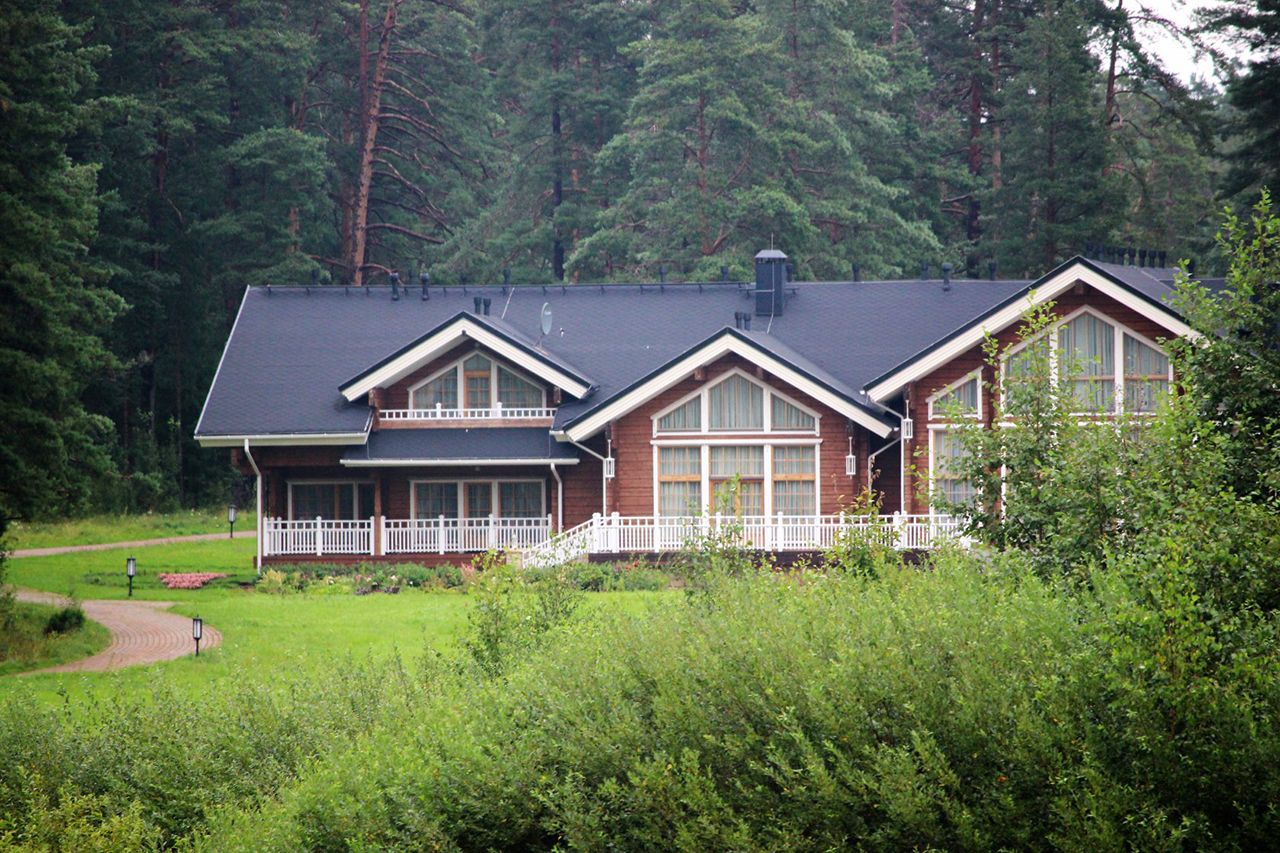
На тщательно охраняемой территории скита, куда простых туристов и паломников пускают только по большим праздникам, кроме собственно храма находится резиденция патриарха и дом «для высоких гостей» . Местные называют его попросту «резиденция Путина», потому что президента там видели не раз. Дома расположены неподалеку, но отделены друг от друга небольшим лесным массивом. Рядом с резиденцией расположена «президентская баня». Весь комплекс оснащен автономным электроснабжением (от дизельной электростанции), водопроводом и канализацией.
При строительстве скита не было недостатка в деньгах — в этом не дает усомниться мемориальная доска, прикрепленная к стене храма. Среди жертвователей — имена известных меценатов, бизнесменов и политиков: занимавшего в то время пост управляющего делами президента Владимира Кожина, строителя Николая Таскина, банкиров Андрея Анисимова, Ильи Юрова (позже разорившего банк «Траст»), Алексея и Дмитрия Ананьевых, «металлурга» Андрея Козицына, «водопроводчика» Феликса Кармазинова, «молочника» Сергея Пластинина, православного мецената Вячеслава Киселева и архитектора Андрея Анисимова.
Туристы, побывавшие в скиту, поражаются не только размаху и темпам строительства, но и состоянием, в котором находится сооружение: в подвальном помещении, где расположен музей монастыря, хорошо видны трещины в стенах, а повышенная влажность приводит к появлению плесени на предметах музейной коллекции.
Кстати, построенная для патриарха Алексия II резиденция не приглянулась его последователю Кириллу. Поэтому в дополнение к официальной резиденции на одном из отдаленных островов архипелага, Байонном, построили «дачу патриарха», или, как она обозначена на публичной кадастровой карте, «патриаршию пустынь».
По фотографиям одного из строителей «пустыни», жителя Белоруссии, патриаршую келью вряд ли «можно назвать кельей», а на самом заповедном острове «сотворена целая Венеция, с рукотворным каналом и мостами».
Оборонный остров
Историки называют остров Оборонный (Келисари) музеем фортификационного искусства под открытым небом. Туристам он хорошо известен благодаря расположенным здесь сооружениям линии Маннергейма. Тут сохранились подземные казематы, блиндажи, орудийные позиции, прорубленный в скале спуск к озеру и наблюдательная вышка для управления артиллерийской стрельбой. Эти сооружения признаны памятниками истории, привлекают на остров многочисленных «диких» туристов и вызывают восторженные отзывы. Оборонный, пожалуй, главная достопримечательность Валаамского архипелага.
Церковные новоделы главного острова представляют интерес только для узкого круга верующих да «теплоходных туристов» .
Монастырь начал масштабное строительство на Оборонном еще летом 2015 года. А в декабре того же года здесь был официально заложен новый скит в честь апостола Андрея Первозванного. «По окончании торжественного богослужения митрополит Варсонофий выразил уверенность, что с помощью Божией при участии благотворителей строительство будет завершено, а остров на Ладоге станет притягательным для многих паломников», — сообщает сайт патриархии.
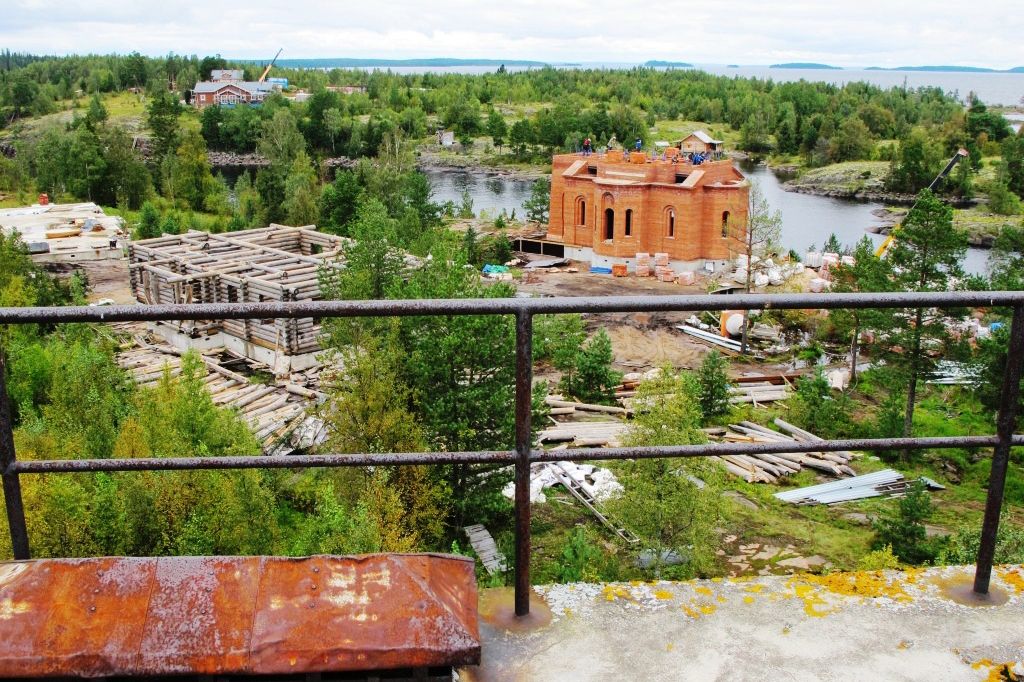
Однако паломническая служба монастыря экскурсии на остров не устраивает. И не только потому, что паломникам не пристало интересоваться фортификационными сооружениями. Некоторые из объектов, строящихся на острове (одном из красивейших мест архипелага и лежбищ ладожской нерпы), вряд ли подходят под описание «культовых сооружений». Тут есть и причал, и вертолетная площадка, а возводимое на скалистом берегу здание меньше всего напоминает келейный корпус монастыря. При этом публичная кадастровая карта не содержит описания ни одного из «новостроев». На ней отмечены только исторические объекты линии Маннергейма.
В управление Росреестра направлен редакционный запрос. Мы выясняем, произошла ли ошибка в самой карте — или на острове ведется незаконное строительство.
Местные жители, туристы и журналисты бьют тревогу: одно из интереснейших туристических направлений превращается в очередной VIP-объект, закрытый для посещения обычными людьми. Никто из местных жителей — владельцев лодок не согласился отвезти на остров журналиста и оператора. Говорят, что причаливать к острову становится небезопасно: руководители стройки порой ведут себя неадекватно, запрещают не только производить съемку, но и вообще высаживаться на остров.
На острове, к слову, никогда не существовало никаких религиозных объектов.
«Казанский скит» на украинские деньги
«У спонсора закончились деньги», — сообщает местный житель, проводивший нас к очередной новостройке. Спонсором строительства, по его словам, является экс-глава Министерства доходов и сборов Украины времен президента Виктора Януковича Александр Клименко (кстати, герой нескольких журналистских расследований ). Эта информация нигде не оглашается, но и не скрывается.
Точно сказать, как называется возведенный на живописном берегу острова огромный кирпичный храм, к которому ведет узкая дорога, больше напоминающая лесную колею, не взялся даже «знающий все на острове» проводник. В народе это место называется «Вторая точка», оно популярно у нерелигиозных туристов, которые размещают там палаточные лагеря.
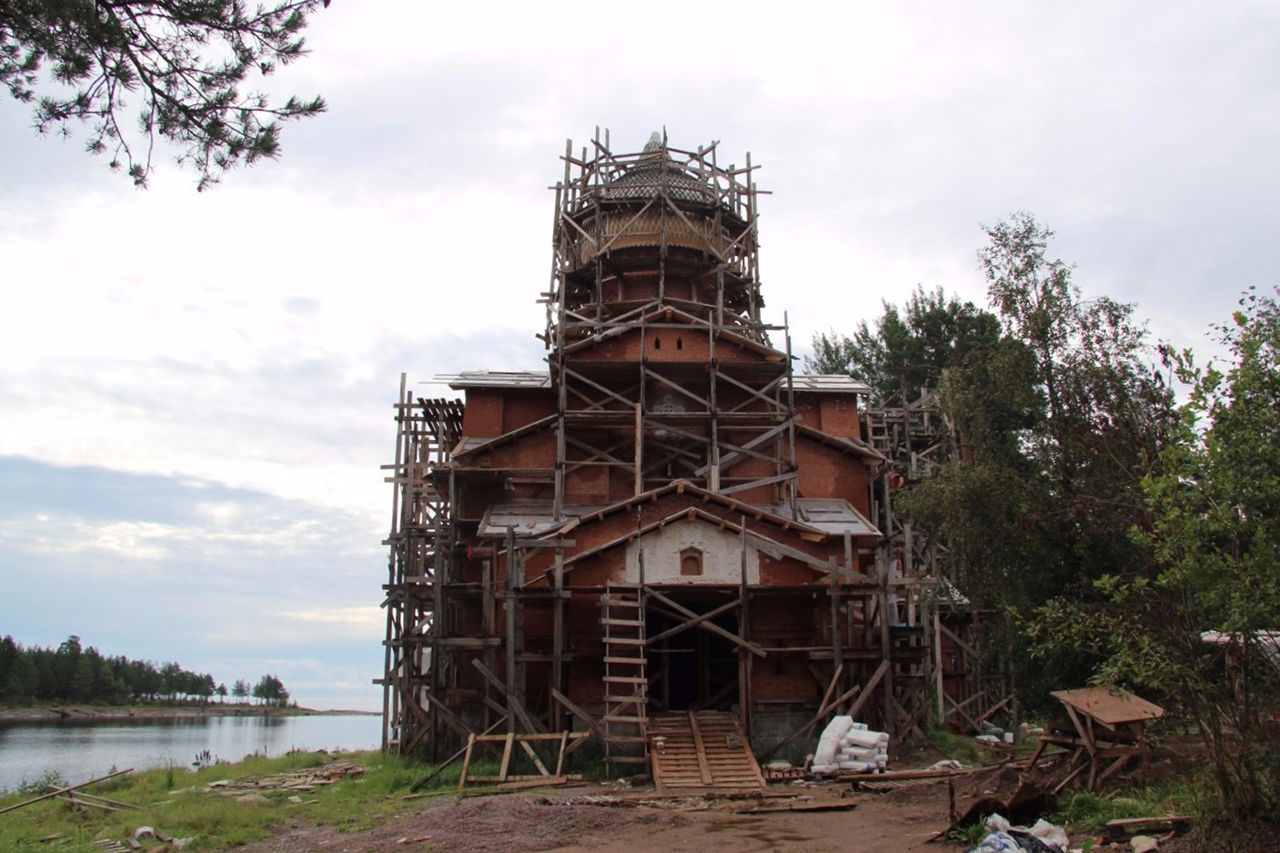
То, что постройка носит имя «Казанский скит», указано на технической табличке, прикрепленной к березе руками энергетиков. Они уже построили там «тэпушку», электрическую подстанцию.
В мае 2015 года на острове похоронили Антона Клименко — погибшего в Египте пристранных обстоятельствах родного брата экс-министра Клименко. А годом позже на острове прошли и похороны их отца Виктора Клименко.
Сначала для захоронения Антона Клименко предполагалось соорудить небольшую могилу прямо на скале рядом с Казанским скитом. Но потом от этой идеи Клименко отказался и соорудил полноценный склеп прямо на Игуменском кладбище, в непосредственной близости от исторической «погребальной» колокольни. Монументальный склеп затмевает все могилы валаамских игуменов вместе взятых.
О близости Александра Клименко к структурам РПЦ говорят данные украинских СМИ, пристально следящих за судьбами представителей элиты времен Януковича. Так, через два месяца после прошлогодних валаамских похорон портал «НБ-ньюс» сообщил о том, что Александр Клименко награжден грамотой из рук самого патриарха Кирилла, причем непосредственно на Валааме.
А данные «Коммерсантъ-Картотеки» намекают на крепкие деловые отношения между семьей Клименко и настоятелем Валаамского монастыря епископом Панкратием. Последний в 2015 году стал учредителем Благотворительного фонда семьи Клименко.
Чайнатаун
Последней валаамской новостройкой стала часовня в честь Всех Валаамских Святых на подходе к Никольскому скиту. Патриарх освятил ее только в июле 2016 года, а местные жители тут же прозвали Чайнатауном за особенности постройки, напоминающей китайскую архитектурную традицию.
На этом месте, так же как и на Оборонном острове, и на «Второй точке», никогда не было никаких культовых сооружений. Однако это не помешало монастырю воздвигнуть очередную часовню, поражающую местных жителей и туристов не только своим масштабом, но и неуместностью: в ста метрах от нее находится популярная среди паломников церковь Святителя Николая, некогда вдохновившая даже взыскательного классика Александра Дюма. «Эта церковь — истинное сокровище, как по искусству, так и по богатству, — создание лучшего, на мой взгляд, архитектора России — Горностаева», — писал Дюма-отец в середине XIX века.
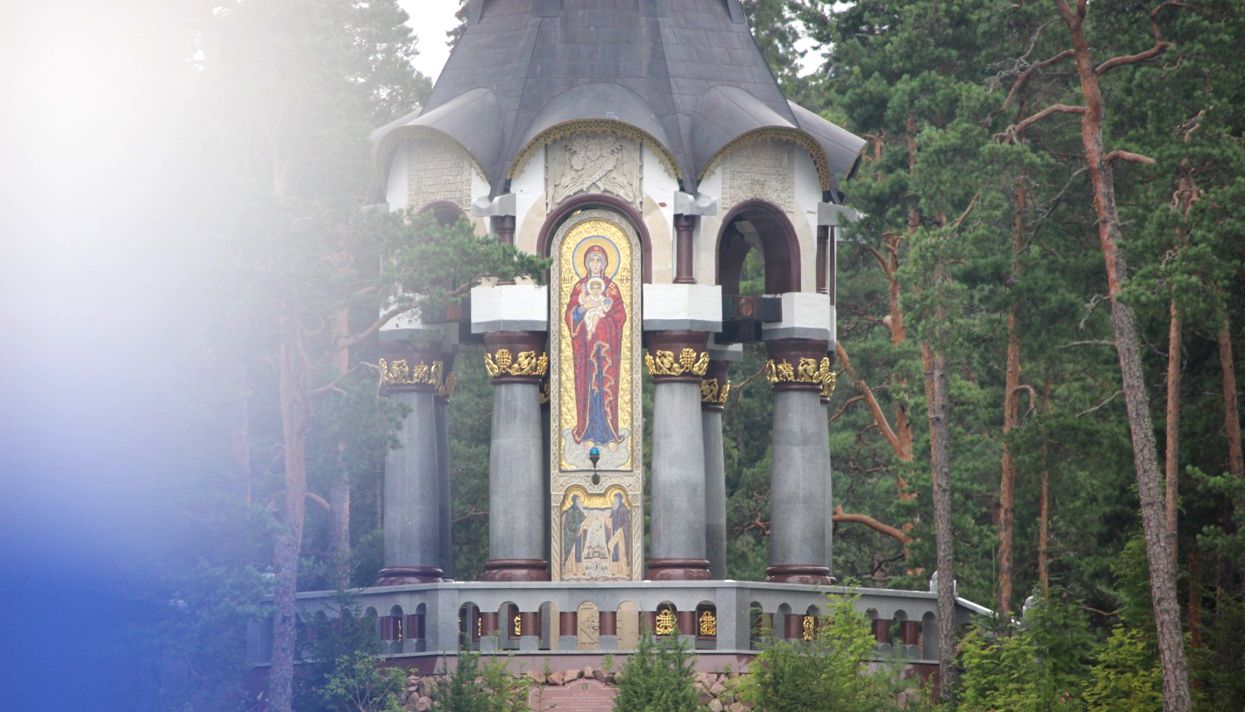
Со смотровой площадки Никольского скита открывается вид на очередную новостройку — часовню Валаамской Иконы Божией Матери, которая «встречает» всех прибывающих на остров на катерах туристов. Ее модерновая вычурность диссонирует и со строгостью церкви Святителя Николая, и с азиатской внешностью Чайнатауна. Впрочем, после нескольких дней на острове начинаешь привыкать к эклектике. Даже пришвартованная у Никольского скита шикарная яхта «Паллада» вызывает не удивление, а просто обывательский интерес.
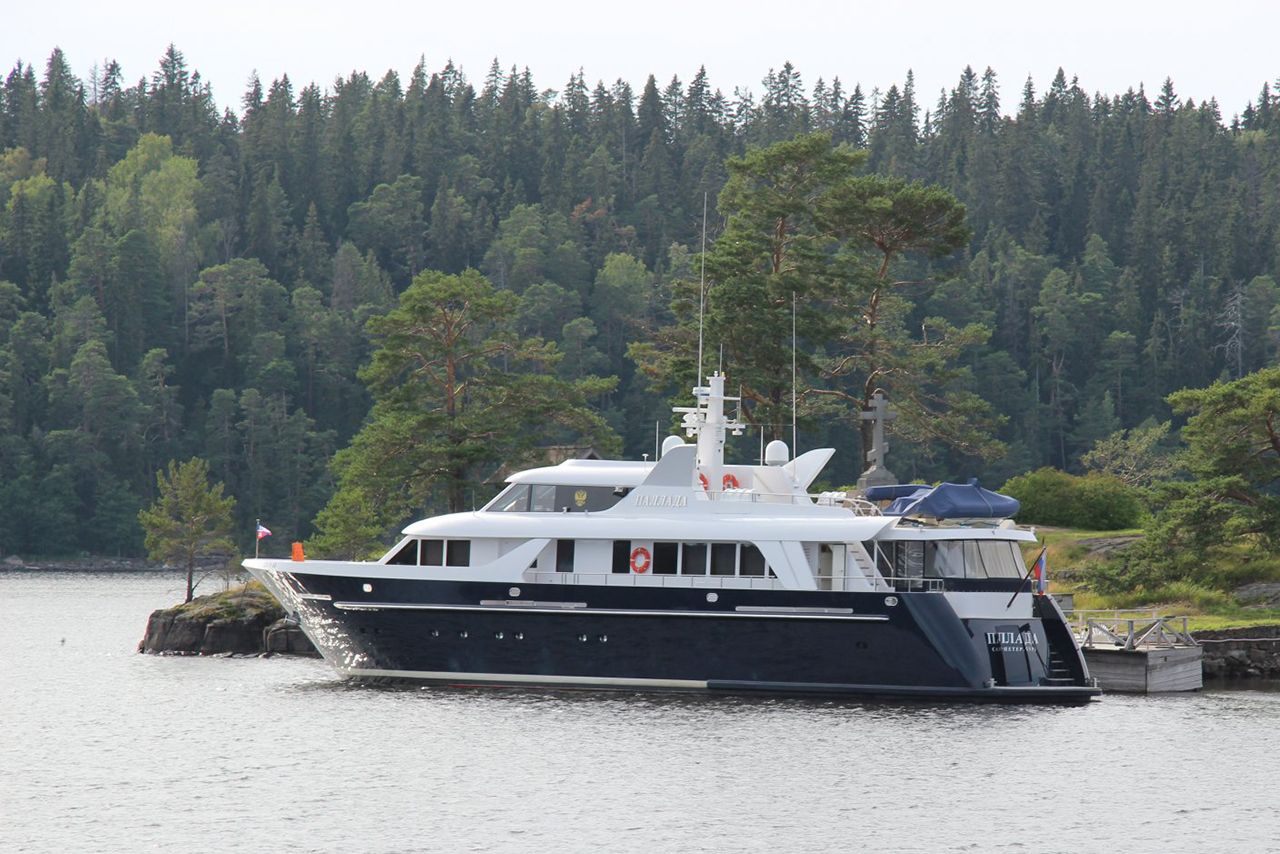
Сайт Валаамского монастыря с охотой рассказывает об этом «разъездном теплоходе», который «Лукойл» выкупил у Управления делами президента и подарил монастырю в 2005 году. На сайте производителя, однако, «Паллада» отнесена в категорию luxury — ее стоимость колеблется в районе 4–6,7 млн долларов США.
Что уж говорить про самое сердце острова — Центральную усадьбу со Спасо-Преображенским собором в центре. Реставрация собора началась еще в советские времена и продолжалась большую часть современной истории Валаама. Параллельно с собором были отремонтированы и реконструированы помещения внутреннего (монашеского) и внешнего каре, замощены центральные «улицы» усадьбы, облагорожены окрестности.
Немало средств (пожертвований) вложил монастырь и в реконструкцию так называемой «Летней гостиницы» для высокопоставленных гостей. Забронировать в ней номер заранее невозможно, свободный номер могут предоставить обычному туристу только тогда, когда на острове нет «дорогих гостей».
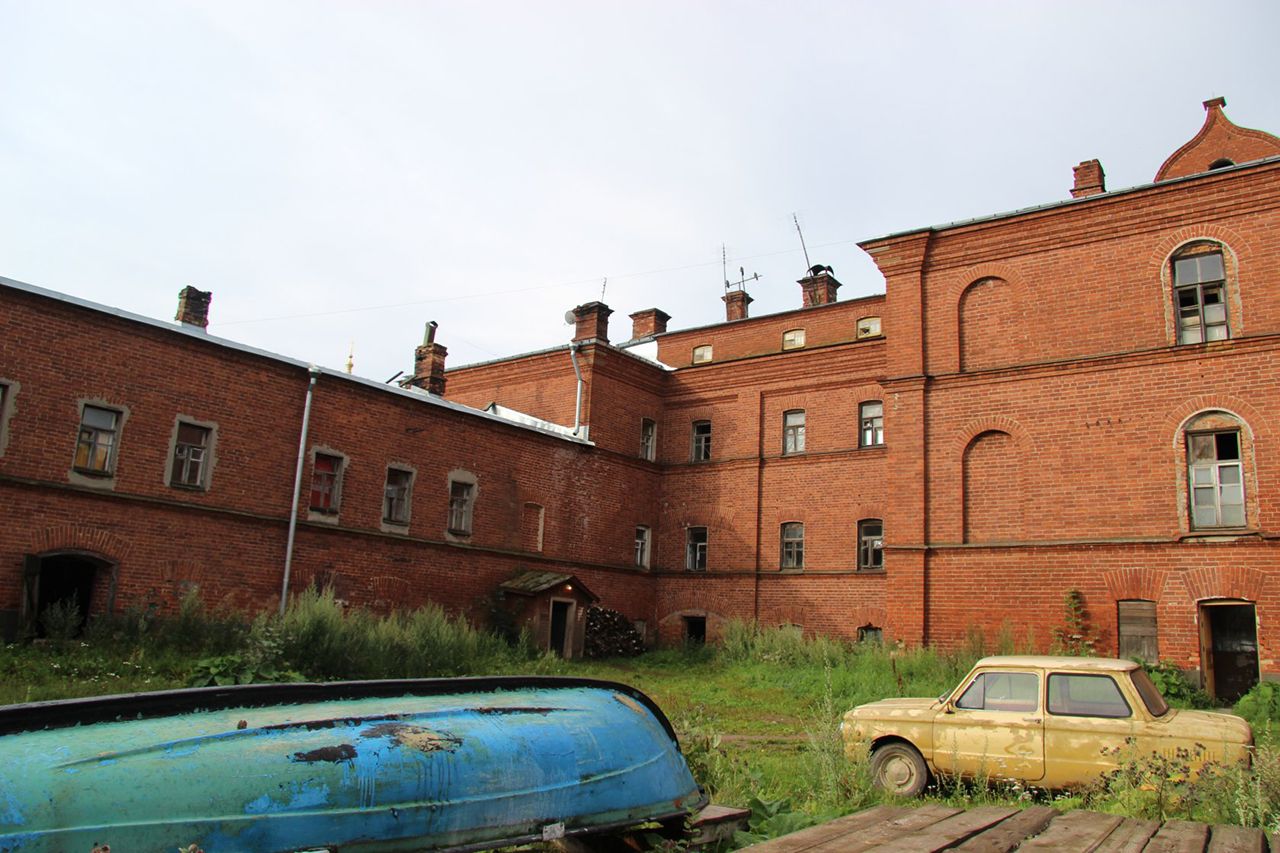
Валаам стал бы хорошей иллюстрацией противостояний «града божьего» и «града земного», описанного Аврелием Августином в V веке н. e. От посещения острова остается впечатление явного диссонанса между процветающим, расширяющимся и крепнущим монастырем («градом божьим») и постепенно затухающим, хиреющим, выселяемым с острова «градом земным». Бывшие поселковые здания — многоквартирные жилые дома, давно переданные государством монастырю, — находятся в удручающем состоянии.
Так называемый работный дом, где в основном живут оставшиеся местные жители, выглядит не намного лучше сгоревшей и законсервированной «Зимней гостиницы». За десятилетия владения этими историческими зданиями-памятниками у монастыря не нашлось средств не то что на ремонт подъездов и квартир местных жителей, но даже на поддержание их в достойном состоянии. Пожертвования, спонсорская помощь, квартплата и государственные дотации ушли на строительство храмов и резиденций, прокладку труб и кабелей, обеспыливание дорог и даже разведение павлинов.
На организацию жизни нескольких десятков местных жителей, не желающих покидать остров, монастырю денег не хватило. Теперь все уже вложенные и еще ожидаемые валаамские миллиарды будут «верой и правдой» служить монахам. И ждать долго не придется. Еще не до конца израсходованы 322 миллиона рублей, предназначенные для создания на острове духовно-просветительского центра (по информации Федерального агентства по делам национальностей, в 2015 году было потрачено лишь 116 миллионов из этой суммы), а в ближайших планах — освоение новых денег из федерального бюджета, обещанных монастырю президентом.
Владимир Путин еще в мае 2016 года распорядился выделить монастырю средства на ликвидацию последствий пожара в здании «Зимней гостиницы». Сколько денег получит монастырь, пока неизвестно, но его представители заявляли в суде о том, что ущерб от пожара 1 мая, как называют его светские жители поселка, оценивается более чем в полмиллиарда рублей.
В маленьком островном валаамском монастыре, где монахов и послушников всего около восьмидесяти (до революции 1917 года средний размер монастырской общины в России был больше 100 человек, а «старый» валаамский насчитывал почти 500), а монахов-священников и всего-то около пятнадцати, деньги считают в миллиардах.
Глеб Яровой, Валаам, «7×7»
Оригинальную версию расследования можно прочитать здесь