
Translated material
From fright to hope
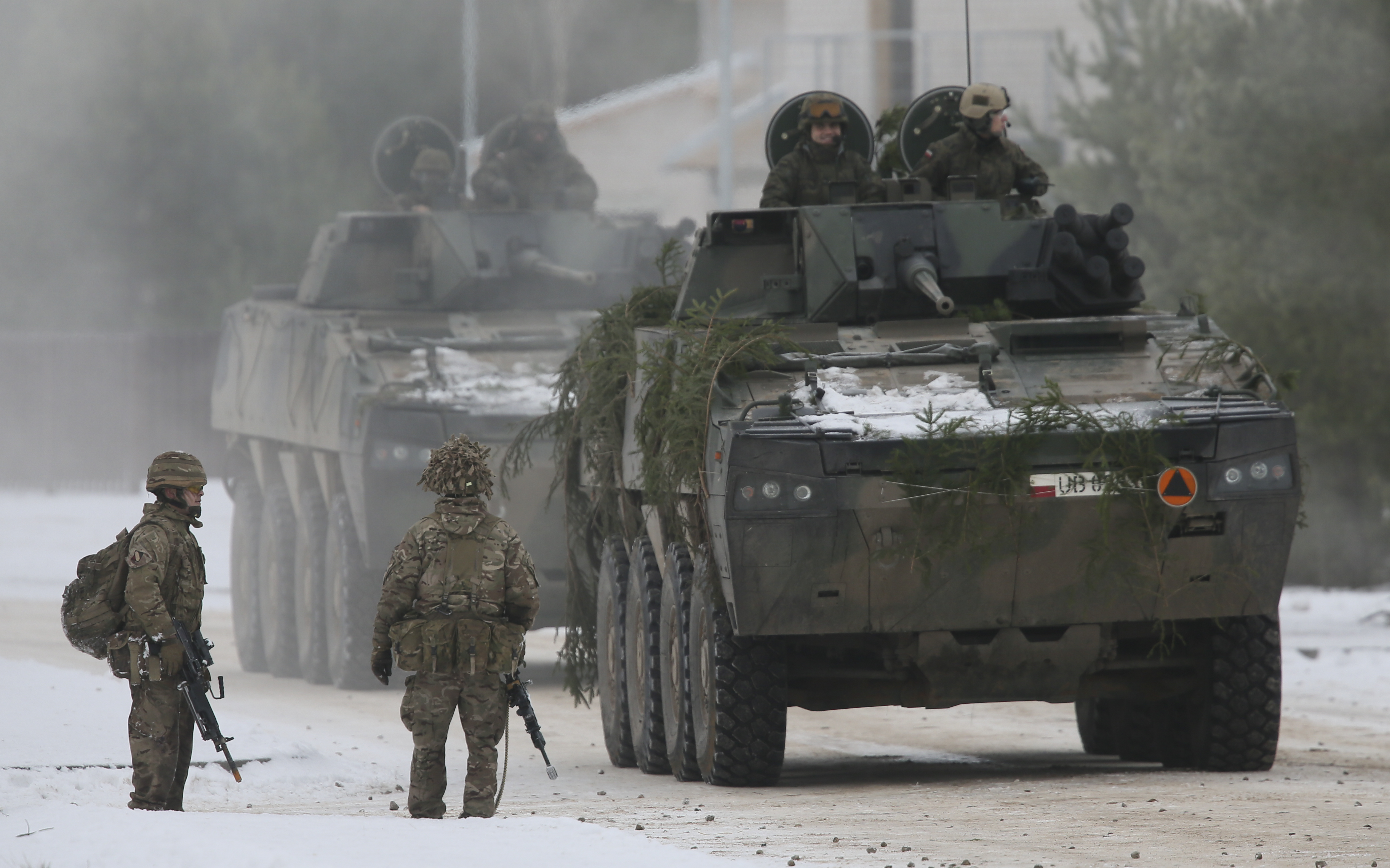
Most Russians, 67 percent, as well as a considerable number of residents of the countries of the former USSR, under the information influence of the Kremlin, consider NATO one of the main threats to their homeland and security. These are the data of a fresh survey published by the American sociological institute of Gallp. The document also emphasizes that a large number of residents of Ukraine reported a noticeable fall of their trust in NATO to NATO. At the same time, the authors of the study write that the population of many NATO members in Central and Eastern Europe still confidently associate the North Atlantic Union with the protection of their interests, despite the fact that the new US President Donald Trump recently called NATO "outdated" .
The report of the Gallup Institute said that in Russia only 20 percent of the respondents replied that they relate to NATO indifferently, and only 3 percent of Russians see an organization in it that can protect them from some dangers. 67 percent of Russians in 2016 considered NATO as a threat, it is 29 percent more than in 2012. This is also the greatest indicator recorded by the Gallup Institute since the start of the study, in 2008, the views of Russians on NATO. Experts who conducted surveys add that they do not see in these figures nothing surprising. In their opinion, the answers of the inhabitants of Ukraine deserve much more attention:
"In 2016, 35 percent of Ukrainians said that they associate the North Atlantic Union with a threat to their country, 29 percent-with protection, 26 percent with either one or the other. In 2014, after the introduction of sanctions against Russia due to the annexation of Crimea, Ukrainians were prone to see the protection in NATO (36%) than the threat (20%). However, the number of those who now sees the threat, again, again The population of Ukraine returned to 35 percent of the conflict between their military and supported separatists, as well as from the fall of the economy and the growth of crime.
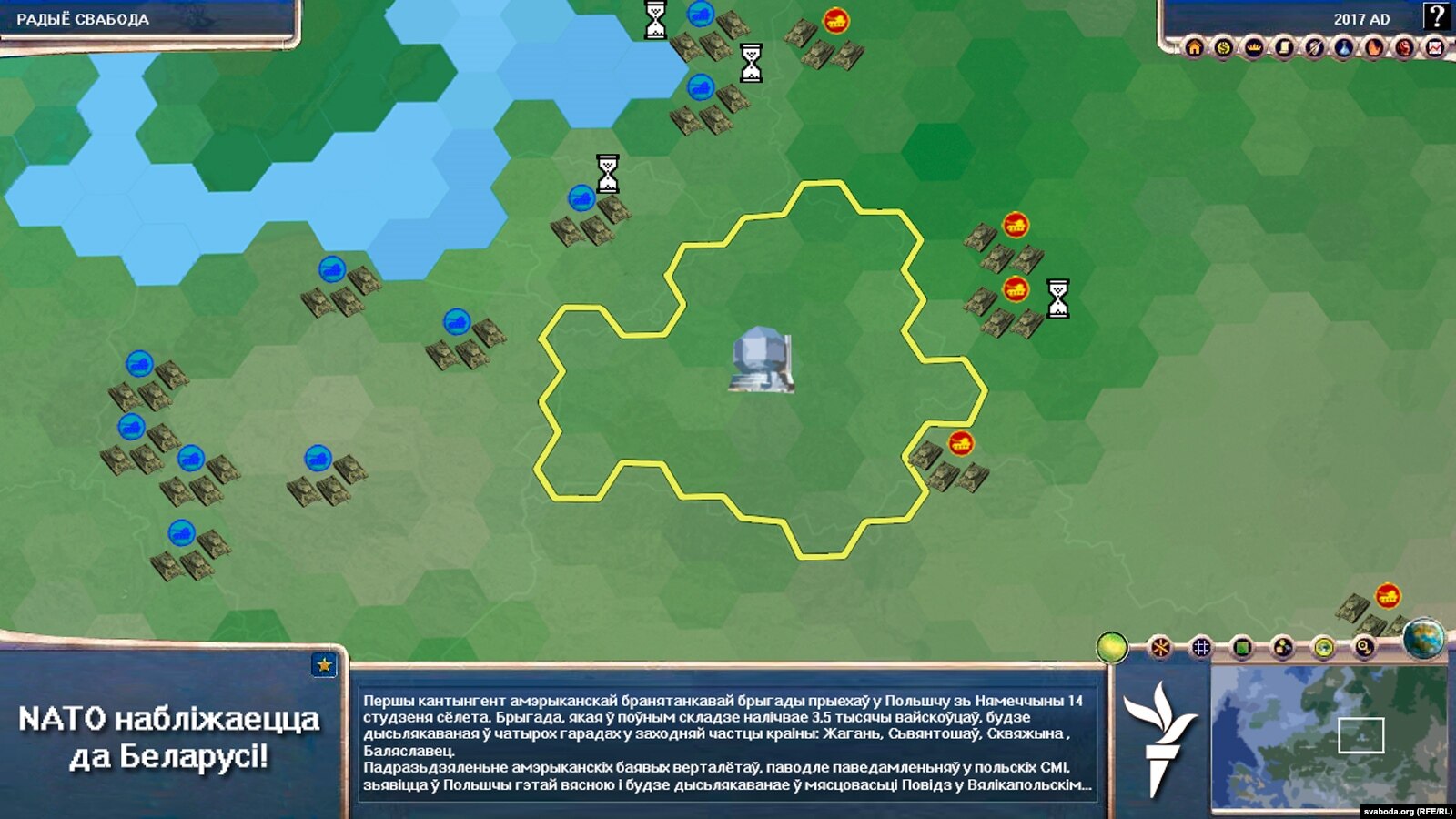
NATO as a threat for the most part is considered by Belarusians - 54 percent. This is 19 percent more than four years ago. 30 percent of the inhabitants of Belarus are indifferent to NATO, and only three percent, as in Russia, welcome its existence and activity. Together with the Russians and Belarusians, they see a threat rather to the NATO, and not the defense that responded in Kazakhstan (31%) of Kyrgyzstan (30%), Moldova (27%), Armenia (20%) and Tajikistan (34%).
Among the inhabitants of Eastern Europe, the greatest hopes for NATO are entrusted by residents of Kosovo, Albania and Poland - 90, 70 and 62 percent of those surveyed, respectively, against 3, 3 and 8 percent, who consider the North Atlantic Union a threat. They also love less than others in Serbia (64%) and Montenegro (29%), where, respectively, only 6 and 21 percent of those who answered the Gallup Institute stated that they were expected from NATO to protect and support their country.
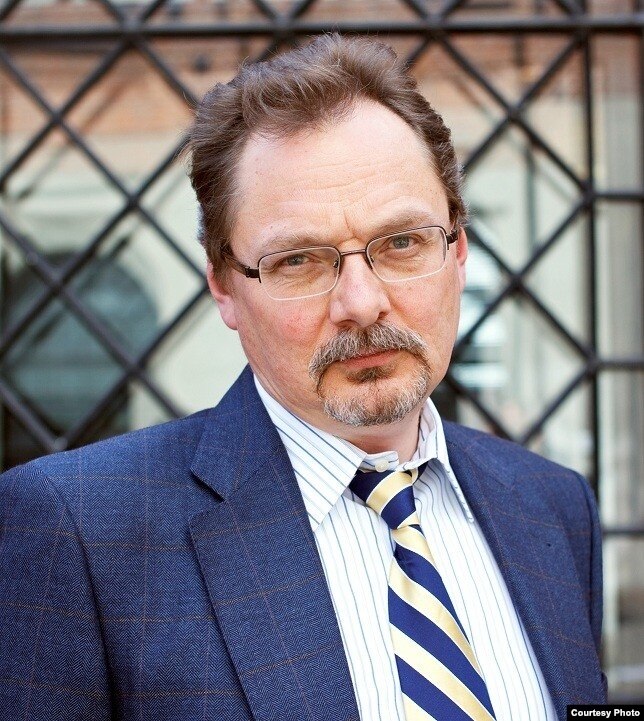
On the image of NATO and about information images and propaganda wars between the Kremlin and the West in an interview with Radio, Freedom is reasoned by the professor of the Institute for World Problems in Oslo Political scientist Pavel Baev :
- What happens to the image and reputation of NATO today? In July last year, at the Warsaw Summit of NATO, the gathered leaders said that Russian President Vladimir Putin actually returned the North Atlantic Union to life . Many important decisions were made regarding, for example, the deployment of additional NATO forces in Eastern Europe, in the Baltic. And six months later, Donald Trump occupied the presidential chair in Washington, who speaks out of NATO as an outdated organization, the content of which is too expensive by the United States, because other members do not want to spend money on it.
- The most important thing for NATO, of course, is not about people in Eastern Europe, but in how it is treated in Germany, France, Great Britain and the USA. Donald Trump may have one look at this, the entire American political elite has a completely different one. A strong verbal attack on NATO by Trump is regarding money, the statements that Europeans must pay more - in itself is not news. The news is only the intensity of this criticism. Because this problem was mentioned by all American presidents, including Barack Obama, naturally without great success. If Trump manages to force Europeans to allocate more money for their own defense, there is certainly terrible in this. Whether the attitude of the townsfolk towards NATO will change in this regard is difficult to say. It is even possible that the fact that Trump doubts not only the financial basis of the Union, but in general its need, perhaps, will even force many in Europe to rally under the banner of the Union.
It is clear that it is one thing - election rhetoric and completely different - Trump as a president. And the fact that he agreed to go to the NATO summit in Brussels in this May, and that he will come to the next Munich Security Conference in a week of the US Vice President Mike Pence, shows, in fact, that in the United States itself the attitude to NATO can be much more positive than some statements by the 45th President of the United States during his pre-election campaign. In this regard, the visit of the new US Minister of Defense James Mattis to Asia , and especially his speeches in Japan and South Korea, give a fairly clear idea of how the new Washington administration refers to military unions as a whole. From Mattis, all kinds of sensations and political turns were expected. The sensation, in fact, became exactly the fact that he introduced a completely traditional military-political line, without the slightest doubt about the importance of these unions, the value of allied ties, and the Americans will continue to support them.
- The Kremlin in recent years, as many European leaders said more than once, forced NATO to tune in to the confrontation with Moscow , in which it has little chance of winning. Now, this winter, we are talking about the confrontation?
Russia put itself in such a position - that it has become a threat to European security
- The topic of confrontation has not gone away. This is not the problem that is solved by one last meeting, the last telegram, call or the last statement. Since Russia, indeed, put itself in such a position - that it has become a threat to European security. Anything can really be expected from her, she modernizes her armed forces on a scale that objectively for all neighbors are a threat. Therefore, how much this topic is reflected in the latest newspapers or not, how dominated by the topic of Donald Trump's intentions is the features of the current moment. Global confrontation - as a very unpleasant reality - has not gone anywhere. We can say that this confrontation ceased to be news that in all political elites there was an interest in preventing it from too sharp escalation to be adjustable and controlled - and therefore it is moved from the category of sensations to the category of everyday life. But the fact of confrontation remains.
- A considerable part of the attention of the same Warsaw summit of NATO concentrated, of course, on the events in Ukraine and in Russia - which annexed the Ukrainian Crimea in March 2014 and which stands behind the Donbass separatists who unleashed the war with Kiev. But now we see that in Ukraine itself there were clearly more than those who consider the North Atlantic Union more likely a threat than help and potential defender. How did it happen?
- I do not think that in Warsaw there was such attention to Ukraine. Still, last July, at the NATO summit, the main attention was paid to the Baltic direction. To ensure the safety of the Baltic NATO member states - this was the main task. Ukraine, of course, is a very important topic, but this country is not a member of the Union and in the near future it is unlikely to become it. As for the attitude to NATO residents of Ukraine - yes, this is an amazing turn! How much the number of those who sees some protection in NATO has been reduced, I think, is connected with the trajectory of the conflict in the Donbass. The Ukrainians came to the understanding that in this war it is necessary to rely only on their own forces. That Ukraine, in the end, is not defenseless Georgia or not tiny Estonia, that it is a large European country. And if she does not mobilize her own efforts in the confrontation of this threat, no one will do it for her.
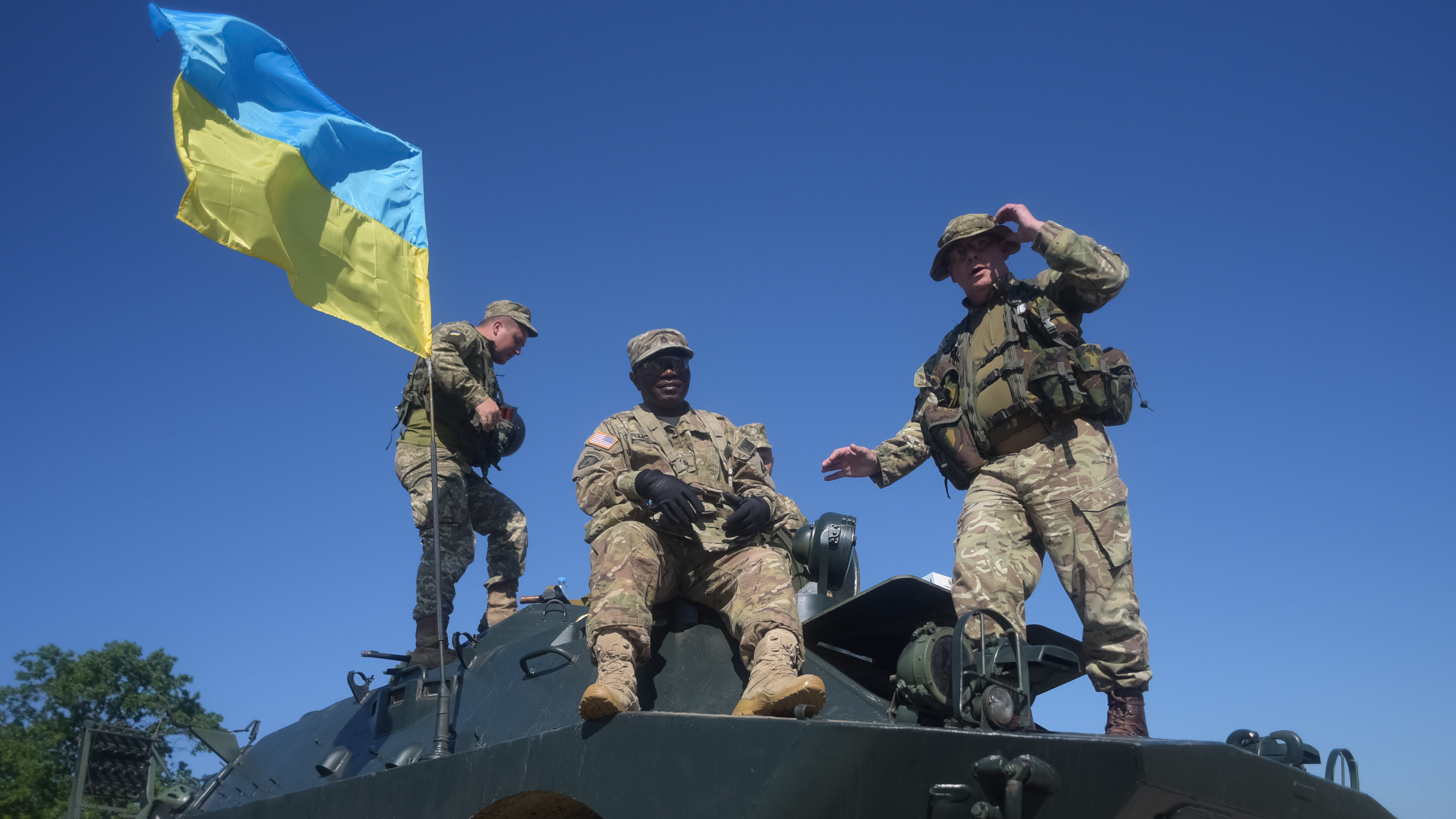
- In connection with the advent of Donald Trump in Russia itself, where NATO is considered a threat to 67 percent of residents, the attitude towards this organization can change as a whole? Or, perhaps, ordinary Russians watching TV will now somehow separate the political image of Trump-human, and after it the United States, from NATO and from the general “building intrigues of the West”? Maybe the attitude will change so that NATO will begin to be associated more likely with "nasty Europe"? And with European politicians, like Angels Merkel, for example?
- Yes, of course, personification may be important. And in this sense, the former President of Barack Obama and the present Donald Trump carry very different semantic loads for Russians - although I am not sure that the difference is really great. As far as I know the latest surveys of the analytical center of Yuri Levada, the attitude to the United States in Russia today changes noticeably in the positive direction. America is suddenly less perceived as a threat! But the Levada Center has much less “step” of these polls-from 2014 to 2016. Although two years are a long term. Analysts sometimes begin to “hide” all sorts of trends at such a distance. This is possible - that NATO can begin to be perceived more as a “European problem”, as a topic of direct close confrontation, especially in the Baltic direction. And the attitude towards the United States will become a little different, since there are some hopes related to Trump, with the prospect of abolition of sanctions, with his personal relations with Putin.
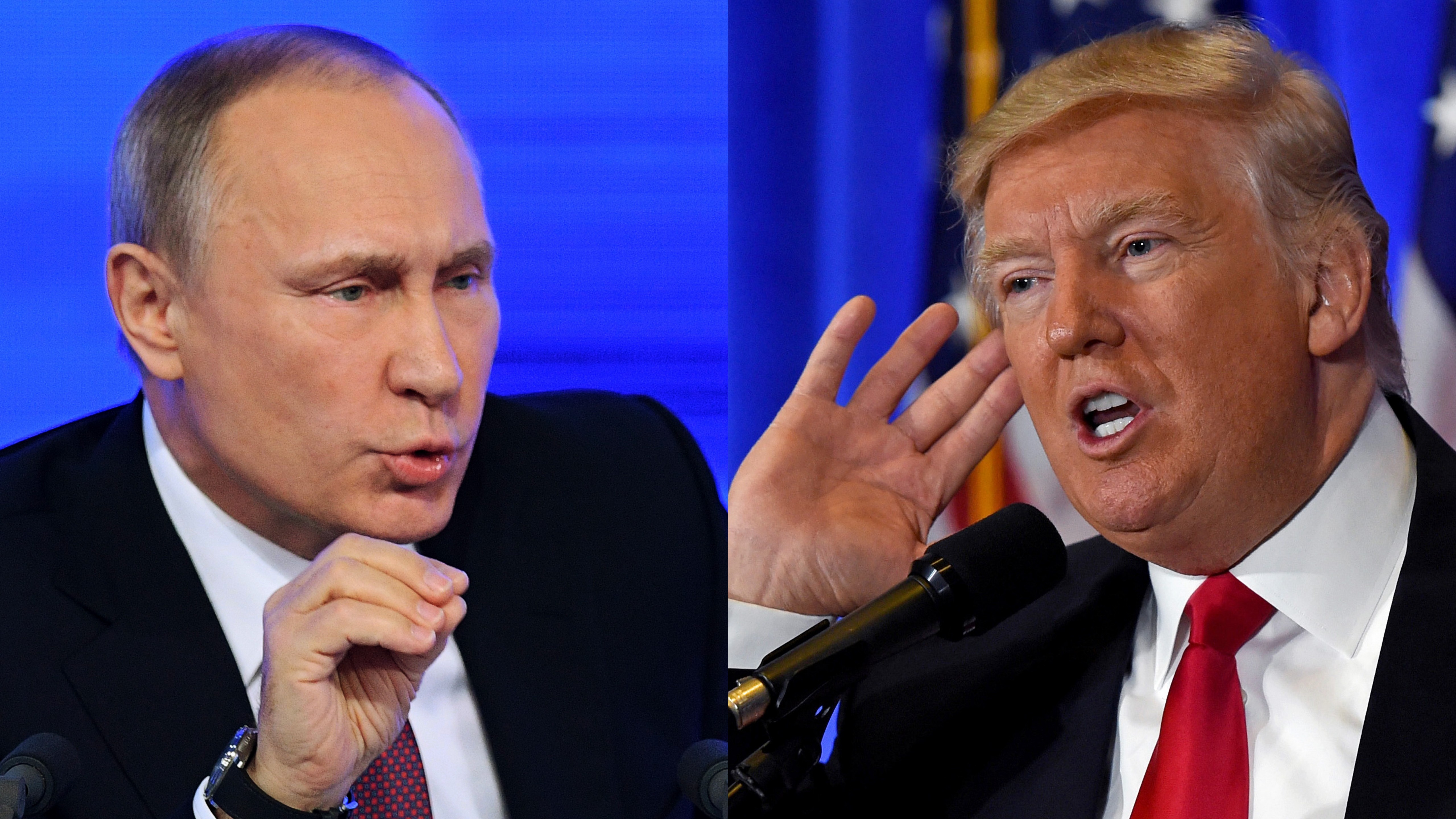
But I do not think that it is for a long time and that these hopes have a great sense. Personal relationships are subject to particularly quick changes, and disappointment in Trump can come quite quickly. And any quarrel at the highest level will immediately give a new impetus to the propaganda and zigzags of public opinion - as we saw in a recent example of Russians attitude to Turkey. This was an extremely effective impact of propaganda on public opinion! In general, the ligament of the USA - NATO, the identification of one with the other remains a deep factor that may be less susceptible to current fluctuations. And the fact that 67 percent of Russians sees the threat to NATO, in fact, not surprising. It is surprising that so little! Because the intensity of anti -Natovsky propaganda in Russia is extremely great. And for me, the fact that 20 percent of Russians surveyed still do not have a certain opinion in this opinion, this is a lot. I am more surprised, perhaps this.
- In the countries of the former USSR, NATO is definitely positively most of the population only in Georgia. This is because the Kremlin won the information war - or because the West refused to wage it?
- For most residents of the post -Soviet countries, except, perhaps, Belarus, NATO is a rather abstract and distant concept. Even in the Caucasus it is clear that the North Atlantic Union cannot have any direct impact on conflict situations. Therefore, in the same Armenia, the dominant attitude is indifferent - neither a threat nor protection. "What does NATO have to do with it? We have problems with a completely different type." And in Azerbaijan, also in this category of indifferent - 44 percent. Those people who believe that NATO is not a serious player on this extremely complex and conflict field. So I do not think that this is the matter in the successes or failure of someone's propaganda. This is a fairly real idea of where NATO can really be force and where it is not.
The intensity of anti -Natovsky propaganda in Russia is extremely great
- But, for example, in Moldova, people definitely perceive NATO as a threat than not - there are 27 percent against 16, who consider NATO a “defender”. And from Moldova NATO is not so far.
- Undoubtedly. But in Moldova, still as many as 38 percent of the respondents to NATO are indifferent, this is the dominant group in answers. Why do so few people see protection in NATO? For Chisinau, the central issue is now preventing any new outbreak of conflict in Transnistria. And I think that for Moldova, of course, connections with the European Union are much more significant than the connection with NATO. Therefore, an indifferent attitude is dominated by. Why do 27 percent in Moldova see NATO as a threat? This is a country that is generally subject to very sharp fluctuations in public opinion - that we see in their elected campaigns, in their general disappointment in how much the West can be a support point for this country.
- In Belarus, NATO opponents are almost as much as in Russia. Formally - it would seem that they before the confrontation of Moscow and the West? It would be good to "stand aside." However, there were even less indifferent than those related to NATO negatively.
- In Belarus, perhaps anti -Nateic propaganda is not as strong as in Russia. Therefore, we see a significant gap between the two countries-how many people see a threat to NATO: in Russia, there are still two-thirds of the population in Russia, and in Belarus-a little more than half. And the fact that 30 percent of Belarusians relate to NATO indifferent is also an important indicator. But inevitably, one must take into account the moment as the real these figures and how much those answers that the inhabitants of Belarus are ready to give to Western sociologists reflect their real ideas.
- That is, Belarus is a country where it is true that it is true not to answer any political questions?
In Belarus and in Russia, people are aware that it is better not to say excess to strangers to strangers
- Like Russia! By the way, partly for this reason, in Russia, as, of course, in Ukraine, the results of this kind of polls should be looked at in very detail - where exactly the study was conducted, what kind of representativeness was ... because regional differences can be very large. I personally would be interested to know, for example, whether there are differences in answers in St. Petersburg and in Moscow on this subject. Belarus, apparently, the country in this sense is more homogeneous. But there, as in Russia, people are aware that it is better not to say excess to strangers.
- If you look in the report of the Gallup Institute for countries not the former USSR, but east of Europe, you can trace how the attitude towards NATO is changing from positive to negative, with some exceptions, geographically, from north to south. From Estonia and Poland, where the most of them are definitely a positive way to NATO, to Bulgaria and Greece, where there are few such people.
-Still, in Bulgaria and Greece, more people still see protection in NATO, not a threat. Yes, it is noticeable that the number of those who do not perceive NATO either that or Xiak is quite large. But I do not think that here we see some kind of "axis" from north to south. Since there is, so far, nevertheless, a residual (and surprisingly strong!) Resonance from the Balkan conflict of the 90s. Which affects the moods in Kosovo and Albania, which at the head of the list of “positive attitude”, although they are in the very south, and in Serbia and Montenegro, which are at the other end.
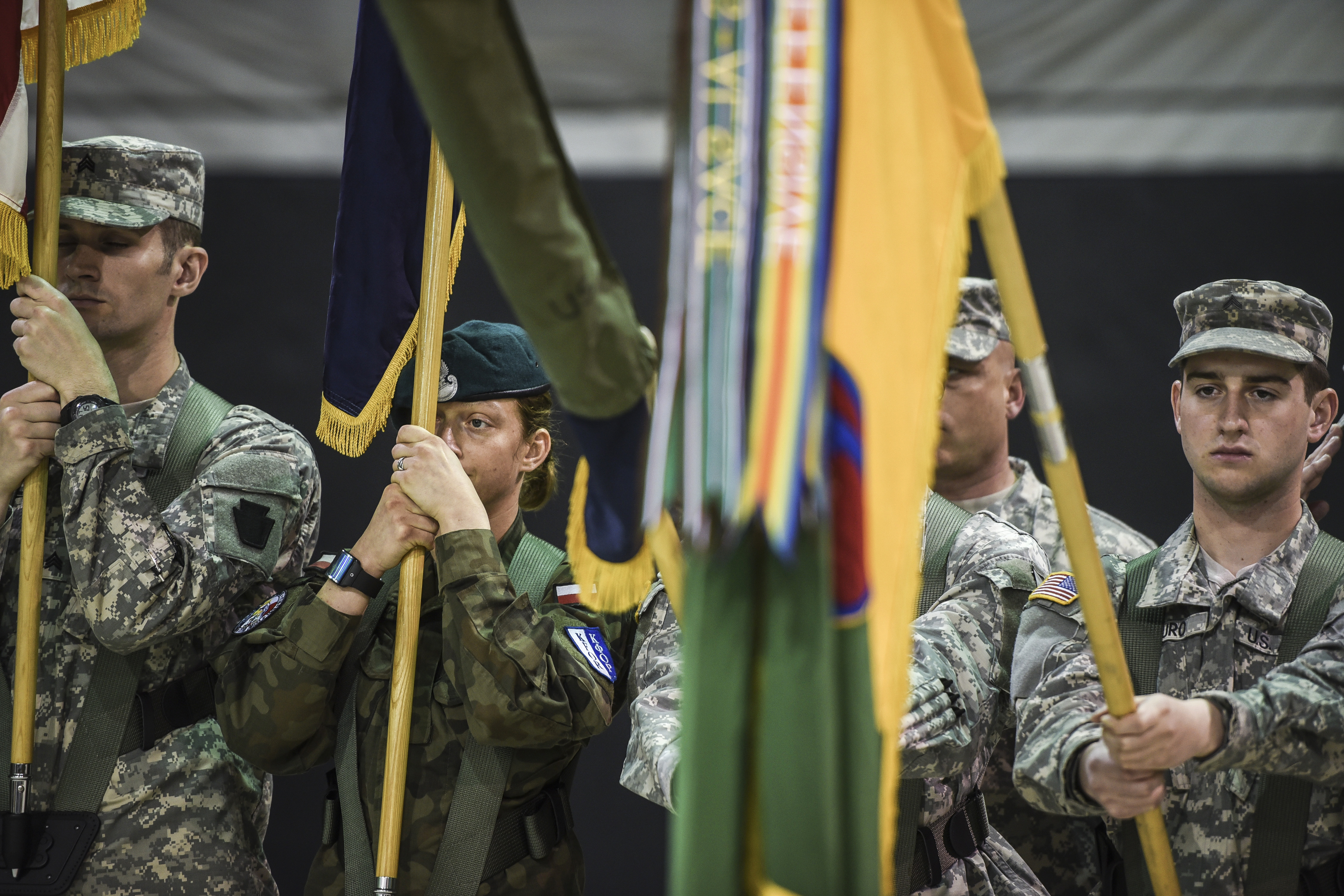
And Poland explainly in this study looks more homogeneous with respect to its population to NATO than the Baltic countries, where, apparently, among the Russian -speaking population there are a significant number of people who see a threat to safety in the very close cooperation of their governments. Here we must first take into account the structure of the societies of these countries. And still, in Estonia, for example, as many as 52 percent answers see a defense in NATO. This is quite high, ”says Pavel Baev .
According to the Gallup Institute, the results of the published survey are based on telephone interviews conducted in 2016 in the studied countries. Everywhere, about a thousand people aged 15 years were interviewed. At the same time, 2 thousand people interviewed Russia.
President of Ukraine Petro Poroshenko recently stated in an interview with German journalists that he was planning to hold a referendum with a question, Ukraine should join the North Atlantic Union: “Four years ago, only 16 percent spoke out for Ukraine’s entry into NATO. Now it is 54 percent,” Poroshenko said in an interview with Funke Mediengruppe, published on February 2. In December 2014, the Verkhovna Rada of Ukraine supported the presidential bill on the refusal of Ukraine from non -block status. В НАТО отмечают, что позиция организации остается неизменной: Украина имеет право на вступление, когда Киев выразит желание вступать и выполнит все необходимые условия. При этом Россия по-прежнему требует от Запада "гарантий невступления Украины в НАТО".
-


Alexander GOSTEV
The editor of the RS information service, international observer, author and editor of the heading and podcast "Atlas of the World"
Gosteva@rferl.org