
Translated material
Three translated novels February
Tony Morrison about violence against children, postmodern Serb Bayats, “zero k” by American classic Delillo
In the new review of the literary critic of Medusa, Galina Yuzefovich, three translated novels on February 2017: “God, keep my child” of the Nobel laureate Tony Morrison, the postmodern “hammam of“ hamam “Balkani” ”Serb Vladislav Bayats and“ zero K ”of the living classic, one of the most authoritative writers of modern America Don Don.
Tony Morrison. God, keep my child. M.: Eksmo, 2017. Translation from English by I. Tomoevo
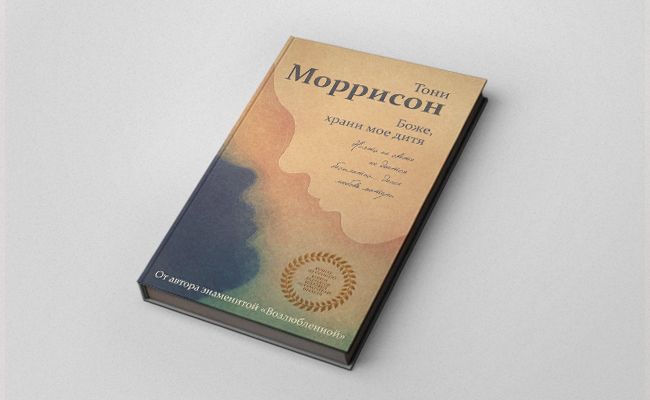
American Tony Morrison, Laureate of the Nobel Prize in Literature and the beloved writer of the TV presenter Winfrey, is a famous master to add to the pain points of readers. However, if in previous books she moved, so to speak, by a wide front, pressing either in one place, then in another, and ultimately “breaking through” almost everyone, then this time Morrison acts more focused. Her whole book is a study of different aspects of violence against children, while violence is understood quite widely - from banal dislike and rejection to violence of sexual and physical.
The main character, the beauty Bride, because of a too dark shade of skin since childhood, does not like mother. Passionately wanting that she at least take her hand (not to mention hugging or allowing her mother to call), Bride erects a terrible in vain on an unknown woman, a young teacher, sincerely loving her pupils. Boyfrend Bride, a young intellectual booker, cannot survive a long -standing loss of his brother (of course, his brother became a victim of violence), and all his further existence is one long attempt to stop time, turn his own life and the life of the deceased boy surrounding the memorial. Kuin, a beloved and wise Aunt Boker, his faithful mentor and support, it seems, once long surpassed violence against her own daughter. The little Rhine, who was picked up and brought home, the good hippies (then they will pick up Bride on the mountain road, who went to look for the escaped booker, but got into an accident), with a crooked grin talks about the life that she led with her mother-prostitute, who readily passed her daughter “for rent” to customers. Even the two -faced and repulsive Brooklyn, Bride's girlfriend, has something to remember about your own childhood such that it would be better to never remember.
All these stories at Morrison are intertwined into a painful, suffocating web, knit heroes on their arms and legs, do not allow you to breathe, love - what is there, simply live. Children's injuries are drawn into the past (sometimes not metaphorically, but quite literally-at some point Bride notes that her body is becoming more and more teenage, and then children's); Famber in this ink whirlpool, each of the heroes of the novel is doomed to loneliness - it is impossible to divide his grief with anyone, in someone else's trouble everyone sees only an echo of his own - and seemingly mourning the other, actually cries only about himself. In paradoxically, the injury does not unite, but disconnects, and its awareness does not cleanse, but isolates each person in a tight cell of the suffering, creating a dangerous illusion of his own exclusivity.
“God, keep my child” - of course, a very important statement on the current topic of children's injury and violence. However, the trouble of this novel is that we have to perceive it at once both in a diachronous and synchronous context, comparing, on the one hand, with earlier things the same Morrison, and on the other, with other books about the “tears of the child” that have appeared recently, and of course, primarily with the sensational “little life” of Khana Yanagihara .
Alas, in both nominations “God, keep my child” noticeably loses. The delightful combination of mystical madness with acute sociality, characteristic of almost all Morrison's books, starting from the debut “The most blue eyes in the world” and ending with the brilliant “lover”, this time looks somewhat mechanistic - and therefore disappointing: reception instead of a miracle, focus instead of mystery. If we compare with a “little life”, we will have to admit that by the power of the emotional influence of “God, keep my child” just in another league - no, no one (okay, almost no one) will cry and remember this time, the scale of the tragedy is not at all.
Nevertheless, a truly outstanding writer (the number of which Tony Morrison, without doubt, refers), even in his best things, is able to do something that is not accessible to others. Where everyone else, depending on temperament, see a reason for compassion, sorrow or anger, Morrison sees the danger: the experience of its heroes shows that the fixation is destructive, and the attempt at all costs to steal the past is not only relief, but also pain, alienation - and, yes, a new injury. And this is a thing that to talk and remember is as necessary as about the actual trauma.
Vladislav Bayats. Hamam "Balkani". SPb.: Limbus Press, 2017. Translation from Serbsky V. Sokolov
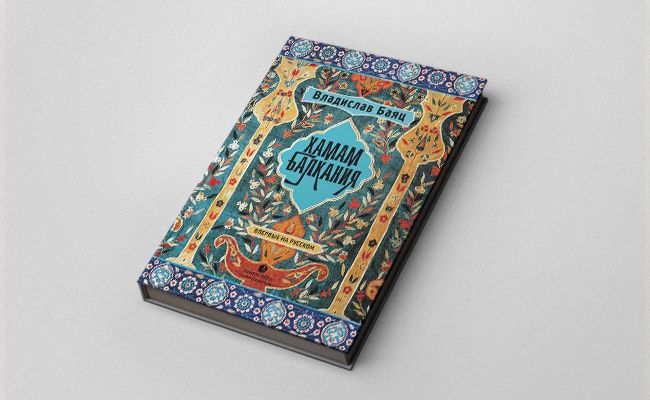
A modern Serbian novel is an infrequent guest on Russian book shelves, and already because of this, Vladislav Bayats’s book “Hamam“ Balkani ”deserves all kinds of interest. However, in addition to the well -known exotic of the advantages of Hamam, there are plenty of Hamam: it is both a fascinating historical novel and an elegant essay on the ratio of literature and what is commonly called “real life”.
Bayats’s novel begins with on -duty curtsy addresses to the great predecessor, the Nobel laureate of Ivo Andrich (his influence on the author is obvious), and then it is built according to the onion model. Her core is a fantastic and exciting story of Mehmed Pasha Sokolla or, as the author himself prefers to call his hero, Baitsa Sokolovich. The young Serb from a noble family, preparing to accept tonsure in the Orthodox monastery, was sent to Turkey according to the law “On Dani Blood”, where he had to become a Janissaries - a stronghold of the empire, her sword, shield and voice. With the seeming ease, Mehmed Pasha abandoned the faith of the fathers, accepted Islam and, having studied not only the art of war, but also the art of intrigue, made a brilliant career at the court of three sultans at once-he had a chance to visit the great vizier during the reign of Suleiman the Great, his son Selim II and the grandson, Murata III.
However, around the history of Baitsa Sokolovich, Vladislav Bayats, steaming several more semantic layers. The first is a classic “Roman about the novel”, a lyrical and almost intimate story about how the idea was born to write a book about a falcon Pasha, about how work was going on, and about how not yet an additional book was fed with life, and life, in turn, suddenly began to reproduce the patterns in the book.
The second layer is the history of long -term relationships and many years of conversations of the hero with his friend and contemporary, the greatest architect of the Ottoman Empire Sinan built in the model of Platonic dialogs. These conversations are in a stupid way reflected and refracted in the conversations of the author himself with the writer Orhan Pamuk (it is not entirely clear, real or imaginary).
And the upper onion sheet, turning the whole novel, like a cocoon, is the Bayatz reflection on historical memory, about the ratio of personal and global, about cultural, national and spiritual identity, about the losses and acquisitions related to preserving this very identity or its loss-in a word, about everything, directly or indirectly adjacent to the theme of Mehmed-Pasha Sokolol, His brilliant career and mysterious death.
The words “postmodernism” and especially “postmodern” in recent years have finally destroyed and dilapidated, becoming not even last year’s fashion, but some kind of postposited annual. However, if you leave these offensive connotations aside, then the romance of Vladislav Bayats is an excellent example of postmodern literature in its purest, most aristocratic and charming form: the text is smart, but not unheated, entertaining and plot, but not flirting with the reader, abundant by quotes and allusions, but with all that it is quite self -sufficient.
Don Delillo. Zero K. M .: AST, Corpus, 2017. Translation from English by L. Tronina
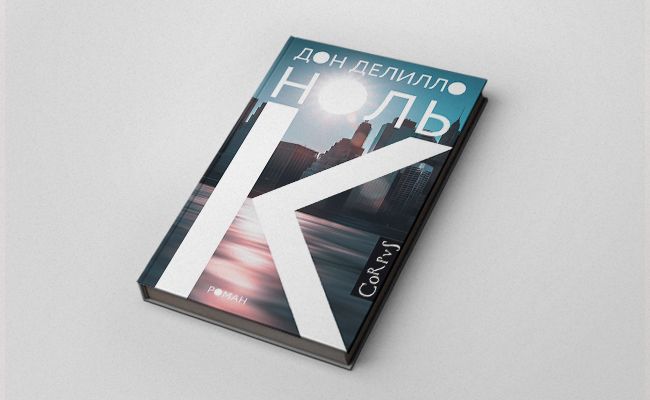
With a living classic, one of the most authoritative writers of modern America, Don Delillo, the Russian reader somehow develops-not one of his novels (including the cult “white noise”) became not like a bestseller, but even a just noticeable event. And even the famous film “Cosmopolis”, shot from the book by Delillo David Kronenberg, could not change the situation.
The last Roman Delillo “Zero K” has a slightly more chance in this sense, since, unlike other texts of the writer, he refers to the events at least known to us - such as the war in Ukraine and the fall of the meteorite in Chelyabinsk (the latter, however, acquires a completely eschatological character from Delillo, but these are already details). However, this romance is hardly awaiting a loud success in Russia - it is too strange, not like anything, not fitting in any typical schemes of reader expectations.
34-year-old Jeff Lokhart at the invitation of his father, millionaire Ross Lockhart, comes to a kind of forgotten place either in Turkmenistan or Kazakhstan. Here, at the epicenter of the “great nothing” (from the point of view of the American reader, of course), there is a very strange scientific institution: its employees are busy frozen the bodies of mortally ill people - in order to re -defrost them when medicine finds a remedy for their diseases. Jeff arrived here to say goodbye to his stepmother - the wife of Ross Artis: she dies of multiple sclerosis, and she has to freeze. The expectation of this event takes several days during which Jeff recalls his own childhood (his parents divorced and he grew up with his mother, and he almost never saw his father), aimlessly becomes about the institute’s building, and ultimately realizes that cryosamoros, who gives science fiction, but still fitting into rational frames - only the upper layer of what is happening in this mysterious place. In fact, the institute, to which Jeff brought his father, is a wild hybrid of the art object and the gloomy spiritual order, the main purpose of which is to save its members during the upcoming Apocalypse. The forerunners of the close end of the world (the unfortunate Chelyabinsk meteorite also refers to them) surround the visitor from all sides in the form of constantly blocking the path of sliding screens, on which the frames of wars, terrorist acts, epidemics and similar horrors are broadcast.
Returning from this unpleasant place home to New York, Jeff is trying to build relationships with his lover Emma-a teacher at a school for children with disabilities, but Emma is too absorbed in the drama with his adopted son Stuk. The glass, the closed autistic teenager, whom Emma adopted ten years ago from the Ukrainian shelter, is obsessed with his past, refuses to go to school, avoids people, and then one day she disappears without a trace. The shocked Emma moves away from Jeff, Jeff rides to the mysterious institute again - this time to say goodbye to his father (he never managed to reconcile his wife and longs to reunite with her), and there he suddenly opens up the tragic fate of the glass, which is strangely consonant with his own. Like stack, Jeff also realizes himself a lost boy, devoid of roots, lonely and abandoned in time and space.
Retelling the plot “Zero K” is a hopeless occupation: with the same success, you can try to retell the flu sleep or hallucination. The oppressive, suffocating atmosphere is not even a nightmare, but a serious painful oblivion that you want, but you can’t wake up - this is the true content of the novel Don Delillo. He virtuoso oven the feeling of the insurmountable irrealism of what is happening, the tragic lack of contact between the hero and the world (not so important, the crazy world of the Tanatological Institute or the quite sensible, pragmatic world of today's metropolis), forcing the reader from time to time to feel nervously and the chair on which sits in order to make sure of his own materiality.
As you probably guessed, these sensations can not be called pleasant in the generally accepted sense of the word, but there is something in this-there is definitely nothing to compare this experience with. Not quite what you advise a friend for the weekend, but the outstanding thing is very strange, as it was said, but very curious.
Galina Yuzefovich