
Translated material
"The main thing is not to make a cute movie"
The legend of animation Michael Dyudok de Vit - about the cartoon "Red Turtle" nominated for Oscar
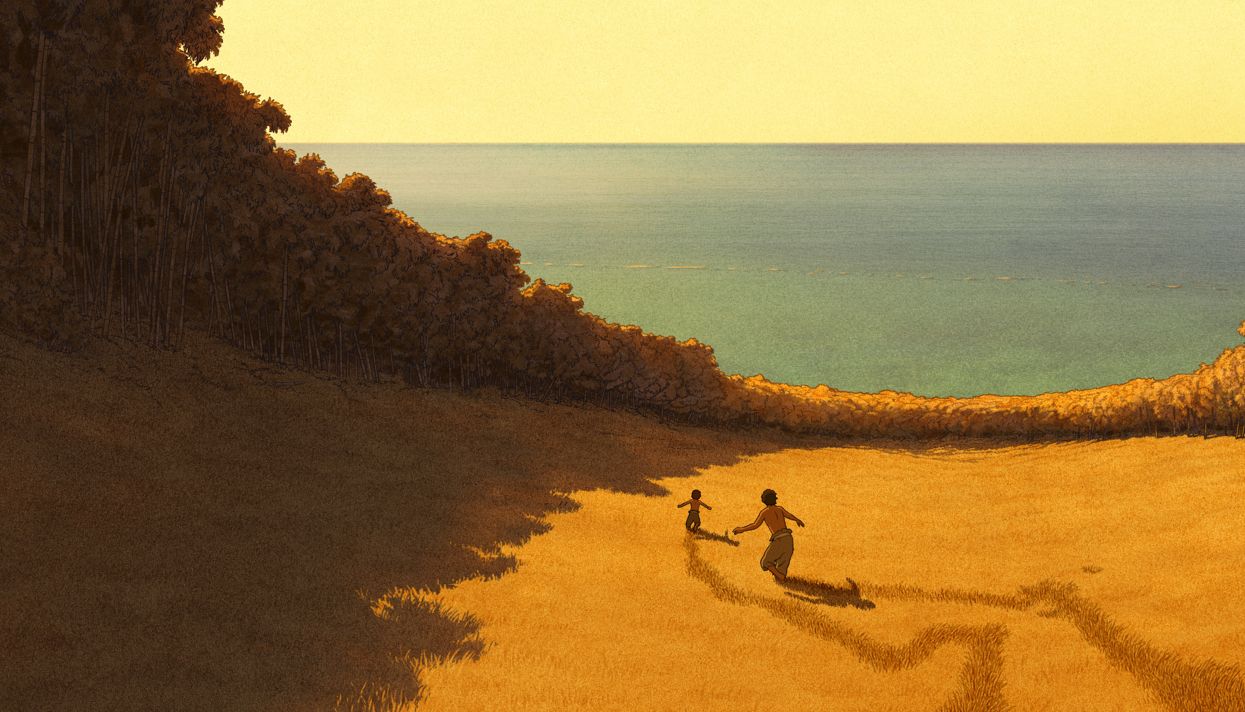
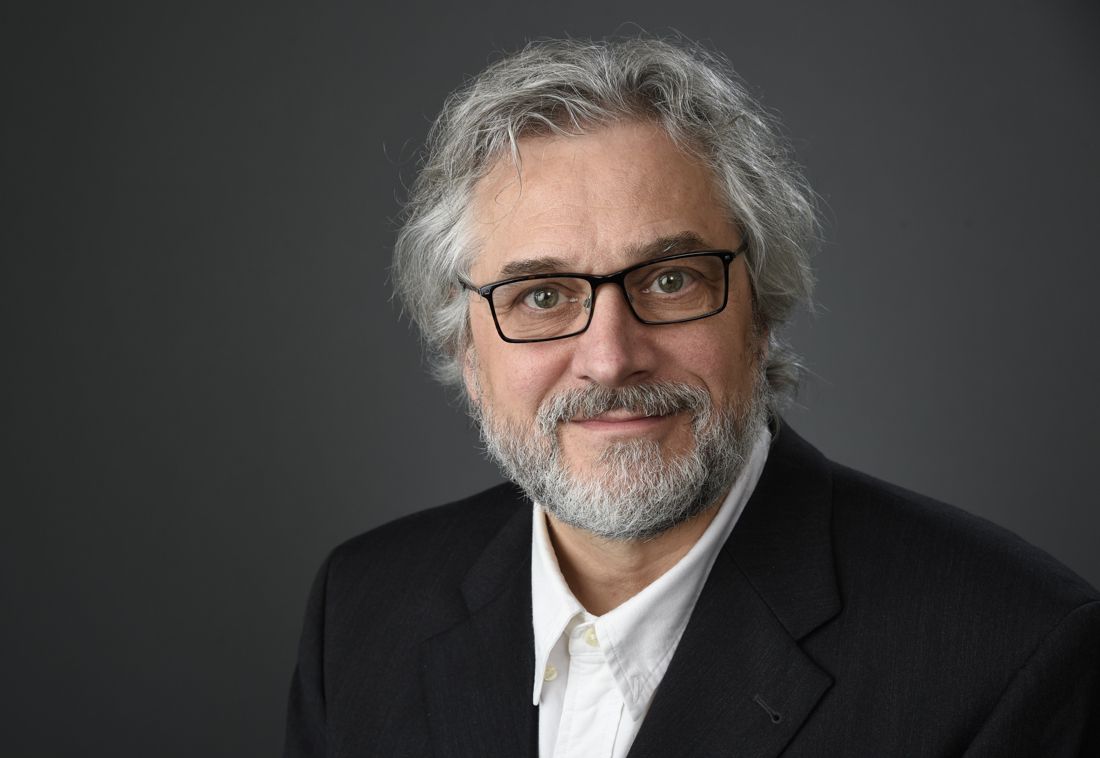
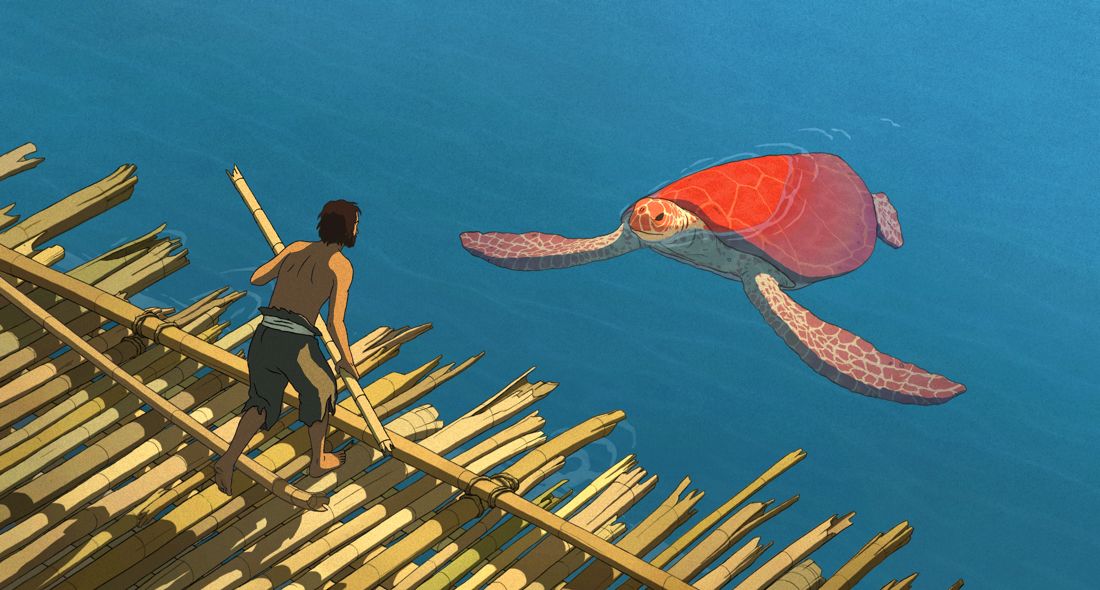
On February 16, the Red Turtle is released on Russian screens - in all respects an unusual cartoon. This is a full-length debut of the 63-year-old Dutchman Michael Dudok de Vita, made by him in the world famous Japanese studio Ghibli. De Vit is the author of amazing poetic short films, the most famous of them is “Father and Daughter”, who received Oscars in 2001. The Red Turtle also received the nomination of the Academy, and before that it was awarded in Cannes. This is a kind of Robinsonade: a man, thrown ashore by shipwreck, is trying to establish life on a paradise island and meets an unexpected ally - a giant red turtle. On the eve of the release of this surrealistic parable, Anton Dolin asked the director about his film.
- To make a large, one might say, commercial, but at the same time uncompromisingly, the author’s film is a big risk and discomfort for the author of the baries, probably?
- Yeah, tangible discomfort. But the project carried me away, and in the wake of excitement I somehow slipped, did not break, brought the matter to the end. I’m used to working day and night long - not even months, but for years! Imagine what to shoot a full meter in such conditions - not at all the same. You make a short film alone or with several comrades. You sit, without getting up, talking a little about the nuances, and now the movie is ready. And here is a giant organization ... Everything must be structureed in stages, at each stage to consult with several curators, to explain every little thing to the animators. It's hard. Although otherwise the film cannot be made. I'm not complaining, I just had a hard time. It seemed to me all the time that I had not done something, I did not keep track of something important.
- It's funny that at the same time in the center of the Red Turtle is a problem of loneliness. Your hero is lonely, but he is a creative person, in fact, creating a world around him.
- I like that he is alone! There is nothing easier than to recognize myself in it and ask a question: what would I do in his place? It seemed important to emphasize: the hero is alone, but he is in a beautiful place, almost in paradise, albeit uninhabited. Does he really have reasons to run from there? He has food, water, shelter, heat. Yes, he suffers from inconvenience, but which of us does not suffer.
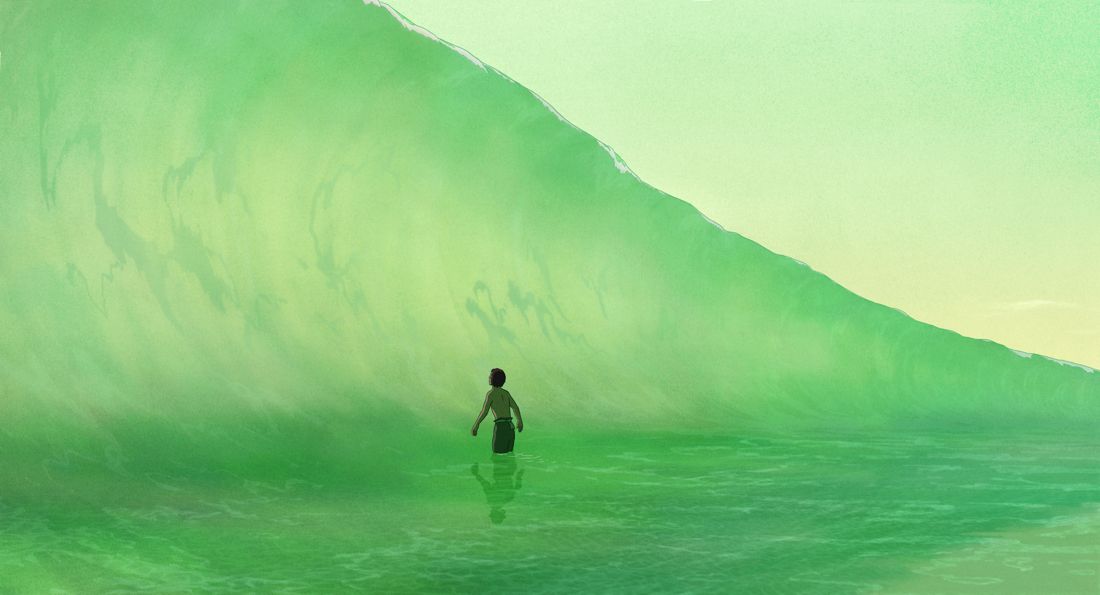
- It seems to be a metaphor for life, and any. It is not easy for anyone, but everyone sooner or later finds its own trajectory, even within the limited limits of the island.
- Of course, it is. Only I wanted to simplify and cleanse this life trajectory. The question is simple: what to do? Here in the plot there is a turn that I do not want to disclose, and the hero ceases to be a loner.
- Did you deliberately cleanse the “red turtle” from the signs of a particular era, country or culture? There is not even a text.
- I did it consciously. At first he wrote dialogs, although he knew that for the first time they would sound somewhere in the middle of the film. How to establish contact without words, how to cause sympathy for yourself? But, to my surprise, nothing happened. Dialogs did not work. Whoever speaks behind the scenes, no matter what language sounds. We experimented a lot, but everything is in vain. Pascal Ferran helped me with the script: what we just tried with her! It turned out something at best not shameful, but at the same time superfluous.
Once a Japanese producer called me and offered to do without words at all. I was at first shocked, and then gradually began to realize that he was right. The Japanese were the first to realize this: they looked at the rental without dialogs, and they liked it. Now we really do not know where our hero comes from. Initially, he spoke French, and the public would immediately conclude: "Yeah, he is a Frenchman." The same - with English or German. We even tried to experiment with a fictional language, but this did not work out: it turned out too comical.
- The conclusion suggests itself: the animation has retained that connection with the dumb cinema that has practically lost the game cinema.
- Especially in a short film, because ... I don’t even know why! The characters are stylized, as if turned into codes. And the viewer understands that there is no need to wait for realism, and accepts the rules of the game. I like the moment of contact with the public. Believe me, the animation is associated with the craft of mums: we studied their tongue seriously, it is indispensable in regard to expressing emotions with gestures.
- Tell us about why your turtle is red.
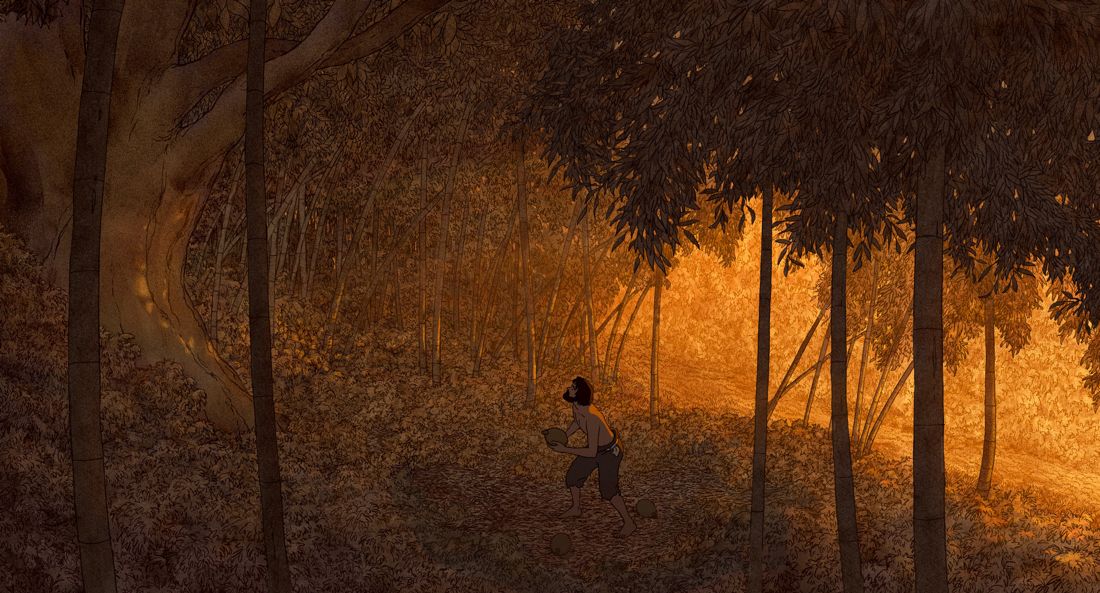
- When we see her for the first time, she appears from the blue ocean. The combination of blue with red is very powerful, unforgettable. We immediately understand that this animal has a unique character, that it differs from other turtles. At first we tried to make it black, but this gave the character an unnecessary raid of mystery. I myself love monochrome cinema, black and white or in Sepia. Its purity often speaks more expressively than the wealth of color, so familiar to animation. For Disney fairy tales, this is good, for me - no. Even in the Red Turtle, I tried to combine a maximum of two dominant colors with each other in every plan, bypassing them. This is my aesthetic choice, not too typical for cartoons.
- Yeah, especially if you recall the [founder of the Ghibli studio] Hayao Miyazaki and his cinema.
- It is incredibly beautiful, especially with the current technologies - you can’t take the eye. But not mine.
-Does the Red Turtle underly the basis of a fairy tale or a myth?
- I read fairy tales all my childhood, and at school I switched to Greek myths. Already much later, I read a collection of incredibly gloomy Japanese folk tales ... more precisely, stories about ghosts. I did not take stories from there, but this book inspired me. I wanted to show the beauty of nature and man against its background. The main thing is not to make a cute movie. It should be poetry that will not dissolve even after the final credits.
- Were there really without Robinson Crusoe?
“I read it when I was a child, he completely fascinated me.” But there is a similarity with him in my film only at the beginning. I am not interested in investigating how the hero gradually opens fire, agriculture or cattle breeding. For me, the Red Turtle is about a man who is trying to return home. By the way, Robinson was the son of his age: he tried to control nature, and Friday. My hero has completely different relationships with the outside world.
Anton Dolin