
Translated material
How to help a child love school subjects
Cool sites for children and their parents
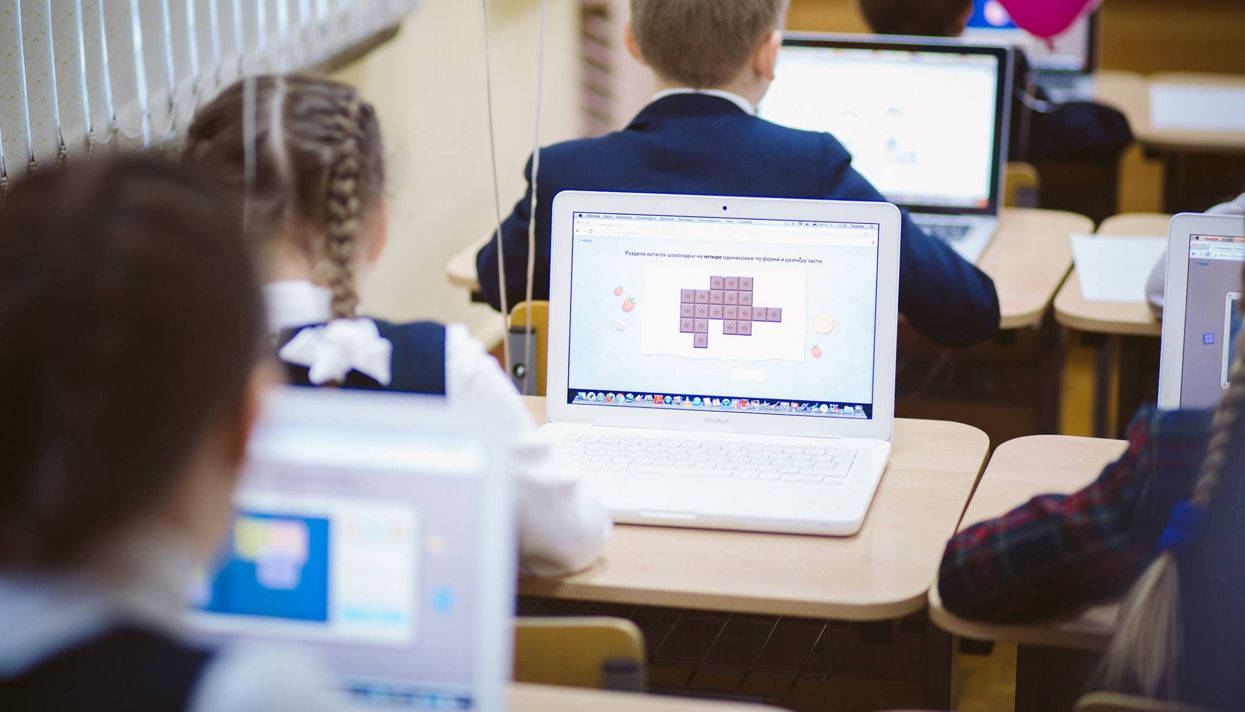
To teach the child everything that you want, schools are often not enough. Some parents worry that children do not read. Others - that the school circle of computer science begins too late. Still others are looking for a Russian tutor to train before the exam. It is completely optional to redraw your whole life and your child: many useful courses can go online, you can learn about new books for children of different ages through publics, repeat the exercises in Russian - on non -teddy sites made by philologists and linguists. At the request of the Medusa, the chief editor of Arzamas and the author of the public “Children like children” Anna Dolizhchik chose the most useful links.
Reading
It seems that the best way to captivate children is to read them aloud or to slip something interesting. To learn about this interesting, find lists of books for different ages and navigate in the stream of modern children's literature - both translated and Russian -speaking - from several good sources. For example, on the website of the writer and teacher, Marina Arromstam Papmambuk also collected collections of books (which is noteworthy, the reviews of the “adult” literature are written by the adolescents themselves), and the announcements of events related to books. Bibliygid , who makes a team of employees of the Russian State Children's Library, is rather an encyclopedia of everything that comes out or turned out, with short writer biographies and numerous thematic collections.
You can follow the novelties simply on social networks of good children's publishers - in fact these are small media telling about books and literary events. Monthly reviews of all novya come out on the site of a pink giraffe : and these are not just lists, but detailed reviews telling about writers and their books. The section “How to Live with Children” is also a lot of interesting, albeit not directly related to reading: a selection of interesting facts about birds (for the release of Ilya Kolmanovsky’s book “Why the Birds do not fly” ) or a story about the Museum of Metropolitan and Michelangelo (in connection with the hit “From the archive of Mrs. Basil E. Frankvayler, the most confused in the world” ). And also conversations with various good people - from Alice Grebenshchikova to Nyuta Federmeser.
Collections by age, genres and topics can be found in the kinship “Giraf” by the Bukashka online store-and it seems that nothing is more convenient yet invented. Different good book events can be monitored on Facebook by the Samokat publishing house. Another useful resource for parents is the blog of the translator of Natalia Medved “Little Reader” : the selection by age, observations about the tastes of readers and reviews of various new ones.
Russian language
A whole encyclopedia in the school - and not only school - Russian is collected on the website "Russian by five" . Dictionaries and reference books, exercises, tests, preparation for the exam, all kinds of analysis - from phonetic to syntactic - for schoolchildren of all ages and even parents who are offered to teach proper speech.
Another good site, mainly designed for children, students at home or not living in Russia, is true words made by philologists Tatyana Krylova and Anna Levinzon. What is valuable: interesting exercises are not outdated, as in a school textbook, but appealing to the modern structure of the world, with funny and cute characters, including teacher Mikhail Yuryevich, a guinea pig with dirty paws and noisy, as in life, children instead of implausible excellent students from the props. Courses and games are conveniently divided by age (from 7 to 10 years, from 10 to 13, from 13 to 16), and you can pass them without the participation of parents. Subscription costs from 490 rubles per course.
You can test your knowledge on the Russian website with Pushkin for free. Here are the Olympiads for younger school students, prepared by employees of the Institute of the Russian Language and the Uchi.ru website (logins and passwords from which are given to almost any school).
Biology and geography
Children and science are a YouTube channel for schoolchildren, launched by the fund of the same name. University teachers and good school teachers clearly explain what will have to be taught to the exam, talk about what is not in the program, or about what is in the program, but is served extremely unsuccessfully. For example, the remarkable course of Solovyov’s novel “The World”, unlike a dull school subject, can be safely shown even to those children who are not at all interested in nature. All this is with a pretty animation and inseparable music.
A kind of continuation for more adult students is a course recorded by the Department of Geography of the School "Intellectual". Lectures about underwater and medical geography, about mountains and space pictures, teachers, university teachers and scientists read about China and Japan. Also about geography, but at the same time about biology - a map of the sounds of our world, according to which you can move like by Google Earth. The sounds of scientists were recorded by enthusiasts from Iceland, Australia, Mexico, Great Britain and other countries. You can listen to how frogs croaked in Niger, or the roar of a humpbacked whale off the coast of the Dominican Republic, or the singing of the Siberian Nightingale-redshift, and then create from all this its own playlist.
Mathematics
For all the same uchi.ru, mathematical and logical tasks of varying degrees of complexity for schoolchildren of different ages are terribly fascinating - so that in the summer children require mathematics; School tasks quickly end and you have to buy additional. Another good option is a free mathematical online circle at the St. Petersburg Physics and Mathematics Lyceum No. 30. Every Friday, younger school students download the next portion of problems, solve them over the next week and receive points. What is especially valuable, parents are asked not to intervene in the process. Mathematics of the house is a project of Alexandra Kozintseva, graduates of St. Petersburg Mehmat and graduate school at Maryland University. The site contains many mathematical games for schoolchildren and preschool children. Subscription costs 500 rubles or $ 10 per month.
Informatics
The Code website has collected many courses for children from 4 years old. Each course lasts 20 hours and teaches the basics of programming: those who began to succeed can, for example, try to program droids, Minecraft characters, Disney heroes or create their own game.
The online platform for students in grades 1–4 was made by Redmadrobot , engaged in mobile applications using psychologists, teachers and game designers. The “Codard” is taught to solve logical tasks, as well as the basics of programming, without focusing on coding languages - the creators say that after a course, it will not be difficult for children to master any of them. All this is in an exciting game form.
Informatics.mccme.ru , which is engaged in remote training in computer science, collects not only copyright courses and tasks, but also information about all additional classes, as well as about olympiads and field schools. The STEPIK educational portal has the “Introduction to Programming” course made by the Higher School of Economics and the Yandex Academy: it is free, suitable for schoolchildren, and Yandex employees conduct classes - vividly and witty. Adult children who are interested in learning the front-end can be sent to the HTML comrade , and “average schoolchildren”-on a pythonturetor , a free programming course from scratch, named after the same language of the coding language.
Sites that are useful to parents
The main resource about children, their upbringing and education-both school and any other, this is chalk , and in general it does not have competitors. There is everything that parents need to know, and all this is almost always interesting to read: collections, interviews, news, useful tips - in particular how to prepare for the exam or choose a tutor. There are also many groups where alternative education and additional classes are discussed. There you can always find a tutor, find out about Skype lessons and other opportunities that are not related to a traditional school.
In the public Matemaris.school , parents and teachers discuss all kinds of methods and approaches to education, organize seminars and lectures. Immediately laid out useful links to prepare for VPR - all -Russian verification work, which torture students of 4 classes; Links to Skype lessons, online courses and other useful things. You can follow the events and sign up for them here . It is convenient to learn alternative education in Russia about a different other one who does not fit into the standards: there are announcements of lectures, courses and lessons, contacts of tutors involved in Skype, and discussions of different schools and pedagogical trends.
Anna Dewire