
Translated material
Maidan is in Romanian
Hundreds of thousands of protesters, who flooded the streets and Square of Bucharest and other cities, have not seen such a Romania since the fall of the Chausko regime. What are dissatisfied and what the Romanians achieve - the New Times found out
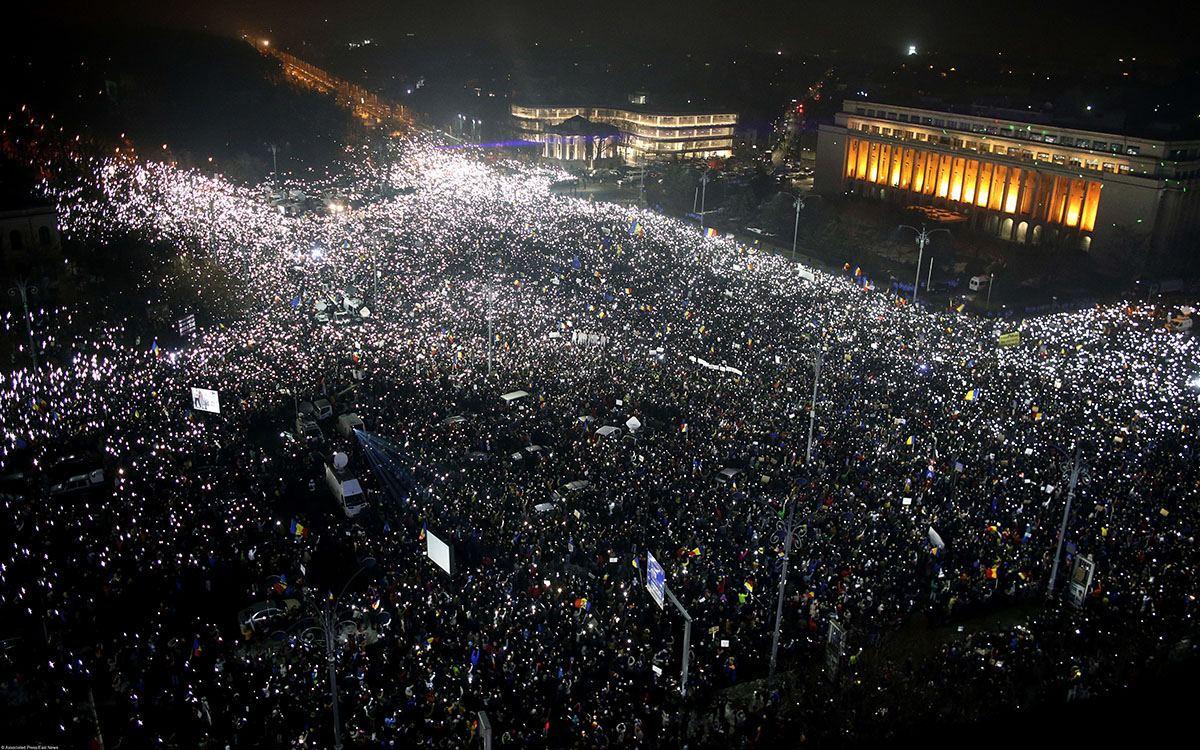
Thieves! Resigned! " - The inhabitants of Bucharest, gathered at the huge palace of the parliament on Victory Square - the former house of the people, from which the last dictator of socialist Romania Nikolai Chausheyesu and his wife Elena fled to meet their execution 27 years ago. People-up to 600 thousand people-took to the streets not only in the capital, but also in the Klizh-Napok, Sibiu, Kraiov, Timishoare and other cities of the country.
The indignation of people was caused by a government decree adopted on January 31 on amnesties to the Criminal Code, according to which the already convicted blessings were subject to amnesties, and the current corrupt officials were exempted from criminal liability if the amount of a bribe is less than 200 thousand lei (€ 44 thousand). The amendments were called the “law of thieves”: in the event of changes from criminal prosecution and imprisonment, 16 members of the parliament, five ministers and three senators would be released.
"We must save the country"
“Corruptions must leave, the government should leave,” explains one of the protesters - a young teacher with a Romanian flag in their hands. Around it, people with handwritten banners “Coreptia Ucide” (“Corruption kills”) and “Puteerea Corope” (“Power corrupt”), photographs of Romanian politicians for a prison grate and signature - “their place in prison”. On some posters printed in a hurry-a black and white photo of 1989, in which a man with a slogan: "Our children will be free." And nearby - a color picture of a girl with a similar banner: "Children of the revolution - here."
“This law would allow politicians to steal and move away from responsibility. The authorities want to protect itself from prison "
“We must save the country,” explains the Bucharest Student Dora. Young among the protesters, the majority of those gathered on an area of 25–40 years. Some came here right because of the student desk, others after work.
People cry out slogans, beat into drums, whistle in whistles and wave them with inflatable hammers. At night, the squares of smartphones are illuminated. “This is a requirement of real democracy, and not its miserable similarity, which has settled in parliament and government! Students, workers, people! Romanians, don't go home! " - Call the people's stands. “Romanians, resist! We can win! " - shouts a young resident of Bucharest Andra. She is sure: “The other day we will only become more. These are not damn nineties, today you can’t just take and change the law! ”
"Black Tuesday Democracy"
A wave of protests in Romania began in mid -January, when draft government decisions on the decriminalization of minor corruption crimes were published. The government, formed following the results of the December parliamentary elections in which the Social Democratic Party won, argued the need to mitigate the law, in particular, by the fact that Romanian prisons are overflowing. The people were indignant. Changes in the Criminal Code would be given freedom of more than 2500 prisoners, and investigations in 2151 cases, according to the National Anti -Corruption Director, would be terminated. The leader of the ruling Social Democratic Party, the speaker of the Chamber of Deputies of the Romania Parliament, Liviu Dragne, who received a conditional term for receiving a bribe of € 24 thousand in 2015, would also become one of those who won from the legislative innovation. “This law would allow politicians to steal and move away from responsibility. The authorities want to protect itself from prison, ”explains the student of Doru.
Nevertheless, on January 31, the Social Democratic Government voted for the "law of thieves." The Romanians called this day "black Tuesday of Democracy", and the protests flared up with renewed vigor. “Any attempt to undermine the activities of the head of the Government of Romania is an attempt to destabilize the state,” Prime Minister Sorin Grindyan reacted.
By the end of the week, protesters in Victory Square won. Romania President Klaus Johannis, a member of the right -center National Liberal Party, first appeared in the office of ministers since 2014 to express solidarity not with government members, but with people on the streets. He accused the Social Democrats of that in two months they split the country in two.
On February 5, the government’s decree was canceled without entering into force.
On February 7, the Romanian Constitutional Court nevertheless confirmed the legality of a government resolution, while emphasizing that “there is no confrontation between branches of power in the country” - the president’s demarche was clearly meant here
Johannis.
On February 8, the parliament refused to maintain a vote of mistrust to the government. The next day, the Minister of Justice Florin Yordake, who was the initiator of the scandalous decree, resigned. President Johannis said that this is not enough to cope with the political crisis in the country.
So, the confrontation will continue. At least the protesters are not going to disperse. “We will not leave,” people say on Victory Square. Citizens whose demand now is the resignation of the Government of Social Democrats, today there are clearly more strengths than politicians in parliament and government.
Corruption and revolution
The fountain on the Unity Square (unity) in Bucharest can be safely considered an excellent metaphor for Romania-the largest state of southeastern Europe, a member of the European Union and NATO: a majestic structure surrounded by shopping centers, but without water.
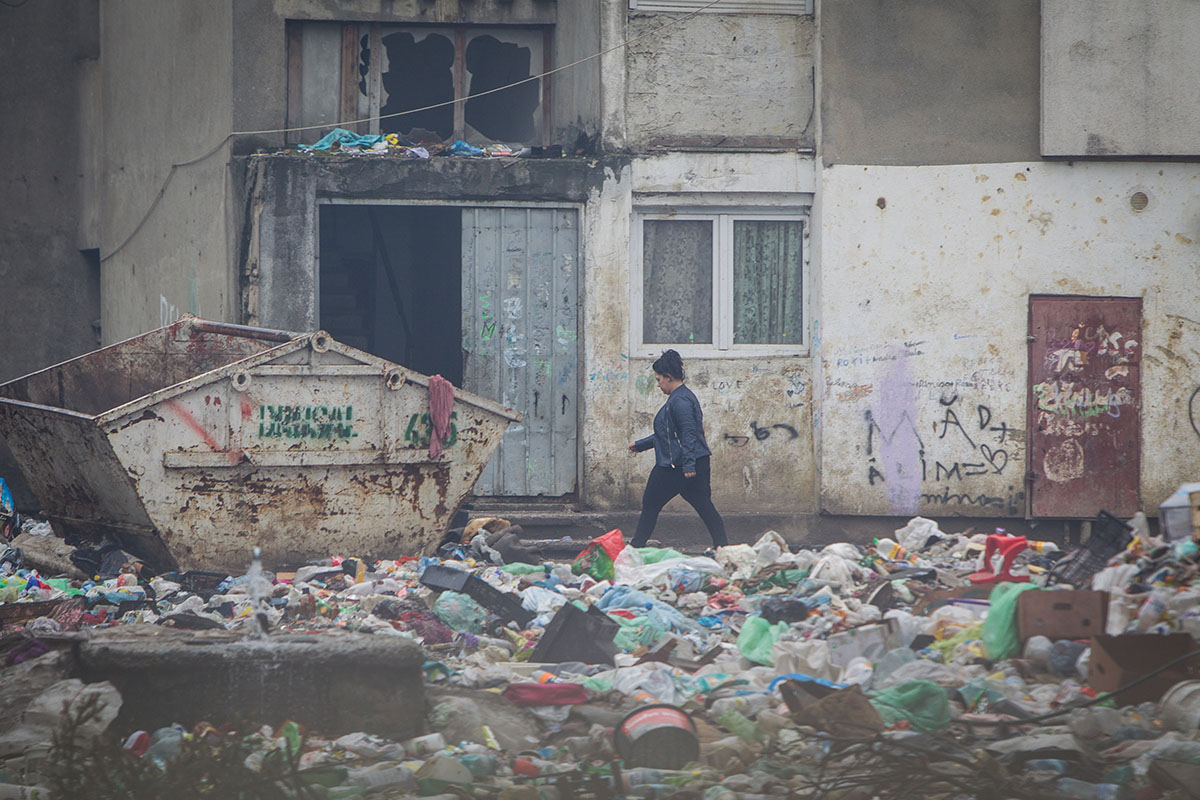
200 thousand lei (2.8 million rubles) - the plank proposed by the "law of thieves", below which a bribe is not considered a bribe to the official - a considerable amount for most Romanians. The contrast between the luxury of the central streets of large Romanian cities is equally striking and, as the protesters say, “real Romania”, where the poor, where people are crowded in the same block houses, where they were desperate to find work. “This real Romania and rebelled against the fact that the country was mired in corruption, that budget money does not go to worthy salaries to workers and benefits to those in need, but to the pockets of both bank accounts of the right and left -wing politicians,” the student argues. According to him, people are primarily fighting for their own dignity. “We have already won one battle (against the law on the weakening of anti -corruption legislation. - NT) and now we want to win the war - we need a change of political elite,” Doru mints.
“The struggle is primarily for control of resources. Literally a month of staying in the power of the Social Democrats, so that many observers could understand: it is unlikely that it would be possible to live with the right president and left-wing government ”
“For Romania, the topic of the fight against corruption is one of the key in her relationship with Brussels,” explains the journalist Dan Olar. -In recent years, we have achieved considerable successes on this path, and the head of the European Commission Jean-Claude Junker has already raised the question of the accession of our country to the Schengen space. "The Law of Thieves" is a knife in the back of our civil society. " The interlocutor NT explains that, contrary to the common ideas, the Romanian Social Democrats are not Eurosceptics, as they are sometimes called in a foreign press: “They are considered left-handed, although their ideological base is blurred. They crossed the elections mainly due to a low turnout-only 38%. But, having received a portion of criticism from Brussels for the draft scandalous law, they stood in a protective rack - they say, there is an intervention in our internal affairs. ” In general, Grindyan and his associates remind Dan Olar Hungarian Prime Minister Orban: "He is the right one, these (Romanian social democrats.-NT)-left, but populism erases all the boundaries."
Once, at the end of 1989, the Romanians were already rebelled. Then the power collapsed, which was much stronger than the current government. Those events today call the revolution. What is happening in Romania now has not yet received its own name. New "Color Revolution", "Romanian Spring"? But in Romania it is now cold, speaking people on Victory Square are enveloped in pair clubs. Participants in this “spring” freeze, especially when the police launch fire hydrants. “Maybe you should start calling a spade a spade? This is winter, not spring, - an elderly man in the square in front of the Palace of Parliament shrugs. “And it is not yet known when and how it will end.”