
Translated material
The new president was elected in Germany
For the coming 5 years, they became a prominent social democrat and ex-head of the Freez-Walter Steinmeyer Foreign Ministry
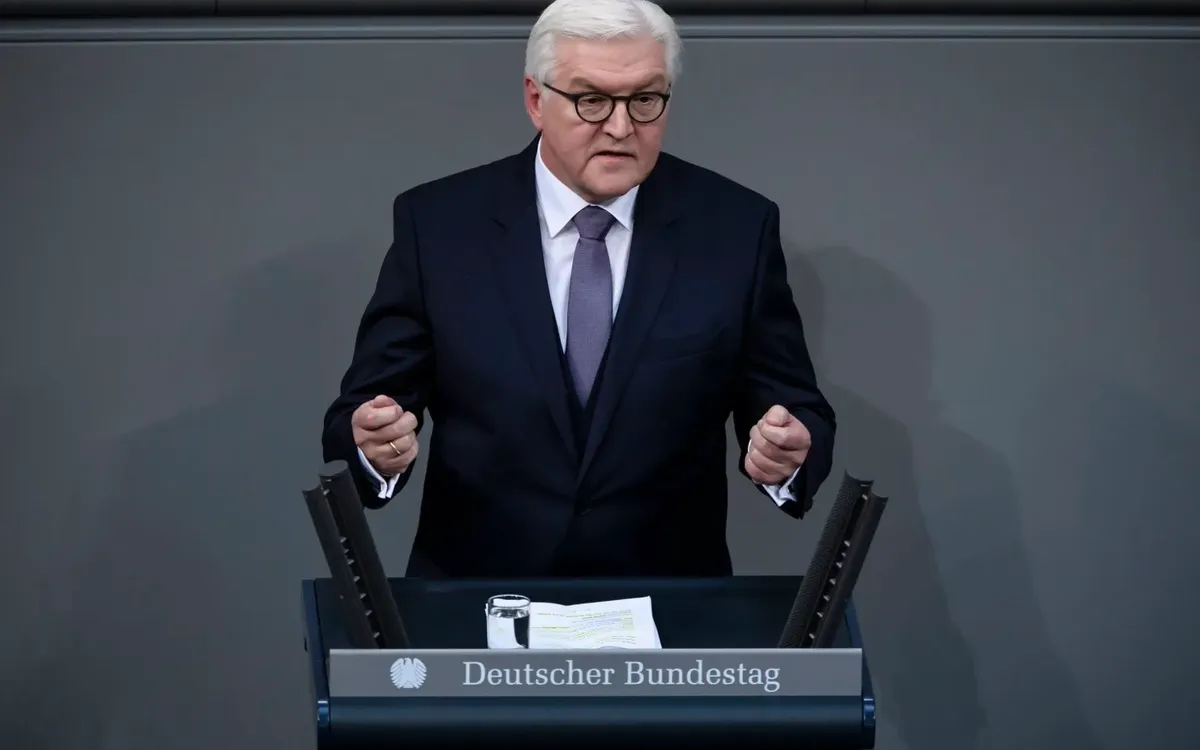
Another step in the career of an experienced diplomat and a sophisticated politician does not promise to be easy. The European Union, like the entire system of pan -European values, is experiencing serious tests for strength, the US policy under Trump was completely unpredictable, in Germany itself the hot stage of the election battles began.
President Steinmeier called the Germans to courage
The elections of the head of the German state are held without a preliminary election campaign. Any citizen of Germany over 40, who has the right to be elected to the lower house of parliament, may apply for a presidential post. However, the candidate who is nominated by the ruling party coalition is considered the passage.
The election procedure itself proceeds as follows. About a month before the expiration of the term of office of the current president, the Federal Assembly is convened - the entire composition of the Bundestag deputies and the number of representatives of land landtags, public organizations and well -known public personalities. During the direct and secret vote, the electors determine who will lead the country.
And although this time Steinmeier’s victory, as a consolidated candidate from the coalition of the CDU/CSS and SDPG, was predetermined in advance, representatives of the Left Party, the Alternative for Germany, one self-nominee and even a 79-year-old papa-pension of one of the leaders of the Pirate Party tried to compete with him. They had no chance, but formally one of the fundamental principles of democracy was formally observed - the alternative of the elections.
The President of Germany, performing purely representative functions, is, nevertheless, an important political figure, the main task of which is to be the face of the nation, and, observing party neutrality, represent the interests of all Germans. This is especially true now, when German society is chopped by a migration crisis, and against the backdrop of the fall in the authority of traditional parties, the influence of Euro -digitics and right -winged populists is growing.
“Who are we? Where are we going? Will children of the current generation of Germans have the same chances tomorrow as today? ” - In such issues, the outgoing President Joachim Gauk described the current situation in Germany, calling it as a whole by the “phase of internal anxiety”. Now the answers to them will have to look for the new inhabitant of the Presidential Palace Bellya in Berlin.
In the first speech, after the election, Steinmeier, demonstrating a complete understanding of the challenges of time, formulated the main principle of his presidency: to consistently defend the basic foundations of democracy, be tolerant of opponents and have the courage to hear alternative points of view. To the same, he called for compatriots.
The election struggle of the main political parties gaining momentum indicates that the Germans will need a serious mobilization of the qualities that the former Foreign Minister, and now the President of Germany, spoke.
The CDU candidate from the SDPG was called a follower of Trump
Essentially, as German observers emphasize, the joint position of partners on the ruling black-red coalition during the voting in the presidential election was their last joint political action. Ahead is a pre -election competitive confrontation, the experience of the first weeks of which shows that politicians will not be easy to preserve the traditionally high level of German political culture.
The nomination of the candidacy of the ex-chairman of the European Parliament Martin Schulz as a contender for the post of chancellor produced the effect of a suddenly exploding bomb. In a matter of days, the SDPG rating, which did not exceed 20% so much, took off to 31 percent, closely approaching 34% of Christian democrats.
And if immediately after Schulz nomination, his chances of becoming a chancellor, according to surveys, reached equal positions with the Chairman of the CDU Angel Merkel, now the ratio of 50 to 34 not in favor of the “folk mother”.
In the ranks of the CDS, the unexpected surprise of the Social Democrats was initially met with skepticism, they say that a frisky start does not mean a victory at the finish line. But soon the sarcastic skepticism gave way to anxious concern. Increasingly, from the lips of leading functionaries of Christian democrats and in publications, acute criticism of the Social-Democratic candidate for chancellors were sounded in the publications oriented to the conservative center of the press.
The first attacked was the classic election slogan of the SDPG on social justice. Shultsu, who is strictly criticized by the millionth bonus managers of the concerns and the “golden parachutes” of high-ranking officials, recalled that it was far from an ordinary member of the party Kristina Hokhmann-Denhard for a little more than a year of work in the board of Volkswagen received a reward of 12 million euros.
And the longtime associate Merkel and the Minister of Finance Wolfgang Shoible directly accused Schulz of populism. When the candidate of SDPG is convinced of an influential politician, allows his supporters to shout “We will make Europe Great!”, He copies the methods of the Donald Trump election campaign. Moreover, the attacks of Schulz on the establishment create the appearance that he himself seemed only to come out of the forest, and was not the head of the European Parliament.
For the sake of the desire to become a chancellor, he believes Shoible, it is impossible to be indefinitely represented so that in Germany everything is bad, when in fact the country's stable economic situation and Germans that have not been.
But it seems that it was only artillery preparation before a real offensive. In recent days, the scandal is gaining momentum around the possible financial uncleanness of Schulz as chairman of the European Parliament.
Mr. Europe did not consider money in a strange pocket
Schulz, bearing the honorary nickname "Mr. Europe", according to the German press, was too freely disposed of parliamentary money.
In 2012, according to the patronage of the chairman of the European Parliament, they hired as a press attachment of a certain Marcus Engels. However, the office of the new parliamentary employee was located not in Brussels, but in Berlin. At the same time, his permanent stay in the German capital was made out not without the knowledge of Schulz as a business trip, which, in addition to a salary of 5 thousand euros per month, annually brought Engels Bonus 16 thousand euros.
At present, by the way, Marcus Engels is headed by the election headquarters of the Social Democratic Chancellor Chancellor.
Also, the regulatory bodies of the European Parliament became interested in the flights of the ex-chairman at private business jets, which had nothing to do with parliamentary affairs. For example, on the route of Brussels-Berlin to party events of the SDPG.
Schultz, the head of the European Parliament Committee on Budget Control Inge Gressle, changed the parliamentary rules for financing as often as no former chairman to his sake. His generosity did not know the boundaries when it was about the support of the party associates.
On the eve of the election of Steinmeier, the Berlin organization of the SDPG welcomed the event with a Twitter message: finally, the owner of the presidential residence will become a social democrat. Such an emphasis on the party affiliation of the future head of state caused outrage of various political forces - the president of Germany, regardless of its past, should be higher than the interests of the parties.
The message was erased almost immediately, but there was a hint that in the ranks of the Social Democrats there are intentions to use the presidential authority of Steinmeier in the election struggle.