
Translated material
Dialogue on Broadway
Alexander Genis: On the air - “Dialogue on Broadway”, which we and the musicologist and cultural historian Solomon Volkov are leading to the Broadway studio Radio Liberty.
Solomon, what is they talking about Broadway?
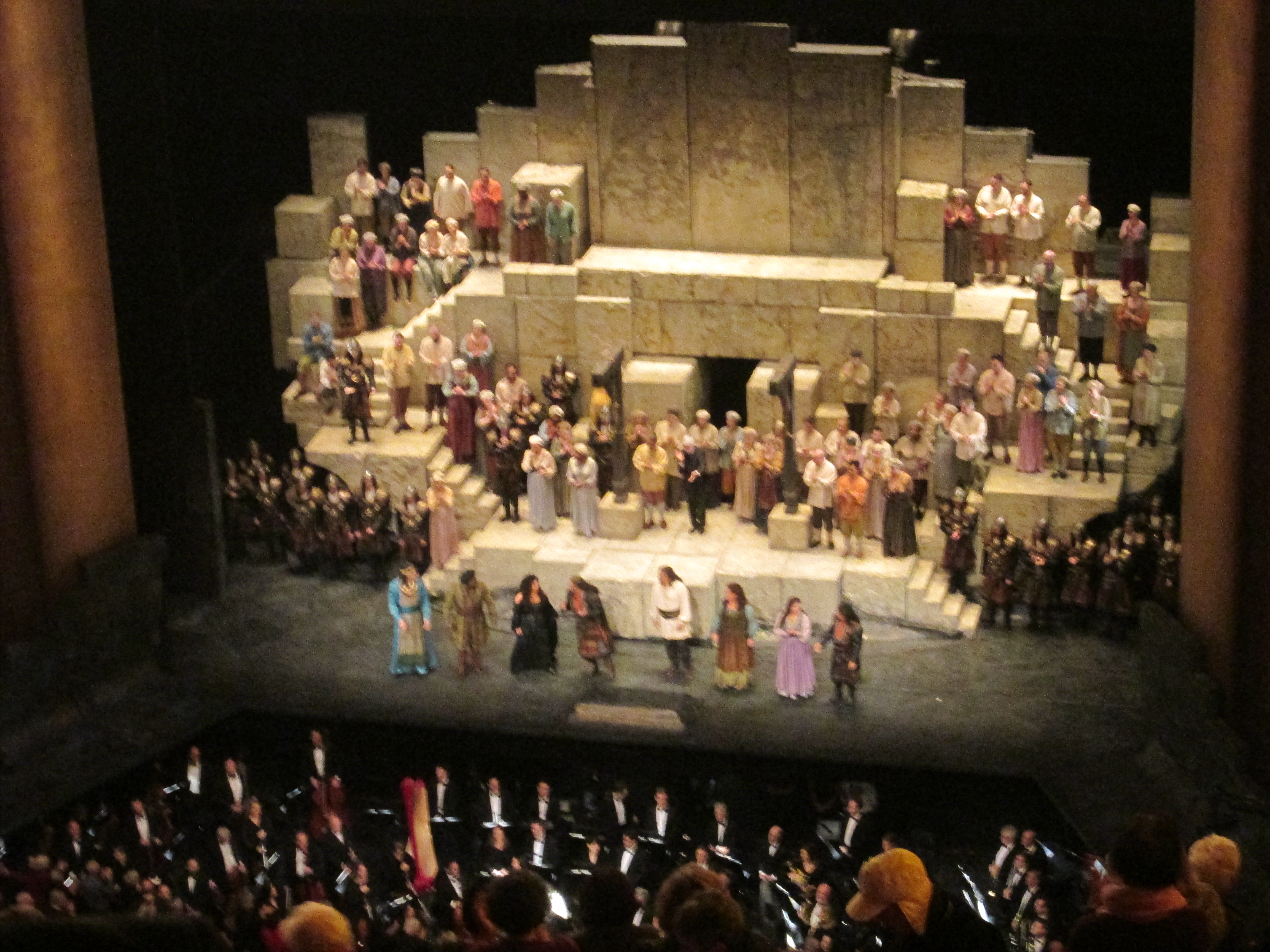
Solomon Volkov: on Broadway, they discuss the production of Verdi’s opera “Nabukko”, in which in the title role, in the party the Nebuchadnezzar, aka Nabukko, was performed by Placido Domingo himself.
Alexander Genis: This performance will go down in history, because the two old people, frankly, were the main on stage and in the orchestra pit. This is Livine, who conducted Nabukko, and - Placido Domingo. Both far over 70, both are seriously ill, Livine - Parkinson and a lot of other diseases, Placido Domingo - cancer. All this is very dramatic. And when you look at the stage, you are stomping that you have become a witness to history. I was lucky, I was at this performance, and the same one that was transmitted on the radio. This is always important, because the performance that is transmitted by radio hear hundreds of thousands.
Solomon Volkov: And he remains in history as a record.
Alexander Genis: Of course. I admit that I watched this performance with tears in my eyes. The heroes were magnificent - and Livine, which can no longer stand, four people are introduced to the stage on a special chair, and Placido Domingo, who sang delightfully. How can an opera singer be such a long -liver - it is impossible to imagine. But I really liked the performance itself. I am a lover of a magnificent opera, this was exactly what was this opera, which was installed for the first time in the metro in 2001.
Solomon Volkov: in the production of Elijah Moshinski.
Alexander Genis: Yes, this is the Australian director, of course, of Russian-Jewish origin.
Solomon Volkov: I must say he likes me no less than Dzeffirelli.
Alexander Genis: In my opinion, this is the same school. Extremely magnificent, baroque performances, these are performances of a large opera, a grand opera. It is, in my opinion, the opera should be, but the “stingy theater”, he is not for this, he is for Beckett.
Solomon Volkov: The stingy theater was actually invented in order to easier to transport the scenery. Now putting a large opera is consistent. This is done in cooperation, two or three theater, sometimes more. To transport these scenery, so as not to bother with them, they are made minimalist. What makes a wretched impression.
Alexander Genis: Of course, the Metro Theater is the richest in the world, he can and should allow himself to put just such a performance.
Solomon Volkov: But not always does it.
Alexander Genis: Unfortunately. Also because criticism scolds for splendor. I looked that Tommazini, our main musical critic, wrote in 2001 about “Nabukko”: too traditional.
Solomon Volkov: Too outdated.
Alexander Genis: Well, how is it, he writes, they put a wall on the stage, the actors need to crawl along it. In short, he did not like that there were only a lot. And I liked it. Choir, a hundred people sings - this is already amazing.
Solomon Volkov: This opera is specially choral, which, incidentally, is very rare for the Western opera, it is rather inherent in the Russian opera.
Alexander Genis: But this opera is unusual in all respects. It was with her that the glory of Verdi began. He was 28 years old, he was in full despair, his wife died, the children died, and the previous two operas failed. He was ready to leave the composer forever. And it was the success of Nabukko that led to the fact that we know Verdi today.
Solomon Volkov: There is a wonderful story with the composition of Verdi of this opera. He was very persuaded by the impressario of the theater of the La Scala to write this opera, and Verdi denied everything. He dragged him a libretto, from whom another composer refused, saying that too many people were involved there, inconvenient for the stage, would not work. This, of course, also did not make a positive impression on Verdi, he also began to abandon this opera. And he insisted on his own. Verdi took the libretto into his hands, it slipped out of his hands, he bent down to raise him, and opened on the very page where the text of the famous choir was later remarkable.
Alexander Genis: It is called the “Jews Choir”.
Solomon Volkov: “Fly, golden -winged thought” - this is how the first line in the Russian translation sounds. Verdi began to read this particular excerpt, he carried him so much that he decided in place that he would try. That is, a pure accident. Can you imagine, would he have a libretto?
Alexander Genis: A little later, he said: I read the libretto three times overnight and knew all the opera by heart. After all, the opera is very unusual in its content, it is entirely biblical, but, except for the hero of Nabukko, he is a Nebuchadrician, everything else was invented.
Solomon Volkov: In our time, they taught "Donor in the ear."
Alexander Genis: Yes, there was such a joke. There are very strange parties. For example, the best party is Abigail, a very difficult part of Soprano, it was called a “killer of voice”. In this production, Abigail sings the Ukrainian singer Lyudmila Monastyskaya simply wonderful. After Placido Domingo, she was awarded the largest applause. This opera is very curious, because it is folk, revolutionary, this opera, which, as the “Marseille” - France, united Italy. And when Verdi was buried, two thousand people sang this famous Jews choir.
Solomon Volkov: You have now touched on my favorite topic - this is the topic with which I live as a cultural historian: the interaction of culture and politics. In this sense, “Nabukko” is a very curious example. I am not sure that Verdi, when I composed this opera, I thought about the revolution or the fate of Italy. He was carried away by picturesque paintings, the idea of making the opera on a biblical plot, but I think the last thing he had in his thoughts is that the opera will become the banner of the Italian Rizorjimento.
Alexander Genis: And the choir of Jews will become the second anthem of Italy. Many believe that it must be done first.
I do not agree with you, no matter what Verdi himself thought, but the public accepted this opera just like that.
Solomon Volkov: This is another aspect of the whole matter - how the audience interprets the essay.
Alexander Genis: When the prime minister was delivered in Milan, in the La Scale Theater, this opera was held, it was taken as a call to fight the Austrians, with the Habsburgs. It was 1842.
Solomon Volkov: And Verdi no longer began to peel off - this is a completely different matter.
Alexander Genis: In general, this opera entered the revolutionary historical context. But this happens constantly with literary and artistic works.
It is interesting that Verdi first appeared in this opera, I would say, Shakespearean character, not in vain he loved to put opera on Shakespeare. The figure of Nabukko resembles King Lear. This is a person who went from the very top to the bottom itself, to madness, reached the bottom, but went upstairs. Unlike King Lear, everything ends well that in the opera is a rare case. And then all the villains who fought with free Jews went into Judaism, as a result, everything fell into place: Israel with enthusiasm from the hands of Nabukko accepted freedom.
Solomon Volkov: Imagine, you are in the hall and you are shown opera - Judea, Assyrians. Still, a flight of fantasy is required to put this. The normal Italian bourgeois, who came to La Scala, needs a certain flight of fantasy to begin to associate themselves with these oppressed Jews and decide that this applies to them, to Italians who are fighting foreign conquerors.
Alexander Genis: I do not think that this needs such a flight of fantasy, because all the art is allegorical, and Shakespeare was put that. In the 19th century, the language of art was often the language of politics. Moreover, he remained like that. It is curious that the author of the program for this opera compares Verdi’s “Nabukko” with the operas John Adams “Nixon in China” and “Death of Clungkoffer”, saying that these are the same political operas.
Solomon Volkov: At the same time, he forgets about Mussorgsky - this is who was the author of real political operas.
Alexander Genis: Absolutely, I said that in the 19th century the language of politics and the language of music was very closely connected with each other. But even more interesting is a fresh review of New York Times for this production of Nabukko, in which the opera is associated with the latest political events. The critic says: “The operates show that his people are captured by wild forces, who are not able to understand the whole height of the religious sense of Jews, the whole depth of their soul, because the invaders are barbarians. That is how the American intelligentsia feels like Trump today.” Without Trump, as we see, nothing is complete now.
Solomon, what about the fate of this opera in Russia?
Solomon Volkov: extremely unsuccessful. She was put in 1851 at the Mariinsky Theater, and she did not at all affect the Russian audience. The Russian opera audience was traditional and extremely conservative. At first they did not accept Rossini, he seemed too loud and non -nemellar. Then, when Verdi came to replace Rossini, the same claims stood up to sound to Verdi. Like, Rossini is wonderful, and here we have a roar, just horror. Bulgarin was especially indignant. “Nabukko”, in particular, was completely not appreciated, it disappeared from the repertoire for many years. Moreover, in the Soviet years, the opera on the biblical plot, and even which treats such a great sympathy for the Jews, could not be put.
As a result, after 1851, the first production in Russia was the production of 2001, exactly 150 years later, in the Bolshoi Theater. They also tried to interpret it in a modern political way. One such extremely sensational production was the production in the new opera in 2005, Andreis Zhagars, the Latvian director is very famous, who puts the operas with great success around the world, transferred the action in the 30s of the twentieth century, and the action takes place in the subway. We are talking about Jews that the Nazis pursues. The performance shows the Jews who have fallen between the two, naked - Nazi and Soviet. In this way, this opera was modernized and sounded quite relevant.
Alexander Genis: And we will finish our conversation with the famous choir of Jews, who sounded completely brilliant in this production. The fact is that there was a hundred people on the stage, each played his role, each director found a special pose. In this variety, voices in one impulse merged. It made such a strong impression that the hall struck with appliances, and the number was repeated on the BIS right during the performance. I saw this for the first time.
Let's listen to how this choir sounds on the stage of the metro.
(Music)
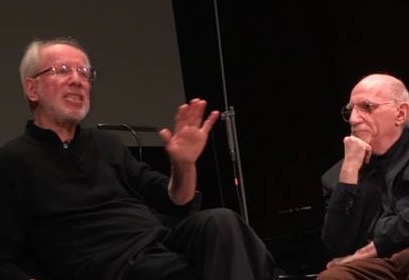
Alexander Genis: Solomon, marks 70 years old outstanding violinist, friend and laureate of our Liberty Award to Gidona Kreerra.
Solomon Volkov: Yes, he is a laureate of many awards.
Alexander Genis: But including ours, which is especially nice.
Solomon Volkov: Cremer - 70, it is actually hard to believe. Because it is such a dynamic figure that somehow such a solid age does not fit with it. On the other hand, this sets up in an optimistic way: it means that after 70 years, life does not end far, and thank God.
Alexander Genis: Solomon, celebrations about the anniversary of Kremer are held in different cities and at different times. In particular, in New York, in the hall - the anniversary celebrates a concert with your participation.
Solomon Volkov: “Y 'is the famous center of cultural life in New York. The audience that is interested in the actual art comes there. There are concerts, there are performances there, people with lectures, reports and so on are performing there.
Alexander Genis: The movie is shown, for example, I watched there, the premiere of Tsuckerman's film “Perestroika”.
Solomon Volkov: And they have such a tradition: before some concerts, if the leadership considers it necessary, to precede the meeting of the musician with the public, conversation.
Alexander Genis: And you were instructed to do this for obvious reasons: you know Kremer, probably for more than half a century.
Solomon Volkov: And secondly, this is my specialty-dialogues with famous people. I now thought that of those remarkable personalities that I was lucky to get to know my life, perhaps, I knew the longtime of all with Cremer. I probably was 15 years old when I printed a review of him. This was not a review dedicated to the creeper itself, it was not yet the creamy that became later, but I conjected in one of the Latvian publications a concert of school students and there several lines were dedicated to the guidon. I am sure that this was the first review of Gidon’s performance as a violinist.
Alexander Genis: Solomon, before we talk about Kremer's music, I want to ask you a biographical question. To the anniversary, New York Times printed a huge - lane - an article dedicated to the anniversary of Gidon Kremer, not only his work, but also his biography. There I found one point that you might clarify because the author could not cope with him. The point is that Gidon Kremer began brilliantly and everything went well with him, but in the 1970s they stopped releasing him to the west, as Kremer told our correspondent, "he himself still does not know why." This is true? What happened then?
Solomon Volkov: In this sense, Gidon is right. He may be guessed what happened there, but does not want to voice it, because it would be connected with one unpleasant thing: it would be necessary to call a person who was tapping the corresponding competent authorities on Kremer, and then it was very often used and used as a weapon against competitors. It is necessary that the person who concocts this denunciation is a confidant to listen to his voice - this time. And two, so that such a denunciation lay down on the table to a person who could have some personal claims, in this case to the guidon.
Recently, such studies began to be published in Russia rather thick, based on archival materials, from which it is clear to what extent the genre of such a denunciation was common. I’m not talking about denunciations in Stalin's times now, but denunciations in later times, sometimes even anonymous, which does not climb into any gates. For example, I recently read an anonymous denunciation of the choreographer Yuri Grigorovich, in connection with his staging Spartak and related to this circumstances. The most incredible dogs are hung on him: there is anti -Soviet, there are accusations of homosexuality, which at that moment was probably a very strong argument. These anonymers proved that Grigorovich could not go abroad. Grigorovich was still released, because he was Grigorovich, but in some cases it worked. So, I think, Gidon guesses who spoiled his life, but does not want to voice it.
Alexander Genis: One way or another, Gidon Kremer has become an international figure: he lives everywhere. As they say with the article, Kremer would like to spend more time at home, but does not know where the house is: he lives in Vilnius, and in New York, and in Europe.
Solomon Volkov: Besides, daughter is one in Paris, the other in New York.
Alexander Genis: Therefore, he said with Paphos: my house is music.
Solomon Volkov: He sometimes calls himself a “flying Dutchman”, and this, in my opinion, is a good definition, he is really such. Kremer gives one hundred concerts a year - this figure would be impressive even for a younger person. And then on it, I do not want to say that it hangs, because it is such a pleasant burden, but it leads the famous team called Kreterat Baltika, who will turn 20 this year. It was founded by Gidon as a gift to himself for the 50th anniversary, and now in the year of his 70th anniversary the ensemble is 20 years old. Also a huge term for the existence of a permanent team. This team is quite special, it consists of very young performers, and is constantly updated, collected from the musicians of the three Baltic countries, mainly Estonia, Latvia and Lithuania. It is a Baltic musical art. At the same time, Gidon sometimes complains, in the interview with the New York Times, which you mentioned, also slipped such a note that in Latvia, where Gidon himself came from, where we studied at a music school, do not appreciate the fact that his orchestra represents Latvian musical art abroad.
Alexander Genis: Honestly, these words were struck, because I was relatively recently in Riga and saw how they relate to the guidon creamer there. There is now in Riga, I would say, the cult of Russian culture. For example, Mikhail Baryshnikov became his man in Riga, he does not just return to Riga, not just gives ideas there, but he is considered an apostle of Riga culture there. In many ways, this applies to the guidon of Cremer.
Solomon Volkov: I’ll still draw a difference between the audience that adores Kremra, and in the end, in the end, we do not engage in this, in this world, we don’t cook in this boiler, unknown to us by bureaucrats from culture, relatively speaking, that is, people who are engaged in some grants, alleviations of entry circumstances.
Alexander Genis: One way or another, Kremer constantly performs in Riga, they know him there, love him, and he loves Riga, that of course I am terribly pleased, because he is definitely a citizen of the world, but at the same time he always remembers his roots. Solomon, like a violinist about a violinist, what can you say about Gidona Krever?
Соломон Волков: Кремер может быть самая своеобразная индивидуальность в области скрипичной игры на сегодняшний день на мировой сцене.
Alexander Genis: What do you mean?
Соломон Волков: Я имею в виду несколько разных обстоятельств. Во-первых, сам факт развития Кремера как скрипача. Он начинал, как все, с того, что осваивал традиционный скрипичный репертуар. Кстати, в этом году в связи с юбилеем одна из самых уважаемых фирм звукозаписи «Дойче граммофон» выпустила не больше, не меньше, как подборку из 21 компакт-диска Гидона с записями концертов скрипичных. Представляете — 21 диск.
Александр Генис: Весь репертуар.
Solomon Volkov: Yes. Но Гидон достаточно рано не то, что ушел от этого репертуара, но он стал его очень интересно возобновлять. Взрыв мировой славы Гидона пришелся на исполнение им скрипичного концерта Бетховена, что само по себе, естественно, не новинка, но Гидон его сыграл с каденциями Альфреда Шнитке, а это произвело сенсацию. Сразу же, как полагается, люди разделились на тех, кому это очень понравилось, в частности, я считаю, что это потрясающие каденции, и тех, которые считали, что это кощунство что-то нарушать в классическом произведении. При том, что это давняя традиция: музыкант не только может импровизировать на темы данного сочинения, для того каденции и существуют, он даже обязан это делать. Другое дело, что не все это могут и решаются.
Александр Генис: Классики каденции ведь не писали, Моцарт, скажем, их не писал каденции, это во время концертов должны были исполнители делать.
Соломон Волков: Но как видите, Гидон уже с этого и начинал, а затем, чем дальше, тем больше его увлекала идея пропаганды музыки его современников, людей, которые может быть не сразу начинали писать для Гидона, но по мере того, как Гидон начинал пропагандировать эти сочинения. Есть такое замечательное английское слово «чемпион», когда говорят по-английски, что человек чемпион того-то — это означает, что он пропагандист. По-русски слово «пропагандист» или «популяризатор» звучит некрасиво, а слово «чемпиона» когда ты произносишь, то в нем есть какой-то спортивный оттенок. Но мы будем говорить «чемпион» в данном случае. Кремер стал чемпионом таких замечательных композиторов, которые во многом благодаря усилиям Гидона как интерпретатора приобрели статус классиков современности. Это Арво Пярт, эстонский композитор, это грузинский композитор Гия Канчелия, это украинский композитор Валентин Сильвестров, это София Губайдулина, российский композитор татарского происхождения.
Александр Генис: Вы назвали весь цвет современной музыки.
Соломон Волков: Сейчас задним числом легко сказать: Арво Пярт — великий композитор, или Гия Канчелия — это великий композитор. Гидон это понимал раньше других и брал на свои плечи пропаганду этих людей. Должен вам сказать, я видел, как это происходит, потому что Гидон мне рассказывал не раз и не два. Ему говорили: нет, мы хотим от вас концерт Чайковского или концерт Брамса, что-то в этом роде. Он говорил: нет, ни Брамса, ни Чайковского я играть не буду, а вот не хотите ли послушать Пярта или Канчелия. Ему приходилось преодолевать колоссальное сопротивление в этом смысле, потому что концерт Чайковского в программе — это обеспеченная публика, а концерт нового композитора, той же самой Губайдулиной, предположим, это уже совершенно другая вещь.
На эту тему есть смешная история у Довлатова, он ее придумал. Довлатов выпустил альбом вместе с Марианной Волковой, моей женой, в том числе там есть истории и о музыкантах, о них он ничего не знал. Сергей приходил к нам и говорил: расскажите что-нибудь. Я ему рассказал, что у Гидона были такие проблемы. А Довлатов придумал такую историю, которая так и закрепилась: Гидон Кремер играет новую музыку и совершенно не беспокоится о том, будет в зале публика или нет. Он якобы сказал: «В пустом зале резонанс лучше».
Александр Генис: Кроме всего прочего, про пустой зал - неправда.
Соломон Волков: Гидон ничего этого не говорил, но история стала популярной.
Александр Генис: Соломон, вернемся к концерту и его программе.
Соломон Волков: В программе композитор, которого Гидон в последнее время усиленно пропагандирует — это Моисей Вайнберг, который сейчас именуется, на Западе пошла такая мода, я заглянул в «Википедию», они сами колеблются, называть его Моисеем, как это принято, я его назвал Моисей Самуилович, когда с ним разговаривал, я был с ним знаком. Мы в Москве как-то один раз даже просидели в ресторане Союза композиторов весь обед, часа два, довольно оживленно разговаривали. Но сейчас они колеблются, может быть называть его Мечеславом, по-польски, поскольку он польского происхождения. Хотя сейчас выясняется, что в польских документах он именовался Мойша вообще.
Это композитор с очень драматической судьбой. Он родился в Варшаве в 1919 году, умер в Москве в 1996-м. В сентябре 1939 года, дата вам понятная, слушателям нашим, надеюсь, тоже — это начало Второй мировой войны, он бежал в СССР. Родители его и младшая сестра остались в Польше, погибли в концлагере. У самого Вайнберга жизнь в Советском Союзе сложилась нелегко. Сначала он женился на дочке Михоэлса — это было в 1943 году, как мы знаем, тогда Михоэлс был почти официальной фигурой, он ездил в Америку, представлял там Советский Союз, собирал деньги у американских евреев в помощь Советскому Союзу. Но потом, как мы знаем, Сталин его уничтожил. Можно себе представить чувства Вайнберга, которого самого в феврале 1953 года, когда началась печально известная антисемитская кампания, арестовали. За него вступился Шостакович, который к этому времени подружился с Вайнбергом. После смерти Сталина почти сразу, как я понимаю, Вайнберг был освобожден. Конечно, это была ужасная травма для человека. Он на меня производил впечатление человека запуганного.
Александр Генис: Легко понять, действительно.
Соломон Волков: У него была очень хорошая репутация в Советском Союзе, все знали, что это замечательный автор. Он написал невероятное количество музыки: 22 симфонии, 17 квартетов, 8 опер.
Александр Генис: И одну из них, как я слышал, сейчас ставят в Большом театре — это опера «Идиот».
Соломон Волков: И покажут вторую оперу тоже на сцене Большого театра - «Пассажирка», привезут спектакль из Екатеринбурга, как я понимаю. Но при этом он не выходил на самый первый план, при том, что, как я уже сказал, репутация была хорошей, ему давали заработать на жизнь тоже, он написал музыку к десяткам фильмов, среди них такие знаменитые как «Летят журавли» Калатозова или «Афоня» Данелия. Я уверен, что многие наши слушатели, которые эти фильмы знают, конечно же, и любят, не отдают себе отчета, что в них звучит музыка Вайнберга. Невероятное количество инструментальных концертов, сонат для самых различных инструментов и так далее.
Александр Генис: Гидон Кремер его полюбил и открыл заново.
Соломон Волков: Открыл для себя и хочет открыть его для других. Говорит, что сейчас это для него самое главное: исполнять произведения Вайнберга. Другие произведения в этой нью-йоркской программе тоже очень интересные. Это две серенады, как всегда у Гидона они очень интересно сопоставляется. Одна серенада Петра Ильича Чайковского, другая серенада Валентина Сильверстова. «Картинки с выставки» Мусоргского в аранжировке для струнного оркестра. Мы же покажем в качестве иллюстрации к юбилейному разговору произведение с любопытной историей.
Это - “Fratres”, что в переводе с латыни означает «Братья», произведение Арво Пярта, с которого и началась его слава современного классика. Это произведение существует в самых разнообразных аранжировках авторских. Гидон в нью-йоркском концерте играет аранжировку для струнного оркестра, этой записи у нас нет, но мы покажем редкую запись, с которого началась слава этого произведения, где Гидон его исполняет, а аккомпанирует ему Кит Джарретт, знаменитый американский джазовый музыкант.
С днем рождения, Гидон!
(Music)