
Translated material
European brisons of America
What is now expected in Europe and Russia from the new US administration
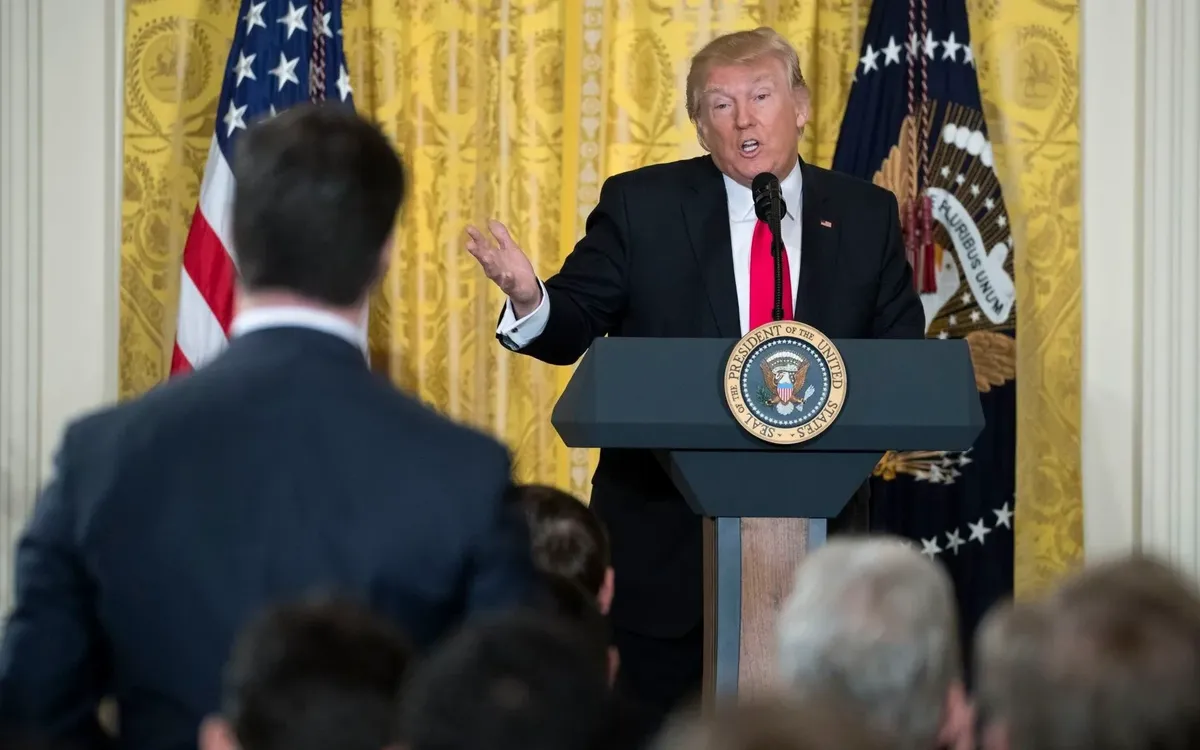
The first European brisons of the new US administration that began on Thursday sharply measured the fears of Europeans that America abandoned them, and also destroyed the rainbow hopes of Moscow to “their guys” in Washington, who replaced the “Obama-Chamo” and his team.
In Bonn on the Twenth of Foreign Ministers, Secretary of State Rex Tillerson said that the United States "can find spheres of practical cooperation with Russia, if in the interests of the American people."
After a meeting with his Russian counterpart Sergey Lavrov, who was rather cool than warm, he said that in cases of disagreement with Russia, the United States would protect the interests and values of its and its allies.
Lavrov commented on the results of the meeting with general diplomatic formulas, noting that the issue of sanctions (it seems that one of the key for Russia - A.M.) was not discussed.
In one vote with the Minister of Foreign Affairs of Great Britain Boris Johnson and France, Jean-Marc Ero, the head of the State Department, unequivocally tied the lifting of sanctions with Russia with the implementation of the Minsk agreements and the de-escalation of the conflict in eastern Ukraine. It sounded quite soft against the backdrop of the requirements of President Donald Trump to simply return Crimea to Ukraine.
On the same day, in the Brussels headquarters of NATO, NATO defense ministers completed a two-day meeting. Shocked uncertainty with the US military obligations in Europe, they finally got the opportunity to meet with the new pentagon chief.
James Mattis assured them that Washington would fulfill his obligations to the allies, but set the condition: they must increase their share of the Blok financing, which is now practically dependent on the USA.
“Adherence to article 5 (about the collective defense -“ one for all, and all for one ”) remains unshakable,” he said. - The message that I brought here - namely, so that everyone was carrying a fair share of burden, sacrifices to maintain the best defense in the world - was very well accepted. No one argued. There are no objections. There was just a conversation about how better and faster each country, given its special circumstances, can achieve this. ”
On the same day, the defense ministers decided to strengthen the NATO presence in the Black Sea. This is within the framework of the Atlantic determination plan, proposed in 2014 by President Obama after Crimea. There is an increase in military contingents, more frequent military exercises, collection of disorders, acceleration of rotation in the sea of fleets of NATO Non -Black Sea countries.
Today, Mattis, as well as the US Vice President, who arrives in Europe, has the opportunity to further develop a campaign to seduce frightened Europe. They will take part in the Munich Security Conference. There will be Sergey Lavrov.
Pence on Monday is also waiting in Brussels. He will meet with the leaders of the EU institutions to discuss the future of transatlantic relations.
Not only the United States tends to confirm loyalty to Europe. On Thursday, the Prime Minister of Canada Justin Trudeau was the guest of the plenary session of the European Parliament in Strasbourg.
With the manners of the gentleman, the young handsome man and with firm beliefs of the liberal, he flew in order to protect freedom of trade, to convince Europeans of the benefits of a trading agreement with Canada (CETA). He called him "the standard of agreements on the freedom of trade in the future."
On the eve of the European Parliament, two thirds of votes approved an agreement and authorized its entry into force on a temporary basis since April. But the document still has the process of ratification in national and regional parliaments of 28 countries of the Union.
Many in the EU are afraid of reducing European social and environmental standards for the sake of globalization and go to demonstrations of protest. Canadians will not have problems with ratification, although they consider their economically oriented economy. Trudeau took the opportunity to imagine himself a reliable and faithful EU partner on the North American continent against the backdrop of protectionism declared by Trump.