
Translated material
Senator Graham: Russia will receive by ass
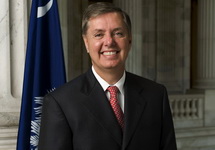
Senator-Republican from South Carolina Lindsay Graham, speaking at the Munich Security Conference, noted: "In 2017, Russia will receive a kick under the ass in the Congress." Senator’s words are conveyed by Radio Liberty.
Graham made his statement, telling about the bill proving sanctions against Moscow for interfering in the course of the American presidential campaign. When the passions around the past elections settle down, the senator said, the Congress "will take on other concerns, and the first item of the summons will be sanctions against Russia."
Graham added that he was counting on powerful support of the bill by both parties, so that the adopted law "lay on the table (US President Donald) Trump."
Trump noted Graham, should directly say: "Although the Russian intervention damaged the Democratic Party (and not the Republican, to which the president belongs. - Ed.), As a leader of the free world, I will take care that Russia will pay for interference in our elections." “He is obliged to say this,” the senator emphasized.
The bill, about which Graham was talking about, was prepared in early January , even before Trump entered the office. Its authors were senators from both parties, including Graham, John McCain, as well as the chairman of the Congress upper Chamber Committee on Foreign Policy, Democrat Ben Cardin. The document provides for the introduction of sanctions against anyone who supports cyber attacks against public and private infrastructures of the United States, and also takes part in the operations of Russian Ministry of Defense and intelligence. Also in the bill is a question of helping Europe in the conduct of counter -propaganda and promoting democracy.
The same document imposes sanctions against Russia for violations of human rights in Syria and in eastern Ukraine. Finally, senators propose to introduce restrictions on investment in Russian energy projects.
The day before, it became known that the FBI is investigating at least three cases of Russian cyber attacks on the US election system. As part of the first, it turns out who hacked the network of the National Committee of the Democratic Party. The task of the second is to establish persons who published the correspondence of the chief of the election headquarters Hillary Clinton, a candidate from the Democrats. During the third case, transactions of Russian citizens and firms associated with Trump's entourage are investigated.