
Translated material
Princess and Prophet
In the Mariinsky Theater, the most loud premiere of the season is Richard Strauss in the production of Marat Gatsalov
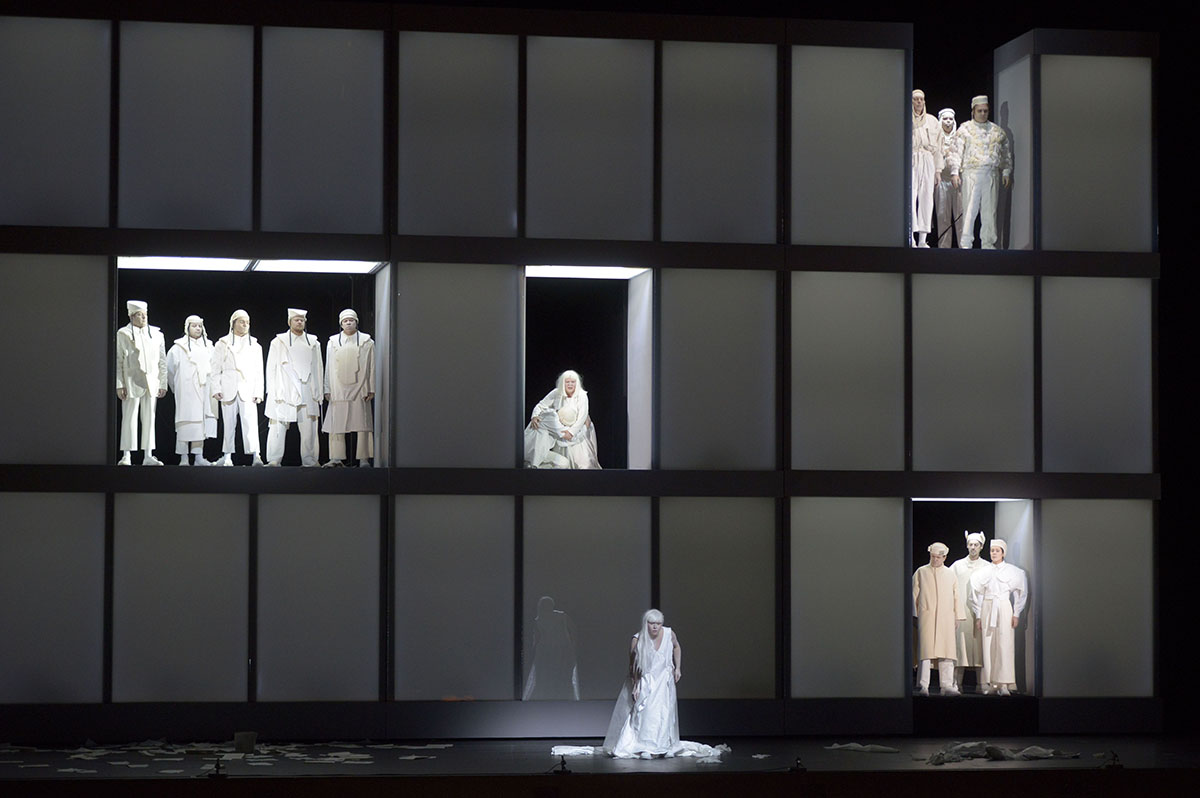
In the form of Richard Strauss opera in the form of Oskar Wilde’s play, with his first production in 1905, he was surrounded by a halo of scandal and shocking. The “Salome” is based on the gospel plot about the bends of the head of John the Baptist. Only the accents of the great dandy, Estete and the provocateur placed very specifically: in the center of the action, not John himself finds himself (so that the play appeared on the stage, the author had to change his name on Iokanaan), but the Salome, the stepdaughter of the king of Herod. The princess irresistibly attracts to the Prophet encouraged in prison, which in response only curses her. Then she recalls Herod a promise to fulfill any whim in exchange for a dance, as a fee for a performance, she requires the severed head of Iokanaan on a dish and, after an angry monologue, kisses dead lips that can no longer curse her.
On the British caricature of the 1910 Evening Standart, a dancer was depicted in a light cloak, dancing around the pie: “The censor forbade showing the head of John the Baptist on the stage, so Madame danced around the plum pudding”
The play was shocking - in England its production was banned for almost 40 years. In 1908, the Russian premiere was canceled: the general rehearsal of the performance by Nikolai Jewinov was ripped off by the extreme right -wing State Duma deputy Vladimir Purishkevich. Now he is remembered primarily as a killer of Rasputin, and in the eyes of his contemporaries, it was not a scandalist without artistry with Black Hundred views, like Vitaly Milonov. Without taking out the scenes of the dance of seven, Purishkevich jumped up and began to indignate - far, they say, look at this abomination, adding a few words about the Masonic conspiracy. However, in Germany the play was on several scenes. By the time Strauss saw Salome in Berlin, he had already read the play, and when he saw on the stage, he took up writing a musical drama (it was waiting for the same glory: say, the imperial censors banned Gustav Malera in the Vienna Court Opera). The composer did not order a special libretto, used Wilde's text: it turned out a very literary work where the text is no less important than music. Wilde literature itself is completely opera, Salome was a drama for singing, and Strauss found an ideal musical embodiment for her.
A little nervous
The ideal in this case does not mean the most melodic. On the contrary: this music is to match the play - scandalous, colorful, uncomfortable. Dissonances, chromatic harmony, arias, more similar to the long, emotional speech, nervous, too accentuated. Strauss added the missing elements to the Wilde play, and it turned into the absolute embodiment of the avant -garde. Gustav Mahler called her the greatest work of his era, criticism of the modernities compared Salome with Wagneric works-for example, Ernst Dech called the opera Strauss "the most satanic and artistic of all that happened on the German stage." Even then it was obvious: this is not Wagner and not Mahler, not romanticism and not a musical theater. Strauss spread the boundaries of drama and music, plot and narrative, words and melodies. The Salome was a kind of fake of the 20th century - she, as a cinematic trailer, showed how loud art would live in new times: they will meet him with shiking, the audience will fainted, and newspapers come up with dull headings.
On the British caricature of the 1910 Evening Standart, for example, a dancer in a light cloak was depicted, dancing around the pie: "The censor forbade the head of John the Baptist on the stage, so Madame danced around the plum pudding." In America, where the premiere was canceled under the pressure of religious organizations, newspapers proposed to hand over each of the seven bedspreads as an advertising platform to pull the production as a marketing campaign.
Strauss earned not only symbolic capital on Salome - the composer built a suburban villa in Garmish on the fee, where he lived most of his life. The Salome became a classic, but the plaque of shocking did not lose. This is a rare avant -garde that remains radical and constantly changing the content. The feminists will see their own manifesto in her, the feminine - their own. The racists will approve the image of the Arab Fanatic, the anti-fascists will find it bright and spiritualized. Believers will insult the image of Iokanaan. All and everyone - Jews tormenting the prophet. And a particularly biblical plot could have sounded in today's Russia with its sensitive believers.
The word of the shepherd
In recent years, the opera has somehow turned into Russia into the most important of the arts, an acute statement on the anger of the day-especially the opera for religious plots. The Wagnerovsky “Tannheiser”, staged at the Novosibirsk Opera and Ballet Theater in 2014, became the reason for the trial - director Timofei Kulyabin was accused of “insulting the feelings of believers”. When in 2010 in the St. Petersburg Mikhailovsky Theater the classic opera of Fromantal Galevi “Jew” was set, critics recalled that the established Russian name was “Jews”, and Jewish communities and Orthodox bonuses opposed the production of the United Front. So from Salome in Mariinsky, almost the only great premiere for the whole season, they were waiting for a lot. However, it turned out that one could not offend anyone. To make such a “salome” so that the Arabs are full, and the Jews are intact, and the feminists are satisfied, and the Orthodox activists nodded under the roller of the spirit.
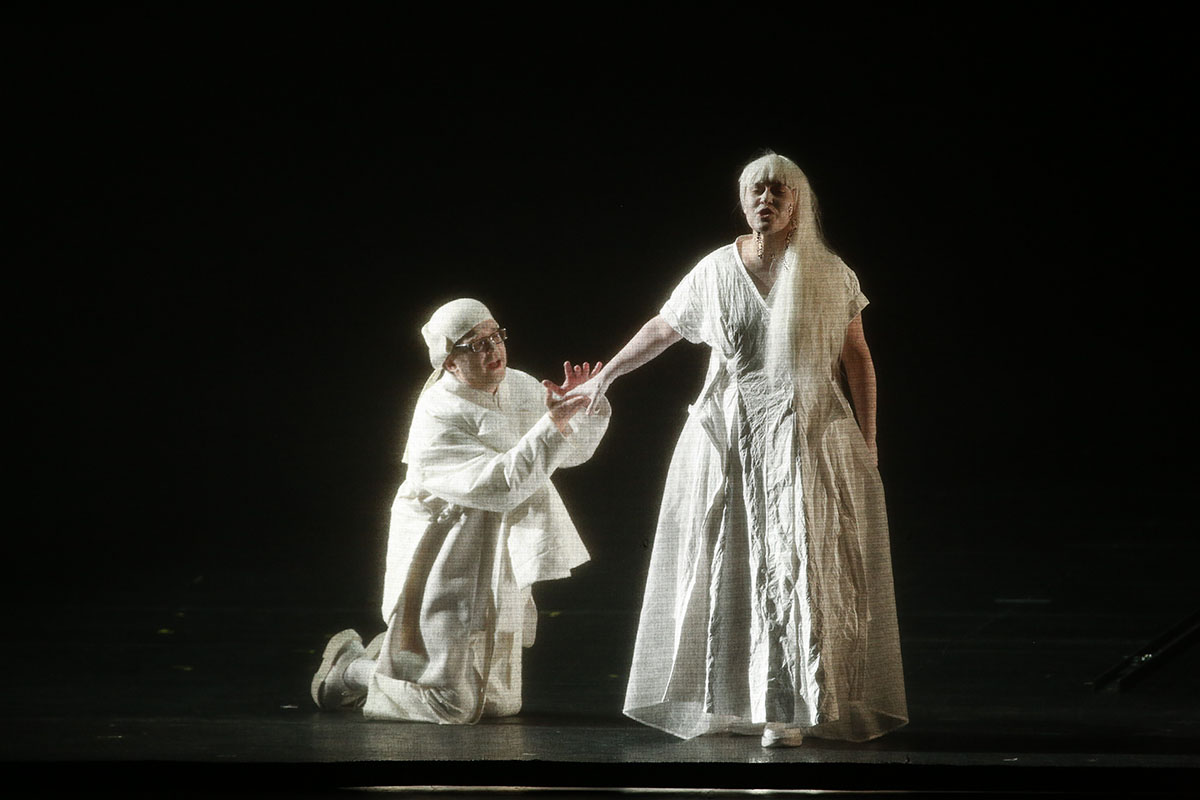
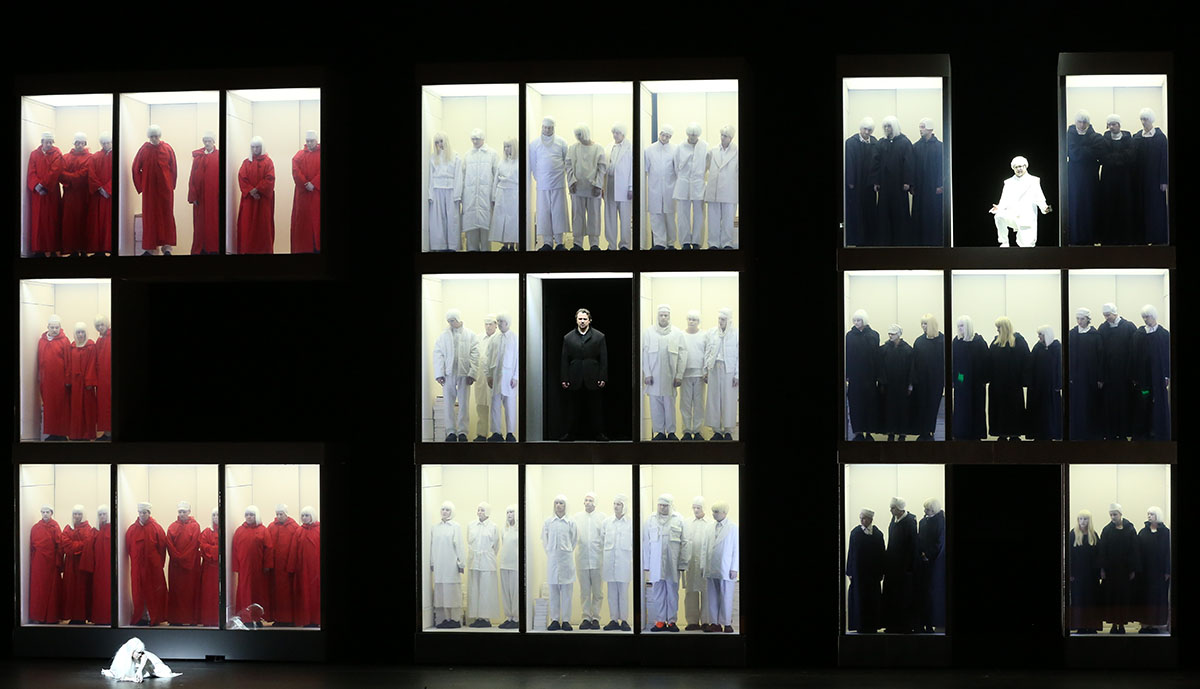
The artist Monica Portmale places the action in the harsh black and white box of the scene where there are no other colors. The choir, the whole in white, crowns on an advanced scene, behind them rises a black baritone: Iocanaan among the courtiers of Herod, his own among strangers. Of the moving light cubes, inside which the choir and mims languish, either the well or the palace of Herod is folded. For a violent, colorful, hysterical opera, Marat Gatsalov chose spectacular minimalism. Everything is clear and illustrative here: the black and white gamut is replaced by red when the head is chopped. The “Salome” of the dramatic director Gatsalov passes under the slogan “Back to Wilde”: this is to a greater extent a drama of words than sounds. Even the only spectacular element of the performance is the word “sleep”, which is folded from white boxes.
In the same spirit of radical minimalism, Gatsalov deprived his “Salome” of the two most famous scenes. Firstly, the seven dance has disappeared, the famous striptease. It is replaced by a video - the camera wanders through the body of a model, to which, in turn, formulas, types of Nazi parades, bombing, burning villages are projected: terrible paintings of the 20th century, on the threshold of which was written by his opera Strauss. As the director says in all the interviews, he set up “the story is not about the harlot, the holy prophet and the unhealthy passion, but about the clash of great ideas that change the world.” Accordingly, there is no chopped head of Iokanaan here and a kiss on the blue lips: Salome turns his passionate final monologue straight to the hall, something like the classic Gogolevsky: “What are you laughing? You laugh at you! " (an unexpected move for the most unkalous of the arts).
Running line
None of the scandalous layers laid down in the Mariinsky Salome, none of the Salome. The rod of the production is the words and ideas that the heroes postulate, the viewer will willy-nilly breaks away from the stage and carefully reads the running line. In Wilde’s work, a new meaning is revealed: it becomes like a play of absurdity or Facebook tape. No one hears anyone, everyone leads his own line. Salome craves kisses, white skin and red lips. Iokanan is being driven. The Herodias is atrocities. Herod is tormented. This is based on a journalistic pathos of the production: we live in an irreal world where ideas rule, we divide the world into black and white, and this always ends in blood.
In this way, put the Gatsalov any other opera - from the “magic flute” to the “children of Rosental” - would be an unexpected directorial decision. There would be pointing, updating, talking about uncomfortable. But in the case of Salome, an incident comes out: the material is much bolder than reading. Eroticism, anti -iclitality, political pathos of Gatsalov reduces his directing to social networks, a different tambourine - some about lust, some about religious ecstasy, some about the thirst for power.
In this way, put the Gatsalov any other opera - from the “magic flute” to the “children of Rosental” - would be an unexpected directorial decision. There would be pointing, updating, talking about uncomfortable. But in the case of Salome, the incident comes out: the material is much bolder than reading
A radical and relevant statement - and here there is definitely a swing on it - perhaps only in a radical and actual language. It is impossible to talk about the intimate intonations of the party train, about the living - using chancellery. A new conversation needs a New Maid. Such as the hysterical music of Strauss, the exaggerated drama and excess speech of Wilde. (It is clear why the main thing now speaks of actionism now: not because it has become the most important of the arts, it is just the youngest, flexible, its iconic system does not form. Whatever action it is - it will be incomprehensible, annoying, will make the viewer think about 100 years and after many interpretations did not even become easy for perception, and Wilde's play even acquired in its shock. Not only is she about lust, but is also written in an unbearably elaborate language. The Gatsalovsky performance, from which all sensuality has taken away in the spirit of time - what would happen, exist in 1905 Facebook. If instead of composing an opera, Strauss simply wrote the status of how hard we are all living and how to live together. It’s not to put “likes” under such a sin and forget - tomorrow they will write about it again. Radical statements - they are born much less often.