
Translated material
The continuity of simple things
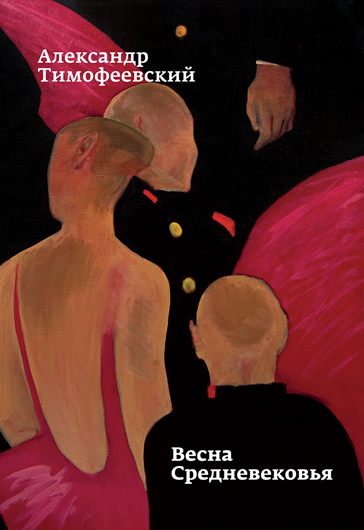
The magazine "Session" published the book of Alexander Timofeevsky, which included archival articles from Kommersant, Capital, Cinema Arts. The second volume is supposed - publications after 2003. Obviously, most readers will see these texts for the first time. It would seem that Google retains everything - but insufficient digitization of sources, lack of Facebook search and universal short memory are made by A.T. inaccessible even for those interested. In the collective metropolitan unconscious, Timofeevsky is not present today as a writer or critic, but rather as a mythological figure, the titanium of a short-lived Russian revival-he influenced everything, employed everyone, invented the term “new Russians”, defined the language of the “businessman”, almost solely created the dominant-political style of Russia of the line of the boundaries (which we are once again which we are once again lost); In a word - "We came up with Windows , we announced a default." It is probably worth noting that I did not work in the led by Timofeevsky editions, I slightly imagine how far the orbits of his influences stretch, all my secret knowledge about the author is a rare and happy watch of conversations with him, and I hope that, like the reader's majority, I can look at this book with an unknown look - not in the regime of a long -standing relationship and not in the genre of skilled only.
Renata Litvinova on the fourth page of the cover remarks: they say, it is difficult to believe that such a block, such a man who once worked as a journalist, even a film expert. What is there, it is difficult to believe that in public space there was a relatively recently such a significant figure - a film outland; That this type of letter about cinema was in demand, far from the nervous response to the “agenda” (and this word itself meant a piece of paper, which demands to appear at the military registration and enlistment office). The subject of description of Timofeevsky is the canon, European cinema in the highest phase of development: Fellini, Bergman, Visconti, Pazolini, Fassborder; At the time of the creation of these texts, the canon partly coincided with the agenda, the line “for viewers will be the weekend under the sign of Lukino Visconti” today looks like a greeting from other worlds.
 © Book workshops, workshop "Session", 2016
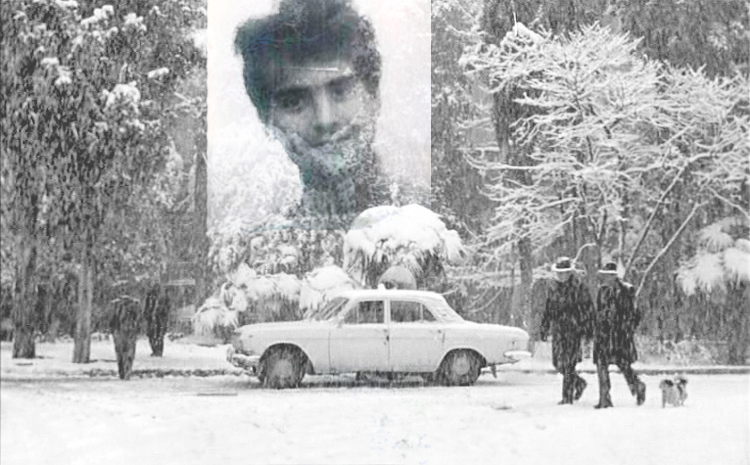
A journalist and film expert tells a contemporary television about language, style, artistic tasks (for Timofeevsky, this is almost always visual tasks); This is a rare type of critic for Russia, which does not go to the subject from literature or actual sociality, but from plastic arts. Cinema in this context is not a conversation about relevant topics, and even more so not an answer to the requests of the audience: this is a statement within the European cultural tradition that develops or disputes its topics; Actually, the film expert explains the grammar of the language passing through centuries. This explanation is also justified by the fact that this language is not that the Aeolian dialect: Mikhalkov, Tsereteli, and deputy Travkin, and all relevant sociality are inside the same tradition, as a rule, without realizing it. Even the Solovyovskaya “Assa” is not just a statement on the topics of fashionable topicality; The main thing in it is not a basement or an earring in the ear, but the image of the Yalta under the snow (which is exhaustively described by a bloc). The long distance shows how justified this hermeneutic method was justified - snowy palm trees were preserved much better than the slogan “We are waiting for change”.
To evaluate the insight of the author in texts dedicated to Sergei Stankevich or Sazhi Smalatova (the psychomphological portrait of the latter is called “Lucretius without Tarquin”) is not always possible; The readership is unlikely to be able to figure out the iconography of post -Soviet Russia without the help of Wikipedia - but the method also works here: supporters of democratic reforms and spiritual opposition under the pen of Timofeevsky are hostages of not their invented genres, plots, styles, and their main sin is the pathological absence of taste - faded from frequent use of revolutions, hysteria, hysteria, hysteria, hysteria, hysteria, hysteria, hysteria, hysterical abuse of words with a capital letter; Eclecticism and hysteria always lies self -interest or cowardice, aesthetic blindness leads to moral evil. So, the State Emergency Committee of Timofeevsky is not an “attempt to expand the story” or “revenge of the communist nomenclature”: this is a coup in which the only real action was the repetition of the television regulations of the Secretary General, an attempt to raise “for the restoration of destroyed economic ties”, and an inconspication of intentions, words and images.
However, the author does not become the position of a taste arbitrator, rather carries out the work of distinguishing, establishing the “separateness of things and phenomena” - as stated in the article on the “rehearsal of the orchestra”, “There is such an aspect in the film, there is another aspect, there are many different unlimited aspects, and in the fact that one is contrary to the other, there is decisively any trouble”. Culture is a complex set of artistic and moral laws, and not a rut united throughout Russia, according to which Pushkin jumps ahead of the Cossack regiment on Mariupol; It is read as a text, and not announced, as a sentence.
The art of distinctions in some highest sense coincides with the experience of continuity: the texts of the Timofeevsky beginning of the 90s are written from the inside of the country, in which temporary and cultural ties did not break up-countries where the court, and parliament, and data from the age of establishment, a book under a green lamp, and snow from under the ladies. The general place was the idea that the language of Kommersant created a new class of the bourgeoisie, for which the newspaper was intended; In the same way, Timofeevsky’s texts seem to be trying to conjure a country where culture is not the name of the heading in the penultimate strip, but a natural form of life, routine, and daily vertebrae.
The book begins with a fragment of the author’s interview with the 1995 newspaper today - about how the West did not accept Russia that dreamed of falling on his chest, about the upcoming war with Islam, about the new anti -Western Russian statehood, about the people who use the word “Homeland” with the frequency of the preposition - even now put on Facebook, no one will notice the difference in time; But the through wound, noticeable in these texts, is not in the sensation of the fatal non -insurance of Russia with the West: Russia in these years, first of all, did not meet with itself. The vertebrae did not grow together, the tradition did not recover. Tradition is understood as a complex, smart, organic feeling of the past and future, the ability to “speak languages”, distinguishing shades of meanings, and not as a self-packing structure, hastily blinded somewhere between the Optina cell, the Goan beach and the Donbass trench; The crumpled loud "Vliyparo", which they try to sell to us on a new historical round; Probably, if this fable could have morality, then she is such, although the author would not approve of moralization.
And since we were seized by a school desire to extract some lesson from the book-if desired, it can be read as a textbook. A manual on the movement of thoughts, the choice of words, building a composition, exactly found details. In terms of proportionality of parts, by the pacification of passions. In a world where the advantages of the text are measured by the number of minutes spent on reading, these are perhaps not the most pressing skills - but in the future that these texts written for a long time and on occasion, there are different, best, rights, and love, and mercy, and for this, no matter how much I resisted, it is difficult not to raise a glass.
Alexander Timofeevsky. Spring of the Middle Ages. - St. Petersburg: Book workshops, workshop "Session", 2016. 344 p.
The presentation of the book of Alexander Timofeevsky will be held at the Stanislavsky Electrodeater (Tverskaya, 23) February 22 at 19:30.