
Translated material
Do not forgive and forbid
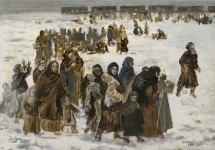
Deputies of the People’s Assembly of Ingushetia unanimously adopted in the first reading a bill prohibiting the perpetuating memory of Joseph Stalin in the republic. It is reported by TASS. A group of deputies made a legislative initiative.
The document provides for a ban not only on the installation of monuments to Stalin and on the assignment of it by the settlements and streets, but also a public justification, the approval of his activities. It is also forbidden to place images of a dictator in public places and in administrative premises "in order to exalt" his personality.
"The draft law" On the ban on the territory of the perpetuction of the memory of Stalin ", adopted on the eve of the 73rd anniversary of the deportation of the entire Ingush people, provides for the imposition of a ban on perpetuating the memory of Stalin, which was subjected to mass repressions of entire peoples and individual citizens," said Zelimkhan Evloev, chairman of the parliament of the republic.
“It’s blasphemous to make a hero, erected monuments to a person who has deported dozens of peoples, a tyrant in which tens of thousands of representatives of the intelligentsia and the military were shot and sent to prisons,” said the chairman of the local government, national policy, Maryam Ampreyeva.
On February 23, on the anniversary of deportation, in Chechen and Ingushetia, Memorial Day was celebrated. Meanwhile, in 2011, the leader of Chechnya Ramzan Kadyrov said that the republic should celebrate all state holidays of Russia along with other regions. Memorial Day was postponed to May 10. In 2014, in Chechnya, mourning events were banned on February 23 .
The operation, under the code name “Chechevitsa”, during which the Chechens and Ingush were massively evicted to Kazakhstan and Central Asia from the territory of the Chechen-Ingush Autonomous Soviet Socialist Republic, took place from February 23 to March 9, 1944. According to the Memorial International Society, in 1943-44, 485,000 people were taken out of Chechnya and Ingushetia.