
Translated material
Bridge
On February 27, two years ago, on a large Moskvoretsky bridge, near the sixth pillar from the beginning of the bridge, opposition politician Boris Nemtsov was killed. A month later, at night, in Varovsky, flowers and portraits were first taken out from the bridge: this began the confrontation between those who created a memorial at the place of murder-and these are dozens, if not hundreds of people, and power. Only in February the bridge was cleaned at least nine times. The last time - after the memory march on the night of February 26 to 27. What the keepers of the memorial are defended and what the flowers and portraits of Nemtsov interfere with the city hall and the Kremlin - the New Times found out
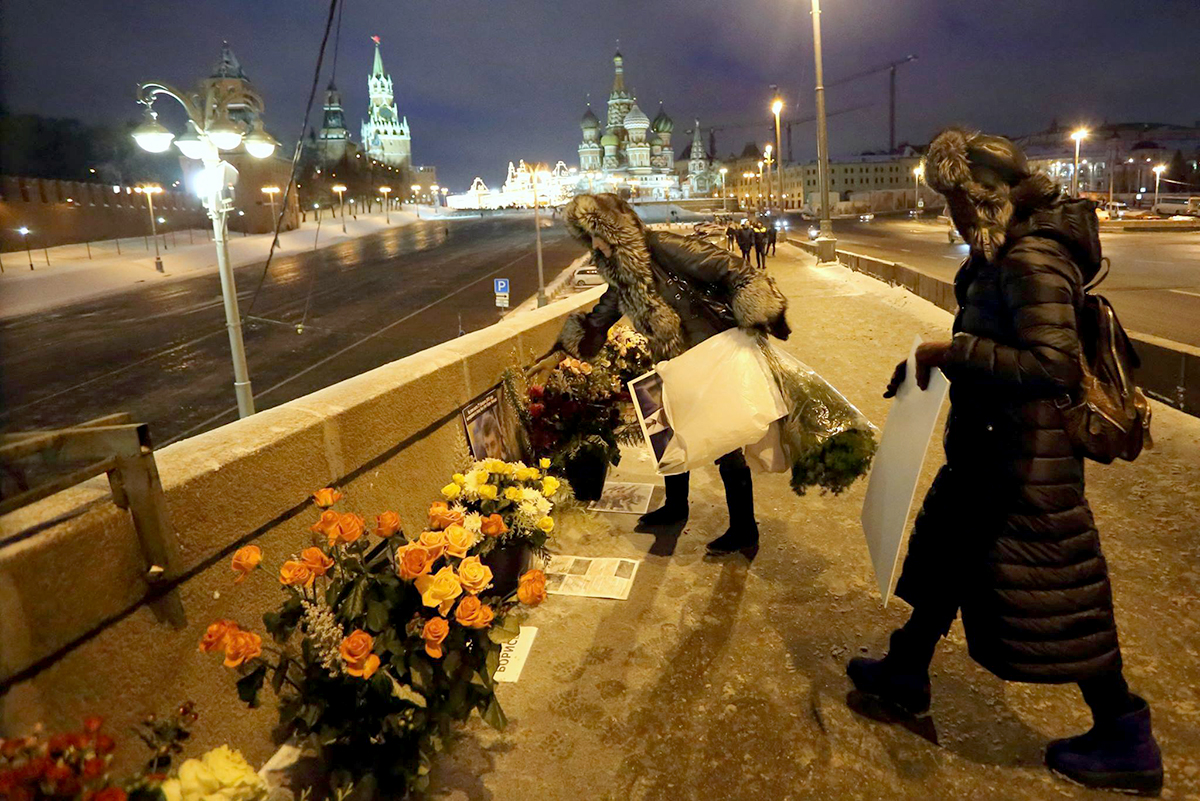
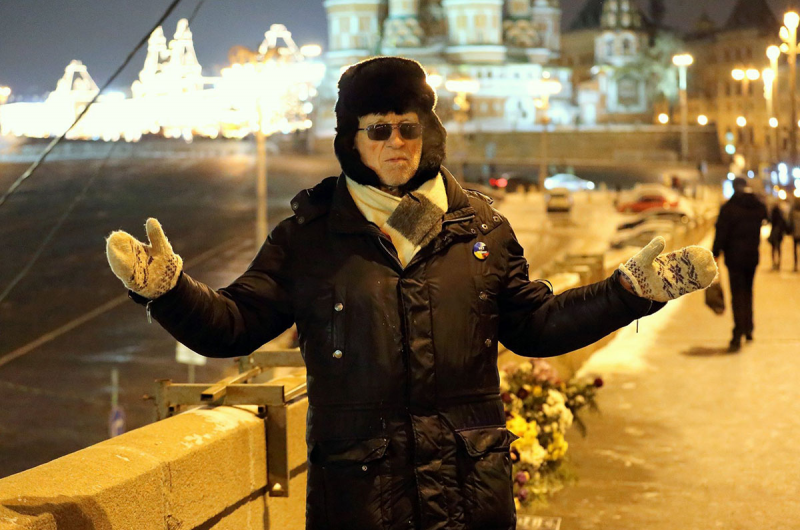
This is the 719th day since the death of Boris Nemtsov. 9 o’clock in the evening. It is cold and the wind blows. On Bolshoi Moskvoretsky, three or four buckets with bouquets-roses, cloves, chrysanthemums, three portraits of Nemtsov, candles. The day before, there was another stripping - people in specialists with the inscription "GBU" took everything, cleanly. Boris Fedorovich Kazadaev, a member of the Parnas party, one of the co -chairs of which was Nemtsov, comes to the bridge "as often as the heart beats." That is - every day. The first time I came to the bridge in the morning of that night when Nemtsov was killed: since then this is his post. Boris Fedorovich was 73 years old, once worked at the ZIL factory, Nemtsova knew-he came to seminars and events, participated in the 2013 Navalny election campaign. Today, says Boris Fedorovich, she took up at 7 pm, will go at midnight - everything is strictly on schedule. “I am dressed warm enough, but I can’t stand all night, the age is not the same, and I have to be in time on the subway,” he explains.
Vladimir (did not name the last name) under fifty, the architect, lives somewhere in Chertanovo, a sleeping area in the south of Moscow. He comes to the bridge “as it can”-this is two to three times a week, for several hours. He is not a member of Parnas and not even an activist: "I just stand with people, I help them." Why is it to him? “In people who support Nemtsov there is an honor and dignity, in those who each time break this memorial and destroy it, there is no this honor,” he says completely without a challenge. It can be seen that he was very frozen.
The third today Cyril, a member of the Solidarity movement, in appearance under forty, came today (it was a medium) instead of a sick activist, usually he will be on duty on weekends.
Closer to midnight, Boris Fedorovich took out a sheet of paper from the black frame, turned it over, put it back and wrote: when this NT number came to readers, it will be 724 days, as Boris Nemtsov was killed.
Guardians of the bridge
The first time the bridge, which is popularly called the “Nemtsov bridge”, was cleaned on the night of March 27 to 28, 2015, that is, exactly a month after the murder. The authorities decided that there was a bust in the center of Moscow: people arrived in the specialists of the GBU "Hormost" and took out all the flowers, candles, notes, flags (each shaft with the Russian flag - 1000 rubles, they were brought by FBK Navalny) and portraits of Boris. “It could not have occurred that the authorities would be so inadequate to respond,” recalls designer Olga Lechton (to her forty), who was one of the first to care for the memorial on the bridge.
“In people who support Nemtsov there is an honor and dignity, in those who break this memorial every time and destroy it, there is no this honor”
She came here on March 9 two years ago, saw a sea of flowers and decided that someone had to restore order here. Then dozens of people came to the bridge every day, a bag for plastic and paper, tied to the very pillar, was regularly crowded - in short, looked at Olga, was necessary. By that time, Facebook was already a group of Boris Nemtsov’s memory: here, after the first stripping of the bridge, it was decided that it was necessary to install round -the -clock duty on the bridge, and since the summer of 2015, the duty schedule was posted in the closed group - the volunteers were recorded themselves, indicating how many hours and at what time they could carry their watch. “We understand that this is a long story, so we try to protect people so that for more than two to three hours they do not stand,” at the same time there are people who take over the collection of money for flowers, as well as the dissemination of information on social networks, “Olga Lechtonen is responsible for wallets now. On average, 200-300 colors are needed per month. “It all depends on the number of seals,” says Nadezhda Mityushkin, a close associate of Nemtsov, now the co -chair of the Moscow Solidarity. “For example, in three weeks of February there were eight sweeps, 30 bouquets came in response.” Only about 50 people come out of the “solidarity” movement for duty, while no more than three are carried on the bridge. “We try to do everything ourselves. Boris is our associate, therefore it is worthless to ask for his memory, ”says Mityushkina.
A site through which people can order flowers for delivery to the bridge or to the Troekurovskoye cemetery, where the grave of Nemtsov was organized by the politician Maxim Katz. At first, Katz recalls, “they came to the sellers from the organs and tried to forbid us to sell flowers, but then it was possible to make a site that easily switches on the next supplier-if they pressed it.”
Marauders
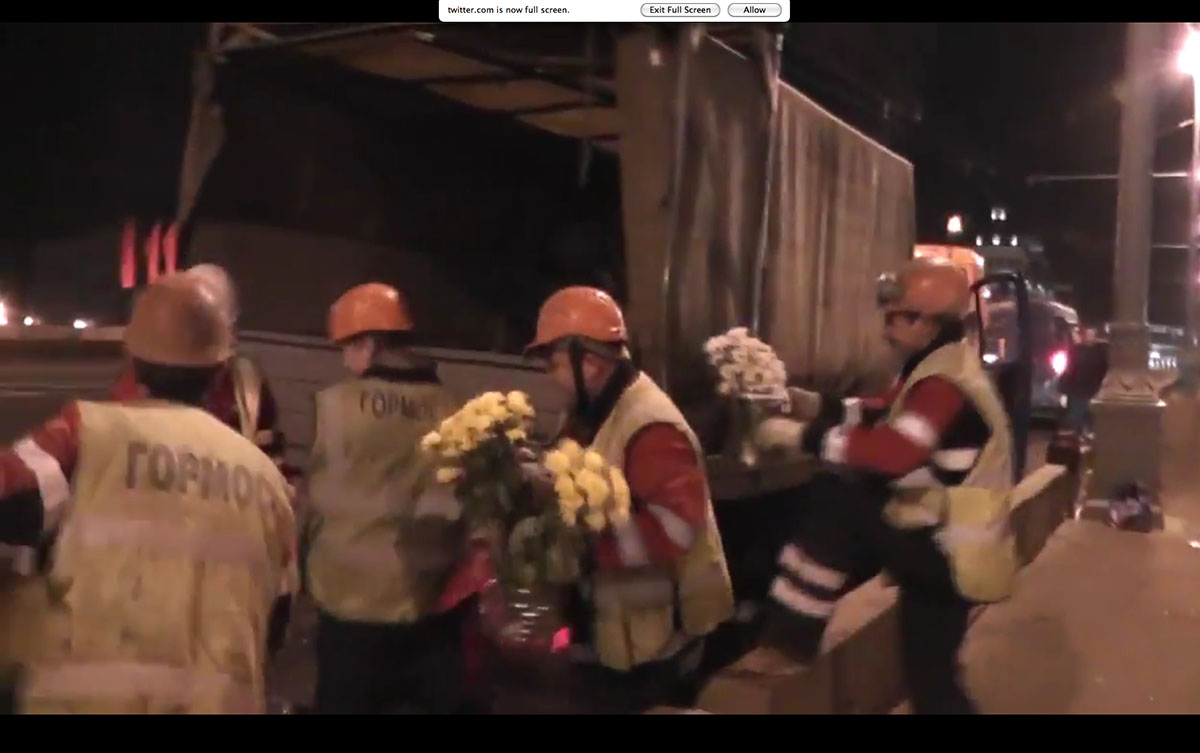
Mityushkina calculated: over these two years, at least 160 plastic buckets took, in which flowers stood and which cleaners from the Hormost professionally threw into their Gazelle. The stripping always occurs at night and in two versions. The first: the police come, they say to the duty officers: “We received a message that there was a fight on the bridge,” and Boris Kazadaev, who went through this detention, told them to the department. The duty officers are taken to the China-Gorod police department, which is considered special in Moscow-there, in addition to the police, the FSB officers are on duty. They hold in the department until the morning - at that time, employees of Hormost come to the bridge. The second option, according to one of the permanent duty officers, Sergei Kireev, looks like this: a brigade of twenty, led by foreman Dmitry Zaitsev, is arrived on one or two Gazelles, they block the attendants and take everything away. “Probably, they are being taken to their base, there are no containers nearby,” says Kireev, who poetically calls the night on the bridge “mystical and metaphysical action”.
And so - from month to month. Although Russian President Vladimir Putin in April 2015 stated that he did not understand and do not welcome attempts to remove flowers from the scene of the death of Boris Nemtsov. The guardians of the bridge more than once and not two sent requests to the Moscow government and to the Hormost GBU, demanding to explain on what basis the memorial is destroyed, although the cleanliness on the bridge is supported by impeccable. There was never an answer. NT correspondent phoned the press service of the GBBU "Hormost". “We do not give comments, contact the City Hall of Moscow,” the female voice answered. They turned - sent a written request: at the time of signing the number, there was no answer to the print.
Big Moskvoretsky bridge - the scope of the competence of the Federal Security Service; According to the Decree of the Moscow Government No. 866-PP for the FSO is assigned to 300 objects in the capital, Big Moskvoretsky was listed under the number 154. NT sent a request to the press service of the FSO to report whether the Federal Objective Service for finding colors and portraits on the bridge. There is no answer either.
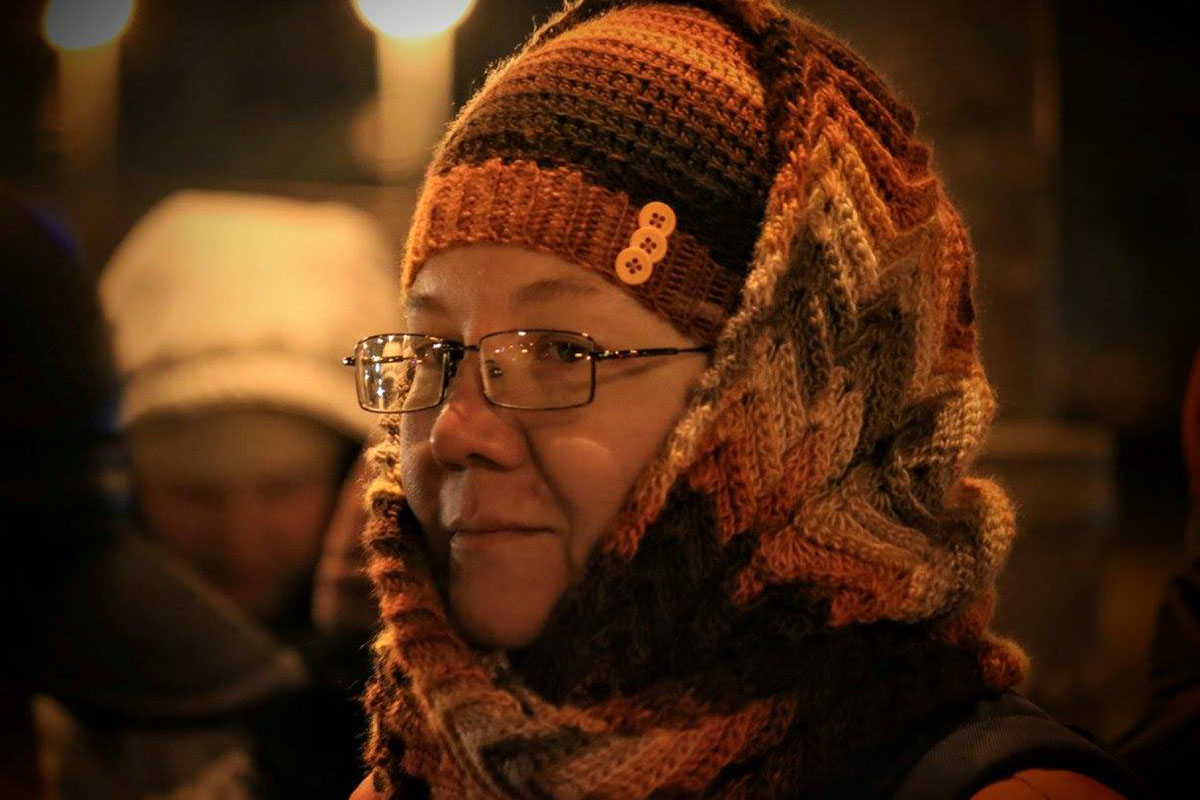
Sometimes the bridge keepers manage to prepare the memorial for raid, remove flowers and portraits in cars. “We have a sympathetic taxi driver and two more guys with cars, they often come,” says Kireev. “When there is no such possibility, we attribute everything to (office) Parnassus to Pyatnitskaya Street, but it does not always work out.” Once, he recalls, it was possible to hide part of the memorial in special boxes that the municipal services of the city use for their needs, but “they quickly stopped this,” Kireev laments.
He was killed here
“It is impossible to allow that after everything that happened, this bridge remained the same large Moskvoretsky bridge - as if there were no murders here,” says Olga Lechtonen. “Our main goal is that a memorial sign of five words is set on the bridge:“ Boris Nemtsov was killed here. ” Another 30 thousand Muscovites who signed a petition to establish a memorial plate on the Bolshoi Moskvoretsky bridge, which in September 2016, also believes, then a politician, then a member of the State Duma, Dmitry Gudkov and RBC journalist Timofei Dzyadko also consider it. The answer is signed by the deputy head of the department S.V. Martynova was as follows: “The proposal for the installation of a commemorative plate at the site of the death of B.E. Nemtsova is not within the competence of the commission but perpetuating the memory of outstanding events and figures of domestic history and culture. ”
The official also said that "memorial boards are installed only on the facades of buildings at the residence of the perpetuated person (no earlier than ten years) or at the place of work (two years after the death of the perpetuated person)."
However, in 2013, one of the streets in the north of Moscow was renamed in honor of Hugo Chavez, President of Venezuela, who died in the same year. At the end of 2016, the Moscow government decided to assign an area in the north of Moscow north of the Cuban leader Fidel Castro - he died in November of the same year - and on the renaming of the street in the west of Moscow in memory of the Russian, which was killed in December in Turkey, Andrei Karlov.
“A woman came from Yaroslavl,” says Kazadaev, “she brought a bucket of flowers and a sign“ Nemtsov Boris - Hero of Russia ”
“They (the authorities) are afraid of Nemtsov, who has long been in the next world,” says politician Dmitry Gudkov. - He becomes a symbol of the democratic movement, fulfill the requirement of the opposition - for the authorities this is a manifestation of weakness. In addition, this is not a question for the city hall, the city hall in this case is afraid to go against the line that was accepted in the presidential administration. The logic is as follows: if you establish a memorial sign, then the opposition will demand further customers and murder organizers. And this is impossible for this power. ”
Bridge
Night. The view of the Kremlin from the bridge is incredible: illuminated by the spotlights, the poppies of the Kremlin’s bells are floating, the non-freezing Moscow river blackes below, people go past flowers and portraits. Someone passes, hiding their eyes, someone nods in solidarity, someone stops, starts a conversation about Nemtsov. No, no, yes, cars are inhibited: glasses are lowered, people look at flowers and portraits.
Boris Kazadaev today had a successful duty - unexpectedly Love Iosifovna (she did not name her surname): she brought the posters printed on sheets prudently packed in plastic files. “Do not kill the memory”, “The march of Boris Nemtsov’s memory” is written on them. He also asks to photograph a paper package on which the “hormost gang is not a place in Moscow” with a black marker, and upload a photo on Facebook. “A couple of hours ago, a woman from Yaroslavl came ( Boris Nemtsov was a deputy of the Yaroslavl Regional Duma. “ NT ), ”says Kazadaev,“ she brought a bucket of flowers and a sign “Nemtsov Boris - Hero of Russia”. The night of the 720 day from the date of the murder of Nemtsov inexorably went to dawn.