
Translated material
Our answer to Chamberlain
90 years ago there was a crisis in relations between Great Britain and the USSR: Stalin responded to the famous note of the British Foreign Office by strengthening repression and suppressing the opposition within the country
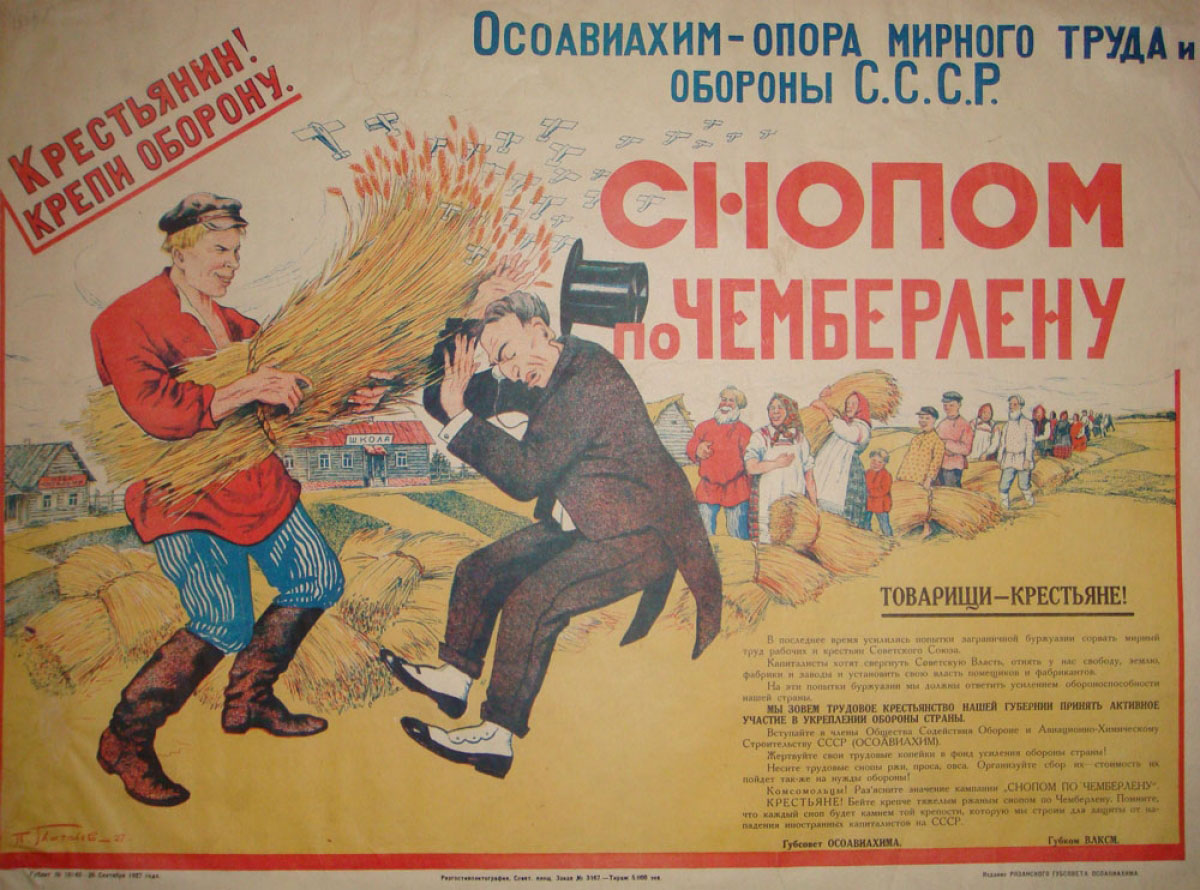
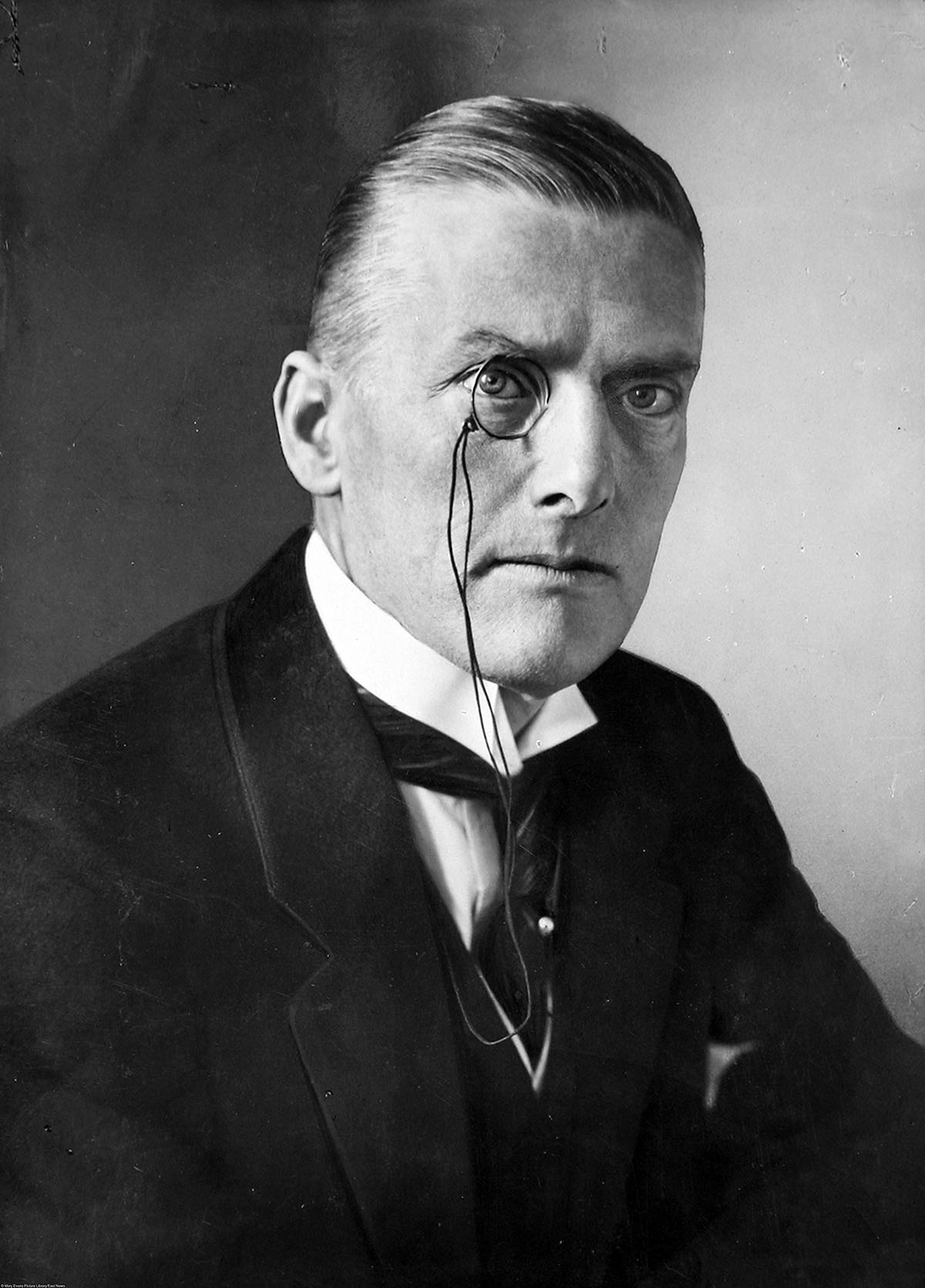
On February 23, 1927, the British Foreign Minister Joseph Austberlaine sent a note to the Soviet government. Under the threat of a breakdown of diplomatic and trade relations, he demanded to stop “anti -British propaganda” and Soviet military support for the revolutionary Gomintan* government in China.
Why did Chamberlain be so worried about China? The fact is that on January 4–8, 1927, the troops of the Kuomintan occupied the territories of English concessions in Hankou and Zyuzzyan. As a result of the subsequent negotiations, England had to abandon the concession in Zyuzzyan.
Asymmetric answer
The response message of the People's Commissariat of Foreign Affairs of February 26 stated: “Threats regarding the Union of SSR cannot intimidate anyone in the Soviet Union ...” A powerful propaganda campaign struck in the USSR, in which the British minister began to personify the forces of international imperialism. Under the slogan “Our answer to Chamberlain”, a fund was created to collect funds for defense and construction of the air fleet. The militarization campaign has begun. New air spaces were created, submarines were laid.
Among the pockets captured in the Soviet envoy in Beijing, the British discovered copies of top secret British diplomatic documents
Another response to Chamberlain’s note was the decision of the CEC “On additions to the Criminal Code of the USSR”. The sadly famous “rubber” 58th article on state crimes appeared there. The counter-revolutionary has now recognized “any action aimed at the overthrow, undermining or weakening of the power of the workers 'and peasants and ... workers-peasants' governments of the USSR, allied and autonomous republics, or to undermine or weaken the foreign security of the USSR and the main economic, political and national conquests of the proletarian revolution.” Punishment - up to the execution. The article was in return, as it also applied to actions committed "to the responsible or secret (agent) positions in the royal system or with counter -revolutionary governments during the civil war."
Meanwhile in China
The successes of the Gomintans continued. On March 23, units of the People's Army (NRA) were taken by Nankin, and the British squadron fired at the city. And three days later, the Comintern Executive Committee called on the working people around the world to defend the Chinese revolution.
On April 6, the police and soldiers of the ruler of Manchuria, General Zhang Zolin, raided the Soviet Embassy in Beijing and the Consulate in the Tianjin, having seized more than 3 thousand documents and arresting the Chinese communists and employees who did not have diplomatic immunity that were hiding in the Embassy. Meanwhile, the Soviet Union quarreled with the leader of the Homintan Chan Kaisha. On April 12, his troops suppressed the workers in Shanghai and began repressions against the Communists. On April 18, in Nanjing, Chan Kayshi proclaimed the formation of the “national government” without the participation of the Communists. At the end of July, Soviet military advisers were withdrawn from the NRA, and the cooperation of the Gomintan with the USSR and the Comintern was interrupted. In December, after the defeat of the Soviet consulate in Guangzhou, Moscow broke off diplomatic relations with National China. Thus, the main stimulus that caused Chamberlain’s note disappeared, although the Soviet Union continued to cooperate with the Chinese communists, then relatively few and did not have the army.
In early May 1927, the publication of documents seized in the Soviet embassy in Beijing began. Of these, it was revealed that the USSR was actively interfering in Chinese affairs, engaged in intelligence and providing military assistance to the Communist Party and Homintan. In the list of papers captured in Beijing, the British unexpectedly found copies of several secret British diplomatic documents. The same unpleasant discoveries made the diplomatic mission of Italy and Japan for themselves.
On May 12, in London, the British police searched in the Anglo-Soviet commercial company Arcos and seized the documents and ciphers of the Soviet trade agent. All employees of Arkos and the trading delegation were detained and subjected to personal search.
On May 24, the British conservative government broke a trade agreement with the USSR. And on May 27, a breakdown of diplomatic relations followed. In the British note, transmitted on this subject, it was argued that the search in the premises of Arcos "proved that Murget was sent and carried out both military espionage and destructive activities throughout the British Empire."
Military hysteria
Great Britain was not going to fight with the USSR. Both the initial note of February 23, and subsequent actions were designed only to limit Soviet activity in China, India and in the Middle Eastern British possessions. The breakdown of diplomatic and trade relations was called upon to complicate the activities of Soviet agents in England and the colonies of the British Empire, but was by no means the threshold of the possible Anglo-Soviet war. However, military hysteria was still pumped in the USSR. On June 1, the Central Committee of the All -Union Communist Party of Bolsheviks made an appeal “to all organizations of the CPSU (b). To all workers and peasants ”, in which the Soviet people called on to be prepared to reflect imperialist aggression. Stalin in the telegram to the head of the OGPU Vyacheslav Menzhinsky of June 23 authorized the “rampant arrests” of the English spies. In fact, the Secretary General understood perfectly well that no one was going to attack the USSR then. And at the July Plenum of the Central Committee, he said: “The war is inevitable - this is beyond doubt. But does this mean that it cannot be delayed for at least several years? No, doesn’t mean. Hence the task: to delay the war against the USSR either until the revolution of the revolution in the West, or until the moment when imperialism receives more powerful blows from the colonial countries (China and India). ” And Soviet intelligence did not record any military preparations of potential opponents. But at the same time, Stalin wrote in Pravda: “There is hardly any doubt that the main question of modernity is the question of the threat of a new imperialist war.”
Time of the OGPU
The militarization continued. On July 5, the Council of People's Commissariats ordered all the People’s Commissariats to submit to the Council of Labor and Defense their proposals to improve the defense of the country. These proposals, among other things, included plans to verify workers and employees, together with the OGPU, for political reliability and dismissal of unreliable. From July 10 to July 17, the “defense week” was held throughout the country.
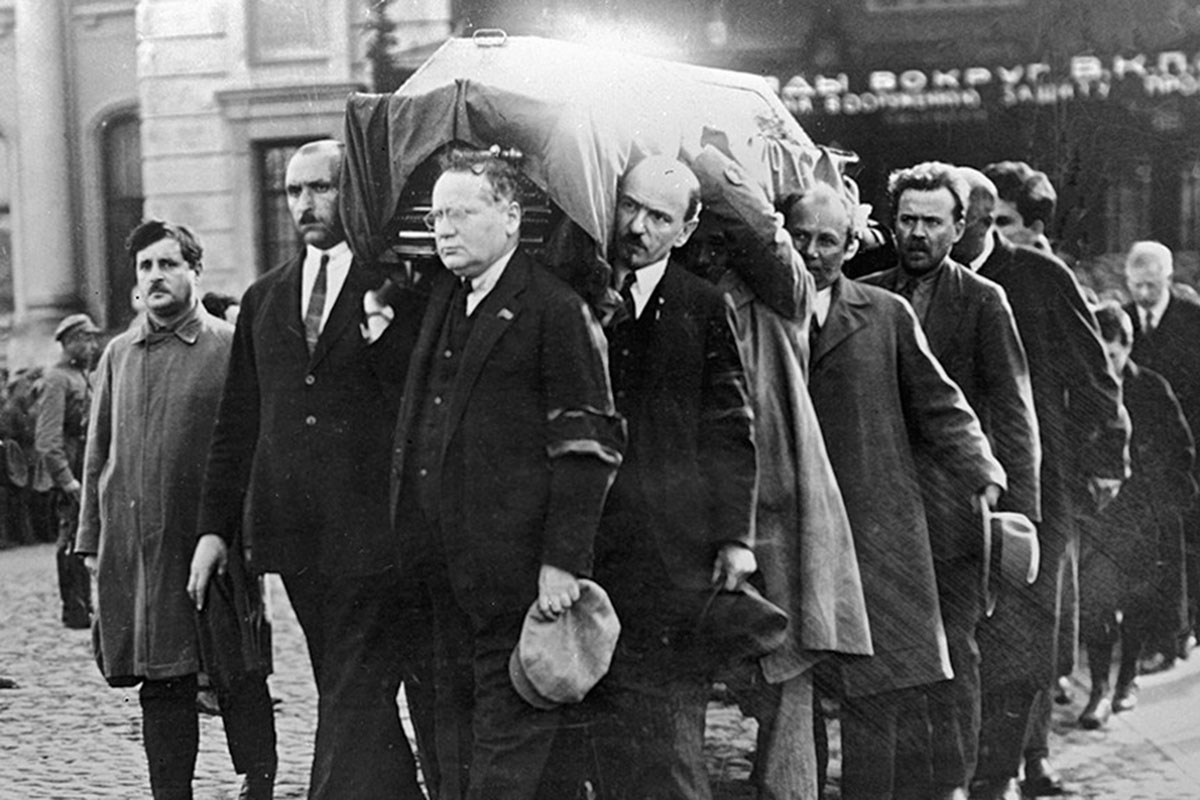
As it seems, not only Soviet working people, but also white emigrants believed in the proximity of the war. Terrorists from the Russian National Union (ROVS)* threw bombs at the OGPU Bureau in Moscow on June 4 and the building of the Central Party Club in Leningrad on June 7. In the latter case, 35 people were injured. On the same day, the Soviet plenipotentiary in Poland Petr Voikov was killed in Warsaw. His killer, 20-year-old Boris Cover, was associated with white emigrant organizations in Poland. And on the same day rich for events, as a result of the railway disaster, the head of the OGPU of Belarus Joseph Opansky died. His death was also written off on the actions of saboteurs.
On June 10, the answer followed. According to the decision of the OGPU without a trial, 14 “Monarchist terrorists” were shot: Prince P. Dolgorukov, I. Susalin, Yu. Elvengren, E. Shcheglovitov, N. Pavlovich, B. Naryshkin, A. Mikulin, A. Meshchersky, V. Vishnyakov, A. Murakov, V. Annenkov, S. Gurevich and A. Popov-Karatov, as well as six “English spies”: V. Jewish, N. Karpenko, S. Mazurenko, K. Malevich-Malevsky, A. Skalsky, N. Rayev. This was preceded by a telegram to Stalin Molotov: “All prominent monarchists sitting in our prison or in a concentration camp should not be delayed hostages. It is now necessary to shoot five or ten monarchists. It is necessary to give the OGPU a directive about the general searches and arrests of the monarchists and all kinds of White Guards throughout the USSR with the aim of their complete elimination by all measures. The murder of Voikov gives reason ... ”Note that among the 14“ monarchist terrorists ”was the former Menshevik, one of the organizers of the scout movement in the USSR Solomon Gurevich, a 24-year-old reporter of the Bolshevik newspaper Pravda. Disappointed in Soviet power and his own life, he wanted to make an attempt on Nikolai Bukharin during a solemn meeting at the Bolshoi Theater in connection with the 10th anniversary of the February Revolution, but he did not have enough determination. The OGPU became known about his intention, and on April 1 he was arrested. Gurevich had nothing to do with the monarchists. The Finnish officer Yurye Elvengren, who first headed the self -proclaimed Republic of North Ingria, and then part of the Savinkovsky “People’s Union of Protection of the Homeland and Freedom”, was not a monarchist. Most of the terrorists were detained or killed on the border, since the emigrant groups were permeated by the Chekist agent.
Stalin Molotov: “All prominent monarchists sitting in our prison or in a concentration camp should not be delayed hostages. It is now necessary to shoot five or ten monarchists. It is necessary to give the OGPU a directive about the rampant searches and arrests of the monarchists and all kinds of White Guards throughout the USSR with the aim of their complete elimination by all measures ”
The head of the ROVS Baron Peter Wrangel noted the complete failure of the terror. In total, in June, after the murder of Voikov, more than 9 thousand people were arrested, mainly from the "former." On July 6, a law was adopted on the introduction of the death penalty for anti -Soviet propaganda and agitation “at mass excitement”. On August 24, according to the verdict of the military collegium of the Supreme Court of the USSR in Semipalatinsk, the former commander of a separate Semirechensky White Army, General Boris Annenkov, and his chief of staff, General Nikolai Denisov, were shot from China to the USSR.
Beat your own
The apotheosis of the "military anxiety" was the defeat of the Trotskyist-Zinoviev opposition. At the United Plenum of the Central Committee and the Central Committee of the All -Union Communist Party of Bolsheviks (b), October 23, oppositionists were frankly poisoned. Trotsky had to speak under a hail of books and inkliters throwing into him. On November 7, supporters of Leo Trotsky and Grigory Zinoviev organized alternative demonstrations in Moscow, Leningrad and Kharkov. This was a pretext for the exclusion of the leaders of the opposition and their supporters from the party. From the second half of November 1927 to the end of January 1928, 2288 people lost their party bits for belonging to the “Left Opposition” (another 970 oppositionists managed to exclude until November 15). Trotsky was exiled to Alma-Ata, and Zinoviev-to Kazan.
So Stalin, escalating military hysteria after the notes of Chamberlain, began to again accustom society to mass extra-court repression, and at the same time dealt with the most dangerous Trotskyist-Zinoviev opposition. This is the usual practice of totalitarian and authoritarian regimes: use foreign policy crises to strengthen repression within the country and suppress the opposition.
* Gomintan is the National Political Party of China, since 1924 - the mass revolutionary political party, which included the Communists.
* Emigrant organization, created by the former commander in chief of the Russian Army, General Wrangel in 1924.