
Translated material
Slaves like us

Last year, the Oscar ceremony was spoiled by a racial scandal-representatives of the African American community, including the director Spike Lee, were outraged by a small number of African Americans in the nominations (and the politically responsible musical Lee did not get into the short list at all). This year, the film academy has indicatively corrected. But the awarding of the “moonlight” is a solution not only to political, but also aesthetic: “black” cinema is located on the front edge of the struggle for freedom of not only a person, but also a movie language. Denis Ruzaev - about how “black” the film is more than the film about the Negro.
What are we talking about when we are talking about "black" cinema?
Or even like this: what makes the “black” film “black”?
A director with skin color is darker than olive? Actors? Plot? Then that “blacker”-“fall asleep in anger” by Charles Bernett or “ghost-ghost” Jim Jarmush? “12 years of slavery” by Steve McQueen or “Dzhango freed” Quentin Tarantino? “His game” Spike Li or “basketball dreams” of Steve James?
Should a movie that falls into this category, first of all, be interested in the burden of a black person, turn it into a magistral theme and the main meaning of its own birth? Or primaryly truthful - more precisely, realistic, indicatively striving for reliability - a reflection of the world, social, cultural, historical and psychological, in which a black person finds himself, since modernity involves self -determination not (only) through the color of the skin?
Could it be “black” not a story or theme of the film, but its shape and style? Is it able to “get blackening” - mimicating under the authors or characters - the language of cinema itself? Does the film make his successful handle with the African American topic? Does the “black” cinema for the soul, in principle, have something except working on the problems of identity and related historical injuries? Finally, the most terrible, but also inevitable question: does the phrase “black cinema” mean, that in the absence of experience with the corresponding skin color will be limited and the audience effect? Why, for that matter, generally watching a “black” movie to a white person?
Yes, there are indecent many questions. But an honest conversation about African American cinema in a decent society is actually impossible-otherwise it will be limited to kindergarten dichotomy between the vulgar anger # Oscarssowhite , on the one hand, and the humiliating meme "What these blacks allow itself?" - On the other. This conversation, meanwhile, is becoming more and more necessary - not for the sake of struggle for an equal fantom of equality and not to make out a certain global trend in the prize layouts of the current Oscar, where the African American theme was really represented by an unprecedentedly richly: almost a dozen (and this is not counting the dock) of Afrocentric paintings. Oscar nominations, of course, will improve the professional situation of the authors of these films, but they are unlikely to make black cinema more popular. His phenomenon itself, devoid of both terminological harmony and unified canons of the genre or aesthetics, is too ambiguous. Nevertheless, it is “black” cinema that now presents, perhaps, the most interesting opportunities for the development of a cinema language as such - if only because it brings to the forefront those topics that are large, industrial, cinema previously interested only as exotic marginalia.
Of course, not all Afrocentric films put forward to Oscar are equally useful in this sense. The “Hidden Figures” of the “Hidden Figures” by Ted Melfi and the “fences” of Denzel Washington in its structure and the paternal, omnivorous, master's intonation are films frankly “white”. The “hidden figures” are quite comfortable in the shackles of the spiritual, stylistically non -conflict bayopic of several women (African Americanists, mathematicians working on NASA ). The “fences” do not dare to drop the shackles of the theater-pioneer player and, instead of exposing the centuries-old scars of a black working class, come to almost pornographic emotional overload, the lyceum analogue of Mani-Shot. On the other hand, at all without nominations (due to a decade and a half, a scandal with the participation of the director) there was a film, the contradictory nature and the solid prospects of “black” cinema embodying much more full-blooded-the “birth of the nation” of Neuit Parker.
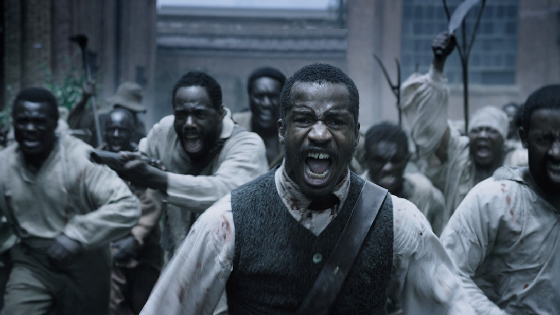 © Bron Studios Frame from the movie "Birth of a nation"
Where is Parker looking for a source of racial charge of American society and culture? This is already clear from the name of the film. More than a hundred years ago, David W. Griffith, in his famous confederate blockbuster of the “Birth of a nation”, provided to Kinematographer a language in which he still speaks, and at the same time created the type of classic black predator, a beast-like vandal and the rapid of innocent white virgins in the mass culture of the twentieth century. The consequences of this indulging by the philistine nightmares are still experiencing American society - what the director of the new “birth of the nation” Parker, in whose life, once had a walk for the rape of a white girl, is more than aware.
It is really impossible to understand whether Parker is to blame - but apparently, yes. “Black” violence during the civil war and reconstruction was also found - but Griffith brought him to the grotesque in his picture, turning it into an influential, which immediately became a common myth, and in addition, predicating the Xenophobic tone of many future Hollywood hits. In the same way, the very idea of the race was also swollen at one time - until it became a phenomenon not anthropological, but social and cultural. The concept of the race has become one of the basic bricks in the foundation and the American attitude, and the entire state built on the slavery. It is not surprising that the Griffith nation gives rise to the post -war reconciliation of the noble white gentlemen from the north and south, as well as pacification that did not justify the trust of the former slaves - in the final they will defeat their suffrage. After Griffith, American cinema spoke in a language in which racism was also laid down in addition to installation innovations.
From the confrontation between the norms of this cinema and the plot he told, the hidden, unobvious drama of the new “birth of the nation” is born. Parker, polemicizing with the classic, counts the history of his people from another historical episode-the uprising of slaves under the leadership of Nature Turner (the director himself plays it), who shocked Virginia in 1831. Such a choice of the plot immediately sets the viewer of the “birth of the nation” of understandable expectations: the physiological horror of the suffering of slaves, the gradual insight of the protagonist, who, thanks to literacy, the Bible and talent to preach humility, was also relatively privileged, gathered in the “courageous heart” pathos doomed to the beautiful death of the uprising. All this really is in the "Birth of the Nation." Wles are carved by bloody traces on dark -skinned backs. Life is sold and bought for pennies, and selected and for nothing. Nate Parker himself plays the transformation of a friendly shepherd into a furious avenger, starting into facial gymnastics - a parade of upturned eyebrows and tears poured with blood. Finally, the loss of human appearance is necessarily even pretty from the white characters (Army Hammer as the owner of Turner). In general, if the essence of the cinema was reduced only to history, the theme and form of the narrative, then the “Birth of the Nation” would be just a “white” film, hopelessly trying to sing a “black” theme.
But the movie, the genre and articulated messenger, fortunately, is far from limited. There is also a style, intonation, moments of visionary ... Yes, a spectator, configured for a heroic, spiritual story about an active struggle for a just cause, will most likely be “the birth of a nation” is disappointed: Turner suffers and inactivity for a very long time, and when he raises the rebellion, he accounts for five to ten minutes of the screen time-in which there is nothing enthusiastic.
The true essence of the “birth of the nation” is revealed in several key scenes that formally do not add anything to the plot. Here the young Natu dreams of a rite of initiation on African traditions, here is a nat, already adult and crushed, dreams of a ritual that there is no one to fulfill (all the elders died), again - clinging to it as a symbol of self -esteem and freedom. In these scenes, the black leather is almost a naked hero of the striped hero is abundantly covered with some kind of white add-on-it turns out that Parker is hinting at one poetic gesture: the color of the skin, the idea of races did not exist for the free ancestors of Nata. That is, slavery manifests itself through an injury to the forcible imposition of identity - in fact, even the name Turner the hero gets from a leopard shoulder.
This idea, expressed through not a plot, but style, not in a word, but a visual technique, gives the clarity and originality of the history itself. The drama of the uprising fades into the background, becomes meaningless, but conscious gesture of despair. Slavery does not leave other options, depriving him of not only freedom and the right to self -determination, but even the possibility of finding the meaning of life in contemplation and evidence. The evidence is impossible - how to implement it, if the words themselves (first of all, the Word of God) have become the right instrument of oppression? In the same way, in the “Birth of the Nation” the very “black” movie, already as a phenomenon, casts doubt on the language that he has to speak with the flock of the cinema-desperately resists those canons, conventions and conventions that are predetermined by the heroic-historical format of history. Yes, you have to refuse the viewer in strong emotion - in order to achieve pain and truth not so catchy, but much more long -playing.
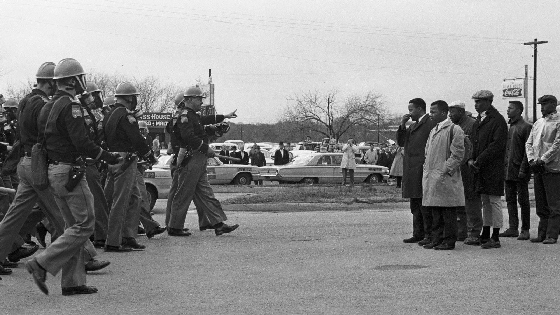 © Velvet Film Frame from the movie "I'm not a Negro"
The fact that the art of the Black Community should resist the hierarchy of the language of oppressors who have not at all lost power with the abolition of slavery, is also said by the best documentary film of the last year “I am not a Negro” by Raul Pek. The video sequence consists of Found Footage - records of marches, demonstrations, television broadcasters devoted to the struggle for rights. But the main argument here is a sunbathing comment: written back in 1979, the text of James Baldwin, the most famous African American writer of the first three or four post-war decades. Then Baldwin decided to write a book about the three martyrs of movement - Martine Luther King, Malcolm X and Nedogar Evers. The writer was friends with all three - and all three represented different platforms to achieve political goals (Evers - collaboration, Malcolm - direct confrontation, King - non -violent disobedience). Nevertheless, Baldwin did not finish the book - having quitting work on the thirtieth page of the draft. The baking of these unfinished sketches is enough to build a versatile, at the same time intimate and public, document about not brought to the end of the struggle and never changed at the best era. A document - but imbued with the literary talent of Baldwin, drawing his persuasiveness in the beauty and poetry of his language.
Paradoxically, the film, which is entirely dependent on the undergrounds of the text, on language vibrations and the balance between observation and reflection, is reduced, like the “birth of a nation”, namely to the criticism of the very language used by. Baldwin, although he refused to call himself a black man at a time when this word did not bother anyone, thanks to his literary activity, had the status of a “good black man”. Peck shows how a passion for reading, for the tongue, to the process of his every minute creative birth brought Baldwin from the ghetto - endowed not only with glory, but also the right of voice. He used it in order to pay attention to the position of the black population - although he did not transform from a writer to an activist. At some point in the film, Baldwin directly means the role of a witness chosen in this struggle.
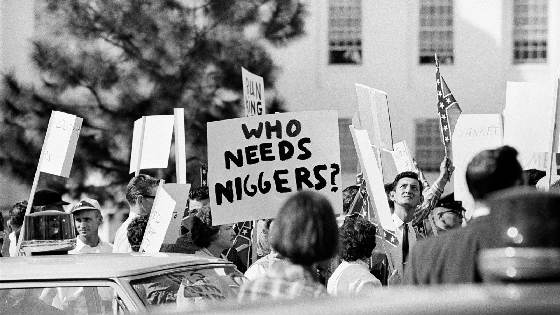 © Velvet Film Frame from the movie "I'm not a Negro"
Judging by the fact that Baldwin did not write the book, it is clear: even this innocent role required self -sacrifice (the FBI, by the way, actually considered it unreliable and leaned for a long time), implied a renunciation that the author of the “Giovanni’s room” and “notes of my dear son” could not go. Why - obvious: the story of King, Malcolm and Evers could not be told by the language that included the instruments of oppression with which they fought. Baldwin nurtured the same language (books and films on which the writer grew up are lit in the film separately, like their frivolous approach to skin color) - and the other, who was crushing in the finale that the word “black” was invented by white, could not be found. The director Raul Pek, however, finds it for Baldwin: the impossibility of the finale, like the struggle against tyranny, becomes the main idea of a film that easily rhyming the Selm with Ferguson , and Baldwin with Kendrick Lamar.
Thus, “I am not a Negro”, despite the fragmentation, fleetingness, futility of the material, suddenly acquires integrity and reveals another quality of any “black” film - constant variability, a decisive rejection of clear forms, from the dogma of style and utterance, from the hope of finding a universal “black” truth. From a difficult situation of slavery, segregation, operation, there cannot be simple exits - just as there cannot be an all -encompassing certificate of it. So, there can be no unconditionally authoritative cinema: after all, authority is a property of power, and the seizure of power is not planned here. Therefore, “black” cinema is always looking for a new form for expressing all the same frustrations, hopes and protests as forty years ago. Exactly this bake makes with the drafts of Baldwin - and they suddenly become more significant than all the ended books of the writer.
 © Plan B Entertainment Hard from the movie "Moonlight"
Is it not possible that the real “black” cinema can be determined only through negativeness: struggle, protest, denial, conflict? Fortunately, it is not that Barry Jenkins proves the “moonlight” (who has taken the main “Oscar” for a week has been in Russian cinemas for a week), an amazingly subtlely feeling changeable, unreliable and unstable nature of “black” cinema - and wider, “black” life. This picture manages to drop the skin three times - in the literal sense of the word.
Here is a nine -year -old, for the first time in his life, a small man, nicknamed a small man, finds a semblance of parental heat for the first time in his life (the dragdler with a good heart) - and he also knows the first truth about himself (“You can be gay, but no one has the right to call you a pedic”). Here he, sixteen -year -old, is experiencing the first sensual experience - he reveals himself, Shiron, not a trifle (and not black, as a friend is constantly trying to call him). And now ten years later, which has changed itself, so that it looks like a typical black (muscles, Golda on the teeth, the old-time car and the profession of a huckster)-Shiriron for the first time for the whole is seen with the only person with whom he was once close. The moonlight, for the third time for the film, illuminating this pair, creates a true illusion that even black guys can at least lose the color of the skin at least for a short while, get rid of the oppression of the racial label (Jenkins' film is based on the diploma text of the dramator of Tarella Elvin McCraine with the name “Black Boys in the moonlight” seem blue ”).
 © Plan B Entertainment Hard from the movie "Moonlight"
The Lunar Light itself is completely deprived of the widespread in films about the black community of the desire to become "whiter", to become like everything and be understood and loved by all at once (the excellent term Racial Passing , denoting this process of racial pretense, is not translated into Russian). The epic of sensual transformations that successed Jenkins not only does not think about the white viewer - it seems to be opposed to the audience expectations as such. After all, these expectations were formed by films that spoke with the viewer in the language of the hosts - and hence the language of slaves. Moreover, the constant undermining of the usual movie language - at the level of both the plot and the style - just sets the magic of the “moonlight”, who fascinated both the American film academy and critics around the world.
“Moonlight” and criticizes and sings the screen reality; There is enough space in it and the impoveritions of the Miami, and deafening, to ringing in the ears, narcotic tantrums, and the circle of anxiety in the air of public schools, and even the lonely bedroom - almost to whiteness, but still black - girls of superhuman beauty (singer Janel Mon). The attention of the viewer is held by the alternating current of Kinogenia, in front of the eyes of all cultural and semantic cargo. “Moonlight” is a gay drama without an element of self-affirmation and emancipation, a film about love without empty illusions, a portrait of Miami without cheap color, a novel of education without morality and achieved status quo. In each episode, he finds a way to surprise with an inadequate palette or inexplicable pause, aggressive assembly jacket or its humble absence - it seems that the shape of the film is formed due to pure improvisation. So the “lunar light” manages with an impressive frequency to deceive formed by completely different, much less free, cinema of expectations.
 © Plan B Entertainment Hard from the movie "Moonlight"
Еще одно важное качество «черного» кино, в котором оно совпадает с кинематографом прочих меньшинств, задается невозможностью общего «афроамериканского опыта», единого для всех граждан одинакового цвета кожи. Никаких универсальных, общих, расово заданных качеств у всех черных (геев, евреев, мусульман, иммигрантов, людей) нет и не может быть. Стремление к насильственному обобщению, обретшему расовую окраску на плантациях и заводах, в тюрьмах и пространствах сегрегации, — это как раз то, против чего восстает афроамериканец. Поэтому логично, что и подлинный «черный» фильм должен избегать любой коллективной интонации, исходить из невозможности универсального «черного» фильма. Лучшие «черные» картины стремятся к максимальной атомизации передаваемого опыта, персонализации своего месседжа.
Получается, что высшим достоинством «черного» фильма может быть прославление отдельной человеческой жизни — уникального опыта, характер которого не задается одним только цветом кожи и сценарий которого не исчерпывается мнимыми константами «черной» жизни. Чем дальше от типичных клише о привычках и нравах афроамериканцев оказывается история, рассказываемая фильмом, тем более «черным» он становится. Это видно как раз на примере «Лунного света», который не ищет никакой самостоятельной ценности в картинах жизни этнически однородных и однородно дурных кварталов Майами. Фильм Дженкинса предпочитает уделить максимум времени и внимания своему одинокому и неразговорчивому герою Широну, чтобы избавить его от ярлыков («черный», «гей») и превратить в разностороннего персонажа, даже шире — свидетеля, который освобожден от вынужденного символизма Ната Тернера и вынужденного активизма Джеймса Болдуина.
Конечно, Широн — ребенком и подростком — никак не вписывается в соответствующие киностереотипы даже без учета цвета кожи и сексуальности. Фильм конструирует индивидуальность героя не драматизацией очевидных свойств и качеств, а вниманием к языку жестов, тела. Зритель узнает о нраве Широна через его тягостное, упрямое молчание, через сковывающую руки и ноги робость, нервные смешки и редкие вспышки гнева. Когда в третьей главе «Лунного света» Широн переживет трансформацию в стереотипического Негра, эта перемена, явно требующая от героя перформативных талантов, ощущается предательством самого себя. Является ли она таковым на самом деле — или стоит простить герою желание облегчить невыносимую боль бытия с помощью единственной доступной ролевой модели? Широн с его очень частной, очень интимной траекторией развития не годится на роль свидетеля в традиционном ее понимании — и как раз поэтому его опыт, его переход от личности к образу, от частного к общему, становится таким важным свидетельством.
 © Plan B Entertainment Кадр из фильма «Лунный свет»
Высшей жизненной ценностью в «Лунном свете» становится право на поиск идентичности, отвоеванное всего одним персонажем, далеким от образа «обычного» чернокожего человека настолько, что именно этот образ казался ему спасительным. «Лунный свет», «черный» фильм par excellence , показывает, что именно энергией неприкаянности, поиска, сутью которого является процесс, не заканчивающийся на финальных титрах, «черное» кино может заменить неприемлемые для себя качества традиционного фильма (догматизм и однозначность, авторитетность мнения, право на обобщение, претензия на истину). Генерировать же эту энергию может только постоянное изобретение себя заново в рамках конкретного фильма — через принятие своей проблемной, противоречивой природы (расовой окрашенности — с одной стороны, принадлежности к тоталитарной кинотрадиции — с другой) и стремление к ее преодолению.
Справедливо, кстати, будет спроецировать эти «черные» качества на фильмы, не имеющие отношения к афроамериканскому контексту, — и обнаружить родство с фильмом нуар и кинематографом послевоенной Германии (Фассбиндер будет «почернее» Спайка Ли), с южнокорейским кино эпохи диктатуры и полочным советским фильмом. Более того, есть подозрение, что находки «черного» кино могут оживить и другие кинематографии, чувствующие себя в состоянии застоя, утраты зрительского доверия к устаревшему языку.
Есть еще одна общая для «черного» кино черта: оно никогда не рассчитывает на то, что его могут любить, почти всегда несет заряд удивительной, трогательной уязвимости — на контрасте с сумасбродным и эксгибиционистским нравом «черной» музыки или моды. «Черный» фильм все время сомневается в том, что вообще возможен, что не является дискурсивной ловушкой, — то есть на ходу учится верить в себя («Черная идентичность — это всегда акт веры», — писала антрополог Сесиль Фостер). Он то и дело без предупреждения задается вопросом, однажды заданным поэтом Фредом Мотеном: «Если считать, что черные люди являются эффектом, порождением рабства, то <...> можно ли вообще любить черного человека?.. За само это определение себя как человека в первую очередь черного и только потом все остальное?» Мотен сам же себе и отвечал: «Да, я верю, что есть феномен черной идентичности и что он оперирует вовсе не так, как если бы он был порождением исключительно жуткого прошлого. Да, черная идентичность пережила невозможные ужасы и кошмары, но она не является их творением или детищем. Черное в человеке можно любить, и нужно любить, и не менее важно защищать». Добавим: сделай мы вид, что черного (кино, идентичности, характера, мироощущения, выраженного через оппозицию норме) не существует, — не успеем заметить, как все вокруг станет исключительно серым вне зависимости от того, куда падает лунный свет.